IHUB
IHUB
 Private Briefings (Webinars)


 LeaderSpeak Podcast
  Global Entertainment Digest (Newsletter)
  Premium Lists
 Membership Benefits
 About Vitrina
 Our Story
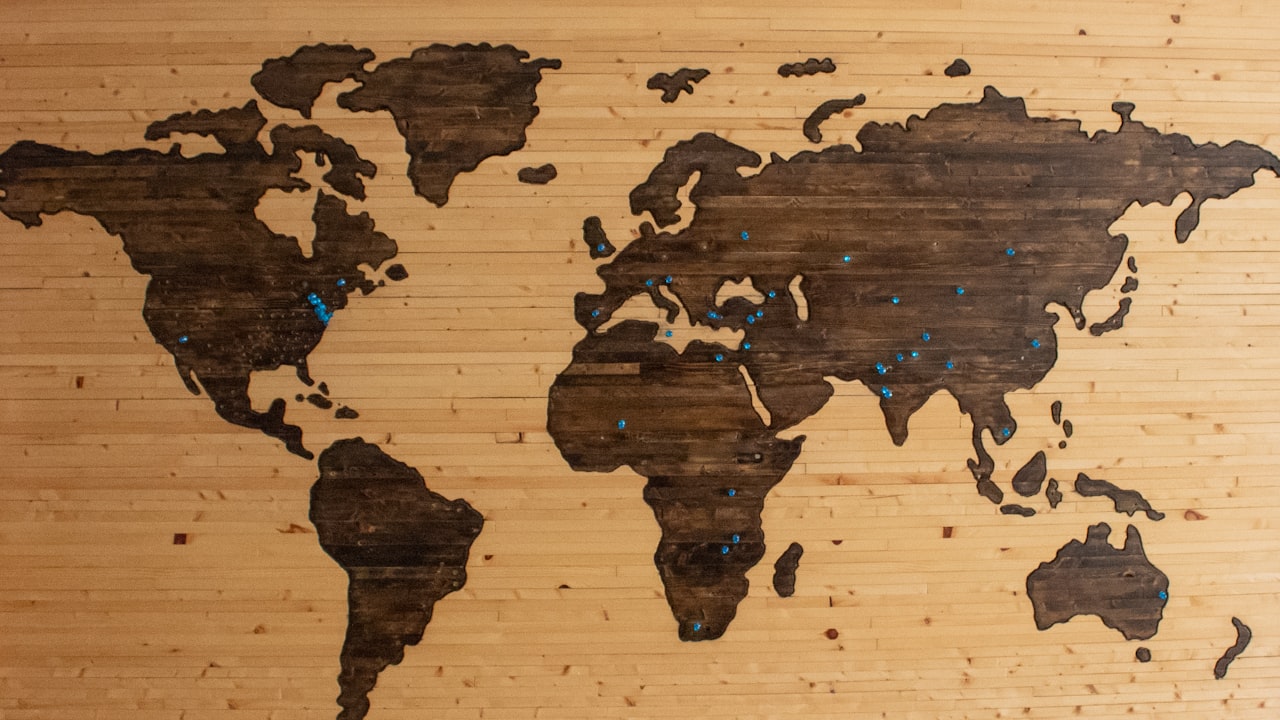
Every market has a different buyer profile, and that profile changes faster than most sales decks get updated. A pitch that lands with a US streamer can stall completely in Seoul, Riyadh, or São Paulo — not because the project is weaker, but because the buyer’s budget, mandate, and acquisition criteria are different.
This is a region-by-region map of who is actually buying film and TV content in 2026, built from recent trade-press reporting and market data, with named deals and the signals each region is sending sellers right now.
See who’s actively buying in every territory before you pitch.
Vitrina indexes 159,223 M&E companies across every major territory.
- 1Global entertainment content spend is forecast to hit $255 billion in 2026, with streamer spend alone topping $100 billion — but growth is uneven by region, and pitching the wrong market wastes a buying window that may not reopen for a year.
- 2US spend is flattening at the traditional broadcast layer while Netflix, Apple TV+, and Amazon keep acquiring and even diversifying into short-form publisher content.
- 3Europe is being reshaped by local-content investment quotas (Germany joining France, Spain, Denmark, and Italy) that are changing who has budget to commission.
- 4APAC now accounts for roughly 36% of global first-run scripted orders from top streamers in 2026, driven by cross-border licensing deals like Prime Video India’s expanded K-drama slate with CJ ENM.
- 5MENA and LATAM buyers are consolidating around a handful of regional platforms (Shahid, Globo, TelevisaUnivision) rather than fragmenting across dozens of local broadcasters.
In 2026, US streamers (Netflix, Apple TV+, Amazon) still dominate global content spend, but the growth is shifting east and south: APAC commands roughly 36% of first-run scripted orders, Europe is redirecting budget toward local-language content under new investment quotas, and MENA/LATAM buying is consolidating around regional platforms like Shahid, Globo, and TelevisaUnivision rather than fragmenting further. Sellers who match their pitch to the right regional buyer pattern close faster than those running one global pitch deck.
The Global Buyer Landscape in 2026
Global entertainment content spend is forecast to reach $255 billion in 2026, up roughly 2% from $245 billion in 2025, according to Ampere Analysis data reported by Deadline and corroborated by C21Media. Streamer spend alone tops $100 billion, now roughly 40% of total global content investment.
Global content spend is forecast to hit $255 billion in 2026, with streamers accounting for $100B+ (about 40%) of that total — and APAC alone now captures roughly 36% of first-run scripted orders from major global streamers. Source: Ampere Analysis via Deadline, January 2026.
The headline number hides the more useful story for sellers: where the growth is actually happening. US broadcast-side spend is flat to declining as parent studios redirect budget toward their own streaming arms. Europe’s growth is now policy-driven, not organic. APAC is the fastest-growing buyer region. MENA and LATAM are consolidating demand into fewer, larger regional platforms rather than fragmenting it further. The practical implication: the same project needs a different pitch, and often a different buyer entirely, depending on the territory.
This is also why a single global sales strategy increasingly underperforms a territory-specific one. A scripted drama with awards ambitions and a US pre-sale attached reads very differently to a BBC commissioner working with a tightening budget than it does to Shahid, which is actively bundling in premium international titles to compete with Netflix and Disney+ on its own platform. Matching the pitch to the region’s actual buying pattern — not just translating the same deck — is now part of the job of selling internationally, not an afterthought once a US deal is already signed.
United States: Streamer-Led, Broadcast-Flat
Netflix, Apple TV+, and Amazon/Prime Video remain the most active acquirers of scripted and unscripted content in the US market, while traditional commercial broadcasters continue trimming spend as parent companies prioritize their own streaming platforms (Ampere Analysis).
Apple Studios moved to acquire full IP and future-season rights to Severance from Fifth Season, a deal widely reported in trade coverage as one of the largest format-rights buyouts of the year — signaling that US streamers are now willing to buy outright ownership of a hit format rather than license season-by-season. Source: Yahoo Finance.
Netflix has also started signing short-form (2–20 minute) content deals with publishers including Variety and Rolling Stone, a diversification move beyond long-form scripted acquisition (TechCrunch). For sellers, the takeaway is that the US buyer set is narrowing at the top (fewer, bigger streamer deals) while opening up at the edges (short-form, publisher partnerships, format acquisitions).
United Kingdom: Public Broadcaster Rebound
The BBC commissioned 310 independent productions in 2025, up from an eight-year low, and spent roughly $2 billion on original content in 2025/26 — while simultaneously warning of commissioning cuts ahead (Broadcast Now, C21Media).
That combination — a short-term rebound layered on a structurally cautious outlook — is the signal UK sellers should read carefully. It’s a window, not a trend. Reliable, up-to-date commissioning budget figures for ITV and Channel 4 were not independently verifiable in current trade coverage at the time of writing, which is itself a useful data point: buyer-side transparency in the UK commercial sector has narrowed, making direct outreach and verified company intelligence more valuable than public reporting alone.
Buyer Intelligence — US & Europe
Stop Guessing Which Streamer Is Actually Buying
Vitrina tracks acquisition activity, executive moves, and commissioning mandates across 159,223 verified M&E companies — so you pitch the buyer that’s actually spending this quarter.
Europe: Local-Content Quotas Reshape Budgets
Germany is set to require streamers to invest at least 8% of German revenue into German-language or EU productions (with an exemption above 12%), joining France, Spain, Denmark, and Italy in mandating local-content spend (IBC, Cineuropa).
Germany joins France, Spain, Denmark, and Italy in mandating that streamers reinvest a minimum share of local revenue into domestic or EU productions — a regulatory trend that is now the single biggest driver of who has budget to commission in continental Europe, independent of a platform’s global content strategy.
This is shifting commissioning power toward broadcasters and national streamers that can satisfy the quota locally. Warner Bros Discovery’s Max is building a dedicated Nordic scripted slate for 2026, and Prime Video is partnering directly with France Télévisions, M6, RTVE in Spain, and ARD/ZDF in Germany on co-productions rather than competing head-on for the same local audience (Nordisk Film & TV Fond, Variety). For sellers, a co-production structure with a local broadcaster is increasingly the fastest route into a quota-regulated European market — a straight licensing pitch to a US-based streamer’s European office is no longer the only, or even the best, entry point.
Latin America: Consolidation Around Regional Giants
Globo (Brazil) and TelevisaUnivision signed a three-year content deal under which Globoplay will premiere at least four Televisa/Las Estrellas/ViX+ titles per year, alongside catalog access (Señal News).
SVOD subscriptions in the region are projected to grow from 110 million (2023) to 165 million by 2029, with seven US-based platforms — Netflix, Prime Video, Disney+, Star+, Paramount+, Apple TV+, and Max — expected to hold roughly 83% combined share by that point (CSI Magazine; figures are forward projections, not current-year actuals).
The practical read for sellers: LATAM buying power is concentrating into a small number of cross-border platform alliances rather than spreading across many national broadcasters. A deal that gets you into Globo’s or TelevisaUnivision’s pipeline now effectively reaches both the Brazilian and Spanish-language US Hispanic markets at once.
MENA: Platform Bundling Over Fragmentation
MBC Group’s Shahid, the dominant Saudi-owned streaming platform, now bundles Netflix content via MBCNOW and has struck the region’s first major streaming bundle with Disney+ through OSN+ (TheWrap, The Hollywood Reporter).
Shahid also signed three-year Bundesliga rights and a content-distribution deal with Egypt’s e& Egypt giving subscribers full access to its library (Sportcal, C21Media). Government production incentives across the Gulf, typically in the 30–40% range on qualifying local spend, continue to pull international productions toward the region, though exact minimum-guarantee ranges for individual deals vary too widely by project to generalize reliably.
For sellers, MENA is now effectively a one-platform-first market: Shahid’s acquisition and bundling decisions set the pace for most of the region’s content strategy, with government incentive programs acting as the secondary lever for production (not acquisition) deals.
Buyer Intelligence — LATAM, MENA & APAC
Find the Regional Platform That Actually Greenlights
Vitrina’s verified company database surfaces the real decision-makers at regional platforms like Shahid, Globo, and CJ ENM — not just the global streamer office that forwards your email.
APAC: The Growth Engine
APAC now accounts for roughly 36% of all first-run scripted orders placed by top global streamers in the first half of 2026, the highest regional share globally (Ampere Analysis via Deadline).
Prime Video India signed a multi-year licensing deal with CJ ENM covering 100+ Korean dramas, including 26 new titles over two years plus catalog access, dubbed into Hindi, Tamil, and Telugu — one of the clearest signals of cross-border licensing demand inside APAC itself, not just from APAC into the US. Source: The Hollywood Reporter and Forbes.
South Korean production continues to attract heavy streamer investment, and trade press widely reports Netflix’s multi-year commitment to the market running into the billions of dollars — though sellers should treat the exact figure as a reported estimate rather than a confirmed number until Netflix states it directly in an investor disclosure. What’s independently verifiable is the deal activity itself: cross-licensing between Indian, Korean, and Southeast Asian platforms is now a buyer pattern in its own right, separate from the traditional APAC-to-Hollywood pitch most sellers still default to.
2026 Regional Buyer Snapshot
Conclusion
The 2026 buyer landscape is not one market getting bigger — it’s six markets moving in different directions at once. The US is consolidating around fewer, larger streamer deals. The UK is in a cautious rebound. Europe’s budgets now follow regulation as much as audience demand. LATAM and MENA buying is concentrating into regional platform alliances. APAC is where the growth actually is, increasingly through cross-border deals within the region itself, not just licensing out to Hollywood.
The sellers who do best in this environment aren’t the ones with the best universal pitch deck — they’re the ones who know which of these six patterns their project fits, and who the actual decision-maker is inside that pattern this quarter.
None of these patterns are static. Quota rules in Europe will be revised. Platform bundles in MENA will expand or fold. A single large co-production can reshuffle a region’s buyer map within a quarter. Treat this as a snapshot to plan the next outreach round against, not a permanent org chart — and revisit the regions where your project has the strongest fit at least once a quarter, since that is roughly how often the underlying deal activity in each of these markets has shifted over the past year.
Frequently Asked Questions
Which region is buying the most film and TV content in 2026?
The US still spends the most in absolute dollars, but APAC has the highest growth, now accounting for roughly 36% of first-run scripted orders from major global streamers in 2026.
Are European broadcasters or streamers buying more content right now?
It depends on the country. New local-content investment quotas in Germany, France, Spain, Denmark, and Italy are shifting commissioning power toward broadcasters and co-productions that satisfy local-spend requirements, rather than toward streamers buying content outright.
Is the Middle East a one-platform market for content buyers?
Largely, yes. Shahid (MBC Group) is the dominant acquisition and bundling platform in the region, having struck bundle deals with both Netflix and Disney+, which makes it the default first stop for most sellers targeting MENA.
Why are Latin American platforms consolidating instead of expanding?
Deals like the Globo-TelevisaUnivision content partnership show platforms pooling catalogs and co-releasing titles across Brazil and Spanish-language markets rather than each platform building a separate content pipeline, which reduces the number of distinct buyers sellers need to reach.
Do US streamers still buy full IP ownership, or just licenses?
Both, but outright IP and format acquisitions are becoming more visible — Apple Studios’ move to acquire full rights to Severance from Fifth Season is a recent example of a streamer buying ownership rather than a multi-season license.
How can sellers find the right regional buyer instead of guessing?
Vitrina’s VIQI platform tracks acquisition activity, executive moves, and verified contacts across 159,223 M&E companies worldwide, letting sellers filter by territory and recent buying activity instead of relying on trade press after a deal has already closed.
Related Reading
About the Author
Vitrina Research Team
The Vitrina Research Team produces intelligence-led analysis on media and entertainment industry structure, deal activity, and market trends. Our research draws on VIQI’s proprietary dataset of 159,223 M&E companies worldwide.
Vitrina Intelligence — Global Buyer Database
Pitch the Right Buyer, in the Right Territory, First
Search 159,223 verified media & entertainment companies by territory, genre focus, and recent acquisition activity — and list your own project so regional buyers can find you.