Why Media Industry Data Platforms Matter More Than Ever

Share
Share
media industry data platform

By Vitrina Research Team | Published: June 28, 2026 | 7 min read

The global media and entertainment industry crossed $2.8 trillion in revenue in 2025, according to the PwC Global M&E Outlook. Yet for most companies operating inside this market, finding reliable, structured intelligence about competitors, co-production partners, or distribution territories still means spreadsheets, industry contacts, and guesswork. That gap between the scale of the market and the quality of available intelligence is exactly why a dedicated media industry data platform is no longer a nice-to-have.

Three forces converged over the past five years to make structured data urgent. Streaming fragmented the competitive landscape beyond what any one team could manually track. International co-productions multiplied as studios chased cost incentives and audience diversification. And post-pandemic deal velocity accelerated to a pace where decisions that once took months now happen in weeks. Traditional research methods, built for a slower and more localized industry, broke under that combined pressure.

This article examines what changed, why legacy approaches failed, what genuine media industry intelligence means in practice, and how modern data platforms are reshaping decisions that were previously made on instinct. We also look at what separates a trustworthy platform from an outdated one, and how entertainment intelligence platforms are beginning to influence decisions far beyond basic market sizing.

Key Takeaways

  • The global M&E market surpassed $2.8 trillion in 2025, yet most companies still rely on manual research methods (PwC, 2025).
  • Streaming fragmentation, international co-production growth, and accelerated deal timelines have made real-time intelligence a competitive requirement.
  • Data platforms now influence five decision types previously driven by intuition: competitor monitoring, territory analysis, supply chain resilience, investor reporting, and slate planning.
  • Trust signals for a platform include recency of data updates, depth of company-level coverage, and transparent sourcing methodology.
  • VIQI maps 400,000+ M&E companies globally, giving buyers, sellers, and financiers a shared intelligence layer.

What Changed in the Past Five Years?

The number of scripted series produced globally surpassed 1,000 titles annually by 2023, a figure that would have seemed impossible at the start of the previous decade (Statista M&E Outlook, 2024). That sheer content volume is the most visible symptom of a structural shift that touched every part of the industry simultaneously. Production, distribution, financing, and rights management all became more complex at the same time.

Streaming drove the first wave. Netflix, Amazon, Apple, Disney+, and dozens of regional SVOD platforms all needed original content, and they needed it from every corner of the world. That created demand for international co-productions at a scale the industry had never experienced. According to the European Audiovisual Observatory, European co-productions with non-European partners grew by over 30% between 2019 and 2023. Every one of those deals required both parties to assess an unfamiliar company in an unfamiliar market quickly.

The pandemic then compressed deal timelines further. Physical markets like Cannes, MIP, and AFM moved partially online, and buyers learned to commit to projects without meeting the people behind them. That shift accelerated a trend toward asynchronous due diligence, where the quality of available data about a company became more important than a face-to-face relationship. Studios and distributors that had relied on personal networks found themselves at a structural disadvantage.

Finally, private equity entered the industry at scale. Between 2020 and 2025, PE-backed acquisitions of production companies, post-production facilities, and distribution businesses reached record levels. Investors accustomed to data-driven decision making in other sectors demanded the same rigor in media. That created bottom-up pressure for better intelligence from within companies, not just from the strategy team. Explore the full scope of global entertainment intelligence and how studios are using it to respond to these pressures.

Ready to research media companies at this scale?

VIQI gives you structured profiles on 400,000+ M&E companies, updated continuously from primary industry sources.

Access Media Industry Intelligence on VIQI →

Why Did Traditional Research Methods Break Down?

Legacy research methods in media, which relied on trade publications, industry directories, and professional networks, were designed for a slower industry. They worked reasonably well when markets were largely national, deal windows were long, and content volume was manageable. All three of those conditions disappeared between 2019 and 2024, and the research infrastructure failed to keep pace.

Trade publications produce editorial coverage, not structured data. A Variety or Screen International article tells you what happened, but it doesn’t give you a clean list of a company’s recent slate, its financing partners, its territory deals, or its key relationships. Extracting that information from hundreds of articles into a usable format requires analyst time that most organizations simply don’t have. And by the time an analyst finishes, the picture has already changed.

Industry directories suffer from an even more fundamental problem: staleness. A company listed in a 2022 directory may have changed ownership, pivoted its focus, or gone out of business. In a consolidating market where M&A activity is high, directory data decays within months. The IFTA has noted that membership and ownership structures in independent distribution shift significantly year over year, making static databases unreliable for due diligence purposes.

Professional networks are arguably the most valuable legacy tool, but they have a structural bias. Your network reflects where you’ve already been. It skews toward established markets, familiar formats, and known players. When a studio needs to assess a production company in Poland, a post-production facility in South Korea, or a distribution partner in Brazil, personal connections rarely extend that far. The gap between where the industry is going and where professional networks reach has widened considerably. This is one of the core film and TV industry database benefits that structured platforms now deliver.

The result? Decision-making that should be grounded in evidence ends up driven by whoever speaks most confidently in the room. That’s a real organizational risk in a market where bad partnership decisions cost millions.

What Does Media Industry Intelligence Actually Mean?

The term “media industry intelligence” gets used broadly, but it covers a spectrum of very different things. At one end sits raw data: lists of companies, titles, people. At the other end sits genuine intelligence: structured, contextualized, continuously updated information that enables a specific decision. Most platforms sold as “entertainment data analytics platforms” live closer to the raw data end than they claim.

True intelligence has several characteristics. It must be structured, meaning the data can be filtered, compared, and combined across entities. It must be current, because a profile that was accurate eighteen months ago may be actively misleading today. It must have depth at the company level, going beyond basic contact information to include slate history, deal activity, financial relationships, and territory focus. And it must be connected, linking companies to the projects, people, and partnerships that define their strategic position.

What platforms typically offer instead is a mix of aggregated press coverage, self-reported directory listings, and basic financial filings. These are inputs to intelligence, not intelligence itself. The difference matters enormously in practice. A buyer using a raw data source to assess a potential co-production partner still has to do most of the analytical work themselves. A buyer using a genuine intelligence platform can arrive at a first meeting already knowing the partner’s recent slate, their active territory deals, and the financing structures they typically work with.

The Difference Between Data and Decision-Ready Intelligence

Decision-ready intelligence is built around user intent. A content acquisition executive needs different information than a co-production producer or an equity investor, even when they’re researching the same company. Platforms that present a single undifferentiated company profile to all user types are delivering data, not intelligence. The best platforms in this space have begun building role-specific views, filters, and signals that surface what’s relevant to a specific decision type.

The BFI’s industry data insights work illustrates this distinction well. Their research isn’t just a dataset; it’s contextualized analysis of the UK production sector tied to specific policy and business questions. That kind of intentional framing is what separates a useful intelligence resource from a large but navigable spreadsheet.

5 Decisions Data Platforms Are Now Driving

Media industry data platforms have moved from supporting research tasks to actively shaping strategic decisions. Five decision types that were previously driven by intuition, relationships, or incomplete analysis are now being made with structured intelligence as the primary input.

1. Real-Time Competitor Monitoring

Studios and distributors can now track competitor slate changes, acquisition announcements, and new partnership signals as they emerge, rather than learning about them weeks later through press coverage. This changes how organizations respond to competitive moves. A distributor that spots a rival acquiring rights in a genre before the announcement hits trade press has a meaningful timing advantage.

2. Territory-Level Greenlight Analysis

Deciding whether a project is viable in a given territory used to require expensive market research or a trusted local contact. Data platforms now allow greenlight teams to assess territory-level demand signals, competitive saturation by genre, and the track records of available local partners before committing development resources. This compresses a process that previously took weeks into hours.

3. Supply Chain Resilience

The production sector learned during the pandemic that vendor concentration is a serious risk. Studios that relied on a small number of post-production facilities or equipment suppliers faced significant delays when those suppliers couldn’t operate. Data platforms that map the full vendor ecosystem, including alternative suppliers by capability and geography, allow studios to build redundancy into their supply chains before a disruption forces the issue.

4. Investor Reporting

PE-backed media companies now need to demonstrate market positioning, competitive benchmarking, and TAM analysis to their investors on a regular cycle. Building those reports from scratch using manual research is expensive and slow. Platforms that maintain structured, comparable company profiles allow finance teams to generate investor-grade market analysis without contracting a new research study each quarter.

5. Slate Planning

Commissioning and development executives can now assess genre saturation, gap analysis, and available talent/partner pools before committing to a slate rather than after. Platforms that connect title data, company data, and deal data allow planners to see not just what’s in the market but what infrastructure exists to support a new project. This makes slate planning a data-informed process rather than a creative judgment made in an intelligence vacuum. Visit the Vitrina Intelligence blog for deeper analysis on each of these decision types.

What Makes a Platform Trustworthy vs. Outdated?

Not all entertainment data analytics platforms are equal. The market includes some genuinely useful tools alongside products that haven’t been meaningfully updated in years. Evaluating a platform requires looking beyond the feature list at the underlying data practices that determine whether the information is actually reliable.

Data recency is the most important trust signal. A platform should be transparent about when individual company profiles were last verified and updated. Monthly or quarterly update cycles are insufficient for a market moving at the current pace. Weekly or continuous-update platforms, which ingest new signals from deal announcements, corporate filings, and primary sources on a rolling basis, are meaningfully more reliable.

Depth of company-level coverage matters as much as breadth. A platform claiming 500,000 company records is less useful than one with 100,000 thoroughly verified profiles including slate history, key personnel, deal relationships, and territory focus. Breadth without depth produces false confidence. A user who finds a company in the database assumes the record is reasonably complete, which is rarely true on breadth-first platforms.

Sourcing transparency is the third signal. Trustworthy platforms explain where their data comes from: primary company submissions, public filings, festival market databases, licensing agreements, or editorial curation. Platforms that cannot explain their sourcing methodology should be treated with caution, because there’s no way to assess how a claimed data point was generated or how quickly errors get corrected.

Finally, look for evidence of active use by people whose judgments have real consequences. A platform that serves working buyers, production executives, and investors at large companies is subject to real-world quality pressure. Platforms used primarily by researchers for background information can accumulate errors over time without anyone catching them. Also consider exploring Japanese anime studio data as an example of how granular, territory-level company intelligence can look when done rigorously.

How VIQI Delivers Media Industry Intelligence at Scale

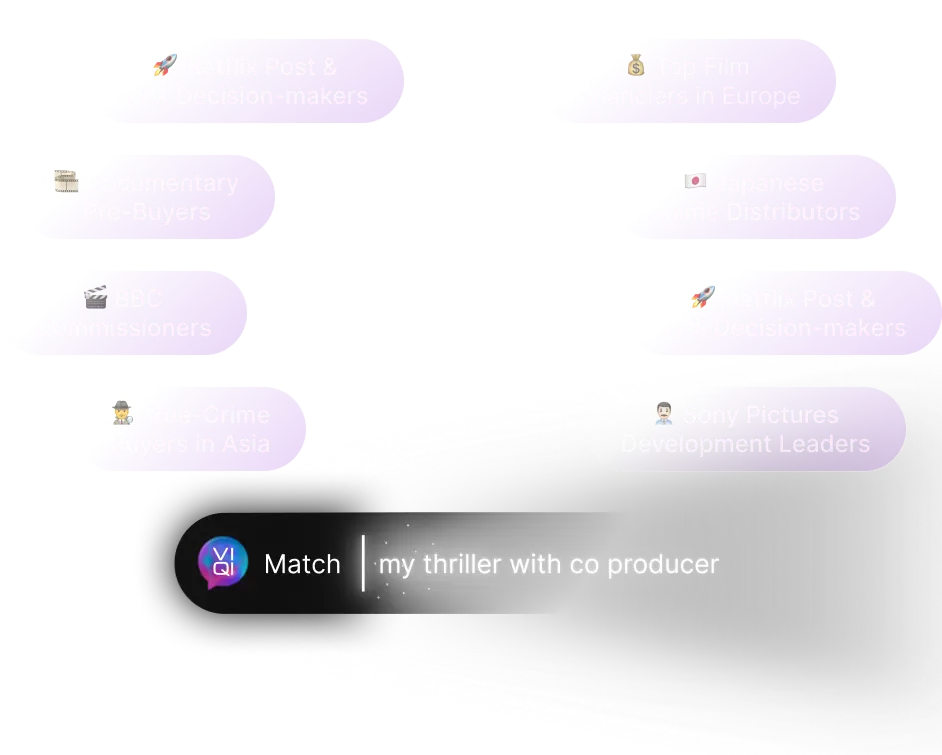
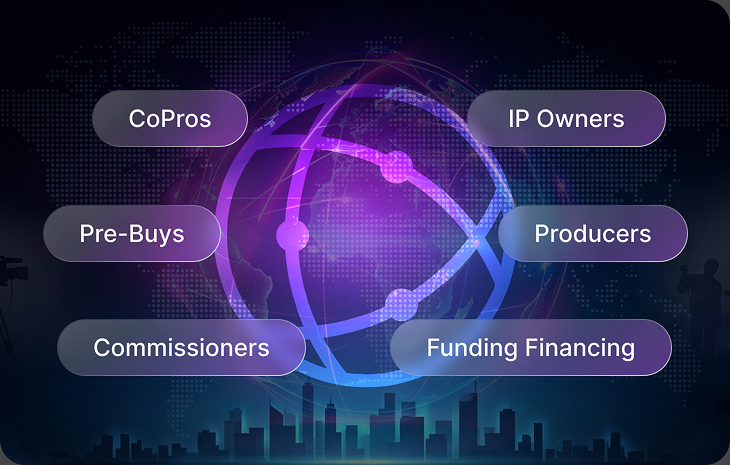
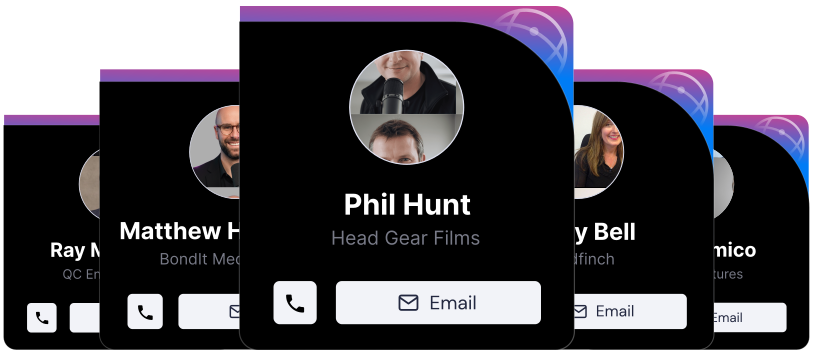
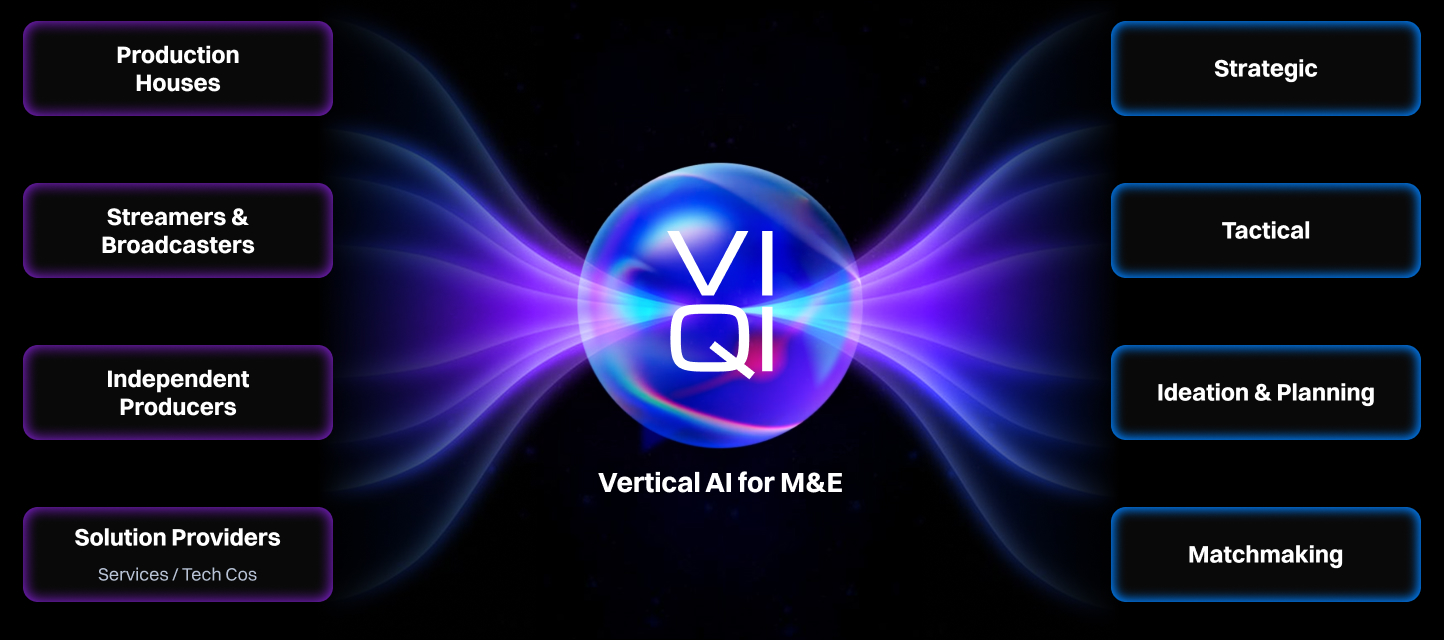
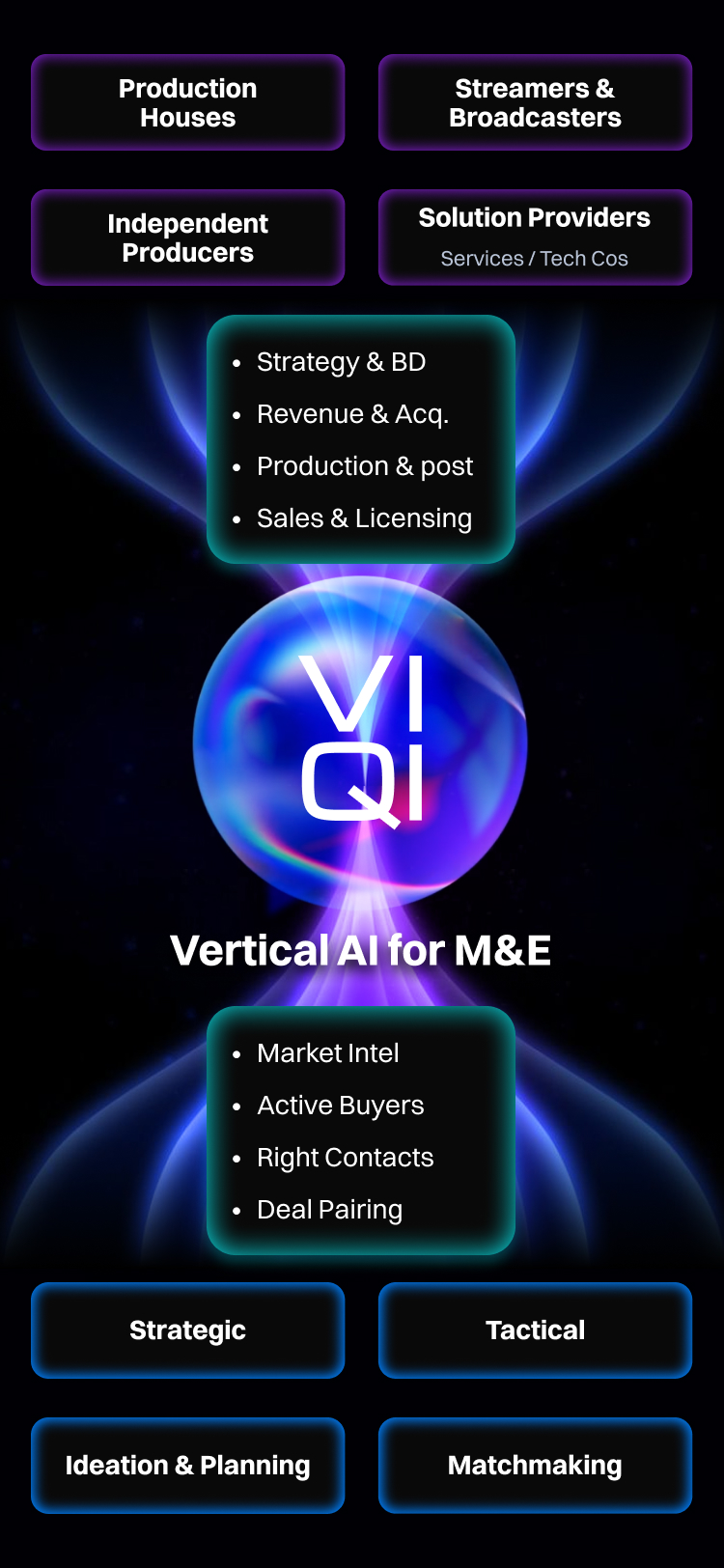
VIQI is Vitrina’s media industry intelligence platform, built specifically around the decision needs of buyers, sellers, co-production executives, financiers, and investors operating in the global M&E market. It covers 400,000+ companies across production, distribution, post-production, technology, and financing, with profiles structured around the information types that drive real decisions rather than around what was easiest to collect.

The platform was designed to address the specific failures of legacy research. Data is updated continuously from primary sources, company-level profiles include slate history and deal relationship signals, and the search and filter architecture reflects how acquisition executives and development teams actually work, not how a generic B2B database is typically built. Users can filter by territory, genre, company type, deal history, and financing model simultaneously, producing shortlists that would take an analyst days to assemble manually.
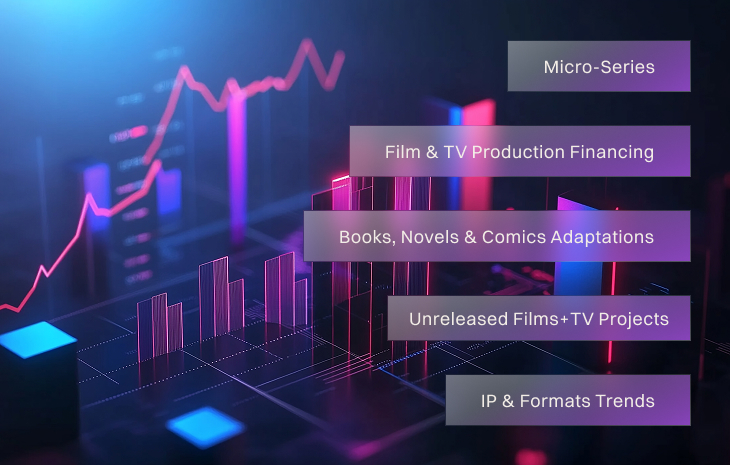

VIQI also connects company intelligence to market-level signals, allowing users to move between a specific company profile and the broader competitive landscape in which that company operates. That connected view is what transforms a data lookup into genuine market intelligence. Whether you’re running territory-level greenlight analysis, building an investor report, or identifying co-production partners for a specific genre in a specific region, VIQI provides the structured foundation that makes those processes faster and more defensible.

Is your company visible to the buyers and partners searching VIQI?

Thousands of M&E decision-makers use VIQI to find and evaluate companies. Make sure yours is discoverable with an accurate, complete profile.

List Your Company on Vitrina →

Conclusion

The media industry has been producing more content, in more territories, involving more companies, at faster timelines than at any previous point in its history. The intelligence infrastructure available to the people making decisions inside this market hasn’t kept pace, and the consequences range from slow partner due diligence to missed market opportunities to preventable supply chain failures. A purpose-built media industry data platform closes that gap in a way that no combination of trade press, directories, and professional relationships can match.

The five decision types outlined in this article, competitor monitoring, territory analysis, supply chain resilience, investor reporting, and slate planning, represent areas where structured intelligence is already delivering measurable advantage to the organizations that have adopted it. That list will expand. As platforms improve in depth, recency, and connectedness, they’ll begin influencing decisions that currently still rely on human judgment backed by incomplete information.

The practical implication is straightforward. If your organization is still researching the market the same way it did in 2018, you’re operating with a significant information disadvantage relative to competitors who aren’t. The market is too large, too fast-moving, and too globally dispersed for manual research to keep up. Choosing the right platform, and evaluating it rigorously against the trust signals outlined here, is one of the highest-leverage infrastructure decisions a media company can make right now.

Frequently Asked Questions

What is a media industry data platform?

A media industry data platform is a structured database and analytics tool built specifically for the media and entertainment sector. It aggregates company profiles, deal activity, content slate data, and market intelligence into a searchable, filterable system. Unlike generic business databases, M&E-specific platforms are designed around the decision workflows of buyers, sellers, producers, distributors, and financiers.

How does an entertainment data analytics platform differ from a trade publication database?

Trade publication databases are organized around editorial content, meaning articles, reviews, and news items. An entertainment data analytics platform is organized around entities, namely companies, people, titles, and deals, and the structured relationships between them. Trade databases tell you what was reported; data platforms let you filter, compare, and combine entity-level information to answer specific business questions.

Why is data recency so important for media industry intelligence?

The M&E market experiences significant ownership changes, strategic pivots, and deal activity year-round. A company profile that was accurate eighteen months ago may now reflect different ownership, a completely different content focus, or a changed financial position. Using stale data for partner due diligence or competitive analysis can produce actively misleading conclusions. Platforms with continuous or near-real-time update cycles are materially more reliable for current decision-making than quarterly or annual snapshots.

Who uses media industry data platforms in their day-to-day work?

Primary users include content acquisition executives at studios and streaming platforms, business development teams at production companies, sales agents assessing territory buyers, private equity investors and their deal teams, co-production executives identifying international partners, and finance professionals building market-sizing analyses for investor reports. Strategy teams and market researchers use these platforms for competitive intelligence and trend analysis.

Can a small production company benefit from media industry intelligence tools?

Yes. Smaller production companies arguably benefit more than large studios, because they typically lack the internal research capacity to compensate for weak tools. A small company using a well-structured platform can compete on intelligence with organizations that have much larger business development teams. Key use cases include identifying distribution partners in unfamiliar territories, finding co-production partners with complementary territorial rights, and monitoring competitor slates for genre gaps.

How do I evaluate whether a media data platform’s information is reliable?

Ask four questions: When was this specific record last updated? What sources were used to build or verify it? Can errors be reported and corrected? Does the platform disclose its data sourcing methodology publicly? Platforms that can’t answer all four questions clearly should be treated with caution. You can also cross-check a sample of records against known facts about companies you know well to test accuracy before relying on the platform for high-stakes decisions.

What is the difference between media industry intelligence and market research?

Market research typically refers to commissioned studies that answer a predefined question using a fixed methodology, delivered as a report. Media industry intelligence is continuous, structured, and user-directed. It enables a user to ask their own questions in real time rather than waiting for a research cycle. The two are complementary: market research provides depth on specific questions, while ongoing intelligence platforms provide the current situational awareness that makes those deeper studies more actionable.

See what 400,000+ M&E company profiles look like in practice.

VIQI is free to explore. No demo required, no lengthy sign-up process. Start searching the global M&E company database now.

Explore VIQI Free →

About the Author

Vitrina Research Team

The Vitrina Research Team produces intelligence-led analysis on media and entertainment industry structure, deal activity, and market trends. Our research draws on VIQI’s proprietary dataset of 400,000+ M&E companies worldwide.