Best Film Production Tracking Platforms for Global Content Businesses

Share
Share
film production tracking

By Vitrina Research Team | Published: June 26, 2026 | 8 min read

Global content volume has hit an inflection point. The PwC Global Media & Entertainment Outlook tracks the industry at over $2.8 trillion in combined revenue through 2027, driven by streaming expansion, co-production deals, and market entry across Southeast Asia, Latin America, and Africa. Studios, distributors, and streamers are greenlighting more titles across more territories than at any point in history. Keeping pace with what is actually in production, and where, has become a core operational challenge.

A film production tracking platform is no longer optional infrastructure for serious content businesses. It is how acquisitions teams spot co-production windows before deals close. It is how distributors identify output gaps in specific genres or territories. It is how competitive intelligence analysts understand which studios are scaling and which are contracting. The teams that invest in the right tool gain measurable lead time. Those relying on trade press alone are always reacting.

This guide breaks down what film production tracking actually involves at scale, which platform features separate serious tools from basic databases, and how to evaluate options across title-level tracking versus company-level intelligence. We also look at how TV production tracking differs from film, and where purpose-built entertainment intelligence platforms outperform generic alternatives.

Key Takeaways

  • A true film production tracking platform covers data freshness, geographic scope, company-level intelligence, and API access β€” not just title listings.
  • TV production tracking requires different filters than film β€” episode count, series status, broadcaster, and renewal windows matter more than format length.
  • PwC forecasts the global M&E market will reach $2.8 trillion by 2027, making comprehensive tracking critical for competitive positioning.
  • Generic databases lack the M&E-specific structure needed for production intelligence β€” purpose-built platforms provide superior filtering and deal context.
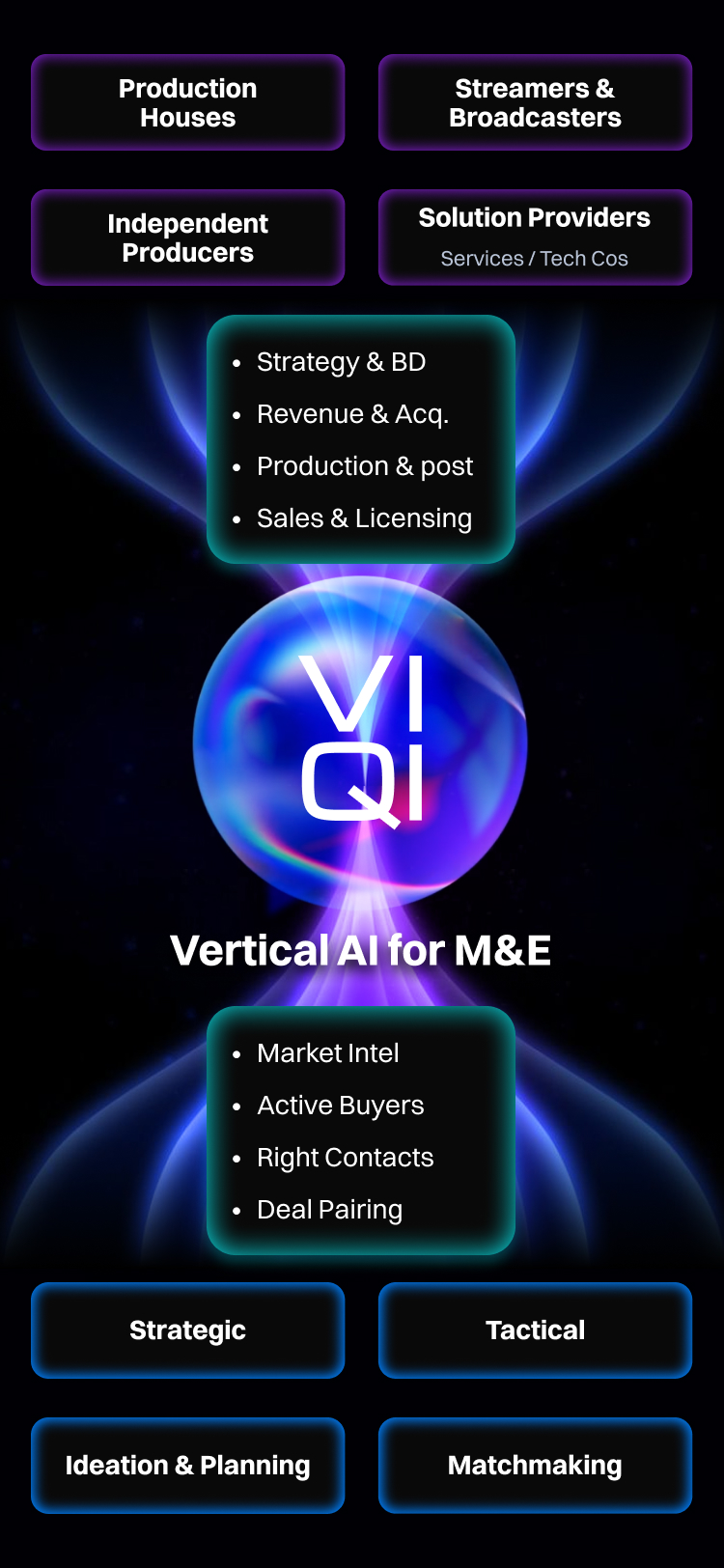
  • VIQI’s company-level approach to production intelligence complements title-level databases by surfacing which organizations are driving production activity.

What Does Film Production Tracking Actually Mean at Scale?

The European Audiovisual Observatory reported over 9,000 feature films produced across European markets alone in a single recent year. Add North America, Asia-Pacific, Latin America, and the Middle East, and global active productions in any given quarter run well into the tens of thousands. Film production tracking at scale means reliably knowing which of those projects are in development, pre-production, production, post-production, or completed β€” and doing so across dozens of languages and jurisdictions.

Basic tracking starts with title-level data: project name, genre, format, director, key talent, production company, and current stage. That baseline is necessary but not sufficient. Teams at major distributors and streamers need additional signal layers: budget range, territory of origin, distribution rights status, festival submission history, and whether key creative or financial attachments have changed. Each of those data points can determine whether an acquisition conversation is worth starting.

At the company level, production tracking extends further. Which studios are increasing output? Which production companies have shifted from domestic to international co-productions? Which talent agencies are consolidating first-look deals? The film and TV industry database that answers these questions is operating at a different tier than one that simply lists titles. Genuine scale tracking is about pattern recognition across thousands of entities, not just a searchable list of current projects.

Data freshness is the single most critical variable in production tracking. A project can move from development to greenlit to cancelled within 90 days. Platforms that update quarterly are functionally obsolete for deal-making. Weekly or near-real-time updates are the operational standard for any team making time-sensitive acquisition or co-production decisions.

Citation Capsule: The European Audiovisual Observatory documented over 9,000 feature films produced in European markets in a single year. At global scale, active productions across all markets in any given quarter run into the tens of thousands, making automated tracking infrastructure essential for any content business operating across more than two or three territories. (European Audiovisual Observatory)

What Features Should You Evaluate in a Production Tracking Platform?

The British Film Institute tracks over 1,200 production and distribution companies in the UK market alone. Multiply that across 50-plus active markets and the feature set requirements of any serious tracking platform become clear. Data coverage, update frequency, search depth, API access, and geographic scope are the five dimensions that matter most when evaluating tools.

Data Coverage and Depth

Coverage refers to how many titles and companies a platform indexes. Depth refers to how many fields are populated per record. A platform with 50,000 titles but only five fields per record is less useful than one with 20,000 titles but 25 fields each. For acquisitions teams, depth almost always matters more than raw record count. You need budget tier, rights status, and territory β€” not just title and director.

Update Frequency

Daily or weekly updates are the baseline for competitive use. Some platforms run editorial cycles that produce quarterly refreshes, which is fine for archival research but creates blind spots in active deal flow. Always ask vendors specifically how they define “current” β€” if it means within 30 days, that’s a meaningful limitation for time-sensitive decisions.

Search and Filter Depth

Production tracking becomes actionable through search. Filtering by genre, territory, production stage, budget range, talent attachment, broadcaster, and rights availability are standard requirements. Platforms that only allow keyword search or single-facet filtering force analysts to do manual work that the tool should handle. Boolean logic, saved searches, and alert-on-change notifications are strong differentiators.

API Access and Integration

Large organizations need production data to flow into their own systems. CRM integration, deal-flow pipelines, and internal dashboards all benefit from API access to a tracking platform. If a vendor does not offer programmatic access, any workflow that depends on regular data refreshes will require manual export and import cycles β€” which introduces both lag and error.

Geographic Scope

North America-centric platforms miss most of global production. Teams with acquisition mandates covering Asia-Pacific, MENA, or Latin America need platforms that actively track local-language productions, regional broadcasters, and territory-specific co-production structures. This requires on-the-ground data sourcing or partnerships with regional trade bodies, not just aggregation of English-language trade press.

Track Active Productions Across Every Market

VIQI indexes 400,000+ M&E companies with production activity, deal history, and company intelligence updated regularly across global markets.

Track Productions on VIQI β†’

How Do Different Platform Types Compare?

The Independent Film and Television Alliance (IFTA) represents over 160 companies across 22 countries β€” a useful benchmark for understanding how diverse the production and distribution ecosystem actually is. Different platform types serve this market with very different assumptions about what users need. The gap between generic business data tools and M&E-specific platforms is significant.

Feature Generic Business DB Title-Level M&E DB Company-Level M&E Platform
Production stage tracking None Yes Yes (+ company context)
Genre/format filters Rarely Yes Yes
Co-production deal data No Partial Yes
Geographic coverage Global (non-M&E) US/EU focused Multi-market incl. APAC/MENA
Update frequency Annual/quarterly Weekly/monthly Weekly or near-real-time
API access Sometimes Varies Yes (enterprise tier)
Broadcaster/streamer data No Partial Yes

Generic business databases (think Dun & Bradstreet, ZoomInfo) are built for B2B sales prospecting. They capture company registration, revenue estimates, and headcount but have no structural support for production stage, rights, or format. Plugging one of these into a film acquisition workflow creates significant manual overhead because analysts spend time reformatting data that was never designed for M&E use.

Title-level M&E databases focus on individual projects. They track what’s in production, who’s attached, and when release is expected. These are strong for film market preparation and rights availability research. Their limitation is that they don’t tell you much about the company behind a project β€” its financial health, deal history, or broader slate direction.

Company-level M&E platforms combine both dimensions. They answer not just “what is in production” but “which companies are doing it, at what scale, with which partners, and in which territories.” That second layer is where competitive intelligence, partnership sourcing, and strategic market analysis live. For global global entertainment intelligence platforms, this dual view is the differentiator.

Citation Capsule: IFTA represents over 160 independent film and television companies across 22 countries. The breadth of that membership reflects how distributed the global production ecosystem has become β€” a distribution that no single North America-centric tracking database can adequately cover. Platform geographic scope is therefore not a secondary feature but a primary qualifier when evaluating M&E intelligence tools. (IFTA)

How Does TV Production Tracking Differ from Film?

TV production tracking software addresses a fundamentally different lifecycle from film. The Producers Alliance notes that the UK’s independent TV production sector alone generates over Β£3.6 billion in revenue annually, with hundreds of series in various states of commissioning, renewal, and cancellation at any given time. Series tracking requires a different data model than feature film tracking.

The key difference is continuity. A film either exists or it doesn’t. A series can be in development for Series 1 while Series 2 is already commissioned, Series 3 is in negotiation, and a spin-off is under a different production company. Tracking tools need to handle parent-child series relationships, season-level status, and commission windows per broadcaster. Most title-level film databases handle this poorly because their data structure was built around single-project records.

Series Status and Renewal Windows

For acquisitions and distribution teams targeting TV content, renewal timing is a key opportunity signal. A series entering a renewal window with its commissioning broadcaster is a moment when secondary rights or international distribution agreements become available. Platforms that track commission dates, episode orders, and renewal timelines give teams advance notice. Platforms that only record broadcast dates miss the opportunity entirely.

Broadcaster and Platform Attribution

TV production tracking requires clear attribution to commissioning broadcasters and streaming platforms. A drama series commissioned by a SVOD platform has different rights structures than one funded by a public broadcaster. Those differences affect what you can acquire, co-produce, or distribute. Platforms that don’t track commissioning entity accurately create ambiguity that takes hours to resolve manually.

Format and Episode Count as Filter Dimensions

Film searches filter by runtime and genre. TV searches filter by episode count, format type (scripted, unscripted, limited series, documentary series), and target demographic. These are entirely different filter taxonomies. A film production tracking platform that attempts to bolt TV content onto a film-centric data model will consistently return poorly structured TV records. The best tools are built to handle both formats natively, with separate field sets for each.

For teams tracking animation specifically, the data structure becomes even more specialized. Anime production tracking involves studio-level output tracking, seasonal broadcast windows, streaming platform exclusivities, and IP licensing chains β€” all of which require field structures that general-purpose platforms rarely support.

What Role Does Production Tracking Play in Competitive Intelligence?

PwC’s Global M&E Outlook reports that global streaming revenue alone will exceed $160 billion by 2027, with content investment from major platforms continuing to increase year-over-year. In that environment, knowing what competitors are producing, which genres they’re expanding into, and which markets they’re targeting is not a nice-to-have. It is active intelligence that shapes greenlight decisions. A film production database built for competitive analysis serves a different function than one built for rights research.

Competitive intelligence use cases include: identifying content gaps in a market before a competitor does, monitoring whether a rival studio’s international co-production activity is accelerating, and spotting talent relationships developing between competitors and key creative partners. These are all pattern-recognition questions. They require the ability to run cross-entity queries across large datasets, not just pull up an individual project record.

The most effective competitive intelligence setups combine title-level tracking with company-level profiling. Title data shows what is being made. Company data explains who is making it and with what strategic intent. Together, they let an analyst build a picture of competitor trajectory over multiple quarters rather than just a snapshot of current activity. This is where purpose-built entertainment intelligence platforms provide the clearest edge over generic tools.

Citation Capsule: PwC projects global streaming revenue will surpass $160 billion by 2027, with content investment by major platforms accelerating across every region. At that scale, competitive intelligence derived from production tracking is not supplementary research β€” it directly informs greenlight strategy, acquisition targeting, and market entry timing for studios and distributors. (PwC Global M&E Outlook)

Early Signal Detection

The best production tracking platforms surface signals before they appear in trade press. Development announcements, talent attachments, and co-production registrations often precede any public announcement by weeks. Organizations that monitor these signals have a meaningful head start on reaching out to production companies, locking in distribution terms, or adjusting their own slate strategy in response.

Market Entry Analysis

Production tracking data is also foundational for market entry decisions. If a distributor is considering expanding into the Polish or Indonesian market, analyzing the current production activity, active local companies, and existing co-production relationships in that territory provides a baseline for evaluating opportunity. You need current, structured data to run that analysis. Trade press archives and Wikipedia are not sufficient.

How VIQI Serves as a Film Production Tracking Platform for Global Teams

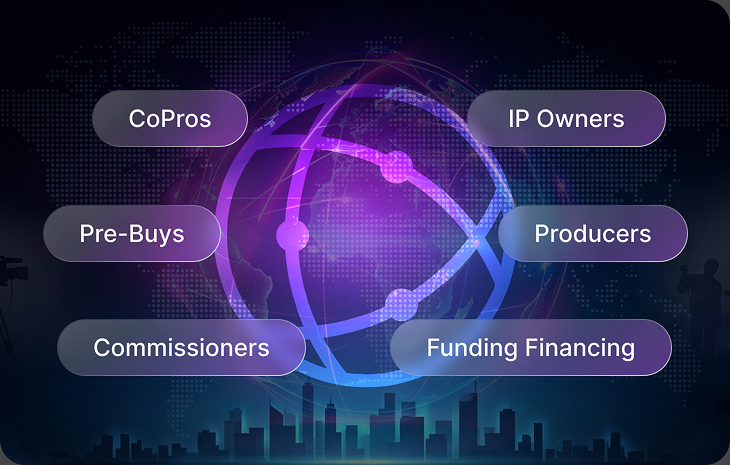
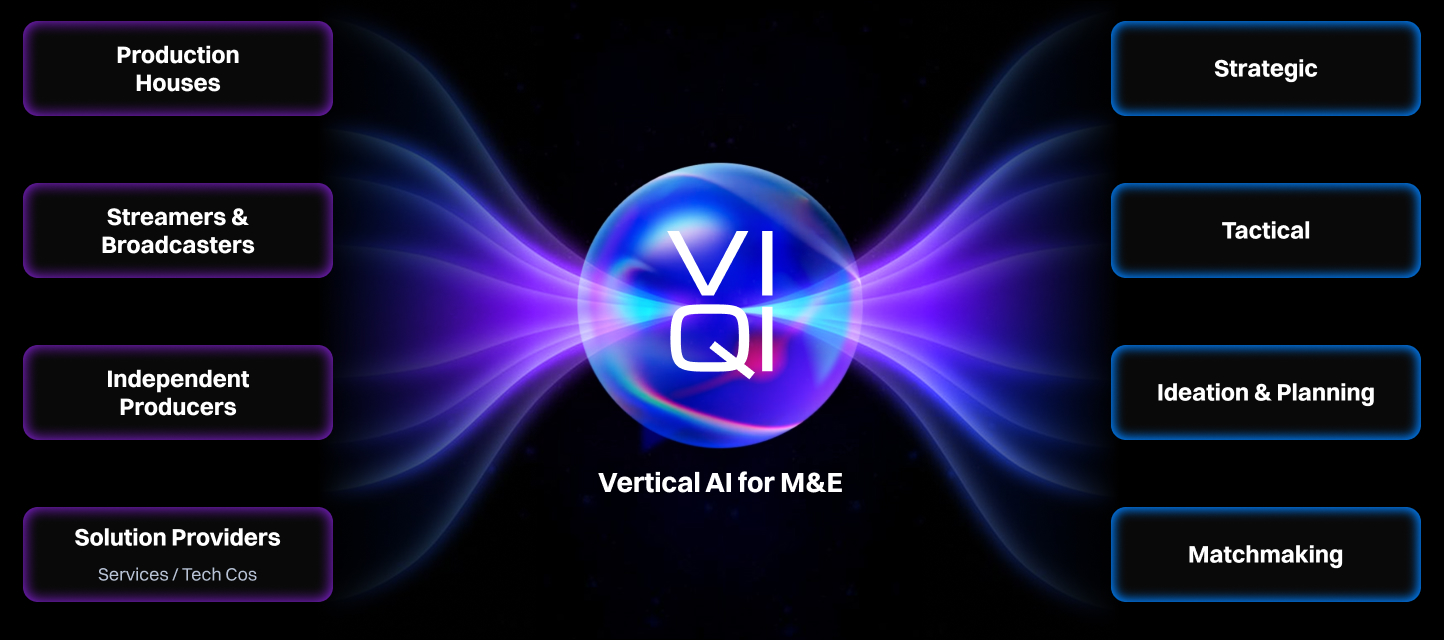
VIQI’s approach to production intelligence is built around company-level data rather than title-by-title records. The platform indexes over 400,000 M&E companies worldwide β€” studios, production companies, distributors, broadcasters, talent agencies, and service companies β€” with production activity, deal history, and market presence tracked at the organizational level. That foundation makes it possible to ask questions that title-level databases can’t answer: which companies in Southeast Asia are increasing scripted output, or which European co-production partners have worked most frequently with North American streamers over the past three years.

For global teams, VIQI’s geographic coverage across APAC, MENA, Latin America, and European markets fills the gap that North America-centric platforms create. Local-language production ecosystems are fully represented, with company profiles that include ownership structure, output history, and partnership networks. Teams using VIQI as a film production tracking platform can cross-reference their title pipeline against the companies behind each project, surfacing context that pure title databases omit. The Vitrina Vitrina blog regularly publishes intelligence-led analysis drawing on this proprietary dataset.

VIQI complements title-level tracking tools rather than replacing them. Organizations typically run both: a title database for project-specific rights research and production stage monitoring, and VIQI for the company intelligence layer. That combination covers both dimensions β€” what is being made, and who is making it at scale. For competitive intelligence, partnership development, and market analysis, the company layer is often the more valuable of the two.

Add Your Production Company to Vitrina

Get discovered by global distributors, streamers, and co-production partners actively looking for content companies in your market.

List Your Production on Vitrina β†’

Conclusion

Choosing the right film production tracking platform comes down to matching the tool to your operational reality. Teams that primarily need rights research and project-stage visibility should evaluate title-level M&E databases with strong update cadences and market-specific coverage. Teams with competitive intelligence, partnership sourcing, or market expansion mandates need the company-level dimension as well. Very few platforms serve both needs equally, which is why many sophisticated organizations run complementary tools together.

The features that separate serious platforms from basic tools are not glamorous: data freshness, geographic coverage, field depth, filter logic, and API access. Evaluating a platform on demo aesthetics alone is a reliable way to end up with a tool that looks good but doesn’t support your actual workflow. Ask for specific data samples from your priority markets, test the filter logic against real queries, and verify update frequency with a direct question rather than accepting marketing language about “real-time” data.

Global content businesses that invest in structured production intelligence consistently make faster, better-grounded decisions than those relying on manual research and trade press monitoring. That gap will only widen as production volume grows across emerging markets. The question is not whether your organization needs a production tracking capability β€” it is whether your current tools are actually built for the scale and geographic diversity of the market you’re operating in.

Frequently Asked Questions

What is a film production tracking platform?

A film production tracking platform is a data tool that indexes active, upcoming, and completed film and TV productions with structured metadata β€” genre, stage, territory, production company, talent, and rights status. The best platforms update weekly or more frequently, cover multiple global markets, and allow filtering across multiple fields simultaneously. They are used by distributors, streamers, studios, and co-production partners for deal sourcing, competitive intelligence, and market analysis. The European Audiovisual Observatory tracks over 9,000 European feature films produced per year, illustrating the scale these platforms must manage.

How does TV production tracking software differ from film tracking tools?

TV production tracking software must handle series-level data structures that film tracking tools are not designed for. Key differences include parent-child series relationships, season-level status, episode counts, renewal windows, and commissioning broadcaster attribution. A TV drama in its third series may have different production companies, rights holders, and distribution partners than it had in Series 1 β€” all of which need to be tracked. Film databases that bolt on TV content as an afterthought produce poorly structured series records that create manual cleanup work.

What is a film production database and how is it used?

A film production database is a structured repository of project-level records for films in various stages of development, production, and release. It is used by acquisitions teams to identify available content, by sales agents to understand the competitive slate, and by festival programmers to track emerging titles. Beyond project lookup, analytical use cases include slate benchmarking, genre trend analysis, and territory gap identification. The BFI tracks over 1,200 production and distribution companies in the UK market alone, showing the complexity any serious database must navigate.

Which features matter most when evaluating a production tracking platform?

The five features that matter most are: data freshness (weekly or faster updates), geographic coverage (genuine multi-market including APAC and MENA), field depth per record, filter and search logic (multi-faceted Boolean filtering with saved alerts), and API access for integration into internal workflows. Update frequency is particularly critical β€” platforms that refresh quarterly are functionally obsolete for deal-making purposes. Always request sample data from your specific priority markets before committing to any platform.

Can generic business databases replace M&E-specific tracking platforms?

No. Generic business databases like ZoomInfo or Dun & Bradstreet were built for B2B sales prospecting and lack the field structures required for M&E production intelligence. They don’t track production stage, rights status, genre, format, broadcaster, or co-production relationships. Using a generic business database for film or TV production research creates significant manual overhead because analysts must reformat data that was never designed for M&E workflows. Purpose-built entertainment industry platforms are not optional for serious content businesses β€” they are foundational infrastructure.

How do global content teams use production tracking for competitive intelligence?

Global content teams use production tracking to monitor competitor slate direction, identify content gaps in specific genres or territories, and spot talent relationships before they become public deals. PwC projects global streaming revenue exceeding $160 billion by 2027, making this intelligence increasingly consequential for greenlight and acquisition decisions. The most sophisticated teams combine title-level tracking with company-level profiling β€” title data shows what is being made, company data explains who is making it and with what strategic trajectory over multiple quarters.

What makes VIQI different from other film production tracking platforms?

VIQI’s primary differentiation is its company-level data structure. Rather than organizing intelligence around individual titles, VIQI indexes over 400,000 M&E companies worldwide β€” including production companies, distributors, broadcasters, and talent agencies β€” with production activity, deal history, and partnership networks tracked at the organizational level. This makes VIQI particularly strong for competitive intelligence, partnership sourcing, and market analysis across global markets including APAC, MENA, and Latin America. It is most effectively used alongside a title-level database to provide the full production intelligence picture.

See VIQI in Action

Schedule a demo and explore how VIQI’s company-level production intelligence can support your acquisition, partnership, and market analysis workflows.

Get a VIQI Demo β†’

About the Author

Vitrina Research Team

The Vitrina Research Team produces intelligence-led analysis on media and entertainment industry structure, deal activity, and market trends. Our research draws on VIQI’s proprietary dataset of 400,000+ M&E companies worldwide.