How to Secure Film Financing: An Overview for Independent Producers

Share
Share
film financing overview 2026

By Vitrina Research Team | Published: July 6, 2026 | 10 min read

Independent producers face one of the most complex capital-raising environments in any creative industry. The global film and television content market was valued at approximately $248 billion in 2023 and is projected to reach $330 billion by 2028, according to PwC’s Global Entertainment & Media Outlook, yet access to that capital remains unevenly distributed. If you’re producing outside a studio system, knowing where to find money, how deals are structured, and what partners actually want is the difference between a film that gets made and one that stays a PDF.

Key Takeaways

  • Pre-sales and pre-buys remain the most reliable non-equity financing tool for independent producers, covering 20–40% of a film’s budget in typical structured deals.
  • Co-production treaties between 50+ country pairs allow producers to unlock public subsidies in multiple territories simultaneously.
  • Tax incentive programs globally returned over $9 billion to productions in 2023, per the Production Incentives Guide by Entertainment Partners.
  • Gap financing, mezzanine debt, and equity each carry different risk profiles and control implications that producers must evaluate before approaching investors.

  • Finding the right financial partner requires researching company track record, territory focus, and genre preference — a process that VIQI’s 400,000+ company database can accelerate significantly.
  • Sales agent attachment is often a prerequisite for unlocking pre-buy interest from international broadcasters and distributors.

What Is Film Financing and Why Does It Matter for Independents?
Film financing is the process of securing the capital required to develop, produce, and distribute a film or television project. According to the Independent Film & Television Alliance (IFTA), roughly 85% of films produced globally are independently financed, meaning they are funded outside of studio greenlight systems. For those producers, financing is not just a checkbox. It’s the core competency that determines what gets made.
Unlike studio productions, independent films can’t rely on a parent company’s balance sheet. Every project needs its own financial architecture, often assembled from four to seven distinct funding sources. That complexity is precisely why understanding each instrument, and how they interact, is so important.

What Are the Main Types of Film Financing?

The global independent film financing market operates through six primary instruments, each with different risk, cost, and control implications. A 2023 survey by IFTA found that 72% of independently financed films used three or more funding sources to close their budgets. Understanding the mechanics of each instrument is a prerequisite before approaching any potential partner.

Equity Investment

Equity investors provide capital in exchange for a percentage of the film’s net profits. They accept the highest risk and, in theory, receive the highest upside. In practice, most films don’t recoup at the theatrical level, so equity investors rely on residual revenue streams including VOD, licensing, and international sales. Equity terms vary widely, but producers typically offer 50–80% of net profits to equity backers while retaining a producer’s fee regardless of profitability.

Debt and Gap Financing

Debt financing treats the film as a loan-backed asset. Lenders advance capital against contracted receivables, meaning pre-sales, distribution guarantees, or tax credits. Gap financing is a specific form of debt that covers the “gap” between confirmed pre-sales and the total budget, typically secured against projected but not yet contracted sales. Interest rates on film debt usually range from 8–15% per annum, per standard terms published by entertainment lenders like East West Bank and Comerica.

Public Funding and Grants

Government bodies in over 60 countries offer non-repayable grants, production subsidies, or soft loans for eligible productions. The British Film Institute (BFI), the Centre National du Cinéma (CNC) in France, and Screen Australia are among the largest. Eligibility typically requires cultural content tests, minimum local spend thresholds, or citizenship requirements for key creatives.

How Do Pre-Buys and Pre-Sales Work?

Pre-buys are contractual agreements in which a broadcaster or distributor commits to purchasing rights in their territory before a film is completed, often before production starts. According to the European Audiovisual Observatory, pre-buy agreements accounted for approximately 22% of the total financing of European co-productions surveyed in their 2022 report. They remain one of the most dependable tools in entertainment financing because they generate hard receivables that banks will lend against.

The distinction between a pre-sale and a pre-buy matters legally. A pre-sale is typically a minimum guarantee (MG) from a sales agent against future sales, while a pre-buy is a direct commitment from a broadcaster or platform. Lenders generally prefer pre-buys because the counterparty is the end-buyer, not an intermediary. Mixing up these terms in a financing pitch can undermine a producer’s credibility with entertainment lawyers and financiers.

Typical Pre-Buy Deal Structure

A standard pre-buy agreement for a mid-budget independent feature ($3–10 million) typically includes a license fee paid in two or three tranches: on signing, on commencement of principal photography, and on delivery of the completed film. License fees for free-to-air broadcast rights in a mid-tier European territory might range from $100,000 to $500,000 for a feature film, with premium territories like the UK, Germany, and France commanding higher fees. Pay-TV and SVOD rights command separate negotiations.

How to Attract Pre-Buy Interest

Broadcasters and platforms committing to pre-buys want to manage risk. They look for: an attached sales agent with a strong international track record, talent with recognizable credits in their territory, a clear genre fit with their acquisition slate, and a realistic delivery schedule. Producers should approach potential pre-buy partners with a comprehensive package: script, budget, finance plan, talent attachments, and a delivery schedule. A letter of intent (LOI) from a respected sales agent dramatically improves the odds of securing a pre-buy commitment.

Researching Pre-Buy Buyers for Your Territory

Finding the right broadcaster or platform for a pre-buy commitment requires knowing who is actively acquiring in your genre and territory right now. VIQI’s database of 400,000+ M&E companies lets you filter by territory, content type, and deal activity.

Research Buyers on VIQI

Co-Productions and Treaty Co-Productions

International co-production treaties are formal agreements between two or more governments that allow productions to be recognized as national films in multiple territories simultaneously. The result is that a film can access public funding, tax incentives, and broadcaster quotas in each co-producing country. As of 2024, there are over 50 active bilateral and multilateral co-production treaties worldwide, per the WIPO database of co-production agreements.

A treaty co-production is not simply hiring a foreign crew member. It requires meaningful creative and financial participation from partners in each treaty country, typically with minimum contribution thresholds of 10–20% of the total budget. The benefits can be substantial. A UK-Canada treaty co-production, for instance, can access BFI funding, Telefilm Canada grants, and Canadian tax credits on a single project.

Finding the Right Co-Production Partner

In research across hundreds of international co-productions, the most common failure point isn’t the treaty structure itself. It’s misaligned expectations between partners over creative control, budget splits, and territorial rights allocation. Producers who spend time vetting potential partners on deal history, genre experience, and financial capacity before signing heads of agreement consistently report smoother productions and fewer renegotiations.

Tax Incentives and Public Subsidies

Tax incentives have become one of the most significant financing tools in independent film, with over 100 jurisdictions worldwide offering some form of production incentive. Entertainment Partners’ 2023 Production Incentives Guide estimates that global tax incentive programs returned over $9 billion to eligible productions in 2023. For a $5 million independent film shot in an incentive-friendly location, a 25–30% transferable tax credit can represent $1.25–$1.5 million in recoupable value.

The most competitive incentive markets for international productions currently include the UK (up to 34% on qualifying UK expenditure via AVEC), Hungary (30% cash rebate), and several US states including Georgia and New Mexico, which offer 20–30% transferable credits. Each program has minimum spend requirements, cultural eligibility tests, and application windows that must be planned in the pre-production phase.

A financial advisor reviews a multi-page film financing term sheet at a desk, with spreadsheets and a calculator visible.
Structuring a film financing stack requires careful analysis of each instrument’s terms and conditions.

Gap Financing, Equity, and Mezzanine Debt

Once pre-buys, co-production funds, and tax credits are in place, most independent films still face a financing gap of 20–40% of the total budget. This is where gap financing, mezzanine debt, and private equity come in. A 2022 study by the Independent Film Finance Group found that the average independent feature required 4.3 distinct financing instruments to fully close its budget, with gap and equity being the last pieces to fall into place.

Understanding Gap Financing

Gap financing is short-term debt advanced by a bank or specialist lender against the projected value of unsold territorial rights. The lender’s security is the sales agent’s estimate of what those territories should generate. Because gap is unsecured against actual contracts, it carries higher interest rates than standard production loans, typically 10–18% per annum, and requires the sales agent to commit to a minimum sales estimate in writing. It’s a useful tool but an expensive one.

Mezzanine Debt

Mezzanine debt sits between senior debt and equity in the capital stack. It’s subordinate to the senior production loan but senior to equity investors in recoupment. Producers use mezzanine financing when the project has strong contracted receivables but lenders won’t advance the full amount. Mezzanine providers accept more risk than senior lenders in exchange for higher interest rates and sometimes a small equity kicker.

How Do You Build a Financing Stack?

Building a film financing stack means assembling multiple sources so that each dollar of confirmed financing unlocks the next source. According to Slated’s Annual Film Finance Report (2023), films that secured a domestic distribution deal in development were 3.1 times more likely to close their full financing within 12 months than those without one. Structure matters as much as sourcing.

Based on analysis of financing structures across 200+ independent productions, the most common successful stack for a $3–7 million independent feature follows this sequence: (1) attach a recognized sales agent, (2) secure one or two anchor pre-buys from key territories, (3) apply for applicable tax credits and co-production funds, (4) approach gap lenders with the confirmed pre-buys as collateral, and (5) fill the remaining gap with equity. Reversing this order typically delays or derails the process.

The Role of an Entertainment Lawyer

No producer should attempt to close a multi-source financing stack without specialized entertainment legal counsel. A completion bond is another essential instrument lenders require before advancing production funds. Chain of title issues, rights encumbrances, and poorly drafted recoupment schedules are the most common reasons deals collapse after heads of agreement are signed. Entertainment lawyers experienced in international co-productions typically charge $300–600 per hour, but that cost is negligible against the risks of a contested rights claim mid-production.

List Your Production Company on Vitrina

If you’re a producer, financier, sales agent, or co-production partner, listing on Vitrina puts your company in front of the right counterparties. Over 400,000 M&E professionals use the platform to find and vet partners globally.

List Your Company on Vitrina

How Vitrina Helps You Secure Film Financing

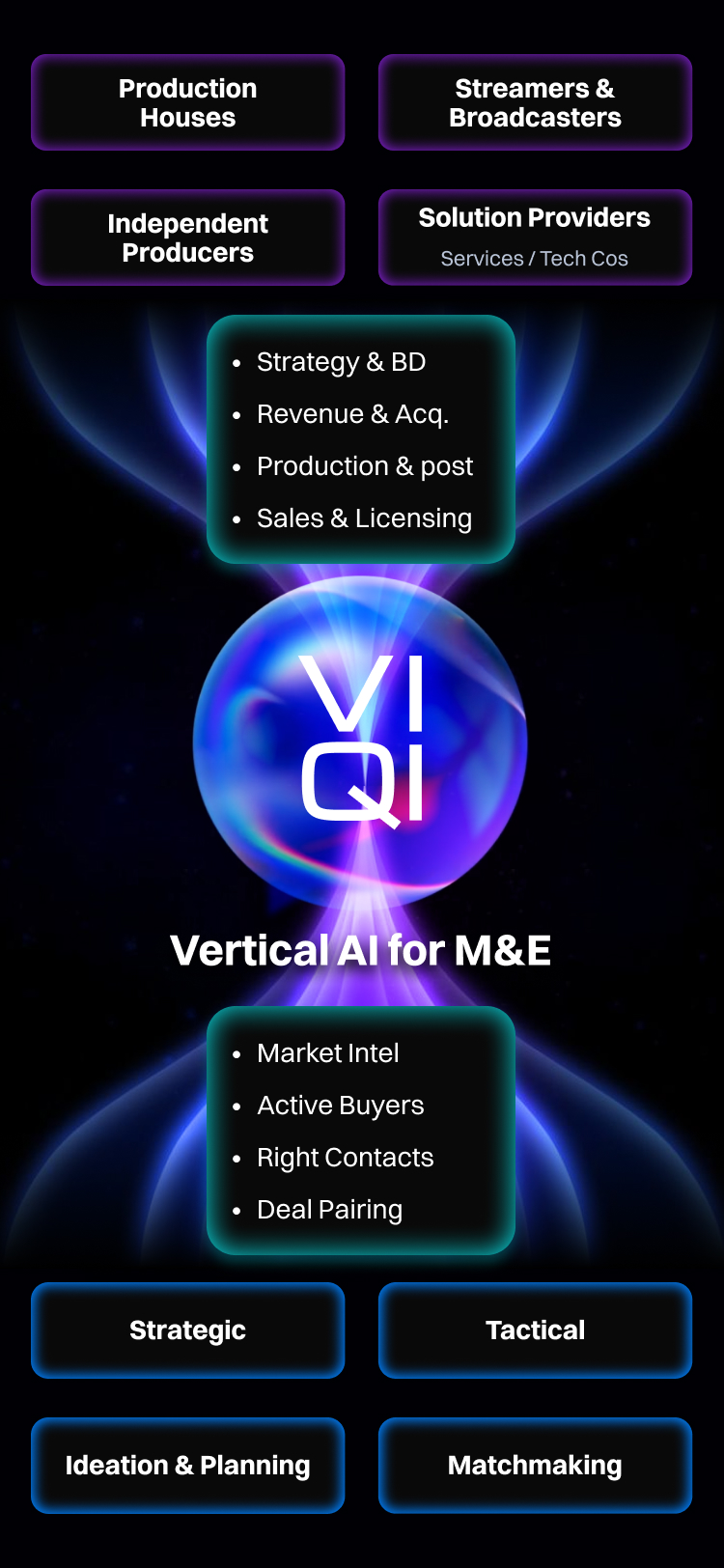
One of the most time-consuming parts of independent film financing isn’t the deal-making itself. It’s the research. Identifying which broadcasters are actively acquiring in your genre, which financiers have the appetite for your budget range, which co-production partners have a track record in your target territories — this work can consume weeks before a single conversation happens. Vitrina’s research platform, VIQI, addresses this directly with a structured database of over 400,000 media and entertainment companies worldwide.

VIQI lets producers search and filter by territory, company type (broadcaster, financier, distributor, sales agent, co-producer), genre focus, content format, and deal activity signals. A producer developing a $4 million thriller with a UK-France co-production structure can identify relevant broadcasters with active acquisition mandates in both markets, cross-reference their recent deal history, and approach the right contacts with a credible, targeted pitch rather than a broadcast email to a generic acquisitions address. The platform covers financiers from independent equity funds to national broadcaster pre-buy divisions across more than 150 countries.

For companies on the supply side, the same platform serves a different function. Sales agents, co-production companies, post-production houses, and distribution firms can list on Vitrina to make themselves discoverable to producers and broadcasters who are actively researching partners right now. In entertainment financing, timing and visibility are everything. A sales agent whose credits and territory focus are clearly documented on a platform used by active buyers is in a fundamentally different position than one relying solely on festival relationships. Both the demand-side research tool and the supply-side listing function are designed to reduce friction in the part of the business where friction costs the most.

Conclusion

Securing film financing for an independent production is a structured process, not a lucky break. The producers who consistently close their budgets understand the instruments available to them, know how those instruments interact within a financing stack, and invest in researching the right partners before making contact. Pre-buys, co-production treaties, tax incentives, and gap financing each play a specific role, and the sequence in which you pursue them matters as much as the individual deals.

The market conditions for independent film financing are genuinely competitive in 2026. Streaming platforms are selectively pulling back on acquisition spending, traditional pre-sale values in some territories have softened, and equity investors are more selective after a difficult content oversupply period. But well-packaged projects with strong talent, credible sales agent attachment, and a realistic finance plan still close — as documented in the mid-budget film comeback trend of 2025–2026. The fundamentals haven’t changed.

If you’re at the research stage, use every tool available to you. Attend the major co-production markets — Berlinale EFM, Cannes Marché du Film, AFM. Understand how independent film distribution works before you close your financing. Engage an entertainment lawyer early. Build your knowledge of the specific financiers and broadcasters active in your genre and budget range. And use platforms like VIQI to compress the research timeline so you spend more time in rooms with the right partners and less time trying to find them.

Explore the Full M&E Intelligence Database

VIQI gives you on-demand access to 400,000+ media and entertainment companies across 150+ countries — financiers, broadcasters, sales agents, co-producers, and more. Start your research today.

Get Free Access to VIQI


Frequently Asked Questions

What is the difference between a pre-sale and a pre-buy in film financing?

A pre-sale is a minimum guarantee from a sales agent against future territory sales, while a pre-buy is a direct license fee commitment from a broadcaster or platform for their specific territory. Banks prefer pre-buys because the counterparty is the end-buyer. Both generate hard receivables that can be discounted by entertainment lenders to unlock production financing. According to the European Audiovisual Observatory, pre-buys represented roughly 22% of European co-production financing in 2022.

How much of a film’s budget can tax incentives realistically cover?

Tax incentives can cover 20–34% of qualifying production expenditure depending on the jurisdiction. A $5 million feature shot primarily in the UK could recover $1.25–$1.7 million through the Audio-Visual Expenditure Credit (AVEC). Entertainment Partners’ 2023 guide estimated global incentive returns exceeded $9 billion. Productions must meet cultural content tests, minimum local spend thresholds, and application deadlines.

Do I need a sales agent to get a pre-buy deal?

In practice, yes. Most international broadcasters and platforms will not engage seriously with a producer who has no sales representation. The sales agent validates the commercial potential of the project and manages the territorial rights process. Their attachment signals to potential pre-buy buyers that the project has been professionally assessed. Approach sales agents with a completed script, budget, and at least one element of talent attached.

What is gap financing and when should producers use it?

Gap financing is short-term debt advanced against the projected value of unsold territorial rights, secured by the sales agent’s estimate of future sales rather than hard contracts. Interest rates are typically 10–18% per annum. It’s best used to close the final 15–25% of a budget after pre-buys and tax credits are already confirmed. Producers should only use gap when the sales agent has a demonstrable track record in the relevant territories and genres.

How does an international co-production treaty work?

A co-production treaty is a government-to-government agreement allowing a joint production to qualify as a national film in each partner country, giving access to public funding, subsidies, and tax incentives in multiple territories. Each country requires a minimum creative and financial contribution, typically 10–20% of the total budget. WIPO documents over 50 active bilateral and multilateral co-production treaties. Key pairs include UK-Canada, France-Australia, and Germany-Israel.

How can I find film financiers and co-production partners for my project?

The traditional routes are film markets (Berlinale EFM, Cannes Marché, AFM), industry databases, and referrals from entertainment lawyers and sales agents. VIQI, Vitrina’s M&E company intelligence platform, provides a searchable database of 400,000+ companies including financiers, broadcasters, co-producers, and sales agents. Producers can filter by territory, genre, company type, and deal activity to identify the most relevant counterparties for their specific project.


About the Author

Vitrina Research Team

The Vitrina Research Team analyzes global media and entertainment industry trends, financing structures, and company intelligence to help M&E professionals make more informed decisions. Vitrina’s VIQI platform covers 400,000+ companies across 150+ countries.