IHUB
IHUB
 Private Briefings (Webinars)


 LeaderSpeak Podcast
  Global Entertainment Digest (Newsletter)
  Premium Lists
 Membership Benefits
 About Vitrina
 Our Story
IPR.VC is a London-based fund management company that connects institutional capital with the film and content industry. Founded in Helsinki in 2014, the firm manages Europe’s largest private film funds, deploying equity into slate deals with studios including A24, XYZ Films, MK2, and Red Bull Studios. The A24 portfolio alone has generated 9 Oscar nominations and over $100 million in box office revenue across Marty Supreme, Materialists, and Civil War.
Podcast Chapters
| Timestamp | Segment Title |
| 01:43 | The IPR.VC Business Model and Strategy |
| 06:22 | Origin Story: From New Media to Content VC |
| 12:04 | The Shift from Single Films to Slate Financing |
| 20:34 | Investment Instruments: Royalties vs. Equity |
| 41:21 | Future Outlook: IPR Lab and the 20-Year Plan |
Key Takeaways
- IP rights over production company equity: IPR.VC invests in the underlying intellectual property and revenue shares of films rather than buying stakes in production companies. Tanu-Matti compares a production company without an IP catalog to a “rock band” that’s only as valuable as its next gig. A catalog of rights generates continuous licensing, sequel, and merchandise revenue that scales independently of any single team.
- Slate financing controls the risk of single-film failure: Rather than betting on individual projects, IPR.VC co-invests in portfolios of 10-20 films alongside studios like A24. If one film underperforms, the slate absorbs it. The fund has invested in roughly 60 films across three funds using this approach.
- Two-year investor returns, not ten-year holds: Traditional tech VC locks capital for 10-13 years. IPR.VC structures deals using royalty and revenue-share instruments that begin distributing returns as early as two years after investment. This solves the liquidity problem that keeps many institutional investors away from entertainment.
- Film as a non-correlated asset class: Content investment performance doesn’t track with stock market movements. This makes it attractive to pension funds, family offices, and insurance companies looking to diversify beyond equities and real estate. IPR.VC’s fund structure is built to meet the regulatory and reporting requirements these investors need.
- The creator economy is the next fund mandate: Through IPR Lab, the firm’s internal research division, IPR.VC is studying AI-driven content creation, YouTube and TikTok studios, micro-dramas, and branded content. Their upcoming Future Content Fund will deploy a hybrid of equity and royalty investment targeting these emerging formats.
Our films like Materialists… and also Civil War… [they] have sold more than $100 million in box office and we are invested in three of them.
Sound Bites:
Sound Bites
“Four films that have sold more than $100 million in box office”.
“[Marty Supreme] is the biggest investment… of our all three funds”.
“We invest in film slates together with the great studios like A24”.
“We diversify with the genre, budget size, geographical area”.
“So far we have invested in, I think, about 60 films”.
Key Learnings
- Single-film investing is gambling; slate investing is portfolio management. The mathematical difference between backing one film and backing twenty is the difference between a casino bet and a diversified fund. IPR.VC’s entire model exists because that distinction took a decade to explain to institutional capital.
- Speed of capital return matters more than size of return for institutional adoption. Pension funds and family offices care about liquidity windows. A 3x return in two years is more attractive to these investors than a 5x return locked up for a decade, because they can redeploy the capital.
- European co-production treaties are a financing multiplier. By structuring films as international co-productions, IPR.VC accesses tax credits and subsidies across multiple jurisdictions simultaneously. This soft money stretches every euro of private capital further.
- The value of a content company sits in its catalog, not its team. Tanu-Matti’s distinction between “artisan” production (project-to-project) and “industrial” production (catalog-building) is the lens through which IPR.VC evaluates every potential partner. Companies without growing IP libraries are passed over regardless of creative reputation.
- AI and the creator economy are accelerating studio formation. IPR Lab’s research shows new studios forming around YouTube, TikTok, and micro-drama formats, often using AI to produce and scale IP. This is the investment territory of the Future Content Fund launching in 2026.
Why Partner With IPR.VC?
- Capital plus executive producer experience: IPR.VC doesn’t write a check and disappear. The team brings deal structuring, co-production navigation, and distribution strategy alongside the investment. Andrea Scarso and Tanu-Matti both sit as executive producers on funded projects.
- Relationships with A24, XYZ Films, MK2, and Red Bull Studios already in place: Partnering with IPR.VC gives projects access to co-financing and distribution networks that took a decade to build. These are not cold introductions.
- Multi-territory co-production expertise that maximizes soft money: The fund actively structures deals to access tax credits and subsidies across European jurisdictions. Producers working with IPR.VC capture financing layers they might not access independently.
- Regulated, institutional-grade fund structure: IPR.VC operates under European financial supervision with formal ESG reporting. This matters for producers who need their financing partners to pass due diligence with distributors, completion bond companies, and banks.
- Forward-looking investment thesis that includes new formats: Through the Future Content Fund, IPR.VC is already deploying into the creator economy, branded content, and live experiences. Projects outside traditional film and TV have a pathway here that doesn’t exist at most content funds.
IPR.VC: The Architects of Alternative Content Capital
IPR.VC is a London-based fund management company that connects institutional capital with the film and content industry. Founded in Helsinki in 2014, the firm manages Europe’s largest private film funds, deploying equity into slate deals with studios including A24, XYZ Films, MK2, and Red Bull Studios. The fund has invested in approximately 60 films across three funds, with the A24 portfolio alone generating 9 Oscar nominations and over $100 million in box office revenue. IPR.VC structures investments around IP rights and revenue shares rather than production company equity, targeting two-year distribution timelines for investor returns. The firm’s research arm, IPR Lab, is developing the investment thesis for a Future Content Fund focused on the creator economy, branded content, and immersive experiences.
Frequently Asked Questions
1. What is slate financing in film?
Slate financing is when an investor backs a portfolio of multiple films rather than a single project. By spreading capital across 10-20 titles with different genres, budgets, and audiences, the risk of any one film underperforming is absorbed by the portfolio. IPR.VC uses this approach in partnership with studios like A24, XYZ Films, and MK2.
2. How does IPR.VC return capital to investors faster than traditional VC?
IPR.VC structures deals using royalty and revenue-share instruments that begin generating returns as soon as a film reaches distribution, typically within two years of investment. Traditional tech venture capital funds often lock capital for 10-13 years before returning it.
3. Can pension funds and institutional investors invest in films?
Yes. IPR.VCs’ fund structure is specifically designed for institutional investors, including pension funds, family offices, and insurance companies. The fund operates under European financial regulation with formal reporting and ESG transparency, meeting the compliance requirements these investors need.

Highlights from this Episode…
More from LeaderSpeak Podcast Series…

Light Sail VR on Spatial Workflows, Studio IP, and the Role…
Emmy-winning creative director Matthew Celia shares how Light Sail VR bridges Hollywood IP with spatial media, builds automated post-production pipelines, and redefines storytelling beyond traditional screens.

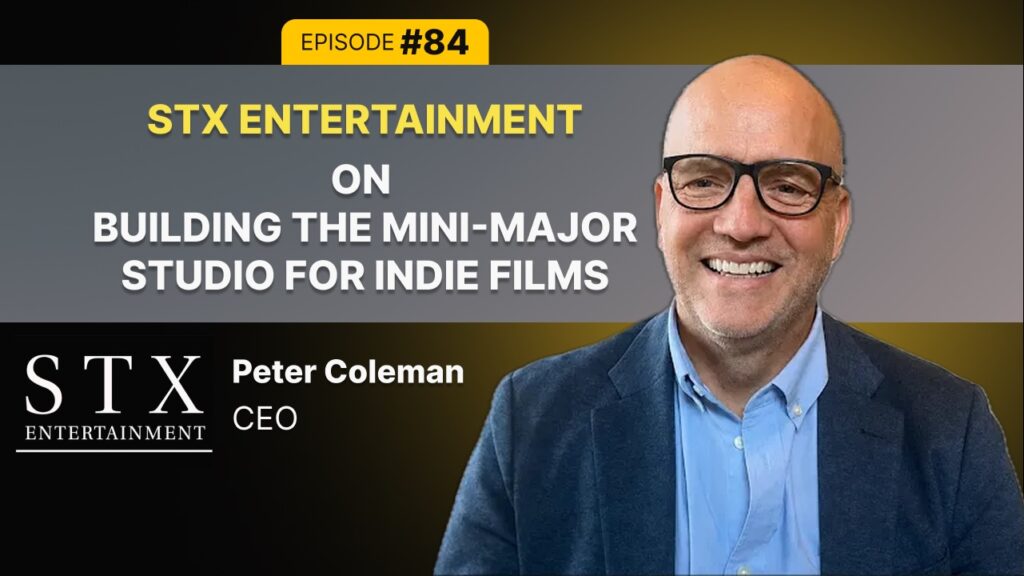
STX Entertainment CEO Peter Coleman: Building the “Min…
STX Entertainment CEO Peter Coleman breaks down how he’s rebuilding STX as an end-to-end indie studio — spanning financing, production, post, and distribution.
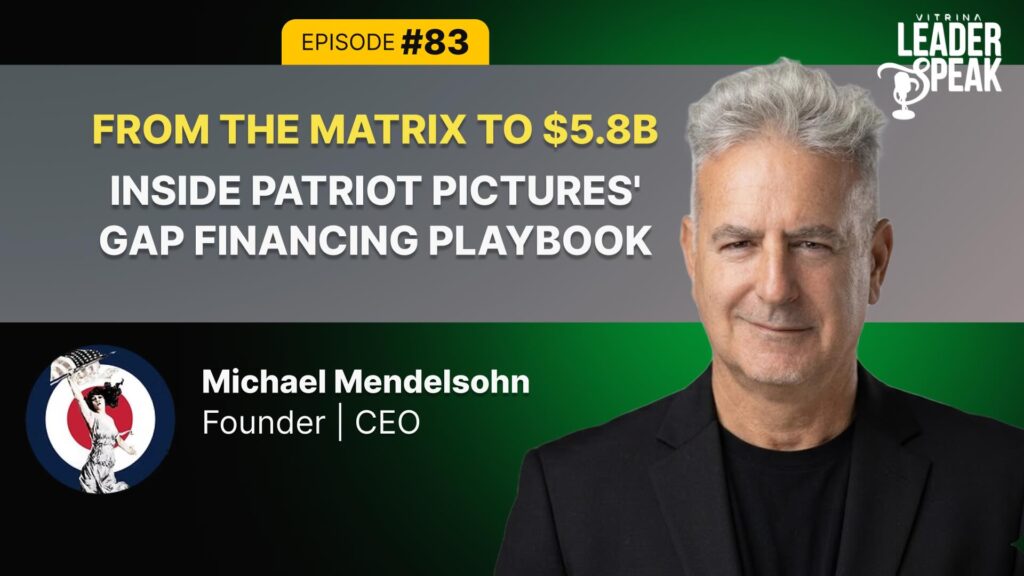
Inside Patriot Pictures’ Gap Financing Playbook
Patriot Pictures’ Michael Mendelsohn explores the business of independent film financing. He reveals strategies on gap financing against unsold territories, structuring rebates and tax incentives across 20+ jurisdictions.