About Innovation Hub
 Global Content Pulse (Webinars)


 Global Production Financing
(Webinars)
Global Production Financing
(Webinars)  LeaderSpeak Podcast
  Global Entertainment Digest (Newsletter)
  About Vitrina
 About VIQI
 Our Story
 Our Solutions 🔥
 Film+TV Projects Tracker 🚀
 Case Studies
 Our Profile

The View from the C-Suite
The Architecture of Discipline: Financing in the Post-Scale Era
The global film and television financing landscape has undergone a structural reset. Independent production is no longer just a secondary market; it is the vanguard. Small budgets are not just viable—they are preferred. These are the projects that continue to get financed in today’s market while large-scale endeavors face an unprecedented gauntlet of skepticism.
Large budgets, which once commanded attention and prestige, now face far greater scrutiny. Investor appetite for outsized risk has declined sharply. Scale alone no longer impresses. In many cases, it alarms. What matters—more than ever—is fiscal discipline. The ledger is king. The spreadsheet has teeth. Project budgeting, profit potential, and real-world viability are the primary filters investors apply today. This is not a creative judgment—it is a commercial one, and it is being applied consistently across global markets.
The End of Easy Money
For much of the past decade, vanity projects and hobby-driven productions floated on an abundance of capital and inflated expectations. Those conditions no longer exist. We are not in a bubble anymore. Capital today is cautious, deliberate, and selective. Financing structures have shifted accordingly.
Gap financing has emerged as the new equity—bold, risk-tolerant, but thin. These investors are stepping in where others hesitate, often bridging uncertainty rather than underwriting scale. Debt, meanwhile, has become increasingly complex. In high-interest-rate environments, it is expensive and unforgiving. In other markets, it is constrained by collateral requirements, guarantees, and legal friction that can slow or derail deals altogether.
A Critical Shift: Incentives and Pre-Buys
One of the most under-discussed changes of the last 18 months has been the global recalibration of tax incentives and government support. These incentives are no longer optional upside—they are foundational to financing strategies.
Whether domestic or cross-border, securing tax credits, rebates, and government sops has become critical to making projects viable. Increasingly, this requires international partnerships, co-production structures, and early strategic alignment across territories. Equally critical are pre-buys across territories—by broadcasters, streamers, and distributors—which are once again a cornerstone of risk mitigation. They provide early validation, cash flow certainty, and leverage in assembling the rest of the financing stack.
The Execution Mandate
At the end of the day, the divide is simple: Investors want returns, and commissioners want exclusive IP. But both are drawn to the same kind of producer. Not the loudest, nor the most ambitious on paper, but the one who finishes. The producer who executes, controls budgets tightly, understands trade-offs, and delivers on time and on plan.
Strategic Intelligence: Vitrina Concierge
As financing structures grow more complex and capital more selective, the challenge is no longer just raising money—it is finding the right partners. This is where Vitrina Concierge plays a critical role. By tracking projects, financiers, commissioners, incentives, and pre-buy activity across markets, we help producers find, matchmake, and connect with the partners most aligned to their specific project needs—whether that’s capital, co-production support, or early buyers.
In a world defined by discipline, precision matters. The future of film and television financing will not be driven by scale or spectacle—but by structure, strategy, and execution. That is the definitive story of media financing in 2026.


India’s Bet: AI-First Cinema at Scale
India is now the world’s most aggressive testing ground for generative AI in film production — with major studios cutting costs by 80% and timelines by 75% while Hollywood is still debating the rules.


Project Submission: Is There a Fee to Enter My Production in…

Why Pre-Buys Are Back — and Why They Matter More Than Ever

Disney’s CTV Frequency Capping Bet Splits Streaming


Branded Entertainment Without the Campaign: Inside the TikTo…
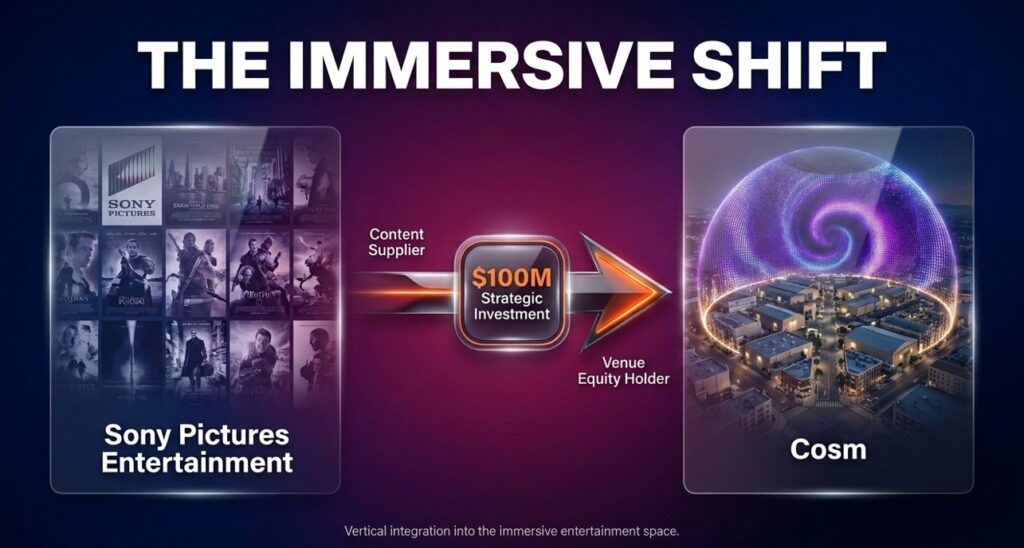
Sony Pictures Bets $100M on Cosm: The Studio That Owns Its W…