About Innovation Hub
 Global Content Pulse (Webinars)


 Global Production Financing
(Webinars)
Global Production Financing
(Webinars)  LeaderSpeak Podcast
  About Vitrina
 Our Story
 Our Solutions 🔥
 Film+TV Projects Tracker 🚀
 Case Studies
 Our Profile
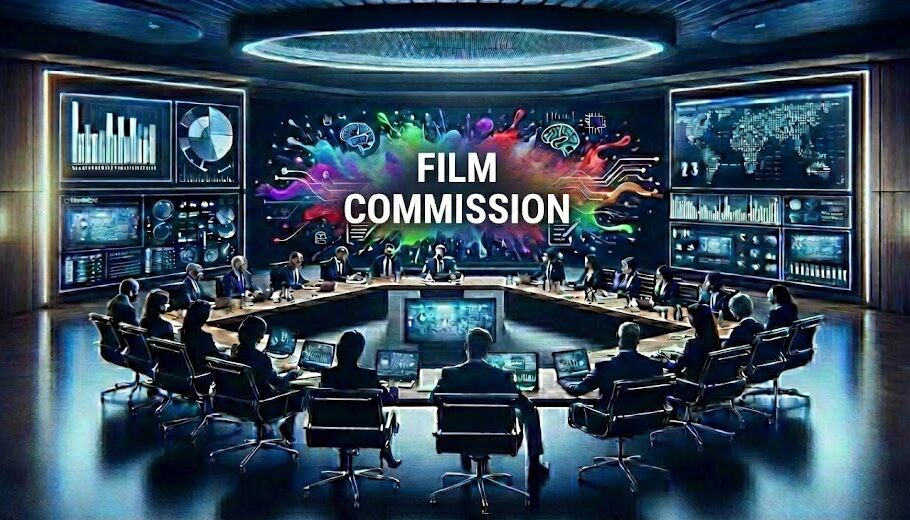
A film commission typically provides location scouting assistance, permit facilitation, financial incentive guidance, and access to local crew and vendor databases.
These entities serve as the primary bridge between the production team and local government agencies, simplifying complex regulatory landscapes.
According to industry data, productions utilizing film commission liaison services report a 30% reduction in pre-production delays related to logistics.
In this guide, you will learn how to maximize these free resources, from securing specialized tax credits to navigating multi-jurisdictional permitting.
While many producers view commissions simply as a source for location photos, modern film offices have evolved into strategic partners that manage economic development and infrastructure growth.
This article fills the gap left by generic resources by diving deep into technical permitting workflows and scale-specific service adaptations.

Your AI Assistant, Agent, and Analyst for the Business of Entertainment
VIQI AI helps you plan content acquisitions, raise production financing, and find and connect with the right partners worldwide.
- Find active co-producers and financiers for scripted projects
- Find equity and gap financing companies in North America
- Find top film financiers in Europe
- Find production houses that can co-produce or finance unscripted series
- I am looking for production partners for a YA drama set in Brazil
- I am looking for producers with proven track record in mid-budget features
- I am looking for Turkish distributors with successful international sales
- I am looking for OTT platforms actively acquiring finished series for the LATAM region
- I am seeking localization companies offer subtitling services in multiple Asian languages
- I am seeking partners in animation production for children's content
- I am seeking USA based post-production companies with sound facilities
- I am seeking VFX partners to composite background images and AI generated content
- Show me recent drama projects available for pre-buy
- Show me Japanese Anime Distributors
- Show me true-crime buyers from Asia
- Show me documentary pre-buyers
- List the top commissioners at the BBC
- List the post-production and VFX decision-makers at Netflix
- List the development leaders at Sony Pictures
- List the scripted programming heads at HBO
- Who is backing animation projects in Europe right now
- Who is Netflix’s top production partners for Sports Docs
- Who is Commissioning factual content in the NORDICS
- Who is acquiring unscripted formats for the North American market
Table of Contents
- 01What Is a Film Commission and Its Core Role?
- 02Location Scouting and Digital Library Access
- 03Navigating the Permitting and Regulatory Maze
- 04Incentive Guidance and Local Financial Benefits
- 05Local Crew and Vendor Resource Networking
- 06Tailoring Services: Indie Films vs. Studio Projects
- 07Real Success Stories: Impactful Facilitation
- 08Integrating Supply Chain Data into Sourcing
- 09Key Takeaways
- 10FAQ
- 11Moving Forward
Key Takeaways for Producers
-
Regulatory Concierge: Film commissions act as mandatory liaisons, streamlining complex city-wide permits and road closures for zero cost to the producer.
-
Incentive Navigation: They provide authoritative guidance on regional tax rebates, often requiring local spend verification that commissions help track systematically.
-
Scale-Specific Support: Services are tailored; while studios get infrastructure help, indies receive vital assistance in finding low-cost municipal locations.
-
Data Integration: Combining commission resources with global supply chain intelligence platforms like Vitrina compresses the partner discovery cycle from months to days.
What Is a Film Commission and Its Core Role?
A film commission is a specialized government-backed entity or non-profit organization established to promote a specific region as a premier filming destination. Their primary mandate is to stimulate local economic development by attracting motion picture, television, and commercial productions. By serving as a central point of contact, they simplify the entry process for outside producers who may be unfamiliar with local laws.
These offices range from city and municipal commissions to large-scale national bodies, each offering varying levels of logistical depth. While a city commission might handle specific parking permits, a national commission focuses on high-level treaties and international co-production agreements. Understanding these layers allows producers to engage the right tier of support at each stage of development.
Find global film commissions and production hubs for your project:
Location Scouting and Digital Library Access
One of the most immediate services provided is access to extensive digital location libraries. Commissions curate thousands of photographs across their jurisdiction, categorizing them by architectural style, terrain, and period. This “virtual scout” allows producers to review potential sites—from executive offices to isolated rural landscapes—before ever setting foot in the region.
Beyond just photos, commission staff offer “bespoke location presentations.” By analyzing a production’s script or location breakdown, they identify sites that meet specific creative needs while remaining logistically viable. This expertise includes knowing which locations are municipal-owned (potentially free) versus private, and which ones have enough “deep” infrastructure to support large lighting rigs and craft services.
Studio Blockbusters vs. Indie Gems: Service Adaptations
Film commission services are not “one size fits all.” For large studio projects, the focus is often on massive logistical orchestration. This includes coordinating with the Department of Transportation for city-wide road closures or securing permissions for high-impact special effects. Commissions often assign a “personal liaison” to these high-value projects to ensure that bureaucratic friction does not delay the multi-million dollar production schedule.
Conversely, for independent filmmakers, the value lies in “cost-mitigation intelligence.” Commissions help indies find student-friendly crew bases, low-cost equipment rental houses, and municipal properties that waive location fees for smaller projects. This specialized support ensures that projects with limited capital can still access professional-grade production environments.
Industry Expert Perspective: Incentive Scheme For Production Of Foreign Films In India
In this deep dive, Mr. Prithul Kumar of the Ministry of Information and Broadcasting (India) explains how centralized government initiatives act as a “super-commission” to facilitate foreign productions and co-production treaties.
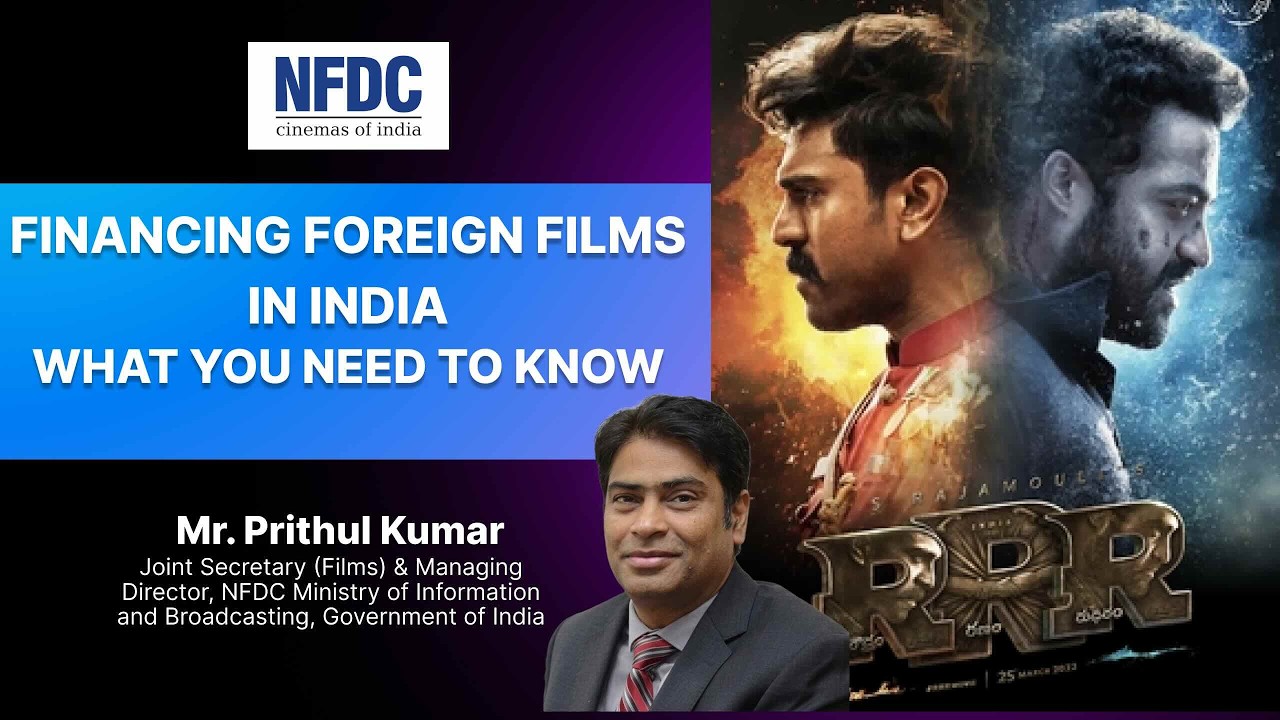
Mr. Prithul Kumar discusses how the NFDC aids international projects through co-production agreements and specific production incentives for foreign film services, including post-production and VFX. This highlights the “liaison” role of national commissions in managing bilateral treaties.
Integrating Supply Chain Data into Sourcing
While film commissions provide localized resources, high-growth producers are increasingly pairing these services with global supply chain intelligence platforms. By using tools like the Vitrina Global Projects Tracker, producers can monitor over 1.6 million titles and 140,000 companies to identify where competitors are filming and which commissions are successfully attracting similar genre content.
This data-driven approach allows for better “due diligence.” Instead of cold-calling every commission, producers use vertical AI assistants like VIQI to query: “Which regional commission has the highest track record for sci-fi episodic series in the last 24 months?” This transforms commission selection from a networking task into a strategic intelligence exercise.
Frequently Asked Questions
Quick answers to help you navigate film commission services effectively.
What is the primary difference between a film office and a film commission?
Do film commissions charge for their services?
Can a film commission help me find production funding?
How early should I contact a film commission?
Moving Forward
The shift from relationship-based networking to data-powered infrastructure has transformed the role of film commissions from passive libraries to active strategic partners. This article has filled the critical information gap by revealing how tailored services—from permitting for blockbusters to municipal fee waivers for indies—drive production velocity.
Whether you are an independent producer looking to minimize local spend, or a studio executive trying to orchestrate multi-city logistics, leveraging these free services alongside global intelligence tools is the new industry standard.
Outlook: Over the next 18 months, we expect film commissions to increasingly integrate AI-driven “matching engines” to connect global productions with local talent pools automatically.
About the Author
The Vitrina Content Team specializes in analyzing the global entertainment supply chain. With decades of collective experience in studio production and data intelligence, we provide actionable insights for M&E professionals. Connect on Vitrina.
Find Film+TV Projects, Partners, and Deals – Fast.
VIQI matches you with the right financiers, producers, streamers, and buyers – globally.
Producers Seeking Financing, Co-Pros, or Pre-Buys?
Vitrina Concierge helps producers reach the right financiers, commissioners, distributors, and co-production partners — with precision outreach, not cold pitching.
Join Industry Briefings Trusted by Leaders
Format Adaptations: Global Trends
Where formats are traveling, which adaptations are breaking out, and how streamers are backing remakes in 2025–2026.

Books, Novels & Comics Adaptations: Global Trends
Books, webtoons, and manga driving the next global screen hits. Discover how in this webinar.

Micro-Dramas & Mobile-First Storytelling
Micro-dramas are building real audiences and revenue. Understand the platforms, buyers, and economics behind the growth.

Navigating Global Content Licensing Trends
How global content licensing is shifting beyond flat fees to flexible, deal-driven models.