

 Global Content Pulse (Webinars)


 Global Production Financing
(Webinars)
Global Production Financing
(Webinars)  LeaderSpeak Podcast
  About Vitrina
 Our Story
 Our Solutions 🔥
 Film+TV Projects Tracker 🚀
 Case Studies
 Our Profile
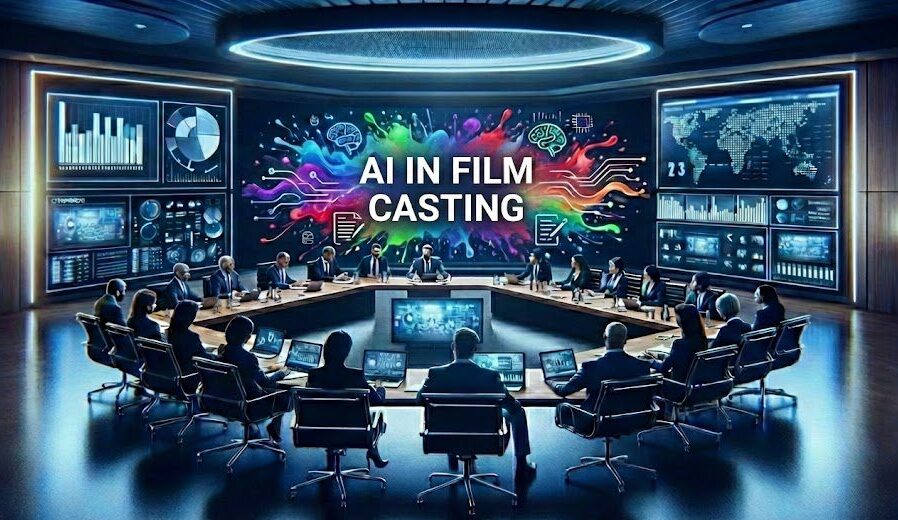
AI assists in casting decisions for films by leveraging predictive analytics to forecast box office performance, automated talent discovery to scan global databases, and emotion-based scene analysis to match actors with specific character arcs.
This technology works by processing vast datasets—including actor filmographies, social media sentiment, and historical audience engagement—to identify high-probability matches for specific roles.
According to industry reports, nearly 40% of major studio productions are now utilizing some form of data-driven intelligence to validate casting choices during the greenlighting process.
In this guide, you’ll learn the technical mechanisms behind AI casting, how to navigate the ethical dilemmas of bias, and real-world strategies to implement these tools without sacrificing creative intuition.
While traditional casting relies heavily on institutional memory and gut feeling, it often leaves studios vulnerable to fragmented data and narrow talent pools that ignore emerging global stars.
This comprehensive analysis fills the depth gaps in existing resources by exploring the “Black Box” of casting algorithms and providing actionable ethical frameworks for casting directors.

Your AI Assistant, Agent, and Analyst for the Business of Entertainment
VIQI AI helps you plan content acquisitions, raise production financing, and find and connect with the right partners worldwide.
- Find active co-producers and financiers for scripted projects
- Find equity and gap financing companies in North America
- Find top film financiers in Europe
- Find production houses that can co-produce or finance unscripted series
- I am looking for production partners for a YA drama set in Brazil
- I am looking for producers with proven track record in mid-budget features
- I am looking for Turkish distributors with successful international sales
- I am looking for OTT platforms actively acquiring finished series for the LATAM region
- I am seeking localization companies offer subtitling services in multiple Asian languages
- I am seeking partners in animation production for children's content
- I am seeking USA based post-production companies with sound facilities
- I am seeking VFX partners to composite background images and AI generated content
- Show me recent drama projects available for pre-buy
- Show me Japanese Anime Distributors
- Show me true-crime buyers from Asia
- Show me documentary pre-buyers
- List the top commissioners at the BBC
- List the post-production and VFX decision-makers at Netflix
- List the development leaders at Sony Pictures
- List the scripted programming heads at HBO
- Who is backing animation projects in Europe right now
- Who is Netflix’s top production partners for Sports Docs
- Who is Commissioning factual content in the NORDICS
- Who is acquiring unscripted formats for the North American market
Table of Contents
Key Takeaways for Casting Professionals
-
Data-Driven Talent Matching: AI identifies actors matching character emotional arcs through scene-level analysis, reducing the noise in global talent discovery.
-
Predictive Performance: Algorithmic forecasting helps studios validate actor-market fit, ensuring cast selections align with regional audience demand and financial goals.
-
Ethical Bias Mitigation: Human-in-the-loop strategies are essential to prevent AI from perpetuating historical casting biases and limited representation patterns.
-
Supply Chain Intelligence: Platforms like Vitrina AI enable casting directors to track 5M+ global professionals and project slates to identify emerging stars before they peak.
How Do AI Casting Mechanisms Actually Function?
At its core, AI for casting operates on two primary data streams: historical performance and qualitative attribute mapping. These systems use natural language processing (NLP) to ingest scripts and “understand” character archetypes, which are then compared against actor profiles containing thousands of metadata tags.
Advanced computer vision algorithms can now analyze previous film performances frame-by-frame, cataloging an actor’s range of emotional expressions and vocal tonality. This creates a “digital thumbprint” that allows machines to suggest actors who have demonstrated specific creative nuances required for a new role.
Find verified profiles for over 5 million industry professionals:
Why Is Predictive Analytics Crucial for Casting ROI?
For studio executives, casting is a high-stakes financial investment where the wrong lead can lead to millions in losses. Predictive analytics uses machine learning models to correlate an actor’s presence with specific box office outcomes across different territories and demographics.
These models account for variables such as an actor’s social media growth, previous “Star Power” indices in specific genres, and current cultural relevance. By simulating thousands of casting combinations, studios can “stress test” a project’s financial viability before committing to a massive talent fee.
Industry Expert Perspective: Emotion is Data: Vionlabs on the Future of Content Intelligence
This discussion reveals how AI processes emotional scene data—the exact technology now being applied to match actors with character emotional arcs during casting.
Key Insights
Arash Pendari discusses how AI identifies emotional patterns and audience responses, which is critical for understanding which talent “resonates” with specific story aesthetics.
Can AI Solve the “Discovery Gap” for Global Talent?
Traditional talent sourcing is often limited by a casting director’s physical network and the geographical footprint of major talent agencies. AI bridges this “discovery gap” by scanning millions of profiles across non-traditional platforms, regional theaters, and international databases.
This is where supply chain intelligence becomes transformative. By utilizing platforms like Vitrina AI, casting professionals can track unreleased projects and emerging production hubs to see which actors are gaining momentum in regional markets like India, South Korea, or Brazil before they hit the Hollywood mainstream.
Discover trending regional talent and distributors:
The Ethical Dilemmas: Can AI Perpetuate Casting Bias?
One of the most significant risks in AI-assisted casting is the “Feedback Loop of Bias.” Since machine learning models are trained on historical data, they may inadvertently prioritize the same demographics and archetypes that have dominated cinema for the past century.
If an algorithm sees that “Action Lead A” (a specific demographic) consistently yielded high ROI in the 1990s and 2000s, it may rank similar actors higher for future projects. This creates a structural barrier for diverse talent. To mitigate this, casting directors must implement “Human-in-the-Loop” validation, where AI is used to expand the initial list rather than filter the final choice.
Case Studies: The Reality of AI Implementation
Major players like Warner Bros. Discovery have pioneered the use of data intelligence to refine their global production slates. By mapping market preferences against talent availability, they’ve identified regional hubs for specific content types, such as animation hubs beyond traditional Hollywood borders.
Conversely, failures often occur when data is treated as a replacement for creative vision. In instances where “AI-preferred” casting ignored the chemistry between leads or the specific cultural nuance required for a role, audience backlash has served as a stark reminder that data can predict interest, but only humans can guarantee resonance.
Moving Forward
The integration of AI into casting is shifting the industry from a relationship-dependent art to a hybrid discipline of creativity and data science. This transformation addresses the critical gaps of discovery, ROI validation, and technical depth that have historically plagued independent and studio productions alike.
Whether you are a casting director looking to discover untapped global stars, or a studio executive trying to de-risk your next blockbuster, the key lies in using AI as an “Assistant” rather than an “Authority.”
Outlook: Over the next 18 months, expect a surge in “Certified Ethical AI” casting tools that prioritize diversity and representation through authorized data training.
Frequently Asked Questions
Quick answers to the most common queries about AI in film casting.
How does AI assist in casting decisions?
Is AI replacing casting directors?
Can AI reduce bias in casting?
What data does AI use for casting?
How can Vitrina AI help in casting?
What is the “Star Power” index in AI casting?
Are there legal issues with AI casting?
Is predictive casting only for blockbusters?
About the Author
Entertainment Supply Chain Content Architect specializing in the intersection of media-tech and production strategy. With over a decade of experience analyzing global content cycles and technology adoption. Connect on Vitrina.
Find Film+TV Projects, Partners, and Deals – Fast.
VIQI matches you with the right financiers, producers, streamers, and buyers – globally.
Not a Vitrina Member? Apply Now!
Vitrina tracks global Film & TV projects, partners, and deals—used to find vendors, financiers, commissioners, licensors, and licensees
Join Industry Briefings Trusted by Leaders

White Space Opportunities in Animation
Deep dive into animation market gaps, studios, and commissioners. Use real-world animation case studies to capitalize on emerging business trends.

Deep dive into Co-Pros
Ambitious co-productions are key to global hits, but most deals collapse. This deep-dive briefing is the strategic playbook. We’ll break down the financing models, partnership structures, and market insights behind today’s successful deals.

Film & TV Financing: Tax Credits & Incentives
A focused look at how 2025 tax credits and incentives are reshaping Film & TV financing decisions — and where the real value now sits.

Film & TV Financing: Pre-Buys
Learn how pre-buys work in current Film and TV financing, how they differ from pre-sales, and how they are used to close real finance plans.
Vitrina tracks global Film & TV projects, partners, and deals—used to find vendors, financiers, commissioners, licensors, and licensees
Not a Vitrina Member? Apply Now!