About Innovation Hub
 Global Content Pulse (Webinars)


 Global Production Financing
(Webinars)
Global Production Financing
(Webinars)  LeaderSpeak Podcast
  About Vitrina
 Our Story
 Our Solutions 🔥
 Film+TV Projects Tracker 🚀
 Case Studies
 Our Profile
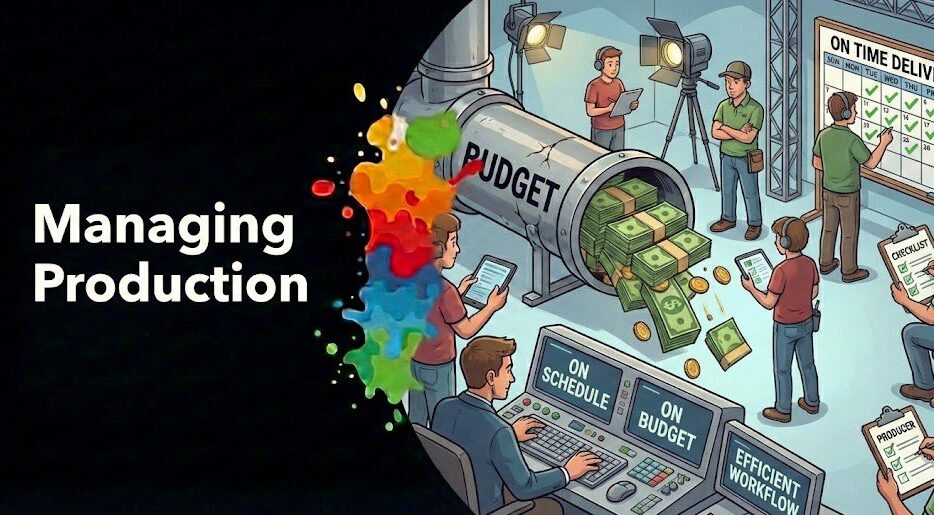
Production cost overruns are the gap between your locked budget and the actual spend required to deliver a project—often triggered by script creep, location shifts, or technical delays. To manage them, you don’t just need a 10% contingency; you need real-time financial controls, a rigid completion bond, and a data-driven approach to cash flow.
In today’s “Big Crunch” market, an unmanaged 15% overrun doesn’t just eat profit; it kills the entire waterfall for equity investors.
Look, every producer says they’re “on budget” until the daily hot costs start screaming. With the cost of capital at historic highs, the margin for error has evaporated. It’s not just about spending more; it’s about the erosion of your IRR and the potential triggering of “takeover” clauses in your completion bond.
If you aren’t tracking your variances weekly—if not daily—you aren’t managing a production; you’re just watching a slow-motion car crash.
Inside the Article:
Stop Guessing Who’s Financing. Get Targeted Outreach.
Stop searching and start getting funded. We identify the exact decision-makers currently backing projects like yours, turning raw data into risk-aligned capital partnerships.
Major Studios
Scouting early stage projects, IP, and Regional partners for global studio pipelines.
IP Owners & Leads
Connecting creative leads with qualified financiers and major streaming platforms.
Streamers
Securing high-value pre-buy content and discovering early-stage global IP for platforms.
Indie Producers
Bridging the gap for indie filmmakers to reach executive production partners and capital.
Global Financing Ecosystems
Mapping complex markets and pairing projects with disciplined, risk-aligned capital across global territories worldwide.
The Root Causes of Production Cost Overruns
Why do films go over budget? It’s rarely one big disaster; it’s usually “death by a thousand line items.” According to Phil Hunt, CEO of Head Gear Films, the industry is currently in a state of flux where the old models of padding budgets no longer hold up against aggressive lender scrutiny. When you’re managing production financing, you have to realize that the capital stack is incredibly sensitive to even a 5% shift in spend.
The real dynamic—what the trades often ignore—is that overruns frequently stem from “hope-based budgeting.” You hope the weather holds in the UK. You hope the VFX vendor won’t charge for that third revision. But hope isn’t a financial control. Common triggers we’re seeing in 2025 include:
- VFX Scope Creep: Technical specs (like post-production delivery requirements for streamers) evolving during the shoot.
- Incentive Slippage: Failing to meet “local spend” requirements for a 40% rebate, effectively increasing the net cost.
- Cast Delays: Every day an A-list actor is stuck in “force majeure” is a six-figure hit to the bottom line.
Phil Hunt explains the “Big Crunch” and why budget discipline matters now more than ever:

The Vitrina Overrun Risk Matrix™
To help producers de-risk their slates, we’ve developed The Vitrina Overrun Risk Matrix™. This framework helps you categorize potential budget threats before the first camera rolls. It’s not enough to have a general contingency; you need to allocate your “financial armor” where the hits are most likely to land.
The Vitrina Overrun Risk Matrix™
| Risk Tier | Trigger Example | Control Measure |
|---|---|---|
| Operational | Weather/Equipment failure | 10% Contingency + E&O Insurance |
| Strategic | Script rewrites in production | Strict Change Order Protocol |
| Financial | Incentive audit failure | Real-time Local Spend Tracking |
| Technical | VFX pipeline bottlenecks | Milestone-based vendor payments |
Note: Use this matrix during the greenlight phase to stress-test your capital stack. Producers looking for vetted production partners can explore 600,000+ companies on Vitrina to find providers with proven on-budget track records.
Find the Financiers Backing Your Genre
Stop searching and start getting funded. We identify the exact decision-makers currently backing projects like yours, turning raw data into risk-aligned capital partnerships.
Real-Time Controls for Line Producers
Production financial controls are the processes and software systems used to track actual spend against the budget (EFC – Estimated Final Cost) in real-time. Without these, you’re looking in the rearview mirror—identifying a problem three weeks after it’s too late to fix it.
Insider candor? Most line producers are overworked and rely on antiquated spreadsheets. But if you’re managing a $15M+ indie, you need to “weaponize” your data. This means:
- Daily Hot Costs: Your accounting team should provide a snapshot of the previous day’s labor and location spend every morning by 10 AM.
- Purchase Order Discipline: No PO, no payment. It sounds basic, but “verbal agreements” are where 40% of overruns hide.
- Waterfall Awareness: Understand that every dollar of overrun is “last in, first out.” It’s the most expensive capital you’ll ever use because it usually carries high-interest gap terms.
If you’re unsure about your vendor’s financial stability, ask VIQI for a research report on regional production service providers and their historical reliability.
The Completion Bond as a Safety Valve
Completion bonds aren’t just an “insurance policy” for the bank; they’re your final line of defense against production cost overruns. In the current market, lenders won’t touch a deal without a bond from a major player like Film Finances or European Film Bonds. (and that’s being generous—some lenders now require dual-bonding for complex VFX slates).
Here’s what actually happens when you hit the 10% overrun mark: The bonding company has the right to step in and take over production. They can fire the director, cut scenes, or change locations to ensure the film is delivered on time. It’s the “nuclear option,” but strategic players understand that the bond company’s interests are aligned with the bank’s, not necessarily the creative vision.
“The bond is there to protect the delivery, not the art. If you can’t manage the spend, someone else will—and you won’t like the results.”
Frequently Asked Questions
What is a standard contingency for an independent film?
Typically, you’ll see a 10% contingency on below-the-line (BTL) costs. However, for productions in emerging Sovereign Content Hubs™ or those with heavy VFX, smart CFOs are pushing for 12-15% to buffer against currency fluctuations and technical bottlenecks.
Does a completion bond cover all overruns?
No. The bond covers costs required to *deliver* the film according to the approved specs. It won’t cover “creative enhancements” or script changes that weren’t in the original bonded budget. Those are the producer’s responsibility.
How can I track production cost overruns in real-time?
Use cloud-based accounting platforms (like Greenslate or Cast & Crew) and ensure your line producer is updating the EFC (Estimated Final Cost) weekly. The key is catching variances before they become permanent budget holes.
How Vitrina Helps with Production Cost Overruns
Managing the “Fragmentation Paradox™” of global production means vetting partners across silos. Vitrina provides the transparency needed to de-risk your production spend before you even sign a location agreement.
- Explore our database of 600k+ companies to find on-budget production service providers.
- Ask VIQI for specific regional cost benchmarks and incentive compliance requirements.
- Contact Vitrina Concierge for hands-on support in mapping your production capital stack.
The Bottom Line
Production cost overruns aren’t an “act of God”—they’re a failure of visibility. By implementing daily hot costs, maintaining a rigid 10% contingency, and using frameworks like the Vitrina Overrun Risk Matrix™, you can protect your IRR and ensure your project reaches the finish line. If you’re navigating a complex shoot, Vitrina’s intelligence platform is your best tool for finding the partners that keep projects on track.
Find Film+TV Projects, Partners, and Deals – Fast.
VIQI matches you with the right financiers, producers, streamers, and buyers – globally.
Producers Seeking Financing, Co-Pros, or Pre-Buys?
Vitrina Concierge helps producers reach the right financiers, commissioners, distributors, and co-production partners — with precision outreach, not cold pitching.
Join Industry Briefings Trusted by Leaders

Format Adaptations: Global Trends
Where formats are traveling, which adaptations are breaking out, and how streamers are backing remakes in 2025–2026.

Books, Novels & Comics Adaptations: Global Trends
Books, webtoons, and manga driving the next global screen hits. Discover how in this webinar.

Micro-Dramas & Mobile-First Storytelling
Micro-dramas are building real audiences and revenue. Understand the platforms, buyers, and economics behind the growth.

Navigating Global Content Licensing Trends
How global content licensing is shifting beyond flat fees to flexible, deal-driven models.