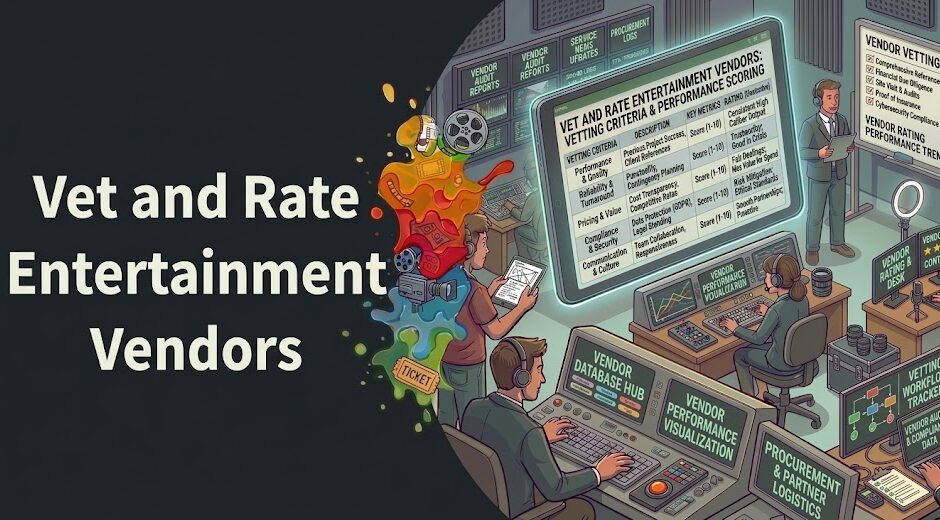
Vetting emerging market vendors is the structured process of verifying the technical capacity, financial stability, and project track record of production partners in regional hubs.
This involves moving beyond anecdotal networks to leverage structured supply chain intelligence that maps cross-border relationships and verified credentials.
According to Vitrina AI data, senior executives face a 25% margin leakage through unverified vendor capacity in opaque legacy markets.
In this guide, you will learn actionable strategies for de-risking vendor selection, including identifying sovereign content hubs, assessing Authorized AI stacks, and utilizing real-time project trackers to validate performance.
While traditional due diligence relies on manual research and word of mouth, these methods fail to capture the rapid shifts in fragmented regions like APAC, MENA, and LATAM. Executives often operate in a data deficit, leaving their slates vulnerable to hidden markups and operational failures when entering unfamiliar territories.
This comprehensive guide addresses these critical gaps by providing a data-driven framework for vendor selection, transforming the invisible supply chain into a transparent, clinical asset for your production slate.

Your AI Assistant, Agent, and Analyst for the Business of Entertainment
VIQI AI helps you plan content acquisitions, raise production financing, and find and connect with the right partners worldwide.
- Find active co-producers and financiers for scripted projects
- Find equity and gap financing companies in North America
- Find top film financiers in Europe
- Find production houses that can co-produce or finance unscripted series
- I am looking for production partners for a YA drama set in Brazil
- I am looking for producers with proven track record in mid-budget features
- I am looking for Turkish distributors with successful international sales
- I am looking for OTT platforms actively acquiring finished series for the LATAM region
- I am seeking localization companies offer subtitling services in multiple Asian languages
- I am seeking partners in animation production for children's content
- I am seeking USA based post-production companies with sound facilities
- I am seeking VFX partners to composite background images and AI generated content
- Show me recent drama projects available for pre-buy
- Show me Japanese Anime Distributors
- Show me true-crime buyers from Asia
- Show me documentary pre-buyers
- List the top commissioners at the BBC
- List the post-production and VFX decision-makers at Netflix
- List the development leaders at Sony Pictures
- List the scripted programming heads at HBO
- Who is backing animation projects in Europe right now
- Who is Netflix’s top production partners for Sports Docs
- Who is Commissioning factual content in the NORDICS
- Who is acquiring unscripted formats for the North American market
Table of Contents
Key Takeaways for Producers & Executives
-
Combatting the Data Deficit: Structured intelligence reduces vendor search time by over 90 percent, enabling clinical partner selection in opaque regional markets.
-
EBITDA Protection: Vetting verified capacity eliminates the 15 to 20 percent legacy markup lost to unverified vendor intermediaries in emerging hubs.
-
Authorized IP Safety: De-risking includes verifying Authorized AI stacks, ensuring chain of title is airtight for weaponized distribution phases.
What is the Invisible Supply Chain in Emerging Markets?
The invisible supply chain refers to the vast network of over 600,000 media and entertainment companies whose operational data is siloed within regional networks rather than global databases. In emerging markets, this fragmentation creates a paradox: while production capacity is massive, it remains opaque to international buyers.
Sovereign content hubs in Saudi Arabia, India, and Brazil are rapidly scaling, yet their Netflix approved security audits or 8K HDR delivery capacity are rarely listed on static directories like IMDb. This lack of visibility forces executives to rely on anecdotal recommendations, which often fail to scale or meet rigorous global standards.
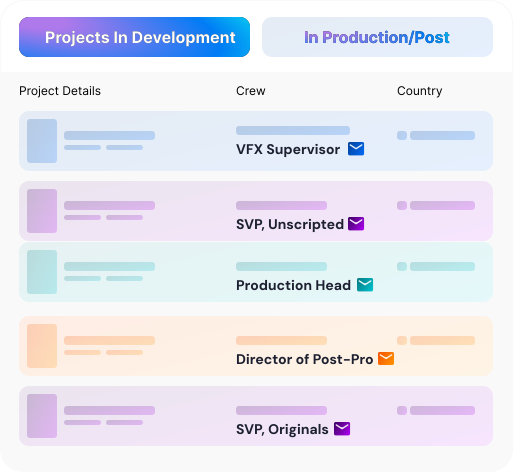
Identify regional vendors with verified capacity:
How to Vet Emerging Market Vendors Effectively?
Effective vetting requires a transition from price focused selection to a data driven Capacity Verification model. Producers must evaluate vendors based on three clinical pillars: historical deal metadata, collaborator networks, and verified infrastructure audits.
By qualified vetting, executives can identify partners who have already successfully delivered projects for major streamers or studios in the target region. This reduces the risk of operational friction and ensures that the technical standards of the project remain consistent with global distribution requirements.
Map regional incentives for hybrid workflows:
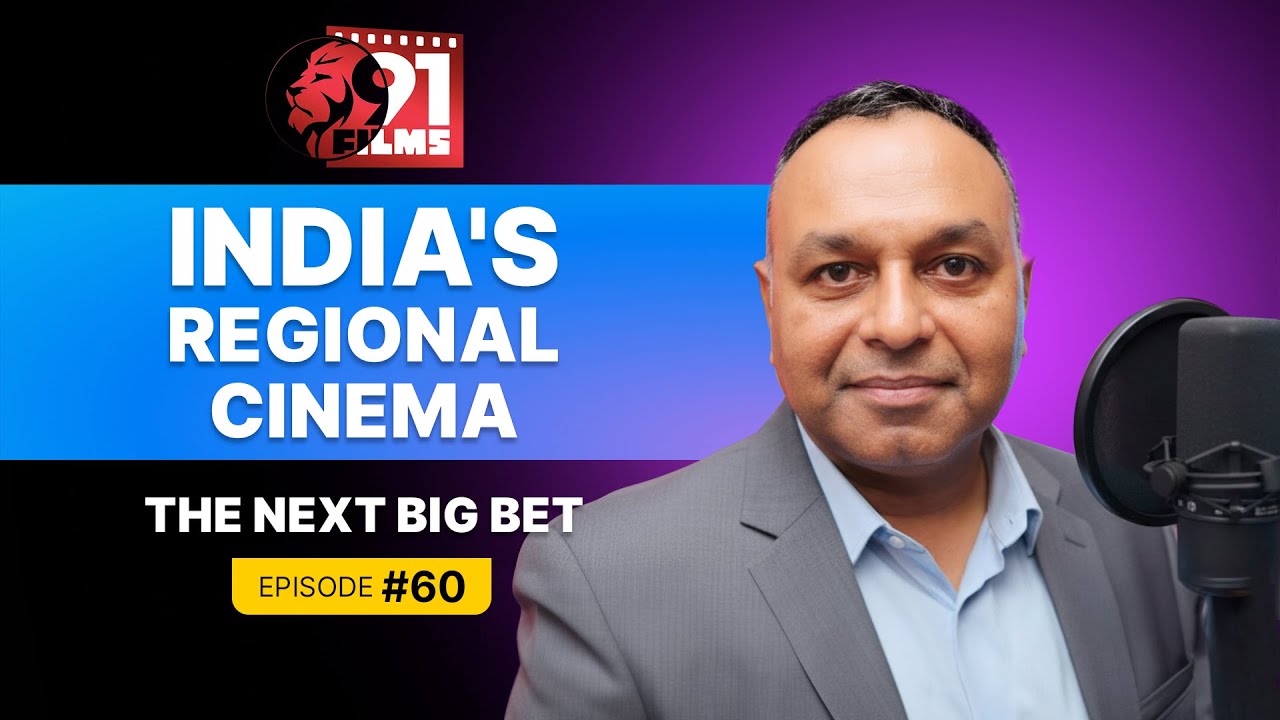
Industry Expert Perspective: Unpacking Regional Cinema Markets
Naveen Chandra, CEO of 91 Film Studios, provides a deep dive into the immense but often misunderstood potential of regional markets like India.
Why Traditional Due Diligence Fails in Regional Hubs?
The legacy approach to vendor selection relies on unverified personal networks and outdated lists. In regional hubs, these networks often prioritize gatekeepers rather than the actual technical vendors.
This data deficit results in reputation fixation, where buyers overpay for western firms with regional storefronts while ignoring highly capable local studios. Using a centralized platform to verify local infrastructure audits ensures that you are contracting with the primary capacity holder.
Qualify vendors based on deal history and reputation scores:
Moving Forward
The entertainment supply chain has shifted from an opaque art to a data driven science. Producers who continue to rely on manual, relationship driven vetting will face increasing margin leakage and operational risk in a hyper competitive, borderless market.
Outlook: Over the next 18 months, platform fragmentation will accelerate, making real-time project tracking and Authorized AI validation non negotiable for project recoupment.
Frequently Asked Questions
How to verify technical capacity in emerging markets?
Technical capacity is verified by mapping historical deal metadata and delivery logs against global streamer standards like Netflix or Disney audits.
What are sovereign content hubs?
These are state backed regional production centers, such as Saudi Arabia or Jordan, that offer significant rebates and infrastructure to attract global slates.
How to avoid the legacy markup?
Avoid markups by identifying the primary vendor through a centralized supply chain platform rather than going through unverified regional middlemen.
What is the data trust deficit?
It is the gap between a company’s claimed capacity and its verifiable project history, often caused by siloed regional data.
How to track real-time project status?
Real time tracking is achieved by monitoring executive movements, financing rounds, and principal photography starts through an integrated industry database.
Why are anecdotal networks risky?
Anecdotal networks are subjective and often based on outdated experiences, failing to reflect current vendor capacity or financial stability.
How does Vitrina map relationships?
Vitrina maps 30 million cross border relationships between companies, projects, and executives to verify the legitimacy of potential partners.
What is the benefit of vertical AI?
Vertical AI is trained exclusively on industry data, providing contextually accurate answers for supply chain queries that generic AI cannot handle.
How to de-risk co-productions?
De risk co-productions by qualifying partners based on their successful completion of similar genre projects and verified financial standing.
What is reputation fixation?
It is the tendency to choose vendors based solely on a well known name rather than objective technical capacity or regional cost efficiency.
“In regions where transparency is scarce, manual selection focuses narrowly on price, ignoring strategic alignment. Shifting to a tech-enabled, continuous vetting model allows businesses to build more resilient, accountable, and trustworthy supply chains.”
About the Author
Content strategist at Vitrina AI, specializing in entertainment supply chain intelligence. Leveraging years of experience in content acquisition and data mapping to bridge the data deficit for global media and entertainment leaders.
Find Film+TV Projects, Partners, and Deals – Fast.
VIQI matches you with the right financiers, producers, streamers, and buyers – globally.
Producers Seeking Financing, Co-Pros, or Pre-Buys?
Vitrina Concierge helps producers reach the right financiers, commissioners, distributors, and co-production partners — with precision outreach, not cold pitching.
Join Industry Briefings Trusted by Leaders

Format Adaptations: Global Trends
Where formats are traveling, which adaptations are breaking out, and how streamers are backing remakes in 2025–2026.

Books, Novels & Comics Adaptations: Global Trends
Books, webtoons, and manga driving the next global screen hits. Discover how in this webinar.

Micro-Dramas & Mobile-First Storytelling
Micro-dramas are building real audiences and revenue. Understand the platforms, buyers, and economics behind the growth.

Navigating Global Content Licensing Trends
How global content licensing is shifting beyond flat fees to flexible, deal-driven models.