About Innovation Hub
 Global Content Pulse (Webinars)


 Global Production Financing
(Webinars)
Global Production Financing
(Webinars)  LeaderSpeak Podcast
  About Vitrina
 Our Story
 Our Solutions 🔥
 Film+TV Projects Tracker 🚀
 Case Studies
 Our Profile
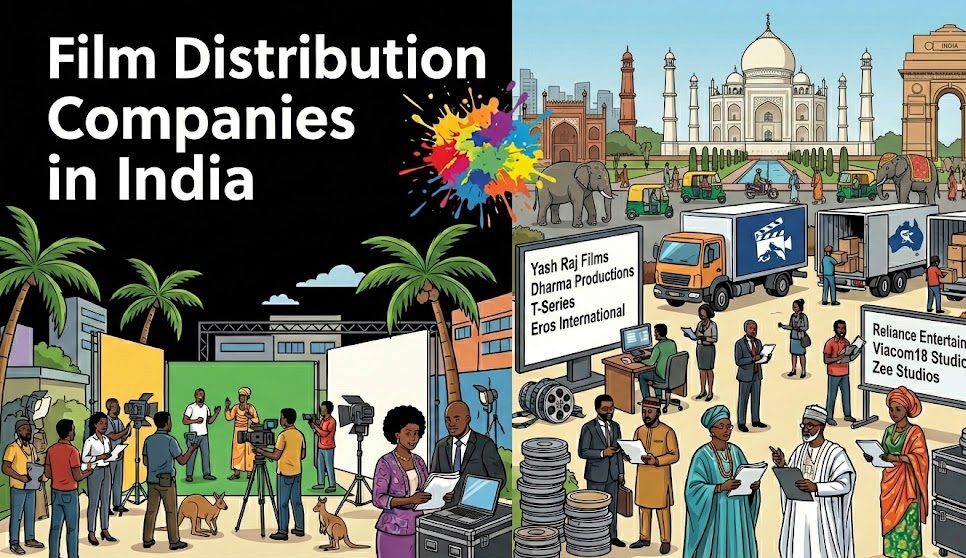
India is the world’s largest film industry by output. More than 1,500 films released annually across a dozen language markets, a theatrical infrastructure spanning 9,500+ screens nationwide, and a streaming ecosystem where Netflix, Amazon Prime Video, Disney+ Hotstar, JioCinema, Zee5, and SonyLIV are all competing aggressively for original content.
The opportunity is genuinely enormous. But so is the complexity — and most international producers walk into India’s distribution market with frameworks built for single-market territories that simply don’t apply here.
Here’s what you need to understand before anything else: India isn’t one film market. It’s six to eight distinct language markets — each with its own studios, distributors, exhibitor chains, streaming platform relationships, and audience expectations. A distribution strategy that works brilliantly for a Hindi-language theatrical release in North India can be entirely irrelevant for a Tamil production targeting South Indian multiplexes.
The Fragmentation Paradox™ that complicates every global supply chain decision hits India with particular force — 600,000+ companies operating in opacity, multiplied across regional markets that most outsiders treat as a single category.
This guide gives you a step-by-step framework for selecting the right film distribution company in India — from mapping the market’s genuine complexity to evaluating distributor track records, structuring financial terms, navigating CBFC certification, and positioning your film for both domestic theatrical and streaming success. Whether you’re an international producer entering India for the first time or a regional Indian producer seeking wider national reach, the selection criteria that matter are not the ones most guides cover.
Table of Contents
- Why India’s Film Distribution Market Is Unlike Any Other
- Step 1: Map India’s Multiple Distribution Markets
- Step 2: Define Your Distribution Model — Theatrical, OTT, or Hybrid
- Step 3: Evaluate Distributor Track Record and Screen Access
- Step 4: Understand the Financial Structure — MG, Revenue Share, P&A
- Step 5: Navigate CBFC Certification and Regulatory Requirements
- Step 6: Assess OTT Platform Relationships and Streaming Windows
- Step 7: Build for the Diaspora — International Distribution from India
- How Vitrina Accelerates Your India Distribution Strategy
- Frequently Asked Questions
- Conclusion
Ask VIQI: Which Indian Distributors Are Actively Acquiring Your Genre Right Now?
VIQI is Vitrina’s AI intelligence engine — trained on 1.6 million titles, 360,000 companies, and 5 million entertainment professionals. Get verified acquisition intelligence on India’s theatrical and streaming distribution landscape before your first meeting.
✓ Included with 200 free credits | ✓ No credit card needed
Why India’s Film Distribution Market Is Unlike Any Other
The number that most producers cite first — India’s 1.4 billion population — is also the number that most misleads them. Population is not a monolithic market. India’s film audience is segmented by language, region, multiplex access, disposable income, and streaming platform preference in ways that make a simple “India strategy” a category error from the start. The country produces more films annually than any other market on earth — and most of them are not Bollywood Hindi productions. They’re Tamil, Telugu, Malayalam, Kannada, Bengali, Marathi, and Punjabi productions that live and die on regional theatrical circuits with distribution dynamics entirely separate from the Hindi belt.
Let’s put this in financial terms. India’s total theatrical box office reached approximately $1.7–1.8 billion in 2024, recovering strongly from COVID-era disruption. But that revenue is distributed across language markets in ways that surprise outsiders. The Telugu film industry — Tollywood — delivered some of India’s highest-grossing films of the past three years, including franchises that crossed ₹1,000 crore ($120M+) in domestic gross. RRR, a Telugu film by director S.S. Rajamouli, became an Oscar-nominated global phenomenon with a production budget around ₹550 crore and a worldwide gross exceeding ₹1,200 crore. The KGF franchise, a Kannada-language action epic, crossed ₹1,200 crore in its second installment. These are not Hindi films. They’re regional productions that distributed nationally and internationally through carefully selected distribution partnerships — and the distributor selection decisions were central to their commercial success.
What this means for you: the right distributor for India is rarely the most famous name you can find. It’s the partner whose specific relationships — with exhibitors in the territories that matter most for your film, with the OTT platforms whose subscribers match your audience, and with the dubbing and localization infrastructure to cross language barriers — align with your film’s actual commercial potential. That alignment requires intelligence. As we covered in our deep dive on India’s regional film markets, the strategies that win in South India are structurally different from those that work in North India — and treating them as interchangeable costs money.
Naveen Chandra (CEO & Founder, 91 Film Studios) breaks down the business dynamics and often-misunderstood potential of India’s regional cinema markets:
Step 1: Map India’s Multiple Distribution Markets — Before You Approach Anyone
The first mistake international producers make is approaching “a distributor in India” without first defining which India. Start by identifying your film’s primary language market and its secondary crossover potential. This single decision shapes every subsequent choice in your distribution strategy.
Hindi (Bollywood) — North and Central India: The largest single-language theatrical market, with Mumbai as its production and distribution center. National-release distributors like Yash Raj Films, T-Series Films, and Excel Entertainment operate primarily in this corridor. PAN-India theatrical reach is achievable — but requires Hindi dubbing for non-Hindi productions and a distributor with genuine multiplex chain relationships across PVR INOX’s ~1,700+ screens and Cinépolis India’s expanding footprint.
Tamil (Kollywood) — Tamil Nadu and South Indian diaspora: Chennai is the hub. Distributors like Sun Pictures and Lyca Productions command theatrical infrastructure comparable to Bollywood in scale — and their diaspora reach into Sri Lanka, Malaysia, Singapore, the UK, and North America is genuinely significant. Tamil productions regularly open at #1 in UK Tamil-majority theaters on opening weekend. Don’t underestimate this corridor’s international value.
Telugu (Tollywood) — Andhra Pradesh and Telangana: Hyderabad-based and arguably India’s most commercially aggressive language market for large-scale productions right now. The success of RRR and the Baahubali franchise has elevated Telugu cinema’s global positioning substantially. Distributors with strong Telugu theatrical networks have become indispensable partners for pan-India and overseas release strategies.
Malayalam (Mollywood) — Kerala: Smaller in scale but consistently punching above its weight in critical recognition and streaming performance. Malayalam films have shown extraordinary OTT crossover — productions like The Great Indian Kitchen and Joji performed far beyond theatrical reach on streaming platforms. Distribution decisions for Malayalam content increasingly weight OTT deal structure above P&A commitment.
Once you’ve mapped your primary language market, assess your all-India release ambition honestly. A pan-India simultaneous multi-language release — the model RRR pioneered aggressively — requires a distributor (or distribution consortium) with relationships across all major language circuits and the P&A budget to execute marketing in five or more languages simultaneously. That’s a different operation than a strong South Indian regional release. Be clear which you’re pursuing before your first distributor conversation.

Your AI Assistant, Agent, and Analyst for the Business of Entertainment
VIQI AI helps you plan content acquisitions, raise production financing, and find and connect with the right partners worldwide.
- Find active co-producers and financiers for scripted projects
- Find equity and gap financing companies in North America
- Find top film financiers in Europe
- Find production houses that can co-produce or finance unscripted series
- I am looking for production partners for a YA drama set in Brazil
- I am looking for producers with proven track record in mid-budget features
- I am looking for Turkish distributors with successful international sales
- I am looking for OTT platforms actively acquiring finished series for the LATAM region
- I am seeking localization companies offer subtitling services in multiple Asian languages
- I am seeking partners in animation production for children's content
- I am seeking USA based post-production companies with sound facilities
- I am seeking VFX partners to composite background images and AI generated content
- Show me recent drama projects available for pre-buy
- Show me Japanese Anime Distributors
- Show me true-crime buyers from Asia
- Show me documentary pre-buyers
- List the top commissioners at the BBC
- List the post-production and VFX decision-makers at Netflix
- List the development leaders at Sony Pictures
- List the scripted programming heads at HBO
- Who is backing animation projects in Europe right now
- Who is Netflix’s top production partners for Sports Docs
- Who is Commissioning factual content in the NORDICS
- Who is acquiring unscripted formats for the North American market
Step 2: Define Your Distribution Model — Theatrical, OTT, or Hybrid
India’s windowing structure has been rewritten by streaming. The old model — theatrical run of 8–10 weeks before home video, then satellite, then digital — no longer describes how most films in India actually monetize. In 2026, you’re choosing between three genuinely different distribution strategies, each requiring different distributor relationships.
Theatrical-first: Still the dominant model for commercial Hindi and South Indian productions. Theatrical success is the primary determinant of OTT deal value — a film that opens strong in cinemas commands a significantly higher streaming MG than one that bypasses theatrical entirely. But the theatrical window has compressed. Most mid-to-large productions now target a 4-week exclusivity window before OTT release, down from the traditional 8 weeks. Your distributor’s relationship with OTT platforms — and their ability to negotiate the theatrical-to-streaming transition efficiently — directly affects your total revenue recoupment timeline.
Direct-to-OTT: Amazon Prime Video, Netflix, Disney+ Hotstar, JioCinema, Zee5, and SonyLIV have all commissioned and acquired Indian originals for streaming-first release, bypassing theatrical entirely. This model works best for mid-budget productions ($2–10M range), content-driven dramas, and films whose audience skews urban and streaming-native. The MG structure in direct-to-OTT deals depends heavily on whether the distributor or producer holds the streaming relationship — a critical negotiation point that shapes the entire deal economics.
Hybrid simultaneous: Some productions now release in theaters and on OTT simultaneously — a model that faced exhibitor backlash when introduced post-COVID but has found an operational equilibrium for specific film types. Niche language productions, documentaries, and certain independent films use hybrid release to maximize total audience reach without paying full P&A for a limited theatrical run. The distributor you select needs to be comfortable managing both channels simultaneously without the exhibitor relationships deteriorating — which narrows the field considerably.
Step 3: Evaluate Distributor Track Record and Screen Access — Not Just Reputation
Reputation and track record are not the same thing. In India’s film distribution market — where the Fragmentation Paradox™ creates deep information opacity — you’ll encounter plenty of distributors whose reputations precede their actual recent performance. The intelligence you actually need is this: which films has this distributor released in the past 18 months, what screen counts did they achieve, and how did actual box office performance compare to their projections?
Specifically, verify three things before committing to any distribution partner in India:
Exhibitor relationships: India’s multiplex sector is dominated by PVR INOX (the result of India’s two largest multiplex operators merging, now operating 1,700+ screens) and Cinépolis India, alongside regional single-screen operators who still constitute the majority of India’s total screen count. Your distributor’s actual booking relationships — not claimed relationships — with these operators determines your opening weekend screen count. A distributor who claims national reach but can only deliver 200 screens for your opening weekend is not a national distributor. Ask for a verifiable recent screen count from a comparable production they released.
Genre performance history: India’s distribution companies tend to have genuine genre strengths and real genre weaknesses. A distributor who has consistently performed with action and commercial drama may have a weaker track record with arthouse, documentary, or international crossover content. Match the distributor’s demonstrated genre expertise to your film’s category — not just their overall market position.
P&A execution capability: A distributor who acquires your film and then underspends on marketing doesn’t help your box office. Ask specifically about P&A budgets as a percentage of MG commitment on comparable recent releases. Indian theatrical marketing has shifted substantially toward digital — Facebook, Instagram, YouTube, and OTT pre-roll are now primary drivers of opening weekend awareness. A distributor without genuine digital marketing capability is operating with a structural disadvantage in 2026.
Track Indian Distributors’ Active Acquisition Pipelines and Deal History
Trusted by Netflix, Warner Bros, and Paramount. Join 140,000+ entertainment companies on Vitrina to verify distributor track records, screen access, and genre performance history across India’s theatrical markets.
✓ 200 free credits | ✓ No credit card required | ✓ Full platform access
Step 4: Understand the Financial Structure — MG, Revenue Share, and P&A Accountability
India’s theatrical distribution deals are structured differently from most Western markets — and the differences matter significantly to your total return. Let me walk you through the mechanics producers most often misunderstand.
The MG (Minimum Guarantee): In the Hindi theatrical market, the dominant deal structure involves a distributor acquiring specific territorial rights (often divided into sub-territories like North, South, East, West, and Overseas) for a fixed MG against a revenue share. The distributor pays the MG upfront or in tranches, then recoups from box office collection before sharing revenue with the producer. Understanding the recoupment waterfall — and specifically where P&A spend sits in that waterfall — is critical. Some deals front-load P&A against producer recoupment, which can dramatically extend the timeline to your first revenue receipt regardless of box office performance.
Sub-territory splitting: India is commonly divided into 11–13 distribution territories, and it’s entirely normal for a film’s distribution rights to be held by different distributors in different territories. This is not a red flag — it’s standard practice. But it creates coordination challenges for P&A consistency and release date management that you need to plan for explicitly. A production that has five different distributors across five territories, each with independent P&A discretion, will often see uneven marketing investment across its opening weekend markets. If you’re pursuing a pan-India release, either centralize distribution through a single national partner or contractually mandate coordinated P&A execution across all sub-territory deals.
Tax implications: India’s 40% federal production incentive (enhanced from 30% in 2024, capped at $3.6M, with an additional 5% bonus for significant Indian content) is one of the most competitive in APAC. But accessing it requires CBFC certification and compliance with specific co-production treaty requirements. Your distribution partner’s familiarity with the incentive structure — and their ability to route your deal to maximize recoupment acceleration through the incentive — is a genuine selection criterion, not a secondary consideration. As explored in our guide on India’s enhanced film incentive program, the right distributor relationship can meaningfully improve your project’s IRR by 200–300 basis points through incentive optimization alone.
Step 5: Navigate CBFC Certification and Regulatory Requirements
No film can be commercially exhibited in India without a certificate from the Central Board of Film Certification (CBFC). This is a hard regulatory requirement, not a formality — and the CBFC process has timeline and content implications that need to be built into your distribution planning from pre-production, not addressed post-delivery.
The CBFC certification categories — U (Universal), UA (Parental Guidance), A (Adult), and S (Specialized Audiences) — affect both screen access and marketing execution. An A certificate restricts advertising on certain media channels and limits your exhibitor options at family-oriented multiplexes during peak family film periods. If your film’s content positions it toward an A certificate, your distributor needs to have a clear strategy for marketing and exhibitor negotiation within that constraint — not discover it as a surprise six weeks before release.
For international productions, the CBFC process requires submission of the final cut with a Hindi or English dialogue list, and regional language certification requires submission to regional CBFC offices. A distributor with an experienced CBFC liaison who can identify potential certification issues before final submission — and advise on cuts or edits that preserve your creative intent while securing the most commercially viable certificate — is genuinely valuable. Build this into your distributor selection criteria, not just their theatrical booking capability.
Additionally, for films involving co-production treaties, the Ministry of Information and Broadcasting approval sits upstream of CBFC certification. This procedural sequencing adds 4–8 weeks to your certification timeline if not managed proactively. Your distribution partner’s familiarity with the MIB-to-CBFC workflow is a real differentiator for international co-productions under time pressure.
Step 6: Assess OTT Platform Relationships and Streaming Window Strategy
India’s OTT landscape is one of the most crowded and competitive in the world. At least six major platforms are actively commissioning and acquiring Indian content in 2026. The platform you end up on — and the terms under which you get there — can be worth more to your total return than the theatrical MG. Understanding your distributor’s OTT relationships before you sign is non-negotiable.
Netflix has expanded its India footprint aggressively — including opening a creative and technology hub in Hyderabad — and is actively acquiring both Hindi and regional language content. Their India acquisition strategy in 2026 tilts toward prestige drama, thriller, and content with international crossover potential. Films that have performed theatrically at ₹50 crore+ in India often command Netflix India MGs in the ₹10–30 crore range depending on genre and cast. According to Variety, Netflix’s commitment to Indian original content has accelerated substantially since 2023, with India now among its top five content investment markets globally.
Amazon Prime Video has a long-established Indian operation with deep content relationships across all major language markets. Their acquisition appetite spans theatrical acquisitions post-run and direct-to-OTT originals, with particular strength in South Indian content where they’ve made significant investments.
Disney+ Hotstar and JioCinema (Reliance’s Jio Platforms) are the dominant local players — both with massive subscriber bases anchored in sports rights (IPL, cricket) that create large captive audiences for adjacent entertainment content. JioCinema, following Reliance’s acquisition of majority control of the joint venture platform, has emerged as an aggressive acquirer of theatrical rights with the financial backing to pay competitive MGs.
But here’s the strategic insight most guides miss: your distributor’s direct platform relationships determine your negotiating position in OTT windowing. A theatrical distributor who has an existing output deal or first-look agreement with a specific platform will naturally route your film toward that platform — which may or may not be the optimal outcome for your project. Ask specifically about platform relationships before you sign, and negotiate explicit provisions in your distribution agreement covering OTT deal approval rights for the producer. This is standard in sophisticated India co-production structures and non-negotiable for any production with genuine streaming platform optionality.
Step 7: Build for the Diaspora — International Distribution from India
The Indian diaspora is the distribution opportunity that most producers — including Indian producers — systematically undervalue until they see the numbers. The global Indian diaspora numbers approximately 32 million people, spread across the US, UK, Canada, Australia, the Gulf, Singapore, Malaysia, South Africa, and dozens of other markets. And they’re not just a secondary audience. For major Telugu and Tamil productions, overseas theatrical revenue regularly constitutes 15–25% of total worldwide gross.
RRR’s overseas theatrical performance — particularly in the US, where it grossed approximately ₹100 crore — was a proof point that strategically managed diaspora distribution can rival mid-size domestic market performance. But diaspora distribution requires a distributor with genuine overseas theatrical infrastructure, not just a licensing arrangement with a local exhibitor who happens to program Indian content occasionally.
For international producers seeking Indian distribution, the diaspora angle works in reverse: your global distribution network can be presented as a strategic asset to Indian distributors who want overseas reach. A production with confirmed UK theatrical distribution, US platform positioning, and European festival strategy is a meaningfully more attractive acquisition for an Indian theatrical distributor than an equivalent film with no international positioning. Use your international distribution relationships as leverage in the India deal negotiation — it’s a differentiated value proposition that Indian distributors with overseas ambitions will respond to. Our guide to top film distribution companies in India outlines which operators have the strongest overseas theatrical infrastructure.
Need Direct Introductions to Indian Distribution Decision-Makers?
Vitrina Concierge doesn’t give you a list — we make warm introductions directly to acquisition executives at Indian and international distributors actively seeking your type of content.
- LA producer → Netflix UK, Fifth Season, Fox Entertainment (48 hours)
- Middle Eastern studio → Legendary Pictures (direct access)
- Korean animation studio → Netflix Adult Animation (week one)
How Vitrina Accelerates Your India Distribution Strategy
India’s distribution market has all the hallmarks of the Fragmentation Paradox™ at full intensity. Over 600,000 companies operate across the global entertainment supply chain in opacity — and in India, regional market segmentation multiplies that complexity across six distinct language ecosystems. The producers who navigate it fastest aren’t the ones with better relationships. They’re the ones with better intelligence — arriving at distributor meetings knowing which acquisitions a company closed in the past 12 months, which OTT platforms they have active output deals with, and what their actual P&A performance looks like on comparable titles.
Vitrina maps 140,000+ active entertainment companies globally — including India’s theatrical distributors, OTT acquisition executives, and regional language operators — with verified capabilities, deal history, and real-time acquisition intelligence. VIQI, Vitrina’s AI intelligence engine trained on 1.6 million titles and 5 million entertainment professionals, can surface which Indian distributors are actively acquiring in your genre, which platforms are currently in acquisition mode for your content category, and which regional operators have the PVR INOX relationships your film needs on opening weekend.
That intelligence advantage compounds at every stage of your India distribution process — from first distributor approach through MG negotiation, OTT deal structure, and diaspora release strategy. Producers and streaming platforms using Vitrina accelerate deal cycles by 80–90% compared to traditional relationship-network research. And they protect 15–20% margin by approaching negotiations with verified market pricing benchmarks rather than the opacity that legacy intermediary structures exploit. For a more comprehensive look at the APAC distribution landscape, our guide to selecting film distribution companies in APAC covers the broader regional context.
Frequently Asked Questions
How do I select a film distribution company in India?
Selecting a film distribution company in India requires a 7-step process: first, map which language market(s) your film targets; second, define your distribution model (theatrical, OTT, or hybrid); third, verify the distributor’s actual screen access and genre track record; fourth, understand MG, revenue share, and P&A structures; fifth, plan for CBFC certification; sixth, assess OTT platform relationships; and seventh, evaluate diaspora distribution capability. Matching distributor capabilities to your specific film’s commercial needs — rather than simply selecting the largest or most famous name — is the critical discipline throughout.
How many film distribution companies are there in India?
India’s distribution landscape spans hundreds of registered companies, but the actively operating theatrical distributors are concentrated across key language markets. Major Hindi theatrical distributors include Yash Raj Films, T-Series Films, Zee Studios, and Excel Entertainment. South Indian markets have dedicated distribution infrastructure through companies like Sun Pictures (Tamil), Mythri Movie Makers (Telugu), and Hombale Films (Kannada). OTT distribution operates through Netflix, Amazon Prime Video, Disney+ Hotstar, JioCinema, Zee5, and SonyLIV. The total active ecosystem is vast — Vitrina tracks 140,000+ active entertainment companies globally, including India’s distribution sector.
What is CBFC and why does it matter for film distribution in India?
The Central Board of Film Certification (CBFC) is India’s mandatory film certification body. No film can be commercially exhibited in Indian cinemas without a CBFC certificate. Certification categories — U, UA, A, or S — affect both screen access and marketing restrictions. An A certificate (adults only) limits certain advertising channels and exhibitor options. For international productions, CBFC certification adds 4–8 weeks to the release timeline if not managed proactively. Your distributor’s CBFC experience and relationships are a genuine selection criterion for any production targeting Indian theatrical release.
What is India’s film production incentive and how does it work?
India’s federal production incentive was enhanced to 40% in 2024 (from 30%), capped at $3.6M, with an additional 5% bonus for productions with significant Indian content. This applies to features, documentaries, VFX, and animation. India also has bilateral co-production treaties with multiple countries. Accessing these incentives requires CBFC certification and Ministry of Information and Broadcasting compliance. Productions that combine the federal incentive with regional state incentives (Maharashtra, Telangana, Tamil Nadu) can significantly accelerate recoupment and protect project IRR.
Which OTT platforms are most active in India for film acquisition?
India’s six most active OTT platforms for film acquisition in 2026 are Netflix (with a new Hyderabad creative hub and strong prestige content appetite), Amazon Prime Video (deep relationships across all language markets), Disney+ Hotstar (dominant local player with massive cricket-anchored subscriber base), JioCinema (Reliance-backed, aggressive acquirer with deep financial resources), Zee5, and SonyLIV. Platform preference often correlates with language market and genre — Telugu and Tamil productions frequently align with Amazon Prime Video’s South India strength, while prestige Hindi drama aligns well with Netflix India’s current mandate.
How significant is the Indian diaspora for film distribution strategy?
Extremely significant — and systematically undervalued. The global Indian diaspora numbers approximately 32 million people, and for major Telugu and Tamil productions, overseas theatrical revenue regularly constitutes 15–25% of total worldwide gross. The US, UK, Canada, Australia, the Gulf, and Singapore all have established Indian diaspora theatrical infrastructure. RRR’s US gross of approximately ₹100 crore demonstrated that strategic diaspora distribution can rival mid-size domestic market performance. Evaluate your distributor’s overseas theatrical relationships — specifically which international exhibitors they have direct booking relationships with — as a core selection criterion.
How do I find film distribution companies in India for my specific language market?
Start by identifying your primary language market — Hindi, Tamil, Telugu, Malayalam, Kannada, Bengali, Marathi, or Punjabi — and search for distributors with verified credentials in that specific market, not just pan-India reputation. Vitrina’s platform maps distribution companies with language-specific track records, verified production credits, and real-time acquisition intelligence. VIQI can surface which language-market distributors are actively acquiring in your genre and budget range, compressing what would otherwise be a 3–6 month research process into days.
Conclusion: India’s Distribution Opportunity Rewards Intelligence, Not Just Access
India is the world’s largest film market by output and one of its fastest-growing by streaming investment. The producers and studios who are capturing disproportionate returns from that opportunity share one characteristic: they arrive with intelligence that the Fragmentation Paradox™ makes hard to come by. They know which distributors have the PVR INOX relationships their film needs. They know which OTT platform is in active acquisition mode for their genre. They know what the CBFC certification timeline looks like for productions with their content profile. And they use that knowledge to close deals 80–90% faster than competitors navigating the same opacity without it.
Key Takeaways:
- India Is Multiple Markets: Map your primary language market first — Hindi, Tamil, Telugu, Malayalam, and others operate as structurally distinct distribution ecosystems, not a single India market.
- Model Before Partner: Define your distribution model — theatrical-first, direct-to-OTT, or hybrid — before approaching any distributor. The model determines which partners are relevant.
- Verify Track Record: Ask for screen counts and box office performance on comparable recent releases. Reputation and actual performance are not the same thing in India’s market.
- CBFC Early: Build CBFC certification timelines and content compliance into pre-production, not post-delivery. Your distributor’s CBFC experience is a real selection criterion.
- 40% Incentive Stacking: India’s enhanced federal incentive of 40% (plus 5% bonus) is one of APAC’s best. A distribution partner who understands incentive structuring can accelerate your recoupment significantly.
- Diaspora as Strategy: The 32 million-strong Indian diaspora represents 15–25% of major production worldwide gross. Build overseas theatrical into your distribution selection criteria, not as an afterthought.
Find Your India Distribution Partner on Vitrina
Trusted by Netflix, Warner Bros, and Paramount. Join 140,000+ companies using Vitrina to surface verified distribution relationships, track acquisition pipelines, and close India deals faster.
✓ 200 free credits | ✓ No credit card required | ✓ Cancel anytime
Need direct introductions to Indian distribution decision-makers? Explore Concierge Service →
Find Film+TV Projects, Partners, and Deals – Fast.
VIQI matches you with the right financiers, producers, streamers, and buyers – globally.
Producers Seeking Financing & Partnerships?
Book Your Free Concierge Outreach Consultation
(To know more about Vitrina Concierge Outreach Solutions click here)
Producers Seeking Financing, Co-Pros, or Pre-Buys?
Vitrina Concierge helps producers reach the right financiers, commissioners, distributors, and co-production partners — with precision outreach, not cold pitching.
Join Industry Briefings Trusted by Leaders

Film & TV Financing: Pre-Buys
Learn how pre-buys work in current Film and TV financing, how they differ from pre-sales, and how they are used to close real finance plans.
Streamers – Netflix vs. Amazon – The 2026 Strategy
How Netflix and Amazon’s content and revenue strategies are diverging ahead of 2026.

Format Adaptations: Global Trends
Where formats are traveling, which adaptations are breaking out, and how streamers are backing remakes in 2025–2026.