About Innovation Hub
 Global Content Pulse (Webinars)


 Global Production Financing
(Webinars)
Global Production Financing
(Webinars)  LeaderSpeak Podcast
  About Vitrina
 Our Story
 Our Solutions 🔥
 Film+TV Projects Tracker 🚀
 Case Studies
 Our Profile
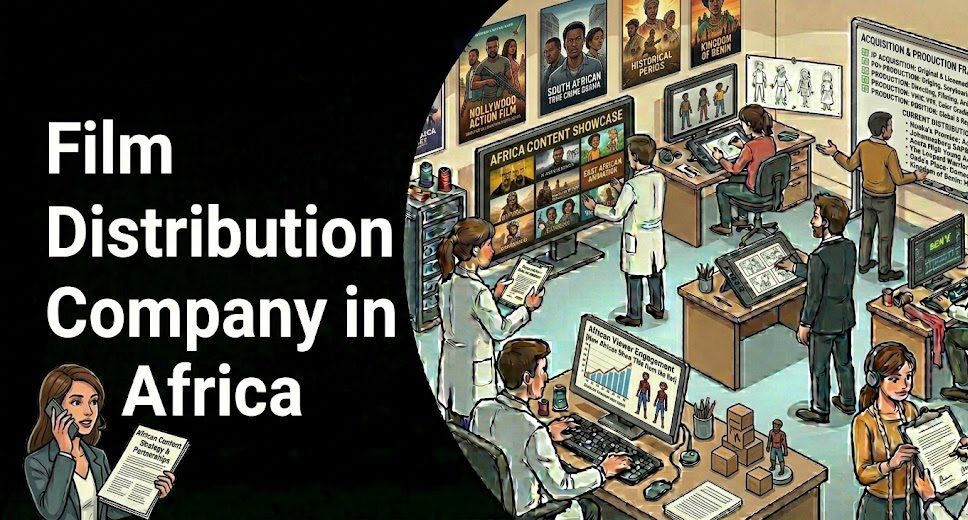
Selecting the right film distribution company in Africa is one of the most consequential decisions a producer makes—and one of the most misunderstood. Africa isn’t a single market. It’s 54 countries, at least 6 distinct sub-market ecosystems, wildly different theatrical infrastructures, and a streaming landscape evolving faster than most trade publications track.
The distributor that made you money in Nigeria won’t necessarily move the needle in Kenya. The South Africa-first strategy that worked for your international co-production might be completely wrong for a Francophone West Africa release.
Yet most producers and rights holders still approach Africa with a single-market mindset—pitching to 1 or 2 distributors they’ve heard of, usually from a festival panel, and treating the continent as a monolith. That’s the Fragmentation Paradox at work: an enormous, fast-growing market that looks accessible but operates in opaque silos that cost you deals, margins, and distribution windows you didn’t know you were missing. This guide gives you a framework for thinking about Africa correctly—and finding the right distribution partner for the specific sub-market where your film belongs.
TABLE OF CONTENTS
- Why Africa’s Distribution Landscape Requires a Different Playbook
- The 5 African Sub-Markets You Can’t Treat as One
- 6 Criteria for Selecting the Right Film Distributor in Africa
- Theatrical vs. Streaming vs. TV: Matching Channel to Market
- Inside Nigeria’s Distribution Reality: Moses Babatope (FilmOne)
- How the Fragmentation Paradox Erodes Your Africa Deal ROI
- Frequently Asked Questions
- Key Takeaways
Find Verified Film Distributors Across Africa in Days—Not Months
Vitrina maps 140,000+ verified entertainment companies globally—including theatrical distributors, streaming partners, and TV rights buyers across West Africa, East Africa, North Africa, Southern Africa, and Francophone markets. Filter by territory, distribution channel, and verified deal history. No cold calls. No guesswork.
200 free credits · No credit card required · Trusted by teams at Netflix, Warner Bros, Paramount, and Google TV
Why Africa’s Film Distribution Landscape Requires a Different Playbook
Here’s what most international producers don’t grasp until it’s too late: Africa has no single distribution infrastructure. There’s no pan-African theatrical release mechanism comparable to what you’d use in the US, UK, or even Latin America. What exists instead is a patchwork of national and regional networks—some theatrical, some broadcast TV, some streaming, and a very large informal market—operating under different languages, regulatory frameworks, and audience consumption patterns.
Nigeria alone produces more films annually than any country outside India and the United States—Nollywood’s output runs to thousands of titles per year. But the Nigerian theatrical infrastructure is still concentrated in a small number of premium multiplex chains in Lagos, Abuja, and Port Harcourt. South Africa has the continent’s most mature theatrical market, with established multiplex operators and a functioning cinema admissions economy. Kenya’s theatrical market is smaller but growing fast. Egypt is by far the most developed market in North Africa, with a theatrical culture closer to the Middle East than Sub-Saharan Africa.
And then there’s streaming—the fastest-moving variable in the equation. Netflix has made visible investments in African content, commissioning originals from South Africa, Nigeria, and Kenya. African platforms like ShowMax, Canal+ Africa, and EbonyLife’s own distribution operation are building subscriber bases across multiple territories. But the OTT economics in most African markets are shaped by mobile-first consumption and price sensitivity that requires distribution strategies you wouldn’t apply in Western markets.
All of this means the selection question isn’t “which African distributor should I work with?” It’s “which distributor has proven reach in the specific territory and channel where my film will perform?”—and those are very different markets, very different distributor profiles, and very different deal structures.
The 5 African Sub-Markets You Can’t Treat as One
1. West Africa — Nollywood’s Theatrical Core
Nigeria is the engine. FilmOne—co-founded by Moses Babatope—is the country’s dominant theatrical distribution company and the company that put Nollywood films into cinemas at a scale and consistency the market had never seen before. As reported by Deadline, Nigerian box office has demonstrated that local-language content can outperform Hollywood imports when the right theatrical infrastructure supports it. The genres that move in Nigerian cinemas—epic dramas, crime, comedy—are specific, and a distributor without deep cultural market understanding will struggle to position even a technically strong film correctly.
But Nigeria’s theatrical market is not Ghana, Côte d’Ivoire, or Senegal. West Africa as a region has wildly varied theatrical screen counts—Ghana has fewer than 20 operational multiplex screens as of 2025—so theatrical distribution across Anglophone West Africa beyond Nigeria often means hybrid deals combining limited cinema releases with TV and streaming windows in rapid succession.
2. East Africa — Mobile-First and Subscription-Driven
Kenya leads East Africa’s media economy with a relatively sophisticated urban audience and a theatrical culture concentrated in Nairobi. But Kenya’s real distribution opportunity in 2025 is digital. Mobile penetration is high, M-Pesa-enabled micropayments have lowered subscription friction, and platforms like Showmax and Buni TV have built East African subscriber bases willing to pay for premium streaming content.
Tanzania, Uganda, and Ethiopia are earlier-stage theatrical markets but have significant diaspora audiences globally—a distribution angle that smart rights holders are beginning to systematically monetise through diaspora-focused digital distribution. A distributor with pan-East Africa reach who understands both the domestic theatrical opportunity and the diaspora streaming upside is a fundamentally different animal from a Nigeria-only theatrical operator.
3. Southern Africa — The Continent’s Most Mature Theatrical Market
South Africa has the most established theatrical distribution infrastructure on the continent—major multiplex operators, an active cinema admissions culture, and a production incentive regime (the Section 12O rebate) that attracts international productions and generates local content that feeds domestic distribution pipelines. Our guide to top film distribution companies in South Africa covers the key players in more depth.
South Africa’s distribution market is also the most structurally Western—deal terms, rights windows, and MG structures are closer to what you’d negotiate in an established European territory than what you’d encounter in Nigerian or Kenyan distribution. That’s useful context if you’re setting expectations for negotiation timelines and deal values.
4. North Africa — Arabic-Language, MENA-Adjacent
Egypt is North Africa’s dominant entertainment market—with established theatrical chains, a long-running domestic film industry, and distribution infrastructure that connects to MENA distribution networks in ways that Sub-Saharan Africa does not. Egyptian films distribute across the Arab world; Egyptian theatrical distributors often have relationships with Gulf-based platforms and broadcasters that Sub-Saharan African distributors simply don’t.
Morocco is the second-most significant North African theatrical market—and critically, Morocco’s production incentive (a 20% cash rebate on qualifying local spend) makes it an increasingly attractive production hub for both African and international co-productions. Distributors with both Moroccan and Egyptian relationships give you North Africa access with meaningful scale.
5. Francophone Africa — A Distinct Regulatory Universe
The 14 CFA franc zone countries across West and Central Africa—Senegal, Cameroon, Côte d’Ivoire, Burkina Faso, and more—represent a distribution territory that most Anglophone distributors are structurally unequipped to serve. French is the dominant language, Canal+ holds significant broadcast reach across Francophone Africa, and the regulatory environment reflects French audiovisual policy frameworks that require specific local expertise.
If your content has Francophone Africa appeal—or if you’re seeking Canal+ Africa carriage—you need a distributor with direct relationships in that specific ecosystem. A Nigerian theatrical specialist won’t bridge that gap for you.
Stop Guessing Which African Distributor Is Right for Your Film
Vitrina maps verified distribution companies across every African sub-market—theatrical, streaming, TV, and diaspora digital—with verified deal history and territory coverage. Join 140,000+ entertainment companies already using Vitrina to find, vet, and connect with the right distribution partners. Start with 200 free credits.
No credit card required
6 Criteria for Selecting the Right Film Distribution Company in Africa
De-risking your African distribution deal starts before the pitch meeting. Here’s what actually predicts whether a distribution partner will deliver—not what they say in the capabilities deck.
1. Verified Territory Coverage (Not Self-Reported)
The single most common mistake: taking a distributor’s claimed territory coverage at face value. “We distribute across Africa” is a pitch. What matters is which specific countries they have verifiable theatrical, TV, and digital relationships in—and what they actually released in those territories in the last 24 months. A distributor with 3 verified theatrical releases in Nigeria in the past year is worth far more than one claiming pan-African reach with no hero projects to substantiate it.
2. Channel Mix Alignment
Does the distributor’s channel strength match where your film actually belongs? Theatrical specialists who’ve never negotiated a streaming deal are a mismatch for content that belongs on Showmax or Netflix Africa. Conversely, digital-only operators who lack cinema exhibition relationships can’t get you the theatrical opening weekend your film needs to establish its commercial profile before the home entertainment window. Know your channel priority—then verify the distributor owns it.
3. Genre Market Understanding
Nigeria’s theatrical market moves on epic dramas, crime thrillers, and family comedies. South Africa’s art house circuit is distinct from its commercial multiplex release strategy. Egypt’s theatrical audience has genre preferences that don’t translate directly to Kenyan or Nigerian audiences. The right distributor knows your genre’s performance data in their specific territory—and should be able to tell you, before you sign anything, which comparable titles performed and how.
4. Rights Window Discipline
Africa’s informal content market—piracy through physical media and unauthorised streaming—is a real commercial threat that the wrong distributor will ignore and the right one will have a strategy for. FilmOne’s theatrical approach, for example, prioritises simultaneous multi-market releases and rapid home entertainment windows to de-risk piracy impact. Ask any distributor you’re evaluating: what’s their strategy for protecting your window? Vague answers are disqualifying.
5. Financial Track Record and MG Capability
Does this distributor pay MGs? How quickly? What’s their recoupment track record on comparable titles? Africa’s distribution market has a higher proportion of revenue-share-only deals than Western markets—which is fine if you understand the upside/downside dynamics, but not if you need guaranteed recoupment to satisfy completion bonds or investor return obligations. Verify financial stability before you negotiate terms, not after.
6. Exhibition Relationships
For theatrical releases, this is non-negotiable: does the distributor have direct booking relationships with the cinema operators in your target territory? In Nigeria, that means access to the major multiplex chains—Genesis Cinemas, Filmhouse (now part of IMAX’s African footprint), and the Vue-operated locations. A distributor who describes their exhibition relationships in vague terms almost certainly doesn’t have the direct access they’re implying. Verify the relationships, or your film sits on a shelf.
For a deeper due diligence framework, our guide to finding film distribution partners in Africa’s emerging markets walks through the verification process step by step.
Theatrical vs. Streaming vs. TV: Matching Distribution Channel to African Market
Your distribution channel strategy in Africa isn’t a stylistic preference. It’s a function of your film’s genre, budget tier, production origin, and specific target territories. Here’s how to match them.
Theatrical: High-Risk, High-Reward in Select Markets
Theatrical distribution in Africa makes commercial sense in four markets: Nigeria, South Africa, Egypt, and—with lower volume expectations—Kenya and Morocco. Outside these, screen counts are too low to justify the P&A (prints and advertising) spend against realistic box office returns. If your film has the genre profile and marketing budget to support a Nigerian theatrical campaign, the upside is real—but the downside of an underperforming opening weekend is also real, and it shapes your secondary window negotiating position.
A theatrical release in Nigeria requires a distributor with genuine multiplex relationships, a marketing capability in Yoruba and Igbo-language media as well as English, and a clear strategy for the home entertainment window that follows. That’s a specific set of capabilities—not all distributors who claim Nigerian theatrical coverage actually own them.
Streaming: The Fastest-Growing Channel Across the Continent
Netflix has invested meaningfully in African originals and acquisitions. Showmax—MultiChoice’s streaming platform—has sub-Saharan Africa as its core growth market. Canal+ Africa covers Francophone territories. And local platforms like iROKOtv (focused on Nollywood) and Buni TV (East Africa) have loyal niche subscriber bases. As Variety has reported, African streaming subscription numbers grew faster than any other global region in 2023–2024—off a lower base, but with compounding momentum.
The streaming distribution deal you need in Africa is rarely a pan-African Netflix deal. It’s more often a stacked strategy: Netflix or Showmax for premium territories like South Africa and Nigeria, Canal+ for Francophone markets, and local platforms for diaspora digital reach. Our guide to TV syndication partners in Africa covers the broadcast layer of this equation in more depth.
Broadcast TV: Still the Widest Reach on the Continent
Don’t underestimate broadcast television. Linear TV still reaches more African households than streaming—particularly in rural areas and lower-income urban markets where smartphone penetration and mobile data costs limit OTT uptake. MultiChoice’s DStv satellite platform reaches across 50+ African territories. State broadcasters in Nigeria (NTA), South Africa (SABC), and Egypt (ERT) have massive but under-monetised audience bases.
A distributor who can navigate broadcast rights deals alongside theatrical and streaming—particularly one with DStv/MultiChoice relationships—gives you genuine continental reach. That’s a different capability profile from either a theatrical specialist or a streaming-only operator. And for library content, African TV syndication can deliver consistent revenues across 5–10 year licensing windows that streaming deals rarely provide. For more on your licensing options in the region, see our overview of film licensing in Africa.
Inside Nigeria’s Distribution Reality: Moses Babatope (FilmOne)
Moses Babatope, co-founder and managing director of FilmOne—Nigeria’s leading theatrical distribution company—has been one of the most insightful voices on what it actually takes to build a sustainable distribution business in the African market. In the Vitrina LeaderSpeak interview below, Babatope covers FilmOne’s journey, the impact of shifting economics on the Nigerian theatrical market, the demand for international content in Nigeria, and the genuine export opportunity for Nollywood content—particularly in epic drama, crime, and comedy genres—to the African diaspora and beyond.
If you’re evaluating Nigerian theatrical distribution, or assessing co-production partnerships with Nigerian producers for content that needs a local distribution champion, this is essential listening:
Moses Babatope (Co-Founder & MD, FilmOne) — “Nollywood Narratives: Nigeria’s Film Landscape” via Vitrina LeaderSpeak
One of Babatope’s most practical insights is that international content in Nigeria performs best when it comes with local marketing support—not just subtitling—and when the release strategy accounts for how Nigerian audiences consume new releases (strong opening weekends, significant weekend-over-weekday concentration, mobile-first marketing). That context changes how you should structure your distribution agreement and what you should require a Nigerian distributor to deliver.
How the Fragmentation Paradox Erodes Your Africa Distribution ROI
Here’s the uncomfortable truth about African film distribution: it’s one of the highest-opacity markets on the planet for rights holders approaching from the outside. The Fragmentation Paradox—where 600,000+ companies operating across the global film and TV supply chain create information asymmetry that erodes margins—applies with particular force in Africa, because the knowledge deficit between local market insiders and international rights holders is enormous.
What does that look like in practice? You approach 1 or 2 distributors you’ve heard of—because that’s the size of your Africa network—and you negotiate from zero visibility into what comparable titles earned in these markets, what MG levels are realistic, what rights windows are standard, or who else might have offered you better terms. The distributor across the table knows all of this. You don’t. That’s a 15–20% margin leakage scenario before the ink is dry.
The timeline cost compounds it. A traditional distributor search in Africa—relying on festival contacts, trade publication referrals, and word of mouth—can run 3–6 months from the point you decide to seek African distribution to the point of a signed deal. In markets where streaming platform windows open and close on quarterly acquisition cycles, and where theatrical release slots are finite, that delay has direct commercial consequences. A 6-week delay in securing your Nigerian theatrical distributor might cost you a Q4 release window entirely.
Vitrina resolves this by mapping verified distribution companies across African territories with deal history, territory coverage, channel capabilities, and financial stability indicators that you can access in days—not months. You go from a blank slate to a qualified shortlist of African distribution partners, with pricing benchmarks that put the Insider Advantage on your side of the negotiation. For producers who’ve already gone through the grants and funding process, our resource on African film grants for producers is a useful companion to this distribution guide—because the right distribution partner for your African film often traces back to who co-financed it.
Need a Shortlist of Verified African Distributors for Your Film?
Vitrina’s Concierge Service gives you dedicated intelligence support—mapping verified distribution partners by territory, channel, and genre fit, providing pricing benchmarks, and connecting you directly with decision-makers who cover your specific African markets. No cold-call cycles. No festival guesswork.
Trusted by teams at Netflix, Warner Bros, Paramount, and Google TV worldwide
Frequently Asked Questions: Film Distribution in Africa
How do I find a film distribution company in Africa?
Start by identifying which specific African sub-market your film is targeting—Nigeria, South Africa, Kenya, Egypt, or Francophone Africa require entirely different distributor profiles. Then verify any shortlisted distributor’s territory coverage, channel mix, and hero projects from the past 24 months before approaching them. Vitrina maps verified distribution companies across 195 countries including African markets, with territory coverage and deal history you can filter and compare—giving you a qualified shortlist in days rather than months of festival networking.
Which African country has the best theatrical film distribution infrastructure?
South Africa has the most mature theatrical infrastructure—established multiplex chains, a functioning cinema admissions economy, and deal terms closest to Western markets. Nigeria has the strongest box office upside for the right film, particularly local-language and African-diaspora content, with FilmOne, Genesis, and Filmhouse operating modern multiplex circuits in Lagos, Abuja, and Port Harcourt. Egypt leads North Africa. Outside these three markets, theatrical screen counts are insufficient for commercial theatrical-first release strategies for most budget tiers.
What streaming platforms distribute content across Africa?
The key streaming platforms with African distribution capability include Netflix (pan-African with local originals from Nigeria, South Africa, Kenya), Showmax (MultiChoice’s streaming platform, strong sub-Saharan Africa coverage), Canal+ Africa (dominant in Francophone West and Central Africa), iROKOtv (focused on Nollywood content), and Buni TV (East Africa-focused). DStv’s satellite broadcast platform reaches 50+ African territories and remains the widest-reach distribution channel on the continent for content that qualifies for their acquisition criteria.
What is Nollywood and why does it matter for African film distribution?
Nollywood is Nigeria’s film industry—one of the world’s three largest by output volume, producing thousands of films annually. It matters for African distribution because Nollywood content has proven cross-continental cultural reach within the African diaspora globally, because Nigerian theatrical distributors have developed some of the continent’s most sophisticated release strategies, and because Nollywood’s genre preferences (epic drama, crime, comedy) and business models (fast theatrical-to-digital windows) now influence distribution strategy across other African markets.
How long does it take to close an African film distribution deal?
Using traditional relationship-based discovery—festival contacts, trade referrals, word of mouth—finding and signing an African distribution deal typically takes 3–6 months from initial search to signed contract. Vitrina’s verified intelligence compresses this to days for the research and shortlisting phase. The negotiation and legal closing timeline depends on deal complexity, but entering negotiations with verified pricing benchmarks and a competitive shortlist of qualified distributors significantly accelerates both timeline and deal terms.
Do African distributors pay minimum guarantees (MGs)?
It depends on the territory, the distributor, and the film. South African distributors operating at commercial scale are more likely to offer MGs on comparable terms to European or Latin American distribution deals. Nigerian theatrical distributors may offer revenue-share structures for local-language content, or MGs for international titles with strong commercial profiles. North African distributors often align more closely with MENA MG structures. Always clarify MG versus revenue-share expectations before entering detailed negotiations, and benchmark against comparable titles rather than accepting first offers.
How does piracy affect film distribution economics in Africa?
Piracy remains a significant variable in African distribution economics—particularly in markets where informal DVD distribution and unauthorised streaming are widespread. Sophisticated African distributors like FilmOne address this through rapid theatrical-to-digital window compression, same-day or near-simultaneous multi-territory releases, and aggressive digital availability at price points that compete with informal alternatives. When evaluating a distributor, their piracy mitigation strategy is a direct indicator of their commercial sophistication. A distributor who waves it off as “unavoidable” is not protecting your revenue.
Key Takeaways: Selecting Your African Film Distributor
Africa’s film distribution opportunity is real, fast-growing, and deeply fragmented. Here’s what to act on from this guide:
- Africa is not one market—never approach it as one. Nigeria, South Africa, Kenya, Egypt, Morocco, and Francophone Africa each require a distinct distribution strategy, distributor profile, and deal structure. The distributor who delivers for you in Lagos almost certainly doesn’t have the Canal+ Africa relationships you need for Dakar.
- Verify territory coverage before the pitch meeting. “Pan-African distribution” is a claim almost any company can make. Verified hero projects in specific territories from the past 24 months are the only meaningful test of whether a distributor actually delivers what they’re promising.
- Match your distribution channel to your market—not your preference. Theatrical works in Nigeria, South Africa, and Egypt. Streaming is the fastest-growing channel across the continent but requires platform-specific strategies by territory. Broadcast TV still reaches more African households than OTT—don’t leave DStv and Canal+ Africa off your rights strategy.
- Piracy mitigation strategy is a distributor selection criterion. Ask every distributor you evaluate how they protect your theatrical and digital windows. Vague or dismissive answers are red flags. The right distributor—like FilmOne in Nigeria—has a proactive strategy for compressing windows and ensuring legal availability beats the informal market.
- Use Vitrina to De-risk the discovery process. With 200 free credits and no credit card required, you can start mapping verified African distributors by territory, channel, and deal history today—and enter every negotiation with the Insider Advantage of market pricing benchmarks and a competitive shortlist of qualified partners.
Find Your African Distribution Partner with Vitrina
Access verified theatrical distributors, streaming partners, and TV rights buyers across every African sub-market—with deal history, territory coverage, and pricing benchmarks. Start with 200 free credits, no credit card required. Or talk to Concierge for a fully curated shortlist matched to your film’s specific territory and genre profile.
Trusted by Netflix, Warner Bros, Paramount, Google TV, and 140,000+ entertainment companies worldwide
Find Film+TV Projects, Partners, and Deals – Fast.
VIQI matches you with the right financiers, producers, streamers, and buyers – globally.
Producers Seeking Financing & Partnerships?
Book Your Free Concierge Outreach Consultation
(To know more about Vitrina Concierge Outreach Solutions click here)
Producers Seeking Financing, Co-Pros, or Pre-Buys?
Vitrina Concierge helps producers reach the right financiers, commissioners, distributors, and co-production partners — with precision outreach, not cold pitching.
Join Industry Briefings Trusted by Leaders

Film & TV Financing: Pre-Buys
Learn how pre-buys work in current Film and TV financing, how they differ from pre-sales, and how they are used to close real finance plans.
Streamers – Netflix vs. Amazon – The 2026 Strategy
How Netflix and Amazon’s content and revenue strategies are diverging ahead of 2026.

Format Adaptations: Global Trends
Where formats are traveling, which adaptations are breaking out, and how streamers are backing remakes in 2025–2026.