IHUB
IHUB
 Private Briefings (Webinars)


 LeaderSpeak Podcast
  Global Entertainment Digest (Newsletter)
  Premium Lists
 Premium Reports
 Membership Benefits
 About Vitrina
 Our Story
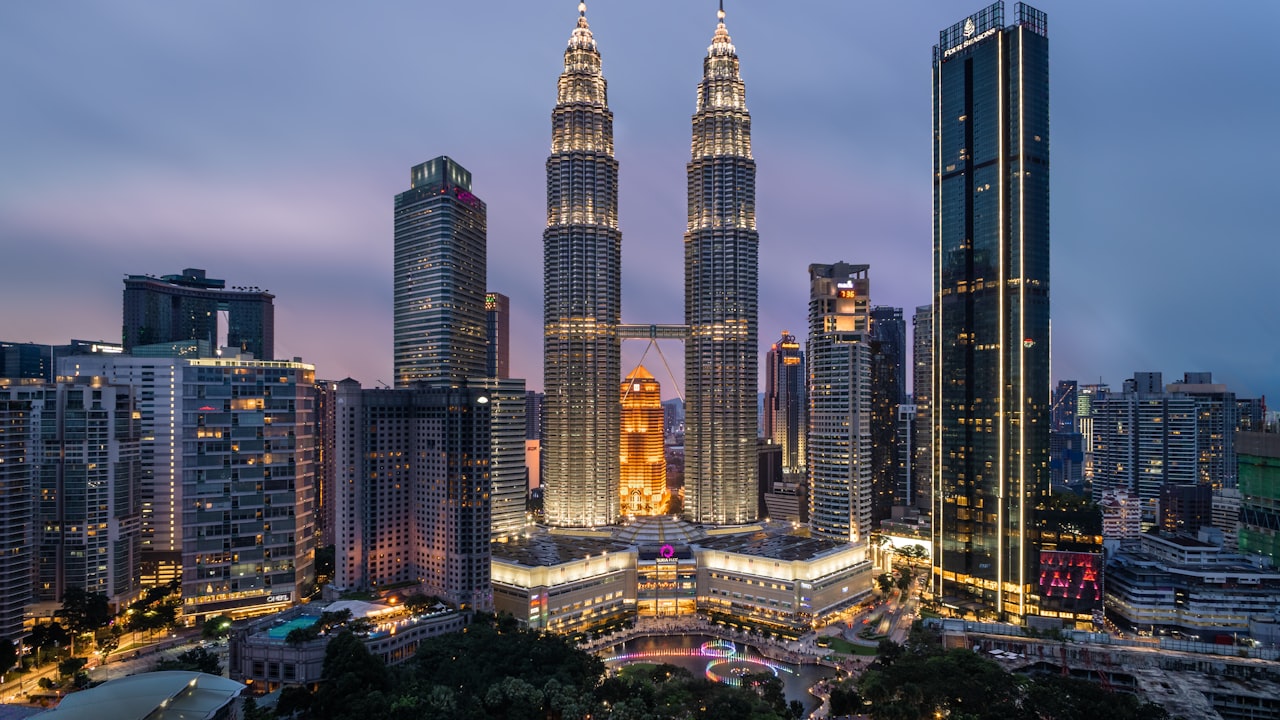
Malaysia has emerged as Southeast Asia’s most dynamic animation and VFX hub — home to globally recognised IP, a creative digital content market estimated at MYR 2.1 billion (~$450M USD) in 2026, and government incentive frameworks that allow international productions to recover up to 30% of qualifying Malaysia spend through FINAS and benefit from MSC Malaysia Status tax exemptions of up to 10 years. With approximately 8,000 digital content and animation professionals and studios whose original IP reaches hundreds of millions of viewers globally, Malaysia stands at the intersection of cost-competitive outsourcing and authentic Asian storytelling (Mordor Intelligence, 2026).
This directory lists verified VFX and animation companies headquartered in Malaysia — spanning compositing, 2D and 3D animation, digital characters, creature effects, game cinematics, and commercial VFX. Studios are drawn from Vitrina’s live global entertainment company database and verified for active operations, production credits, and contact accuracy. Use the filters to narrow by service type, hub, and studio size, then connect directly with studio decision-makers through Vitrina’s B2B platform. For regional benchmarking, see our top VFX companies in India and top VFX companies in Singapore directories.
- 1Malaysia’s creative digital content market generates an estimated MYR 2.1 billion (~$450M USD) in 2026, with approximately 8,000 digital content and animation professionals and a growing number of internationally active studios — making it Southeast Asia’s leading animation country (Mordor Intelligence, 2026).
- 2Lemon Sky Studios (Cyberjaya) is Malaysia’s largest VFX studio, employing ~500 staff, holding TPN Assessed status and MDEC certification, and delivering game cinematics for EA, Ubisoft, and DreamWorks — establishing Malaysia as a credible Hollywood outsource destination.
- 3FINAS offers a 30% Filming in Malaysia Incentive for qualifying international productions, while MSC Malaysia Status delivers 0% income tax for up to 10 years and import duty exemptions for certified digital companies in zones like Cyberjaya — among the most competitive incentive packages in ASEAN (MDEC, 2026).
- 4Les’ Copaque (Upin & Ipin — 5B+ YouTube views globally, distributed on Netflix) and Animonsta Studios (Boboiboy — Netflix, 60+ countries) demonstrate that Malaysian studios can create IP with genuine global reach, making them viable co-production partners beyond pure outsourcing.
- 5Malaysian VFX and animation artist day rates run MYR 800–3,500/day (~$170–$750 USD) across major hubs, with Cyberjaya/Putrajaya Tier 1 studios at the upper range and Johor Bahru and Penang boutiques at the lower — all before FINAS and MDEC incentives that substantially reduce net production cost.
The top VFX companies in Malaysia include Lemon Sky Studios (Cyberjaya — TPN Assessed, EA/Ubisoft/DreamWorks game cinematics, ~500 staff), Les’ Copaque Production (Upin & Ipin, 5B+ YouTube views), and Animonsta Studios (Boboiboy, Netflix 60+ countries). Cyberjaya is Malaysia’s primary VFX hub with MSC Malaysia Status tax exemptions. FINAS offers a 30% Filming in Malaysia Incentive for international productions. Vitrina indexes verified Malaysian VFX studios with direct contacts, MDEC certification, and production credits.
Why Malaysia Is Southeast Asia’s Leading VFX & Animation Hub
Malaysia’s VFX and animation industry has grown into a regional powerhouse on the strength of three compounding advantages: government-backed incentive infrastructure (MDEC Digital Content Grants, FINAS 30% incentive, MSC Malaysia Status), a proven track record of global IP creation (Upin & Ipin, Boboiboy), and significantly lower day rates than comparable-quality markets in South Korea, Japan, or Australia. Malaysia’s creative digital content market generates an estimated MYR 2.1 billion (~$450M USD) annually in 2026, with approximately 8,000 digital content and animation professionals employed nationally (Mordor Intelligence, 2026). Productions from EA and Ubisoft game franchises to Netflix original animated series have all leveraged Malaysian VFX and animation studios.
Key Stat
FINAS (National Film Development Corporation Malaysia) provides a 30% Filming in Malaysia Incentive on qualifying production spend for international productions shooting or completing post-production in Malaysia. Combined with MSC Malaysia Status — which delivers 0% income tax for up to 10 years and import duty exemptions for qualifying digital companies in MSC zones (including Cyberjaya) — Malaysia offers one of the most compelling incentive stacks in ASEAN for international animation and VFX outsourcing.
Lemon Sky Studios — headquartered in Cyberjaya, MDEC-certified, and TPN Assessed — is Malaysia’s largest VFX studio and the country’s flagship proof of Hollywood-grade capability. With approximately 500 staff delivering game cinematics for EA, Ubisoft, and DreamWorks, Lemon Sky has established Malaysia’s credibility as a serious outsource destination for premium content. Les’ Copaque Production’s Upin & Ipin franchise has accumulated over 5 billion YouTube views globally and streams on Netflix, while Animonsta Studios’ Boboiboy is distributed in 60+ countries. For broader ASEAN context, see our top VFX companies in Singapore and top VFX companies in Australia directories.
Top VFX Companies in Malaysia — Full Directory
The companies below are verified VFX and animation studios headquartered in Malaysia, sourced live from Vitrina’s global entertainment company database. Filter by service specialty, hub, and studio size. Click any company card to view the full profile, contact details, and past production credits. Looking for studios across the region? Compare our Singapore VFX directory and India VFX directory for cost and capability benchmarks.
Lemon Sky Studios
Malaysia

Services
3D Animations & Motion Graphics3D Content Creation3D Modeling & Simulation3D Scanning3D Visualization+22 more
Genres
Polygon Pictures Malaysia
Petaling Jaya, Malaysia

Services
3D Animations & Motion Graphics3D Modeling & SimulationAnimationAnimation / Computer Graphics (CGI)Cel Painting+8 more
Genres
Astro Productions
Malaysia

Services
3D Animations & Motion Graphics3D Modeling & Simulation3D VisualizationAnimationAtmos Sound Services+55 more
Genres
Animasia Studio
Kuala Lumpur, Malaysia

Services
2D & 3D Animation2D Animation2D Content Creation3D Content CreationAnimatics+16 more
Genres
Malaysian VFX Hubs: Cyberjaya, KL, Penang & Johor Bahru
Malaysia’s VFX and animation industry is concentrated across four distinct hubs, each with unique characteristics in terms of studio type, specialization, and incentive access. Understanding hub differences is important for international productions selecting a Malaysian VFX or co-production partner — the right hub depends on your project’s scale, content type, and incentive strategy.
Key Stat
Malaysia has approximately 8,000 digital content and animation professionals across all major hubs. Cyberjaya leads with the highest concentration of MDEC-certified and TPN-assessed facilities in the country. Malaysian VFX and animation artist day rates run approximately MYR 800–3,500/day (~$170–$750 USD) — with Cyberjaya/Putrajaya Tier 1 studios at the upper range — all before FINAS and MDEC incentives that substantially reduce net production cost.
Cyberjaya and Putrajaya form Malaysia’s undisputed VFX and animation capital. Designated as part of the Multimedia Super Corridor (MSC), Cyberjaya houses Lemon Sky Studios, Les’ Copaque Production, and R&D Studios — the country’s highest concentration of MDEC-certified and Hollywood-facing studios. MSC Malaysia Status provides qualified companies with 0% income tax for up to 10 years, import duty exemptions, and IP protection frameworks — making certified Cyberjaya studios uniquely cost-efficient for long-term international partnerships. For a regional perspective on Hollywood-grade VFX outsourcing, see our top VFX companies in India.
Kuala Lumpur (Bangsar and KLCC) is home to Malaysia’s commercial VFX and boutique animation ecosystem. Wau Animation — known for award-winning short films and the Sang Kancil feature — and Fish Animation — a specialist in commercial animation for Proton and Petronas advertising — anchor this hub alongside Animasia and Animonsta Studios. KL studios are particularly strong in ASEAN co-productions, commercial content, and branded entertainment, often combining animation and live-action VFX capabilities. KL’s proximity to Malaysia’s major broadcasters and advertising agencies creates a steady domestic pipeline supplementing international work.
Penang hosts a smaller network of boutique VFX and game animation studios, serving the indie animation sector and game VFX outsourcing — at the most competitive rates in Malaysia. Johor Bahru, positioned just across the causeway from Singapore, hosts an emerging studio cluster that increasingly captures overflow projects from Singapore’s higher-cost production market, particularly for commercial and mid-scale VFX work. For Singapore market comparison, see our top VFX companies in Singapore.
How to Choose the Right Malaysian VFX Studio
Selecting a Malaysian VFX or animation partner requires evaluating five criteria beyond base cost: MDEC certification and MSC Status eligibility, pipeline compatibility, international credit history, TPN certification status, and studio capacity relative to your shot count and content type. Malaysia’s top studios (Lemon Sky, Les’ Copaque) are frequently engaged on concurrent international projects — early outreach and clear timeline communication is essential, especially if FINAS incentive documentation or MDEC grant applications are part of your financing plan. For an international comparison context, see our top VFX companies in Australia directory.
Incentive alignment is the most financially significant decision. FINAS’s 30% Filming in Malaysia Incentive applies to qualifying international productions completing post-production or principal photography in Malaysia; MDEC’s Digital Content Grant supports Malaysian IP development and can reduce studio costs for co-productions; and MSC Malaysia Status gives certified studios in Cyberjaya and other MSC zones a 0% income tax rate for up to 10 years — directly lowering their cost structure and improving competitiveness on long-term outsourcing agreements. For a MYR 5M co-production, the FINAS incentive alone could return MYR 1.5M (~$320K USD) to the project.
Pipeline compatibility matters at every tier. Lemon Sky Studios and R&D Studios operate Maya, Houdini, Nuke, and Unreal Engine pipelines compatible with Hollywood and major game studio delivery requirements. Mid-tier studios (Animonsta, Wau Animation) use hybrid 2D/3D pipelines accessible to ASEAN co-production partners and international streaming platforms. Confirm the specific toolstack and delivery format requirements before finalising any studio selection.
TPN certification is required for any production involving unreleased content from Disney, Netflix, Warner Bros., Amazon, or Apple TV+. The Trusted Partner Network (administered by the MPA) assesses facilities annually. Lemon Sky Studios holds TPN Assessed status and R&D Studios operates as an MDEC Digital Hub. Request current TPN documentation and verify assessment date before sharing any unfinished content.
TPN Certification & Malaysian Incentives: MDEC, FINAS & MSC Status
Malaysia’s leading VFX studios include the country’s most rigorously TPN (Trusted Partner Network) certified and MDEC-verified facilities — a combination that is increasingly required for studios handling unfinished content from major Hollywood studios and global streaming platforms. TPN Assessed studios are pre-approved to receive unreleased content from major buyers with reduced per-project security friction, making them substantially easier to onboard for international productions.
Key Stat
30%
FINAS’s Filming in Malaysia Incentive provides a 30% cash incentive on qualifying production spend for international productions filming in or completing post-production in Malaysia. Combined with MSC Malaysia Status (0% income tax up to 10 years for certified digital companies) and MDEC’s Digital Content Grant for IP development — Malaysia’s incentive stack is one of the most comprehensive in Southeast Asia for animation and VFX outsourcing.
Beyond TPN, leading Malaysian studios handling international streaming content operate under MPA Content Security Program (CSP) requirements: physical access controls, network segmentation, encrypted asset delivery, and personnel background verification. Request the studio’s most recent TPN assessment report and MDEC certification documentation before signing any agreement involving unreleased content.
Malaysia’s eight most prominent VFX and animation studios span all major hubs. Lemon Sky Studios (Cyberjaya) — MDEC-certified, TPN Assessed, ~500 staff — is Malaysia’s largest facility, delivering game cinematics for EA, Ubisoft, and DreamWorks. Les’ Copaque Production (KL) is the creator of Upin & Ipin (Netflix, 5B+ YouTube views, ~300 staff) — Malaysia’s most successful animation IP. Animonsta Studios (KL) produced Boboiboy, distributed on Netflix in 60+ countries, and co-produces with Japan and Korea. R&D Studios (KL) handles mixed live-action and CG VFX for Malaysian feature films and government projects. Wau Animation (KL) is known for award-winning short films and the Sang Kancil feature. Fish Animation (KL) specializes in commercial animation for ASEAN brands including Proton and Petronas. Purple Originals (KL) focuses on digital storytelling and ASEAN co-production VFX. MOV Studio (KL) delivers VFX for Malaysian features including the Polis Evo franchise.
VFX Costs in Malaysia: What Productions Pay (MYR)
Malaysian VFX and animation costs vary significantly by hub and studio tier. Cyberjaya and KL Tier 1 studios (Lemon Sky, Les’ Copaque) command the highest rates — reflecting quality, Hollywood credit history, and MDEC/TPN certification. However, FINAS and MDEC incentives fundamentally reshape the net cost calculation: FINAS’s 30% incentive and MSC Malaysia Status tax exemptions make even Tier 1 Malaysian studios cost-competitive with comparable studios in Singapore or Australia at significantly lower gross rates.
FINAS’s 30% incentive fundamentally reshapes the Malaysian VFX cost map. A production spending MYR 5M (~$1.07M USD) on qualifying Malaysian VFX and post-production spend could receive MYR 1.5M (~$320K USD) back through the incentive — making Tier 1 Malaysian studios the most cost-effective animation outsource market in Southeast Asia for IP-owning productions. Combined with MSC Malaysia Status tax exemptions, the effective blended rate for long-term outsourcing relationships at Cyberjaya studios is highly competitive with India’s top-tier studios on a quality-adjusted basis.
Conclusion
Malaysia’s VFX and animation industry in 2026 is a MYR 2.1 billion (~$450M USD) market anchored by world-class studios — Lemon Sky Studios, Les’ Copaque Production, Animonsta Studios — and powered by one of Southeast Asia’s most complete government incentive stacks. FINAS’s 30% Filming in Malaysia Incentive, MDEC Digital Content Grants, and MSC Malaysia Status (0% income tax up to 10 years) collectively make Malaysia one of the most financially attractive and creatively capable VFX and animation destinations in ASEAN (Mordor Intelligence, 2026). The combination of proven global IP (Upin & Ipin: 5B+ YouTube views; Boboiboy: Netflix 60+ countries), MDEC-certified studios, a Western-compatible IP framework, and significantly lower day rates than comparable-quality markets positions Malaysia as the premier choice for animation co-productions and quality boutique outsourcing in Southeast Asia.
For productions evaluating Malaysian studios, the key decision is tier and hub selection: Cyberjaya for the largest TPN-certified, MDEC-verified studios with Hollywood outsource credentials (Lemon Sky), KL for animation IP co-productions and commercial VFX (Les’ Copaque, Animonsta, Wau Animation), and Penang or Johor Bahru for boutique and game VFX at the most competitive rates. Use the directory above to explore verified Malaysian VFX studios with direct contacts, and compare against our Singapore VFX directory and India VFX directory for broader ASEAN and Asian benchmarking.
Related Reading
Frequently Asked Questions
What is the best VFX studio in Malaysia?
Lemon Sky Studios in Cyberjaya is Malaysia’s largest VFX studio — approximately 500 staff, TPN Assessed, MDEC-certified, delivering Hollywood game cinematics for EA, Ubisoft, and DreamWorks. It is the country’s flagship proof of Hollywood-grade outsource capability.
What incentives are available for VFX work in Malaysia?
FINAS offers a 30% Filming in Malaysia Incentive for qualifying international productions. MDEC provides the Digital Content Grant for IP development and the IP Waiver Program. MSC Malaysia Status delivers 0% income tax for up to 10 years and import duty exemptions for certified digital companies in MSC zones such as Cyberjaya.
How much do Malaysian VFX studios charge per day?
Malaysian VFX and animation rates run MYR 800–3,500/day (~$170–$750 USD). Tier 1 studios (Lemon Sky, Les’ Copaque): MYR 1,500–3,500. Tier 2 (Animonsta, R&D Studios): MYR 1,200–2,500. Boutique/indie studios (Penang, Johor Bahru): MYR 800–2,000 — all before FINAS and MDEC incentives that further reduce net production cost.
Is Malaysia a significant VFX and animation hub?
Yes — Malaysia is Southeast Asia’s leading animation country. Upin & Ipin (Les’ Copaque) has accumulated over 5 billion YouTube views globally and streams on Netflix. Boboiboy (Animonsta) is distributed in 60+ countries. MDEC actively attracts global media companies through Digital Content Grants and MSC Malaysia Status certification.
What major productions have used Malaysian VFX and animation?
Lemon Sky Studios has delivered game cinematics for EA, Ubisoft, and Activision franchises. Les’ Copaque’s Upin & Ipin has global Netflix distribution. Animonsta’s Boboiboy is distributed in 60+ countries. R&D Studios has delivered VFX for Malaysian feature films and government productions.
What is MSC Malaysia Status?
MSC Malaysia Status is a government designation awarded by MDEC to digital and technology companies operating in MSC zones such as Cyberjaya. Benefits include: 0% income tax for up to 10 years, import duty exemptions on multimedia equipment, IP protection frameworks, and eligibility for MDEC grants and programs. MSC-certified studios are uniquely cost-efficient partners for long-term international outsourcing agreements.
How does Malaysia compare to India for VFX outsourcing?
Malaysia offers lower day rates than Mumbai’s top-tier studios, a smaller talent pool overall, but key advantages: Western-compatible IP ownership framework, MSC Malaysia Status tax exemptions, FINAS 30% cash incentive, and natural gateway positioning for ASEAN co-productions. India offers more volume capacity. Malaysia excels at quality boutique outsourcing, game cinematics, and animation co-productions where ASEAN market access and IP-friendly regulation matter.
How do I find VFX companies in Malaysia on Vitrina?
Use the Vitrina directory above — filter for Malaysia by service type (VFX, game cinematics, 2D/3D animation), MDEC certification, and production history. Compare Lemon Sky-tier studios against boutique animation specialists directly, and request quotes through the platform with direct access to studio decision-makers.
Vitrina Intelligence
Malaysia VFX Market Research · B2B M&E Data Platform
Updated Jul 2026
This directory was compiled by Vitrina’s APAC M&E intelligence team. Every studio is verified from direct submissions, TPN/MPA assessments, production credit databases, MDEC Digital Content programme data, FINAS incentive documentation, and Mordor Intelligence sector reports. Vitrina covers verified VFX and animation studios across Cyberjaya, Kuala Lumpur, Penang, Johor Bahru, and beyond.
Research Methodology
✓ Mordor Intelligence VFX Market 2026
✓ MDEC Digital Content Grant documentation
✓ TPN/MPA Assessed Vendor List
✓ FINAS incentive programme data
✓ Direct studio submissions & verification
✓ Variety / Hollywood Reporter coverage
Malaysia M&E Market
MDEC & MSC Status
ASEAN Co-Production