About Innovation Hub
 Global Content Pulse (Webinars)


 Global Production Financing
(Webinars)
Global Production Financing
(Webinars)  LeaderSpeak Podcast
  About Vitrina
 Our Story
 Our Solutions 🔥
 Film+TV Projects Tracker 🚀
 Case Studies
 Our Profile
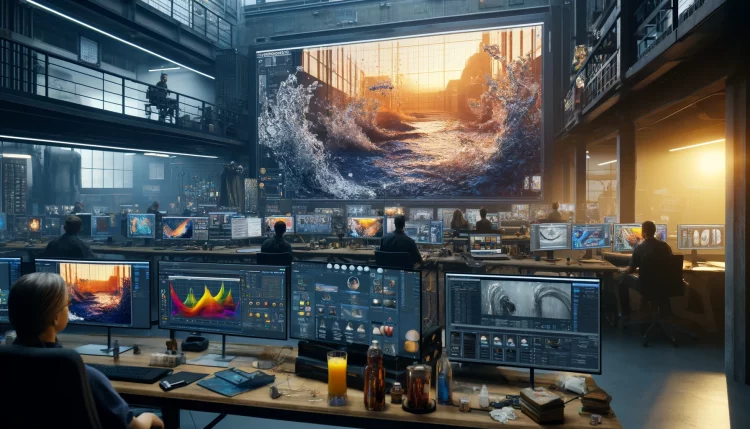
If you’re sourcing VFX companies in Germany right now, you’re navigating a market that just got more interesting—and more complicated—at the same time. Here’s what most procurement guides won’t tell you: Germany’s VFX incentive stack quietly became one of Europe’s most compelling in 2025, with the DFFF and GMPF rebates rising to 30% of approved German production costs as of February 2025. And the German government has earmarked nearly €250 million per year from 2026 onward—almost doubling the previous €133 million allocation. That’s not marginal. That’s a capital-stack decision hiding inside a location choice.
But Germany’s VFX landscape also went through genuine turbulence in 2025. Scanline VFX Munich—a Netflix-owned facility once counted among Europe’s elite—shut down its German operations entirely, with work shifting to Vancouver and India. TRIXTER, Germany’s most decorated Hollywood VFX vendor, underwent restructuring and layoffs in late 2025, even as it remained operational on feature film commitments. Understanding which studios are actually stable—and which are navigating market contractions—matters before you commit your next project.
That’s what this guide does. We’ve mapped the top VFX companies in Germany by verified capability, current operational status, hero project history, and incentive leverage—not marketing language. Whether you’re a commissioner routing episodic VFX work into Europe, a producer building a co-production capital stack, or a studio procurement team benchmarking vendors, you’ll find the intelligence you need here.
In This Guide
Find Verified German VFX Studios in Under 48 Hours
Ask VIQI—Vitrina’s AI assistant trained on 1.6 million titles and 360,000+ companies—to surface verified German VFX vendors filtered by your budget, capability, and timeline. Netflix, Warner Bros, and Paramount teams already use it.
200 free credits · No credit card required
Why Germany’s VFX Market Matters in 2026
Let’s be direct. Germany isn’t a Sovereign Content Hub in the MENA or APAC sense—it’s not deploying sovereign wealth fund capital at Saudi Vision 2030 scale. But it occupies a specific and underrated lane in the global VFX supply chain: a technically sophisticated market with genuine Hollywood pipelining, generous stacked incentives, and a talent base fed by one of Europe’s premier animation schools.
RISE | Visual Effects Studios, operating out of Berlin, Cologne, Munich, and Stuttgart, has contributed to virtually every major Marvel Cinematic Universe film—including Avengers: Infinity War, Black Panther, Captain America: Civil War, and Guardians of the Galaxy. That’s not a boutique shop. That’s a central-European VFX powerhouse with a marquee client roster most studios would kill for.
TRIXTER—part of the Cinesite Group since 2018—delivered VFX for Predator: Badlands (2025), earned Emmy nominations for Loki Season 2 and I Am Groot Season 2, and won the German Lola Award for Best VFX. Those aren’t credentials you dismiss, even amid 2025 restructuring. And Lumatic won the Lola Award—Germany’s equivalent of an Oscar—for its work on Dragon Rider, becoming the most commercially successful German film of 2021.
Why does this matter for your procurement decision? Because Germany’s FMX conference in Stuttgart is one of the most important annual VFX and animation industry events in the world—not just Europe. The studios that cluster around it aren’t regional curiosities. They’re internationally competitive vendors that happen to sit inside a favorable incentive regime. That’s exactly the kind of cost-quality alignment you’re looking for when you’re building a VFX budget.
But the market is shifting fast. Two major closures in 2025—Scanline Munich and significant Trixter restructuring—have reshuffled which studios hold genuine capacity. You need current intelligence, not a two-year-old vendor list.
Germany’s VFX Incentive Architecture: The Numbers That Actually Move Projects
Here’s what most producers miss when they think about Germany as a VFX destination. The incentive story isn’t just about the headline rate—it’s about stacking. As reported by Screen International, the German government has committed to nearly doubling its main film incentive funds from €133 million annually to €250 million per year starting in 2026—a commitment locked into the federal budget through 2029.
The core instruments are:
- DFFF I and II (German Federal Film Fund): Raised to 30% of approved German production costs as of February 1, 2025. DFFF II specifically targets VFX work for international co-productions—no longer requiring a physical shoot in Germany. A minimum €2 million spend unlocks access.
- GMPF (German Motion Picture Fund): Also at 30%, running parallel to DFFF, and stackable with regional programs under certain conditions.
- FFF Bayern (FilmFernsehFonds Bayern): Bavaria’s regional film fund—specifically expanded to include line producing for digital visual effects and series productions. TRIXTER drew €900,000 from this fund in a single production cycle while delivering Marvel VFX from Munich.
- Combined stacking: When federal and regional incentives are combined for qualifying projects, the effective return can reach up to 45% of qualifying German expenditure—a figure that’s genuinely competitive with the UK’s 29.25% enhanced VFX rate and France’s 40% French VFX incentive.
And there’s a co-production dimension worth tracking. Germany participates in bilateral co-production treaties under the European Convention framework—administered by the FFA. That means Anglo-German co-productions can theoretically stack German and UK incentives, which is a meaningful ROI uplift for productions with parallel European operations.
The FFA also integrated cultural film funding under its auspices from January 2025 under the amended German Film Law (FFG 2025)—consolidating what was previously fragmented across multiple programs. If you haven’t re-read Germany’s incentive framework since 2023, your numbers are out of date. For a broader view of how to select VFX companies across Europe, Vitrina’s European VFX guide breaks down the incentive comparison by territory.
Track German VFX Studios in Real Time
Vitrina maps 140,000+ active companies globally—including verified German VFX studios with current capacity status, hero project portfolios, and incentive eligibility data. Join teams from Netflix, Warner Bros, and Paramount who use Vitrina to compress 3–6 months of vendor research into 48 hours.
No credit card required · Cancel anytime
Top 7 VFX Companies in Germany: Verified Capability Profiles
Every studio below is profiled against three criteria: verified hero credits, current operational status as of early 2026, and strategic fit by production type. Don’t use this as a definitive ranking—use it as a shortlist that you validate with current data before committing.
1. RISE | Visual Effects Studios — Berlin, Munich, Cologne, Stuttgart
RISE is the studio that most Hollywood VFX supervisors think of when they route work into Germany. One of the largest VFX operations in central Europe, RISE operates across four German cities—Berlin, Munich, Stuttgart, and Cologne—plus a London presence. Their Marvel credits alone would fill this page: Avengers: Endgame, Captain Marvel, Ant-Man and the Wasp, Black Panther, Doctor Strange, Guardians of the Galaxy, Captain America: The Winter Soldier, and Iron Man 3.
But it’s not just superhero spectacle. RISE delivered VFX for Dark and Babylon Berlin—proving they can execute high-end European drama with the same technical precision as tent-pole action. They’ve also worked on Stranger Things and Sense8 for Netflix. When the DFFF expanded VFX eligibility without requiring a physical shoot, RISE Managing Director Sven Gellinger specifically called it out—noting Germany had been “on the slow end of this development for years” and that combined regional and federal rebates could now reach up to 45%. He knew exactly what his studio was leaving on the table before the policy changed.
Best for: Marvel/Disney-level tentpoles, premium episodic drama, large-scale compositing, and multi-city capacity distribution across Germany.
2. TRIXTER — Munich and Berlin (Cinesite Group)
TRIXTER is Germany’s most decorated Hollywood VFX studio—and one that’s navigating a pivotal moment. Founded in 1999 by Simone Kraus Townsend and Michael Coldewey (a professor at the Munich Film School), the studio built its reputation across two decades of Marvel work before joining the Cinesite Group in 2018. Their most recent credits—Predator: Badlands (2025), The Sandman Season 2, Caught Stealing—confirm they’re still active and taking on high-profile work.
But they underwent significant restructuring and layoffs in late November 2025—part of what their statement called “a strategic restructuring to enhance operational efficiency and long-term stability.” Managing Directors Christina Caspers and Holger Voss confirmed the studio remains “an active, fully operational studio dedicated to its client and project commitments.” That’s a nuanced status. They’re real, they’re active—but capacity has contracted.
What doesn’t change: their incentive leverage. TRIXTER drew €900,000 from FFF Bayern in a single production cycle while delivering Marvel VFX from Munich. For producers who need European VFX capacity with an established Hollywood pipeline, that capital-stack math still holds.
Best for: Character animation, creature FX, set extensions, episodic Marvel/Disney+ pipeline work—with due diligence on current capacity before committing.
3. Lumatic — Berlin and Munich
Lumatic wins the German Lola Award for Best Visual Effects for Dragon Rider—the most successful German film of 2021—and you start paying attention. Based in Berlin with a Munich collaborator network (primarily Big Hug FX for lighting and compositing), Lumatic operates as a boutique CG-focused studio with deep expertise in character animation, rigging, and facial setup.
Their Child’s Play (2019) credit tells you they can handle digital doubles and character replacement at feature film level. Their Dragon Rider work demonstrates they can carry a full animated feature’s visual pipeline from preproduction through delivery. And unlike some studios that function purely as service vendors, Lumatic develops scripts in-house—which matters if you’re exploring a creative partnership, not just outsourcing shots.
Best for: Character animation, digital doubles, facial rigging, full CG sequences on features and family content. Mid-tier budgets where creative flexibility matters.
4. Big Hug FX — Munich
You might not find Big Hug FX on a top-10 list. That’s fine—they’re not chasing press. This Munich-based studio focuses specifically on lighting and compositing, operating as a specialist collaborator within the German VFX ecosystem. Their repeated partnership with Lumatic on feature-level work proves they can execute at quality levels that hold up next to Lola Award-winning content.
For producers who’ve already identified a lead studio and need a reliable specialist for specific pipeline stages—particularly in Bavaria, where FFF Bayern incentives apply—Big Hug FX is worth shortlisting. Their Munich location means they qualify under the same regional incentive stack that makes Bavaria attractive for multi-studio productions.
Best for: Lighting and compositing specialist work, Bavarian productions leveraging FFF Bayern, and pipeline partnerships with larger lead studios.
5. Studio Babelsberg Digital — Potsdam (Berlin region)
Studio Babelsberg—one of the world’s oldest and largest film studios—maintains a significant VFX and digital production operation out of Potsdam. This isn’t a boutique; it’s a full studio infrastructure with soundstages, backlot, and integrated post-production capability. For productions already shooting at Babelsberg (and many international productions do), keeping VFX in-house or nearby is a natural extension.
The Babelsberg infrastructure qualifies for DFFF incentives, and the studio has hosted productions including The Hunger Games: The Ballad of Songbirds and Snakes (2023) and other international tentpoles. If you’re routing physical production through Germany and need VFX capacity collocated with your shoot, this is your anchor.
Best for: Productions physically shooting in Germany, particularly in Brandenburg/Berlin, where collocation with physical production delivers scheduling and coordination advantages.
6. Pixomondo — Frankfurt
Pixomondo carries one of the most interesting origin stories in the German VFX ecosystem: founded in Frankfurt, scaled internationally, and built genuine capacity across three continents before consolidating. Their Game of Thrones work—specifically the dragon animation—earned them a Visual Effects Society Award. That’s reference-level creature work on one of the most-watched series of the past decade.
For international producers, Pixomondo’s multi-territory footprint means you can access German incentives through their Frankfurt hub while potentially routing work across their international network depending on the production structure. Their episodic TV credentials—built across high-budget prestige drama—make them a relevant option for showrunners sourcing European VFX capacity for streaming productions.
Best for: Prestige episodic drama, creature animation, dragon/fantastical creature work, and productions that need multi-territory VFX distribution.
7. Talking Animals — Berlin
Talking Animals is Berlin’s specialist in photorealistic animal and character work—the niche that’s harder to execute than most producers realize until they’re in the middle of it. Their reputation sits in the same Lumatic ecosystem of collaborative German studios, confirming they meet international feature-film technical standards.
In an era where AI-assisted character animation is accelerating, studios with deep foundational expertise in organic character movement—animals, creatures, facial performance—are holding value against automation pressures. Talking Animals’ specific niche is increasingly difficult to commoditize.
Best for: Photorealistic animal and creature work, organic character animation, and family/adventure content requiring believable non-human characters.
The 2026 Market Reality: What the Scanline and Trixter Situations Mean for Procurement
Let’s not pretend the 2025 events are background noise. They’re not. Scanline VFX Munich—a Netflix-owned studio founded by Thomas Zauner and known for pioneering work under VFX Supervisor Stephan Trojansky—shut down German operations entirely in early 2025. The talent dispersed. The institutional knowledge walked out the door.
Then in November 2025, Trixter restructured and laid off a significant portion of its Munich team. As noted by industry publication INDAC, this happened “another big blow towards the German animation and VFX community after Scanline Munich’s exit.” Two marquee German studios, reduced in capacity or closed entirely, within a twelve-month window. That’s real market contraction—not a blip.
But here’s the thing about market contractions: they create opportunity for the studios that remain standing. RISE didn’t close. Lumatic didn’t close. Big Hug FX didn’t close. Talent that dispersed from Scanline and Trixter is landing somewhere—and the studios with active pipelines and DFFF incentive access are positioned to absorb it.
Meanwhile, the government is going the other direction: committing €250 million annually from 2026, nearly doubling incentive funding. This is not the behavior of a government abandoning its VFX sector. It’s the behavior of a government that’s watching international capital flow toward better-incentivized markets and responding. Germany’s film industry is lobbying hard, and so far the results are going their way.
The fragmentation problem, though, remains real. Germany has approximately 30 VFX studios operating at various scales, employing between 829 and 2,552 people across the sector. Finding which of those studios has current capacity, active DFFF applications, and relevant hero project experience for your specific production type—that’s not a Google search. That’s intelligence work.
Connect With Vetted German VFX Partners in 48 Hours
Vitrina Concierge gives you precision outreach to verified German VFX studios—with current capacity data, hero project portfolios, and incentive status. Not cold pitching. Not guesswork. Netflix, Warner Bros, and producers across 140,000+ active companies on Vitrina already trust this process.
No credit card required · Match with partners who fit your project
How to Vet a German VFX Studio Before Signing: 5 Questions That Actually Matter
The studio list gets you to the shortlist. These questions get you to the contract. And Joseph Bell—a VFX industry veteran with over two decades of experience including roles at Industrial Light & Magic—has discussed in Vitrina’s LeaderSpeak podcast how the current landscape demands that producers apply more rigorous due diligence than previous VFX procurement generations ever had to.
Question 1: What’s their current DFFF application status? A studio claiming 30% incentive access needs an active and approved DFFF application. Ask for documentation—not a verbal assurance. Applications require FFA approval before principal photography begins.
Question 2: What’s their active headcount, not their claimed capacity? Post-restructuring, “we have 220 artists” may mean “we had 220 artists.” Ask for current headcount and breakdown by department. A compositing house that’s shrunk its FX simulation team can’t deliver the same scope.
Question 3: What did they deliver in the last 18 months—and to whom? Hero projects should be recent, not decade-old. Studios that haven’t credited a Netflix, Disney+, or major theatrical release in 24 months need a clear explanation of why.
Question 4: Do they have completion bond experience and clean chain-of-title procedures? With authorized AI becoming a requirement for insurability, studios that haven’t established clean IP pipelines create back-end exposure. Ask directly about their AI tool usage and licensing status.
Question 5: Can they show you their regional incentive stacking model? A studio in Bavaria should be able to show you exactly how FFF Bayern and DFFF interact for your specific project type. If they hand-wave this, either they haven’t done it before or they’re overclaiming the benefit. Either way, flag it. You can explore how to select VFX companies in Germany in detail through Vitrina’s dedicated guide.

Your AI Assistant, Agent, and Analyst for the Business of Entertainment
VIQI AI helps you plan content acquisitions, raise production financing, and find and connect with the right partners worldwide.
- Find active co-producers and financiers for scripted projects
- Find equity and gap financing companies in North America
- Find top film financiers in Europe
- Find production houses that can co-produce or finance unscripted series
- I am looking for production partners for a YA drama set in Brazil
- I am looking for producers with proven track record in mid-budget features
- I am looking for Turkish distributors with successful international sales
- I am looking for OTT platforms actively acquiring finished series for the LATAM region
- I am seeking localization companies offer subtitling services in multiple Asian languages
- I am seeking partners in animation production for children's content
- I am seeking USA based post-production companies with sound facilities
- I am seeking VFX partners to composite background images and AI generated content
- Show me recent drama projects available for pre-buy
- Show me Japanese Anime Distributors
- Show me true-crime buyers from Asia
- Show me documentary pre-buyers
- List the top commissioners at the BBC
- List the post-production and VFX decision-makers at Netflix
- List the development leaders at Sony Pictures
- List the scripted programming heads at HBO
- Who is backing animation projects in Europe right now
- Who is Netflix’s top production partners for Sports Docs
- Who is Commissioning factual content in the NORDICS
- Who is acquiring unscripted formats for the North American market
The Fragmentation Paradox in German VFX: Why the Right Studio Is Harder to Find Than It Should Be
Germany has roughly 30 operational VFX studios—a number that sounds manageable until you realize it sits inside a broader European VFX ecosystem where the Fragmentation Paradox runs deep. There are thousands of post-production companies across the continent that list “VFX” as a service. Most of them are not the counterpart you’re looking for when you’re routing a €10 million VFX package from a Disney+ episodic shoot. But they’ll appear in any directory search alongside RISE and Pixomondo.
The real intelligence question isn’t “who are the VFX studios in Germany?” It’s “which of those studios has available capacity in Q3, holds an active DFFF application, has delivered photoreal character work at our budget level in the last 18 months, and isn’t mid-restructuring?” That’s a query that traditional directories, trade coverage, and festival networking can’t answer in real time.
That’s where Smart Pairing changes the dynamic. Instead of running a 6-month search process across European markets—relying on introducer networks that mark up access by 15-20%—you can use verified capability mapping to compress that timeline to days. The margin leakage from opaque vendor networks is real: without verified pricing intelligence, you’re often overpaying 15-20% on VFX contracts simply because you didn’t know the market rate.
For a wider view of how to approach strategic VFX vendor selection in the AI era, Vitrina’s executive guide covers the full procurement framework—including how to structure RFPs, benchmark bids, and de-risk vendor relationships before creative deliverables are on the line.
Frequently Asked Questions: VFX Companies in Germany
What is the best VFX company in Germany for Hollywood-level feature film work?
RISE | Visual Effects Studios holds the strongest Hollywood feature credential in Germany, with credits across virtually every major Marvel Cinematic Universe film—including Avengers: Endgame, Black Panther, and Guardians of the Galaxy. For character animation specifically, TRIXTER (despite 2025 restructuring) also carries exceptional Marvel and Disney+ credentials. Your choice between them should hinge on current capacity verification—not historical credits alone.
How does the German DFFF incentive work for VFX production in 2026?
The DFFF (German Federal Film Fund) offers 30% of approved German production costs as of February 2025—raised from 25%. DFFF II specifically covers VFX service providers for international co-productions, and critically, it no longer requires physical shooting in Germany. A minimum €2 million spend is required to qualify. Applications are administered by the FFA and must be approved before principal photography begins. Bavaria’s FFF Bayern regional fund can stack on top for Munich-based productions, potentially reaching 45% combined incentive value.
Is TRIXTER still operating after the 2025 layoffs?
Yes—as of early 2026, TRIXTER is operational and in production on feature film projects. The studio issued a statement in late November 2025 confirming it remains “an active, fully operational studio dedicated to its client and project commitments.” Its most recent credits include Predator: Badlands (2025), The Sandman Season 2, and Caught Stealing. That said, capacity has contracted due to restructuring, so current headcount verification is essential before committing project scope to them.
What happened to Scanline VFX Germany?
Netflix—the owner of Scanline VFX—shut down its Munich operations in early 2025, shifting work to Vancouver and India. The closure was driven by cost-optimization decisions rather than performance issues with the German team. Founders Thomas Zauner and VFX Supervisor Stephan Trojansky had built Scanline Munich into one of Germany’s most respected facilities. The talent has since dispersed across the European VFX market.
Which city in Germany has the strongest VFX industry concentration?
Munich and Berlin dominate—with Munich arguably holding the edge for high-budget international VFX work due to the FFF Bayern regional incentive and the presence of studios like TRIXTER and Big Hug FX. Berlin is home to RISE’s headquarters and a broader creative tech ecosystem. Stuttgart is worth tracking for animation talent pipeline specifically—the Filmakademie Baden-Württemberg feeds studios across Germany, and FMX (the annual animation and VFX conference) draws the global industry there every year.
Can I stack German VFX incentives with UK or French rebates for a co-production?
Yes, in principle. Germany participates in bilateral co-production treaties under the European Convention framework, administered by the FFA. Anglo-German co-productions can structure projects to access both Germany’s 30% DFFF and the UK’s 29.25% enhanced VFX rebate. French-German co-productions can similarly benefit from France’s 40% French VFX incentive and Germany’s DFFF. Structuring this correctly requires early FFA consultation—typically 4+ weeks before principal photography—and careful documentation of contribution proportions from each territory.
How do I verify a German VFX studio’s current capacity before committing?
Don’t rely on self-reported numbers from studio websites or pitch decks. Ask for current headcount by department, active project pipeline with delivery dates, and documentation of DFFF application status. Request recent client references—ideally productions that delivered in the last 18 months—and verify incentive claims against FFA published eligibility criteria. Vitrina’s verified company profiles provide current capacity data, hero project portfolios with verified dates, and direct contact access to decision-makers—compressing a process that traditionally takes 3–6 months into days.
What German VFX incentive changes took effect in 2026?
The most significant change is the near-doubling of Germany’s main incentive funding—from €133 million annually to €250 million per year starting 2026 and running through 2029. The 30% DFFF/GMPF rate (raised in February 2025) remains in place. The German Film Law (FFG 2025) also consolidated previously fragmented federal funding programs under the FFA from January 2025. Together, these changes represent the most significant upgrade to Germany’s production incentive architecture in a decade.
Industry veteran Joseph Bell—with over two decades in VFX including a pivotal role at Industrial Light & Magic—discusses current VFX industry dynamics, procurement challenges, and the evolving landscape for studios and producers in this Vitrina LeaderSpeak episode:
Key Takeaways: Top VFX Companies in Germany 2026
Germany’s VFX market is in active transition—capacity has contracted at the top end, but incentives have improved significantly and government commitment to the sector has strengthened. For producers and commissioners routing work into Europe, that’s a nuanced opportunity that requires current intelligence, not a static vendor list.
- RISE dominates on Hollywood credentials: Marvel MCU credits across Berlin, Munich, Stuttgart, and Cologne—Germany’s most versatile large-scale VFX operation with a proven incentive track record.
- TRIXTER is operational but reduced: Still taking on feature work (Predator: Badlands, The Sandman Season 2), but capacity has contracted post-restructuring. Verify headcount before committing scope.
- Germany’s incentive stack is now genuinely competitive: DFFF at 30%, government funding at €250M/year from 2026, FFF Bayern for Munich productions—combined stacking can reach 45% for qualifying projects.
- The Scanline closure reshuffled available talent: Skilled artists dispersed from Scanline Munich are entering the broader German VFX market—creating absorption opportunities for studios with active pipelines and DFFF access.
- Vet current capacity, not historical credits: Ask for current headcount, active DFFF application documentation, and recent client references from the past 18 months before you commit.
Start Mapping Germany’s VFX Market Today
Vitrina gives you verified profiles on 140,000+ entertainment companies globally—with current capacity data, hero project history, and incentive eligibility. Netflix, Warner Bros, and Paramount teams use it. Start with 200 free credits. No credit card required.
No credit card required · Cancel anytime
Need a Precision Match With German VFX Partners?
Vitrina Concierge handles your vendor search—verified profiles, direct decision-maker access, and current capacity data—so you’re not cold-pitching studios that can’t take your project.
No commitment required
Find Film+TV Projects, Partners, and Deals – Fast.
VIQI matches you with the right financiers, producers, streamers, and buyers – globally.
Producers Seeking Financing & Partnerships?
Book Your Free Concierge Outreach Consultation
(To know more about Vitrina Concierge Outreach Solutions click here)
Producers Seeking Financing, Co-Pros, or Pre-Buys?
Vitrina Concierge helps producers reach the right financiers, commissioners, distributors, and co-production partners — with precision outreach, not cold pitching.
Join Industry Briefings Trusted by Leaders

Film & TV Financing: Pre-Buys
Learn how pre-buys work in current Film and TV financing, how they differ from pre-sales, and how they are used to close real finance plans.
Streamers – Netflix vs. Amazon – The 2026 Strategy
How Netflix and Amazon’s content and revenue strategies are diverging ahead of 2026.

Format Adaptations: Global Trends
Where formats are traveling, which adaptations are breaking out, and how streamers are backing remakes in 2025–2026.