About Innovation Hub
 Global Content Pulse (Webinars)


 Global Production Financing
(Webinars)
Global Production Financing
(Webinars)  LeaderSpeak Podcast
  Global Entertainment Digest (Newsletter)
  About Vitrina
 About VIQI
 Our Story
 Our Solutions 🔥
 Film+TV Projects Tracker 🚀
 Case Studies
 Our Profile
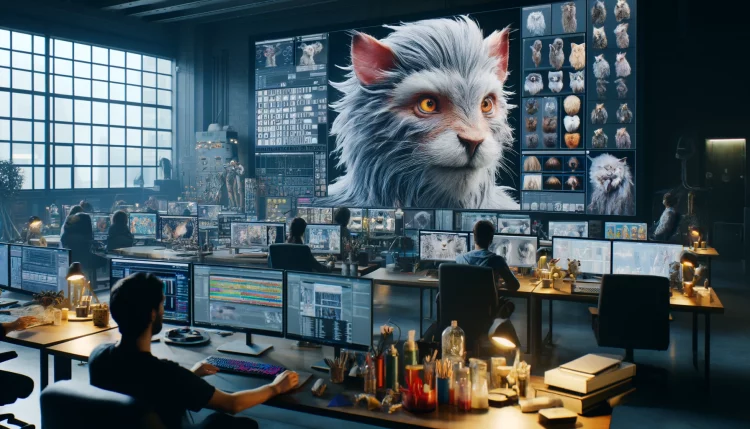
Ne Zha 2 crossed $1.7 billion at the box office in early 2025 — the highest-grossing animated film in history. And 75% of its 1,900 VFX shots were completed entirely by Chinese studios. That’s not a one-off achievement. It’s the new baseline for VFX companies in China, and it should fundamentally change how you think about vendor sourcing, co-production, and post-production capital allocation across Asia.
Whether you’re a line producer sourcing VFX for a Netflix series, a studio executive mapping your post-production capital stack, or a buyer trying to understand what Chinese content costs to make — you need a current picture of who’s doing the work, what they specialize in, and how to reach the right contacts before your competitors do. This guide gives you exactly that.
In This Guide
- Why China’s VFX Industry Matters in 2026
- Base FX — The Global Standard-Bearer
- MoreVFX — China’s Domestic Powerhouse
- Pixomondo Beijing — Virtual Production Leader
- DGene — AI-Native VFX Pioneer
- RedHot VFX — Award-Winning Boutique
- Shanghai Creasun Media & Mas Image Works
- How to Choose the Right VFX Partner in China
- AI Is Reshaping Chinese VFX
- FAQ
- Key Takeaways
Find Verified VFX Studios in China — Before the Project Gets Away
VIQI — Vitrina’s AI intelligence layer — surfaces active China-based VFX vendors matched to your project specs, budget range, and genre. Trusted by Netflix, Warner Bros, and Paramount. No credit card required.
Why China’s VFX Industry Matters in 2026
Not long ago, the phrase “Chinese VFX” made Hollywood producers wince. The industry’s own shorthand — “5-cent VFX” — captured exactly how domestic productions were perceived before 2015. But that era is definitively over.
Today, Chinese studios are delivering Marvel-caliber visual effects for blockbusters like Deadpool & Wolverine, Ant-Man and the Wasp: Quantumania, and Thunderbolts*. They’re not handling overflow work — they’re leading on flagship sequences. Base FX delivered 190 shots for Thunderbolts* and 280+ VFX shots for Marvel’s Ironheart. That’s the standard of work these studios are putting out now.
The structural shift has three drivers. First, the domestic Chinese market matured fast — local audiences now demand Hollywood-level spectacle, which forced studios to upgrade rapidly. Second, strategic alliances with Western houses like Industrial Light & Magic transferred world-class pipeline knowledge into Beijing studios. Third, AI tools are giving Chinese VFX artists — who already work at competitive cost structures — an additional productivity multiplier. According to People’s Daily, Chinese VFX teams can now “bring almost all visual concepts to life by technical means.”
For producers and buyers, this creates a real sourcing opportunity — if you know which studios to call, what they specialize in, and how to de-risk the engagement before it hits the trades. That’s precisely what this guide is built for.
The Numbers That Define the Market
17 dedicated VFX studios currently operate in China, employing an estimated 850–2,250 artists. But that’s just the formal studio count. The actual production ecosystem is far wider — Ne Zha 2 alone required 138 animation and VFX companies and a 4,000-person team over 5 years. No single country outside of the US and UK can mobilize that scale of coordinated VFX production. And the pipeline quality, once the biggest concern for international buyers, is now verifiably world-class.
As you’ll see reviewing the top VFX studios worldwide, China-based operations now sit alongside UK and US houses for mid-to-high complexity work — often at significantly lower recoupment risk on your production budget.

Your AI Assistant, Agent, and Analyst for the Business of Entertainment
VIQI AI helps you plan content acquisitions, raise production financing, and find and connect with the right partners worldwide.
- Find active co-producers and financiers for scripted projects
- Find equity and gap financing companies in North America
- Find top film financiers in Europe
- Find production houses that can co-produce or finance unscripted series
- I am looking for production partners for a YA drama set in Brazil
- I am looking for producers with proven track record in mid-budget features
- I am looking for Turkish distributors with successful international sales
- I am looking for OTT platforms actively acquiring finished series for the LATAM region
- I am seeking localization companies offer subtitling services in multiple Asian languages
- I am seeking partners in animation production for children's content
- I am seeking USA based post-production companies with sound facilities
- I am seeking VFX partners to composite background images and AI generated content
- Show me recent drama projects available for pre-buy
- Show me Japanese Anime Distributors
- Show me true-crime buyers from Asia
- Show me documentary pre-buyers
- List the top commissioners at the BBC
- List the post-production and VFX decision-makers at Netflix
- List the development leaders at Sony Pictures
- List the scripted programming heads at HBO
- Who is backing animation projects in Europe right now
- Who is Netflix’s top production partners for Sports Docs
- Who is Commissioning factual content in the NORDICS
- Who is acquiring unscripted formats for the North American market
Base FX — The Global Standard-Bearer
Base FX is the name every international producer needs to know first. Founded in 2005 by CEO Chris Bremble in Beijing, it’s become the most globally integrated VFX studio in China — with studios across Beijing, Wuxi, Xiamen, and Kuala Lumpur, plus an LA office. The studio employs 450+ artists and has completed 200+ major productions in its 20-year history.
Base’s credentials aren’t just Asian accolades. They hold three Primetime Emmy Awards — for HBO’s The Pacific, Boardwalk Empire, and Starz’s Black Sails. They earned two consecutive Academy Award nominations for Best Visual Effects — for Captain America: The Winter Soldier and Star Wars: The Force Awakens. That second nomination is particularly telling: Base contributed 400+ VFX shots to Force Awakens through their exclusive ILM partnership, which began formally in 2012 and helped define what China-based VFX could look like at the very top of the market.
Their 2025 slate confirms their standing. Base delivered 226 shots on Deadpool & Wolverine, 190 shots on Thunderbolts*, and 280+ shots on Ironheart. VFX Supervisors Tang Bingbing and Habib Zargarpour led 180 artists through 84 shots on Ant-Man’s Quantumania. But Base isn’t just a Hollywood service house — they also worked on Ne Zha 2, handling complex dynamic simulation sequences including, according to Supervisor Tang Bing Bing, “a thousand creatures jumping through lava with chains attached to them inside Tianyuan Cauldron.” Creature animation, fluid dynamics, and physics simulation running simultaneously at that scale requires a very short list of studios globally. Base is on it.
In 2025, Base also celebrated its 20th anniversary — and founder Chris Bremble was invited as a featured sessions speaker at SIGGRAPH Asia in Hong Kong, where he spoke on dynamic simulations work for Ne Zha 2. That invitation signals where Base sits in the global VFX conversation: not as a regional player, but as a studio that shapes international best practice.
Best For
High-end feature VFX, superhero and sci-fi tentpoles, prestige TV for streaming and cable, productions needing China–US pipeline continuity. Base is your first call if you need Hollywood-grade VFX delivered out of China with a proven international co-production track record.
Track Active Projects at China’s Top VFX Studios
Vitrina tracks 400,000+ active productions — including which VFX vendors are attached, what capacity looks like, and who the key decision-makers are.
Join 140,000+ companies already using the platform. 200 free credits. No credit card required.
✓ 200 free credits | ✓ No credit card required | ✓ Cancel anytime
MoreVFX — China’s Domestic Sci-Fi Powerhouse
MoreVFX (墨境天合) has been operating since 2007 and is the studio that arguably defines what “Chinese-made VFX” means domestically. If Base FX built China’s bridge to Hollywood, MoreVFX built the engine powering China’s own blockbuster machine.
Their fingerprints are on the films that changed the global narrative about domestic Chinese cinema. For The Wandering Earth (2019), MoreVFX — alongside Orange Vision — completed nearly half of the film’s 2,003 special effects shots. That sci-fi epic proved definitively that China could produce Hollywood-scale VFX domestically. For the sequel, The Wandering Earth 2 (2023), Wei Ming, MoreVFX’s cofounder and visual effects director, told China Daily that his team deployed “tens of thousands of lights” to illuminate the film’s planetary engine sequences — up from 5,000 in the original, requiring entirely new pipeline architecture to execute at that scale.
The awards record is formidable. Wukong won Best Visual Effects at the 37th Hong Kong Film Awards. The Wandering Earth took Best Visual Effects at the 9th Temple of Heaven Awards. A Writer’s Odyssey was nominated at the 15th Asian Film Awards. And The Wandering Earth 2 claimed the Visual Effects Award at the 25th Shanghai International Film Festival. MoreVFX has contributed to nearly 100 films in total — a volume that speaks to industrialized production management, not just creative talent.
And their concept design team is led by internationally renowned designers — giving them the creative range to handle everything from pre-production concepting through to final delivery without handing off the aesthetic vision mid-pipeline.
Best For
Sci-fi epics, fantasy blockbusters, Chinese mythology-driven IP, large-scale environmental and creature simulation. Essential for productions targeting the Chinese domestic market or co-productions needing to qualify under Chinese content frameworks.
Pixomondo Beijing — Virtual Production Leader
Pixomondo is the studio that straddles East and West most fluidly. The Oscar, BAFTA, and Emmy award-winning house — now part of Sony Pictures Entertainment — runs its Beijing operation as part of a global network spanning Los Angeles, Toronto, Vancouver, Montreal, Stuttgart, and Frankfurt. For international productions, that pipeline continuity across major hubs is a genuine logistical advantage.
What makes Pixomondo distinctively valuable in 2026 is their virtual production infrastructure. Their dedicated division, PXO Clara, delivers end-to-end LED volume services — from design and commissioning through to real-time toolsets and on-set supervision. They unveiled the PXO AKIRA system at CES in January 2025: a purpose-built platform combining robotic camera cranes, motion platforms, and LED volume technology specifically engineered for shooting vehicles in cinematic environments. That kind of hardware-software integration signals serious R&D investment — and a willingness to weaponize technology for competitive differentiation.
Their China credits include VFX work on Shadow, Zhang Yimou’s martial arts epic — one of four international studios enlisted to deliver the film’s 900 VFX shots. The film’s aesthetic demanded a “Chinese ink painting” look, requiring VFX work that balanced photorealism with cultural specificity. Pixomondo’s global pipeline structure made that translation possible at scale.
Best For
Productions requiring virtual production infrastructure in Asia, projects needing seamless pipeline continuity across global studio locations, high-end visualization and previs work, and LED volume shoots across the China-APAC region.
DGene — AI-Native VFX Pioneer
DGene is the studio to watch most closely if your concern is what Chinese VFX looks like in three years — not just today. This is a cutting-edge VFX and AI technology company that combines machine learning with traditional artistry at the pipeline architecture level, not as an add-on.
Their approach addresses something real. As Li Zhen, a researcher with the China Film Art Research Center, observed after Ne Zha 2‘s record-breaking run: Chinese AI models are “increasingly adept at handling Chinese-themed content,” drawing on thousands of years of cultural heritage that Western AI training datasets simply don’t contain. DGene is building into that advantage — developing tools trained on Chinese aesthetics, mythology, and storytelling conventions that no Hollywood studio’s AI pipeline can replicate.
The studio has earned recognition for technical and creative achievement, and their profile among international co-production partners is rising. But the real value proposition is strategic: if you’re developing China-originated IP that needs to travel globally, DGene can execute VFX that looks authentically Chinese without reading as culturally foreign to international audiences. That balance is genuinely difficult to achieve — and it’s a capability Western studios can’t easily buy.
Best For
AI-assisted VFX workflows, Chinese mythology and cultural IP, immersive digital media, productions wanting early access to next-generation AI pipeline tools ahead of the mainstream adoption curve.
RedHot VFX — Award-Winning Boutique Studio
RedHot VFX punches well above its weight class. This Shanghai-based boutique has earned consistent industry recognition for creativity and technical excellence — not by scaling up to compete with Base FX on volume, but by specializing in specific effect categories where artistic quality is the differentiator, not shot count.
For productions that need nuanced, artistically driven VFX — a boutique sensibility rather than a factory floor approach — RedHot is a strong consideration. Their award record signals a house that treats each sequence as a creative challenge, not just a delivery milestone. And their Shanghai base puts them in China’s most internationally connected city, simplifying logistics for international teams coordinating reviews across time zones.
Mordor Intelligence lists RedHot VFX among the top players in China’s animation, VFX, and post-production market — recognition that reflects sustained quality output rather than a single breakout project. Don’t overlook them for mid-budget productions where creative distinction matters more than raw scale.
Need a Bespoke China VFX Shortlist for Your Production?
Vitrina Concierge builds a curated vendor list matched to your project’s genre, budget, timeline, and quality bar — with direct introductions to the right contacts. Netflix and Warner Bros use Vitrina to track vendors globally.
Shanghai Creasun Media & Mas Image Works — Full-Service Partners
Shanghai Creasun Media is built for versatility — a true full-service VFX and animation operation serving domestic and international markets. Where specialist houses like MoreVFX or DGene focus on specific capability niches, Creasun is structured for productions that need a single vendor managing a diverse VFX scope across multiple effect types.
Film and television projects requiring effects spanning environments, characters, simulations, clean-up, and compositing benefit from Creasun’s integrated approach. Multiple industry awards for visual effects excellence, combined with an international client portfolio, demonstrate cross-cultural pipeline competency. Shanghai’s position as China’s entertainment hub makes Creasun highly accessible for international productions based in the region.
Mas Image Works brings a focused reputation in post-production services for film and TV — VFX that integrates cleanly with narrative rather than drawing attention to itself. Their multiple industry awards reflect consistent quality output. For productions that need China-side VFX vendor continuity without the overhead of a major studio engagement, Mas Image Works and Versatile Media — another solid operator with a global client base for technically complex work — round out the mid-tier vendor landscape effectively.
For a broader picture of how to evaluate and compare VFX vendors across production scales, our guide to VFX outsourcing companies puts the China ecosystem in the global context you need for procurement decisions.
How to Choose the Right VFX Partner in China
Here’s what most procurement guides won’t tell you: in China’s VFX market, the gap between a great engagement and a painful one usually comes down to pre-selection intelligence, not the quality of the work itself. The studios listed here can all deliver. The question is whether you’ve matched the right studio to your specific production need.
Match by technical capability, not name recognition. Creature animation at Base FX, large-scale simulation and particle effects at MoreVFX, virtual production infrastructure at Pixomondo, AI-native pipeline at DGene, artistically nuanced boutique work at RedHot VFX. The Fragmentation Paradox in VFX procurement is real — there are enough studios with enough capability overlap that vague vendor selection leads to margin leakage and missed creative potential. You need to know what you actually need before you call anyone.
Go deep on showreel vetting. Don’t just watch the highlight reel. Ask to see full-sequence breakdowns and request examples that match your project’s specific complexity category. The difference between a studio that can do creature effects and one that’s delivered your scale of creature effects is a legitimate procurement distinction — and it’s one that’s easy to miss when you’re moving fast.
Audit the communication infrastructure. VFX is iterative. If you’re running a production from London or Los Angeles and your vendor is in Beijing or Shanghai, you need established async review workflows, English-language production management, and clear escalation paths. Studios like Base FX have built this over 20 years of international co-productions. Newer boutiques may require a longer onboarding runway — factor that into your schedule.
Get in front of timing. China’s top VFX studios book up fast around domestic blockbuster release seasons — particularly Spring Festival and Golden Week. Since Ne Zha 2 and the Wandering Earth franchise established Chinese animated and sci-fi epics as Box Office tentpoles, Base FX and MoreVFX are now competing for capacity against both Hollywood tentpoles and their own domestic pipeline. If you need them on your slate, you need to be talking to them 6–9 months before principal photography — not 6 weeks before. That intelligence — knowing who has capacity and when — is where platforms like Vitrina accelerate your procurement cycle from months to days.
For a practical framework on evaluating studios across complexity and budget tiers, our guide to choosing the right VFX company is worth reading alongside this studio profile list.
AI Is Reshaping Chinese VFX — What Buyers Need to Know
The AI story in Chinese VFX isn’t the same as the AI story in Hollywood. And that distinction matters significantly for anyone sourcing internationally.
In the West, AI in VFX is primarily a cost efficiency and speed narrative — using generative tools to accelerate pipeline stages that previously required extensive human artistry. In China, there’s an additional strategic dimension: AI models trained on Chinese cultural heritage are unlocking aesthetic capabilities that simply don’t exist in Western toolkits. “The more these models learn from our VFX artists,” said a VFX industry executive quoted by People’s Daily in early 2025, “the better they capture Chinese aesthetics and emotional expression.” The pipeline implications are profound — and they haven’t filtered into mainstream procurement thinking yet. That’s your information advantage if you move on it now.
Practically, this means: if your production involves Chinese mythology, historical settings, martial arts aesthetics, or content where cultural specificity matters — Chinese studios using AI trained on domestic content libraries will outperform Western houses working from generic datasets. That’s a genuine creative advantage, not just a cost argument. And it’s one that will only widen as Chinese AI development accelerates.
There’s also the cross-media scope expansion worth tracking. It’s not just feature film and streaming TV anymore. Gaming, AR/VR, and social media production are driving new demand at Chinese VFX studios — creating capacity variance that smart buyers can exploit by timing their vendor conversations outside peak domestic release seasons. Shenzhen in particular has identified digital creative as one of its 20 key strategic emerging industries, with dedicated support for animation, film and television production, and gaming — creating a new cluster of specialized capabilities south of the established Beijing-Shanghai axis.
Our coverage of AI VFX in the global entertainment supply chain provides the broader context for how these China-specific developments fit into the worldwide shift toward AI-integrated production.
Frequently Asked Questions About VFX Companies in China
Key Takeaways
China’s VFX industry isn’t a future story anymore. It’s a present-tense procurement reality — and the producers, buyers, and studio executives who engage with it now will have a structural advantage over those waiting for the mainstream to catch up.
- Base FX is China’s global benchmark: Three Emmy Awards, two Oscar nominations, 200+ major productions, and a 2025 slate spanning Deadpool & Wolverine, Thunderbolts*, Ironheart, and Ne Zha 2. Founded by CEO Chris Bremble in 2005, with 450+ artists across five global locations — including Beijing, Kuala Lumpur, and LA.
- MoreVFX owns domestic sci-fi VFX: Nearly 100 films, multiple Hong Kong and mainland Chinese awards, and the studio behind The Wandering Earth franchise’s signature simulation sequences. Cofounder Wei Ming’s team is the first call for large-scale particle effects and environmental VFX targeting the Chinese market.
- Ne Zha 2 reset the frame of reference: 138 companies, 4,000 people, 1,900 VFX shots, $1.7 billion at the box office, and 200 million simultaneous characters in the climactic battle — all delivered by Chinese teams. This is your new benchmark for what’s achievable domestically.
- AI differentiation is real and strategic: Chinese studios developing AI tools trained on domestic cultural heritage have creative capabilities that Western toolkits simply can’t replicate. For China-originated IP, this is a competitive moat — not just a pipeline efficiency story.
- Timing is the most underrated variable: China’s top studios now compete for capacity against both Hollywood tentpoles and massive domestic blockbusters. Connect with your vendor shortlist 6–9 months before your schedule requires it — or use Vitrina’s real-time project intelligence to close the Data Deficit before it costs you.
Connect With China’s Best VFX Studios — Starting Today
Vitrina tracks 400,000+ active global productions and the vendors powering them. Find verified China-based VFX companies, see their active credits, and reach the right decision-makers directly — with 200 free credits, no credit card required.
Get 200 Free Credits
Talk to Vitrina Concierge
Trusted by Netflix, Warner Bros, Paramount, and Google TV | 140,000+ companies on the platform
Find Film+TV Projects, Partners, and Deals – Fast.
VIQI matches you with the right financiers, producers, streamers, and buyers – globally.
Producers Seeking Financing, Co-Pros, or Pre-Buys?
Vitrina Concierge helps producers reach the right financiers, commissioners, distributors, and co-production partners — with precision outreach, not cold pitching.
Join Industry Briefings Trusted by Leaders
Books, Novels & Comics Adaptations: Global Trends
Books, webtoons, and manga driving the next global screen hits. Discover how in this webinar.

Micro-Dramas & Mobile-First Storytelling
Micro-dramas are building real audiences and revenue. Understand the platforms, buyers, and economics behind the growth.

Navigating Global Content Licensing Trends
How global content licensing is shifting beyond flat fees to flexible, deal-driven models.