About Innovation Hub
 Global Content Pulse (Webinars)


 Global Production Financing
(Webinars)
Global Production Financing
(Webinars)  LeaderSpeak Podcast
  About Vitrina
 Our Story
 Our Solutions 🔥
 Film+TV Projects Tracker 🚀
 Case Studies
 Our Profile
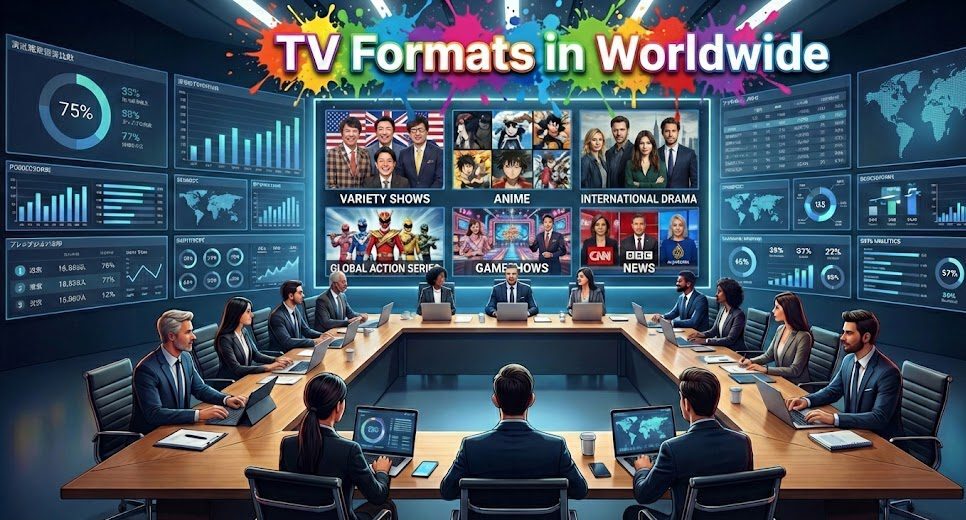
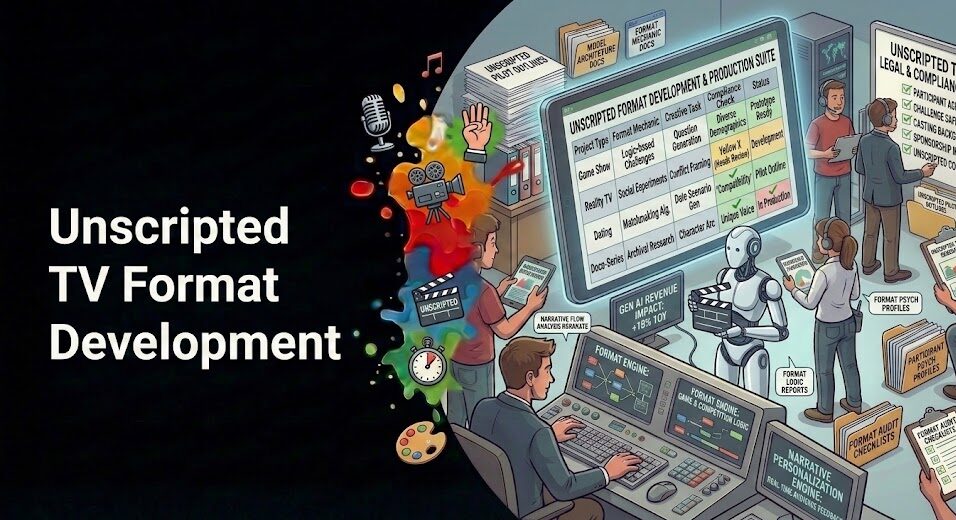
TV formats in worldwide markets are proven program concepts—ranging from unscripted reality competitions to scripted dramas—that are licensed for local adaptation across different territories.
This process involves securing the “Bible” (production manual), brand assets, and consultancy rights to recreate a successful series while tailoring it to local cultural nuances.
According to recent industry data from Ampere Analysis, unscripted content now accounts for up to 80% of commissioning activity for traditional broadcasters, with streamers rapidly adopting this “broadcastification” strategy to drive ROI.
In this guide, you’ll learn how to identify trending regional formats, navigate the legal complexities of multi-territory rights, and leverage supply chain intelligence to compress your acquisition cycles.
While traditional licensing relies on surface-level database listings, the modern content landscape demands a deep dive into interconnected supply chain data. Many buyers face a “data deficit,” struggling to track unreleased projects or verify a format’s track record in emerging markets before the competition.
This comprehensive analysis fills those gaps by providing a roadmap for 2025, focusing on data-driven discovery and strategic risk mitigation for acquisition professionals.

Your AI Assistant, Agent, and Analyst for the Business of Entertainment
VIQI AI helps you plan content acquisitions, raise production financing, and find and connect with the right partners worldwide.
- Find active co-producers and financiers for scripted projects
- Find equity and gap financing companies in North America
- Find top film financiers in Europe
- Find production houses that can co-produce or finance unscripted series
- I am looking for production partners for a YA drama set in Brazil
- I am looking for producers with proven track record in mid-budget features
- I am looking for Turkish distributors with successful international sales
- I am looking for OTT platforms actively acquiring finished series for the LATAM region
- I am seeking localization companies offer subtitling services in multiple Asian languages
- I am seeking partners in animation production for children's content
- I am seeking USA based post-production companies with sound facilities
- I am seeking VFX partners to composite background images and AI generated content
- Show me recent drama projects available for pre-buy
- Show me Japanese Anime Distributors
- Show me true-crime buyers from Asia
- Show me documentary pre-buyers
- List the top commissioners at the BBC
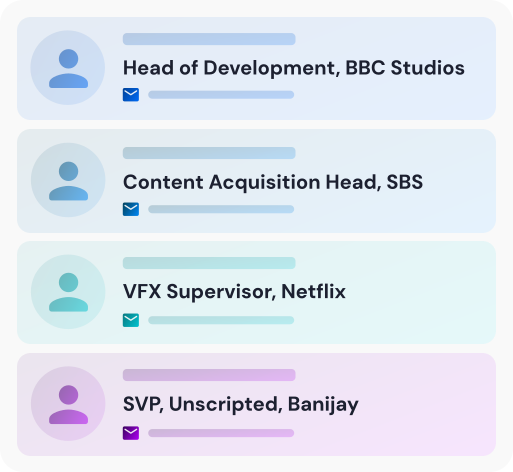
- List the post-production and VFX decision-makers at Netflix
- List the development leaders at Sony Pictures
- List the scripted programming heads at HBO
- Who is backing animation projects in Europe right now
- Who is Netflix’s top production partners for Sports Docs
- Who is Commissioning factual content in the NORDICS
- Who is acquiring unscripted formats for the North American market
Table of Contents
Key Takeaways for Acquisition Leads
-
De-Risk with Data: Buyers track regional format successes to find concepts with global travelability, reducing the inherent risk of betting on unproven paper formats.
-
Unscripted Dominance: High-performing unscripted hits like “Silent Library” or “24 in 24” offer flexible, cost-effective adaptation frameworks that resonate globally.
-
Rights Automation: Leveraging AI tools like VIQI simplifies complex multi-territory licensing by mapping relationships and verifying deal histories for 140,000+ global companies.
What is TV Format Licensing in a Global Context?
TV format licensing is the professional mechanism by which the underlying intellectual property of a television series is rented to another producer or broadcaster for local recreation. Unlike acquiring a finished tape, where you buy a completed show, format licensing provides the “roadmap”—the structural beats, rules, and aesthetic guidelines that made the original a success. This allows for cultural customization while maintaining the brand’s global integrity.
The “Bible” is the core of this transaction, serving as a technical manual that includes everything from lighting plots to host scripts. By 2025, format deals are typically structured as “option/purchase” arrangements. Producers pay an option fee for the exclusive right to develop an adaptation, eventually paying a “format fee” once the show is greenlit by a local broadcaster or platform.
Find active format licensees in European markets:
Why Do Acquisition Leads Track Regional Format Successes?
In today’s unpredictable landscape, security and scale are paramount. Acquisition leads track regional successes to “de-risk” their investments. It is far easier to convince stakeholders to greenlight a format that has already traveled to 15 countries than to bet on a completely new idea. This “proven roadmap” provides a competitive edge, allowing buyers to identify which subgenres are resonating in similar demographics.
For example, Japanese unscripted hits like “Silent Library” and “Old Enough!” have seen format revenue double for Fuji Television and Nippon TV respectively in 2024-2025. By monitoring these successes early through Vitrina’s Global Projects Tracker, acquisition teams can secure options before a format goes viral, avoiding bidding wars and securing better territorial terms.
How Do Buyers Solve Multi-Territory Rights Complexities?
Managing rights for TV formats in worldwide markets is a logistical gauntlet. Modern contracts must now differentiate between traditional usage and “Training Rights” for AI, as seen in recent deals by major publishers and studios. Furthermore, the shift from a “Walled Garden” to “Weaponized Distribution” means buyers must anticipate rotational windows—licensing hits to rivals 18-24 months post-release to maximize ARPU.
To solve this, leads rely on Deals Intelligence to track money movement and historical licensing patterns. Understanding who previously held rights and the specific clauses regarding digital cloning or synthetic media (crucial for localized dubbing) is the only way to ensure a project is legally sound before production begins.
Industry Expert Perspective: MGM Alternative: Reinventing Reality TV
Barry Poznick, President of MGM Alternative, explores the transition from pop-culture-obsessed production to managing a global slate of 35+ shows. This masterclass reveals how unscripted television is evolving to meet the demands of a streaming-first era.
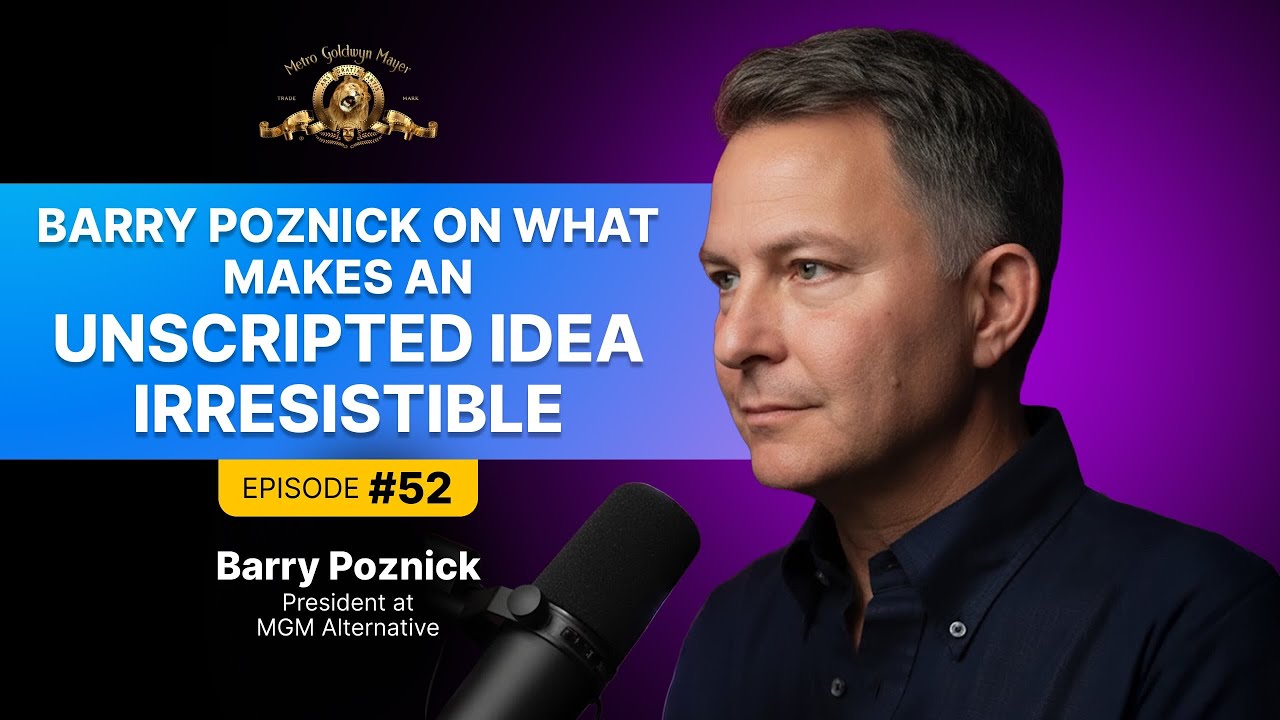
Learn how MGM Alternative builds and scales hits like “Shark Tank” and “Survivor” globally, leveraging data to drive decision-making in unscripted content.
Unscripted vs. Scripted Adaptations: Which Strategy Wins in 2025?
Unscripted formats remain the “bread and butter” of global content due to their cost-effectiveness and cultural flexibility. Shows like “The Traitors” or “Love Island” effortlessly pass the twenty-mark for local adaptations because they rely on universal psychological hooks. In 2024, Netflix significantly increased its unscripted commissioning, making it the majority of its show orders for the first time.
Scripted formats, while riskier, are seeing a “renaissance” as buyers turn to known IP for stability. Adapting a scripted drama like “Doc Martin” (U.S.) or “Shameless” (India) requires capturing the “essence” of the narrative while updating it for local critical reception. The choice between a procedural (high syndication value) and a serialized limited series (high binge-watch potential) is now a primary strategic decision for acquisition leads.
How Is AI Revolutionizing Global Format Discovery?
AI has transitioned from a theoretical tool to a core business strategy. For acquisition leads, Vertical AI assistants like VIQI function as “virtual Hollywood agents,” trained on proprietary datasets to map 30 million industry relationships. Instead of searching manual databases, buyers can now query: “Which unscripted formats are trending in Brazil with available rights in Europe?” and receive a verified, real-time list.
Beyond discovery, AI is optimizing the “Content Innovation Loop.” By analyzing vast amounts of viewing data, AI helps greenlight formats with the highest potential for audience retention. In production, tools like deep-learning dubbing enable formats to cross language barriers with emotional authenticity, making regional hits truly global phenomena within days of release.
Frequently Asked Questions
Quick answers to the most common queries about TV Formats in Worldwide markets.
What is the difference between a TV format and a genre?
Which region is currently leading in unscripted format production?
Is it better to create an original format or license an existing one?
How do AI dubbing and localization impact format travelability?
What are the risks of scripted format adaptations?
““Vitrina AI acts as a digital lighthouse for the entertainment industry; in a sea of fragmented data and opaque personal networks, it provides the clear, steady signal that allows global players to navigate safely toward the right partners and opportunities.”
Moving Forward
The global TV format market is no longer a relationship-driven art but a data-powered science. This guide has addressed the critical gaps in tracking regional hits and managing multi-territory rights by emphasizing the shift toward verifiable supply chain intelligence.
Whether you are an acquisition lead looking to de-risk your next slate with proven regional formats, or a strategist managing complex multi-platform rights, the conclusion is clear: actionable intelligence drives deal velocity.
Outlook: Over the next 12-18 months, “Weaponized Distribution” and AI-driven discovery will dominate, with successful buyers being those who embrace the “insider advantage” of a global, data-first infrastructure.
About the Author
Expert Entertainment Supply Chain Architect with over 15 years of experience in global content acquisition, licensing, and data intelligence strategy. A specialist in navigating complex multi-territory rights, they focus on transforming traditional media workflows into data-driven powerhouses. Connect on Vitrina.
Find Film+TV Projects, Partners, and Deals – Fast.
VIQI matches you with the right financiers, producers, streamers, and buyers – globally.
Producers Seeking Financing, Co-Pros, or Pre-Buys?
Vitrina Concierge helps producers reach the right financiers, commissioners, distributors, and co-production partners — with precision outreach, not cold pitching.
Join Industry Briefings Trusted by Leaders
Streamers – Netflix vs. Amazon – The 2026 Strategy
How Netflix and Amazon’s content and revenue strategies are diverging ahead of 2026.
Format Adaptations: Global Trends
Where formats are traveling, which adaptations are breaking out, and how streamers are backing remakes in 2025–2026.

Books, Novels & Comics Adaptations: Global Trends
Books, webtoons, and manga driving the next global screen hits. Discover how in this webinar.

Micro-Dramas & Mobile-First Storytelling
Micro-dramas are building real audiences and revenue. Understand the platforms, buyers, and economics behind the growth.