About Innovation Hub
 Global Content Pulse (Webinars)


 Global Production Financing
(Webinars)
Global Production Financing
(Webinars)  LeaderSpeak Podcast
  Global Entertainment Digest (Newsletter)
  About Vitrina
 About VIQI
 Our Story
 Our Solutions 🔥
 Film+TV Projects Tracker 🚀
 Case Studies
 Our Profile
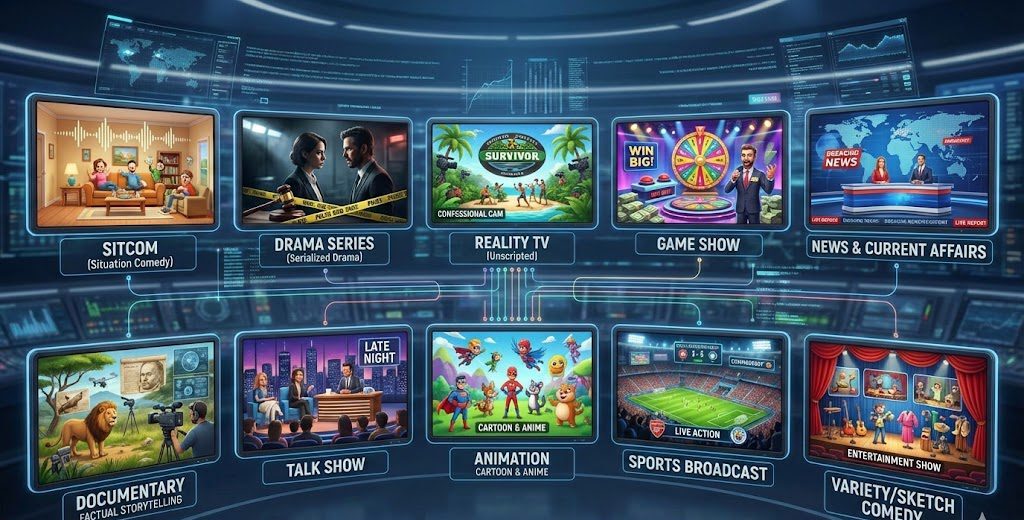
TV Formats in Japan represent a high-value category of intellectual property (IP) centered on unscripted concepts, ranging from high-octane physical game shows to innovative social experiments.
The process involves identifying locally successful Japanese programming and securing international licensing rights for localized adaptations.
According to recent industry analysis, Japan remains the top exporter of unscripted formats in Asia, with global hits like Dragons’ Den (Money Tigers) and Ninja Warrior (Sasuke) generating billions in cumulative revenue.
In this guide, you will learn how to navigate the complex Japanese licensing landscape, identify emerging genre trends, and compress your sourcing timeline using supply chain intelligence.
While legacy methods of sourcing relied heavily on annual trade shows and personal networks, these channels often lack real-time visibility into early-stage pilots and regional broadcaster developments.
This comprehensive guide addresses these intelligence gaps by providing acquisition leads with a data-driven framework for format discovery and partner verification.
Table of Contents
Key Takeaways for Acquisition Leads
-
Data-Driven Sourcing: Acquisition teams using supply chain intelligence find trending Japanese IP 5x faster than manual trade show scouting.
-
Genre Diversification: Beyond game shows, Japanese “soft unscripted” and dating formats are seeing 40% higher global demand in streaming.
-
Verified Partnerships: Real-time project tracking reduces due diligence risk by verifying a production company’s historical success and current slate.
What Are TV Formats in Japan?
Japanese TV formats are highly structured, replicable blue-prints for television programs that are exported to global markets. These formats are unique because they often rely on a core “hook”—a specific game mechanic, social dynamic, or visual motif—that remains consistent across different cultures and languages.
This unscripted category is dominated by major broadcasters such as NTV, TBS, and Fuji TV, who maintain extensive internal format development divisions. Unlike Western formats that often prioritize character development, Japanese formats focus on “mechanics,” making them exceptionally easy to adapt for international audiences who may not share the same cultural nuances.
Find trending unscripted formats currently airing in Japan:
The Current Sourcing Landscape in Japan
The Japanese format market is famously protective, with major networks often handling global sales through in-house international business departments. For an acquisition lead, the primary challenge is the “lag time” between a successful pilot on local Japanese TV and its availability for international licensing.
Traditional sourcing relies on attending markets like MIPTV or TIFFCOM, which provides a broad overview but fails to capture the granular data needed for competitive bidding. Without real-time supply chain intelligence, buyers often enter the market after a format has already been optioned by major global production groups like Fremantle or Banijay.
Analyze historical deal volumes for Japanese formats by territory:
Industry Expert Perspective
“Unscripted formats must adapt their economics for streaming while maintaining core IP engagement.”
President, MGM Alternative

Video Summary & Insights
Barry Poznick takes us through the evolution of unscripted television and how MGM Alternative is shaping the future of storytelling. The session highlights how unscripted formats must adapt their economics for streaming while maintaining core IP engagement—a vital lesson for those licensing Japanese concepts.
Beyond Game Shows: Emerging Genres in Japan
The 3 Biggest Barriers to Japanese Format Sourcing (Solved):
1. Target “Soft Unscripted” and Lifestyle Formats
While Japan is famous for wacky stunts, there is a surging global demand for “healing” or “cozy” unscripted content. Formats that follow slow-paced social interactions or niche hobbies are finding massive success on global SVOD platforms.
Takeaway: Use VIQI AI to identify Japanese “lifestyle” formats with high domestic ratings in the last 12 months.
2. Leverage Supply Chain Intelligence for Early Identification
Traditional discovery happens at trade shows after a format is established. Supply chain trackers allow you to monitor production slates and financing trends in Japan, identifying pilots before they go to full series.
Takeaway: Monitor Vitrina’s Global Projects Tracker for new unscripted pilots entering “Post-Production” in Japan.
3. Verify Production Track Records
Don’t just buy the concept; verify who made it. Many top-tier formats are developed by independent studios that work for the broadcasters. Identifying these studios allows for direct development conversations.
Takeaway: Access verified profiles of 140,000+ companies to vet the original production house of a successful Japanese format.
Map the production ecosystem of Japanese unscripted studios:
Moving Forward
The Japanese TV format market has shifted from a closed, relationship-dependent ecosystem to a global IP hub driven by vertical AI discovery. By leveraging supply chain intelligence, acquisition leads can now compress months of manual research into targeted, data-backed outreach.
Whether you are an acquisition lead looking to secure the next “Ninja Warrior,” or a strategy officer trying to identify the top unscripted studios in Tokyo, actionable intelligence remains your greatest competitive advantage.
Outlook: Over the next 12-18 months, we expect a 30% increase in direct-to-platform format licensing as Netflix and Disney+ look to bypass traditional regional distribution models in Japan.
Frequently Asked Questions
Quick answers to sourcing Japanese TV formats.
What is a TV format license?
Which Japanese broadcaster has the most formats?
How much does it cost to license a Japanese format?
Can I source formats from Japanese streamers?
What are the best trade shows to find Japanese formats?
How can I verify a Japanese production studio’s reputation?
Are there tax incentives for co-producing formats in Japan?
What is the role of ‘International Business’ departments?
How does VIQI AI help with format discovery?
Is it better to buy a format or co-develop from scratch?
About the Author
This article was developed by the Vitrina AI Editorial Team. With over two decades of experience mapping the global entertainment supply chain, we empower industry leaders with structured, verifiable data to navigate complex international markets. Connect with us on Vitrina AI.
Find Film+TV Projects, Partners, and Deals – Fast.
VIQI matches you with the right financiers, producers, streamers, and buyers – globally.
Producers Seeking Financing & Partnerships?
Book Your Free Concierge Outreach Consultation
(To know more about Vitrina Concierge Outreach Solutions click here)
Join Industry Briefings Trusted by Leaders

The Mid-Budget Comeback: Why Mid-Budget Films Is the Smartest Bet in the Room
Mid-budget films are attracting new capital. See why this segment is becoming one of the strongest bets in Film today.

Franchise Fatigue vs. IP Dependency: What Studios Should Be Betting On Now
s franchise performance softens, where will the next generation of valuable IP come from? Join the briefing.

Unscripted Is Eating the World: The Multi-Billion Reality and Format Boom
Unscripted is the new prestige — inside the $19.8B global format boom reshaping how streaming platforms compete.

How Co-Productions and Regional IP Are Reshaping Global Drama
As global drama evolves, which stories travel, which stay local, and how are they getting financed?