About Innovation Hub
 Global Content Pulse (Webinars)


 Global Production Financing
(Webinars)
Global Production Financing
(Webinars)  LeaderSpeak Podcast
  About Vitrina
 Our Story
 Our Solutions 🔥
 Film+TV Projects Tracker 🚀
 Case Studies
 Our Profile
India isn’t just the world’s largest film industry by output anymore. It’s rapidly becoming one of the most strategically important film production houses destination for global M&E partnerships—and the numbers bear that out. With a federal incentive now at 40% (raised from 30% in 2024), a domestic audience of 1.4 billion people, and streaming platforms committing billions to local originals, international executives who’ve been treating India as a cost-effective service hub are waking up to something bigger. This is a Sovereign Content Hub with its own IP ambitions, its own star system, and its own route to global audiences.
But here’s the part that trips up most international buyers and co-production seekers: India isn’t one market. It’s eight or nine simultaneous ones—Hindi (Bollywood), Tamil (Kollywood), Telugu (Tollywood), Malayalam (Mollywood), Kannada (Sandalwood), and beyond. Miss that distinction and you’ll pitch the wrong houses, build the wrong partnerships, and leave real value on the table.
This guide breaks down the top film production houses in India, the M&E partnership structures that are actually closing deals, and what international players need to know before they enter the room.
Table of Contents
- Why India Is Now a Tier-1 Sovereign Content Hub
- Top Bollywood Production Houses for International Partnerships
- Beyond Bollywood: Regional Production Houses That Matter Globally
- Streaming Platform Partnerships: Netflix, Amazon, and Hotstar
- M&E Partnership Structures That Actually Work in India
- Incentives and Co-Production Framework: The 40% Advantage
- Finding and Vetting Indian Production Partners at Scale
- FAQ
- Conclusion
Ask VIQI: Which Indian Production Houses Are Actively Seeking Co-Production Partners Right Now?
VIQI is Vitrina’s AI assistant—trained on 1.6 million titles, 360,000 companies, and 5 million entertainment professionals. Ask it to surface verified Indian prodco contacts by genre, language, or deal type.
✓ 200 free credits included | ✓ No credit card needed
Why India Is Now a Tier-1 Sovereign Content Hub
India produces more films than any country on earth—between 1,500 and 2,000 titles annually—across more than 20 languages. That’s not a new fact. What’s new is the capital stack behind it and the global ambition that now accompanies it.
The federal 40% production incentive (administered by the NFDC—National Film Development Corporation of India) covers features, documentaries, VFX work, and animation. There’s an additional 5% bonus for productions with significant Indian content, capped at $3.6M per project. That’s a meaningful number for mid-budget international co-productions—especially when you stack it against state-level incentives in Maharashtra, Telangana, and Karnataka. Mr. Prithul Kumar, Joint Secretary (Films) and Managing Director of the NFDC, has been actively pitching this framework to international producers, emphasizing bilateral audio-visual co-production agreements that India holds with multiple countries as a route to double-dipping on incentive structures.
But India’s Sovereign Content Hub status isn’t primarily about the rebate. It’s about access. A partnership with a top Indian production house gives you distribution reach across a domestic theatrical market that’s still expanding—over 9,500 multiplexes and single screens nationwide, with India’s box office growing at roughly 12% annually through 2025. Add the DisneyHotstar, Netflix, and Amazon Prime Video India subscriber bases—collectively well over 500 million streaming accounts—and you understand why the Fragmentation Paradox hits hardest here. There are thousands of production companies to choose from. But the ones with genuine scale, bankable talent relationships, and clean IP chains? Those are a far smaller universe—and finding them without real-time intelligence wastes months.
As we covered in India’s top film production companies power list, the market is consolidating around a set of vertically integrated players who control talent relationships, distribution networks, and streaming output simultaneously—and those are the partners worth knowing before you walk into MIPCOM or AFM.

Your AI Assistant, Agent, and Analyst for the Business of Entertainment
VIQI AI helps you plan content acquisitions, raise production financing, and find and connect with the right partners worldwide.
- Find active co-producers and financiers for scripted projects
- Find equity and gap financing companies in North America
- Find top film financiers in Europe
- Find production houses that can co-produce or finance unscripted series
- I am looking for production partners for a YA drama set in Brazil
- I am looking for producers with proven track record in mid-budget features
- I am looking for Turkish distributors with successful international sales
- I am looking for OTT platforms actively acquiring finished series for the LATAM region
- I am seeking localization companies offer subtitling services in multiple Asian languages
- I am seeking partners in animation production for children's content
- I am seeking USA based post-production companies with sound facilities
- I am seeking VFX partners to composite background images and AI generated content
- Show me recent drama projects available for pre-buy
- Show me Japanese Anime Distributors
- Show me true-crime buyers from Asia
- Show me documentary pre-buyers
- List the top commissioners at the BBC
- List the post-production and VFX decision-makers at Netflix
- List the development leaders at Sony Pictures
- List the scripted programming heads at HBO
- Who is backing animation projects in Europe right now
- Who is Netflix’s top production partners for Sports Docs
- Who is Commissioning factual content in the NORDICS
- Who is acquiring unscripted formats for the North American market
Top Bollywood Production Houses for International Partnerships
The Hindi-language Bollywood ecosystem is where most international M&E partnerships begin—because it’s where the globally recognized IP sits. But the dynamics of each major house are different, and approaching them without understanding those differences is a common misstep.
Dharma Productions, founded by Karan Johar, is arguably the most globally connected production house in India. It’s delivered franchise tentpoles like the Kuch Kuch Hota Hai legacy and recent Netflix co-productions, and its output consistently dominates opening weekend box office. Dharma’s strength is talent packaging—it holds long-term relationships with A-list stars and directors that make it uniquely bankable for streaming platform first-look deals. International partners working with Dharma typically enter via streaming output deals or co-production arrangements tied to specific genre projects.
Yash Raj Films (YRF) operates more like a traditional studio than any other Indian company—with in-house distribution, a music label, a talent management division, and a content library spanning over five decades. YRF’s international partnership activity has focused on co-productions leveraging its SPY UNIVERSE franchise (the Tiger and Pathaan films), which has demonstrated that Indian action cinema can cross over globally. Any international player seeking library access alongside production capability should have YRF on their priority list.
Excel Entertainment, co-founded by Ritesh Sidhwani and Farhan Akhtar, has built a reputation for mid-budget prestige content—the kind of projects that punch well above their production cost at festivals and on streaming. Excel’s Dil Dhadakne Do, Zindagi Na Milegi Dobara, and Inside Edge (Amazon’s first Indian original series) signal a house with genuine international sensibility. It’s the partner to approach for co-productions targeting both Indian audiences and South Asian diaspora markets globally.
Red Chillies Entertainment, owned by Shah Rukh Khan, brings a different proposition: its VFX subsidiary Red Chillies VFX has become a serious technical capability, not just a vanity production label. The Fan (2016) and Zero (2018) VFX work demonstrated that Red Chillies can compete technically with global studios. For international partners seeking Indian production with integrated post and VFX capability under one roof, Red Chillies is a compelling single-vendor solution.
Maddock Films and Junglee Pictures are newer but fast-moving houses that have proven particularly agile in the horror and thriller genres—delivering commercial hits like Stree and its sequels at budgets well below traditional tentpole spend. For international partners looking for co-production arrangements with de-risked budget profiles and strong domestic theatrical track records, these houses represent the middle market that often gets overlooked in favor of the major brands.
Discover Verified Indian Production Houses Before Your Next Co-Production Conversation
Trusted by Netflix, Warner Bros, and Paramount. Join 140,000+ companies using Vitrina to track Indian production house deal flow, verify capabilities, and identify partnership windows—in real time.
✓ 200 free credits | ✓ No credit card required | ✓ Full platform access
Beyond Bollywood: Regional Production Houses That Matter Globally
Here’s the intelligence gap that costs international partners real money: the assumption that a Bollywood partnership gives you India. It doesn’t. And the production houses driving India’s most commercially explosive recent titles aren’t all based in Mumbai.
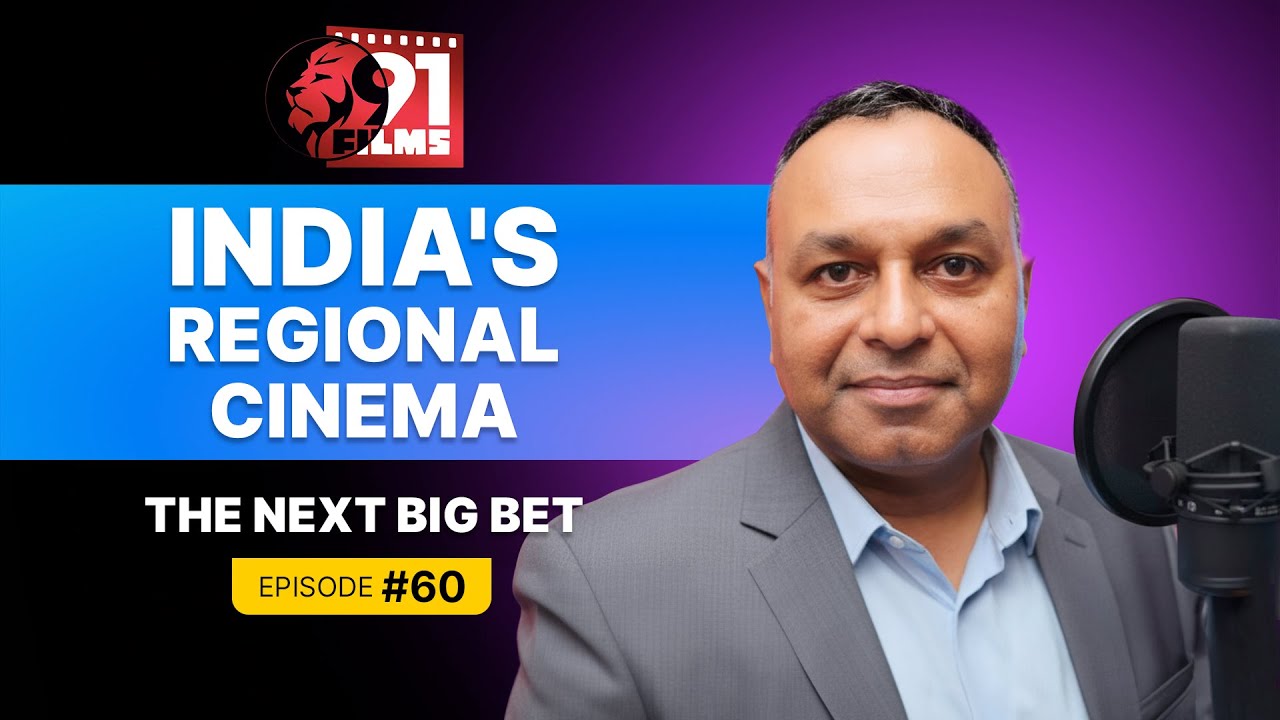
Naveen Chandra, CEO and Founder of 91 Film Studios, makes this point sharply in his Vitrina LeaderSpeak conversation about India’s regional cinema markets. He describes a system where Tamil, Telugu, and Malayalam films regularly outperform Bollywood on a per-screen revenue basis within their territories—and where organized production capital is now flowing into regional cinema in ways that were structurally absent just five years ago. The implication for international partners: your co-production strategy for India should map the language markets separately, not treat “India” as a monolith.
Naveen Chandra (CEO & Founder, 91 Film Studios) unpacks why India’s regional cinema markets are the most misunderstood opportunity in global content right now:
In Telugu cinema, Mythri Movie Makers and Haarika & Hassine Creations are the houses behind some of Tollywood’s biggest recent exports—including titles that cracked the global streaming charts on Netflix and Amazon. The Baahubali franchise, produced by Arka Media Works (S. S. Rajamouli’s company), demonstrated that Telugu cinema could command a $250M+ box office run globally. That’s not an anomaly—it’s a market signal that smart international buyers acted on.
In Tamil cinema, Lyca Productions and Sun Pictures carry the weight of the biggest theatrical bets in Kollywood. Sun Pictures’ backing of Rajinikanth’s films alone puts it in a different financial tier—these are productions that routinely exceed ₹200 crore ($25M+) budgets with pre-sales locking global Tamil diaspora markets before a frame is shot. International partners looking for equity co-production in Tamil cinema need to come with significant capital and clear territorial rights—because the domestic appetite is already there at scale.
Malayalam cinema—Mollywood—is arguably the most critically credible regional market globally right now. Productions like All We Imagine as Light (which won at Cannes 2024) and the sustained international festival presence of Malayalam directors have created a co-production pathway that European arthouse financiers are actively exploiting. The production houses here are smaller and more relationship-driven, but the creative track record for festival-path content is second to none in India. Our deep guide to India’s regional film markets maps this landscape in full detail.
Streaming Platform Partnerships: Netflix, Amazon, and Hotstar
The streaming platform partnerships Indian production houses have built over the past five years have fundamentally changed the M&E deal landscape—and they’ve created a new tier of bankable partners that didn’t exist a decade ago.
Netflix opened a dedicated creative technology hub in Hyderabad, signaling a long-term India infrastructure commitment that goes well beyond content licensing. As reported by Variety, Netflix has committed over $1 billion in Indian content investment—channeled through multi-year output deals with houses like Dharma Productions, Excel Entertainment, and select regional partners. The Netflix India slate has become a validation mechanism: a Netflix co-production credit on an Indian house’s recent projects is now a quality signal that international buyers read quickly.
Amazon Prime Video took a different approach—building its India originals slate through smaller, genre-focused production companies rather than anchoring to the Bollywood establishment. Excel Entertainment’s Inside Edge series was the beachhead. Amazon has since expanded to regional content in Tamil and Telugu, giving smaller production houses a route to global streaming distribution that bypasses the traditional Bollywood gatekeepers entirely.
Disney+ Hotstar (now operating under Reliance’s JioCinema following the JioCinema-Disney merger) is the domestic streaming giant—with a subscriber base that dwarfs international platforms in India. For international M&E partners, a relationship with Reliance Entertainment or the Hotstar content team opens a distribution channel that reaches Indian audiences at a scale no other platform can match. The Reliance-Disney merger created an entity with over 750 million potential viewers, which makes any co-production deal involving that platform strategically significant for global reach into the South Asian diaspora.
M&E Partnership Structures That Actually Work in India
Not all partnership structures translate equally in the Indian market. Here’s what the deals that actually close look like—and where the structures that work in Europe or the US fall apart.
Official co-productions under India’s bilateral audio-visual agreements give international partners access to NFDC incentives alongside their own territory’s incentives—effectively stacking the capital structure. India holds active agreements with Italy, France, Brazil, Germany, the UK, and Canada, among others. The key requirement: financial contributions must be proportional to creative contribution, and personnel from each co-producing country must be meaningfully attached. This isn’t a paperwork exercise—NFDC reviews these applications seriously. Build the creative collaboration first, then structure the treaty co-production around it. More on film financing in India covers the full capital stack mechanics.
Production service agreements (PSAs) are the faster route for international productions that want to shoot in India without treaty complexity. The Indian house provides infrastructure, crew, location services, and compliance management. You retain IP and creative control. The 40% NFDC incentive still applies to qualifying spend, and the cost advantages—crew rates typically 40–60% below UK or US equivalents—make the EBITDA math compelling without any treaty complexity at all.
Streaming output deals with Indian production houses are increasingly the preferred route for international streamers building India-specific content libraries. Structure: a multi-year first-look or output arrangement where the Indian house delivers a set number of titles per year to an international platform’s Indian catalog. For production houses, this provides predictable production capital. For platforms, it provides a consistent pipeline without the operational overhead of running a local production division. As reported by Screen International, streaming output deals with Indian houses have grown 35% year-on-year since 2022, making it the dominant deal structure in the market.
Incentives and Co-Production Framework: The 40% Advantage
India’s enhanced incentive regime—40% reimbursement on qualifying expenditure, increased from 30% in 2024—makes it one of the most competitive production destinations in the Asia-Pacific region. And it’s not just for theatrical films. The NFDC scheme covers documentaries, VFX work, animation projects, and post-production services—which opens the incentive window for international companies doing high-volume VFX outsourcing to Indian studios.
The additional 5% bonus for significant Indian content is worth engineering into your production. “Significant Indian content” isn’t just about cast—it encompasses subject matter, locations, crew percentages, and post-production footprint. Productions that invest in planning this from development stage rather than retrofitting it at application can realistically target the 45% combined rate. At a $5M production budget with 60% of spend qualifying, that’s a $1.35M NFDC reimbursement—before state incentives stack on top.
For co-production treaty eligibility, India’s bilateral agreements set financial contribution minimums at 10–20% from each co-producing party, with a maximum of 80–90% from any single country. This means a French co-producer putting in 20% of a budget can access both CNC support in France and NFDC incentives in India simultaneously—effectively creating a dual soft-money stack that dramatically reduces net production cost. Our guide to finding co-production partners and financing opportunities goes deep on these structures.
Need a Warm Introduction to the Right Indian Production House? We’ll Make It.
Vitrina Concierge is your Virtual Agent. We identify the Indian production partners actively seeking your deal type—and make direct introductions. No cold outreach. No months of conference circuits.
- European co-producer → NFDC-approved Indian production partner (week one)
- International streamer → Regional Telugu/Tamil production house with verified credits (48 hours)
- Global VFX buyer → Indian VFX studios with incentive eligibility (direct access)
Finding and Vetting Indian Production Partners at Scale
Here’s the insider reality about the Indian market that doesn’t appear in the trade press: the Fragmentation Paradox hits harder in India than almost anywhere else. There are hundreds of registered production companies in Mumbai alone—and thousands more across the regional markets. But the number with clean IP chains, verifiable financial track records, and genuine capacity to deliver an international co-production to specification? That universe is dramatically smaller.
The traditional approach—conference introductions, distributor referrals, festival sidebars—works when you’re looking for the top five houses. But if you’re trying to find the right regional Tollywood co-producer for a Telugu-language action series, or the right mid-tier Malayalam production house with an arthouse track record and streaming relationships, that process takes three to six months and still delivers a biased shortlist. The production companies your contacts know aren’t necessarily the best ones—they’re the ones inside the same relationship network.
Vitrina’s Smart Pairing approach changes this directly. Rather than working from static festival catalogs or outdated directories, you can surface which Indian production houses have active projects in your target genre, which have verifiable streaming deal histories, and which have capacity in the production window you’re targeting—all in days rather than months. The Insider Advantage isn’t just about speed. It’s about seeing 99% of the market rather than the 1% your existing network reaches. In a fragmented market like India, that difference is worth real money—typically 15–20% margin protection compared to deals sourced through information-blind channels.
Frequently Asked Questions
Which are the top film production houses in India for international M&E partnerships?
The leading Bollywood houses for international partnerships include Dharma Productions (Karan Johar), Yash Raj Films, Excel Entertainment, Red Chillies Entertainment (Shah Rukh Khan), Reliance Entertainment, and Maddock Films. In regional markets, key partners include Mythri Movie Makers and Arka Media Works in Tollywood, Lyca Productions and Sun Pictures in Kollywood, and a cluster of Mollywood independents for festival-path co-productions. The right partner depends entirely on your target language market, budget profile, and deal structure—Bollywood and regional are effectively separate ecosystems.
What is India’s film production incentive and how do you qualify?
India’s NFDC incentive reimburses 40% of qualifying Indian expenditure (increased from 30% in 2024), capped at $3.6M per project. An additional 5% bonus applies for productions with significant Indian content, bringing the effective rate to 45% for qualifying projects. The scheme covers features, documentaries, VFX, and animation. Applications are reviewed by NFDC under the Ministry of Information and Broadcasting. International productions must meet minimum spend thresholds and apply with verified expenditure documentation.
Does India have official co-production treaties with other countries?
Yes. India holds bilateral audio-visual co-production agreements with Italy, France, Germany, Brazil, the UK, Canada, and several other territories. These treaties grant official co-productions national status in both countries, enabling access to incentives and public funding mechanisms in each jurisdiction simultaneously. Financial contributions from each co-producing party must be proportional to creative contribution, with minimums typically set at 10–20% per country. NFDC administers the approval process on the Indian side.
Why do international M&E partners miss the regional Indian film markets?
The assumption that “Bollywood equals India” is the most expensive mistake in Indian market entry. Telugu (Tollywood) and Tamil (Kollywood) productions regularly outperform Hindi films on per-screen revenue in their home territories, and titles like Baahubali 2 have demonstrated global box office capability exceeding $250M. Malayalam cinema carries the strongest international festival track record of any Indian language market. Each regional market has its own production ecosystem, talent relationships, distribution networks, and streaming partnerships—requiring separate partnership strategies.
How has Netflix’s India investment changed the production house landscape?
Netflix’s commitment of over $1 billion in Indian content—including a dedicated creative technology hub in Hyderabad—has transformed the bankability of Indian production houses with Netflix output deals. Multi-year first-look and output arrangements with houses like Dharma Productions and Excel Entertainment provide predictable production capital that reduces dependence on traditional theatrical box office performance. A Netflix credit on a production house’s recent slate has become a quality validation signal that international co-production seekers read quickly when vetting partners.
What M&E partnership structures work best in India?
Three structures dominate successful India M&E partnerships: (1) Official treaty co-productions, which stack NFDC incentives with partner-country soft money for maximum capital efficiency; (2) Production service agreements, where the Indian house delivers infrastructure and crew while international partners retain IP and creative control; and (3) Streaming output deals, where a multi-year arrangement between a production house and an international streaming platform creates predictable pipeline for both parties. Output deals have grown 35% year-on-year since 2022 and now represent the dominant deal structure in the market.
How can Vitrina help identify and vet Indian film production house partners?
Vitrina maps 360,000 entertainment companies globally—including hundreds of verified Indian production houses across all language markets—with real-time data on active projects, deal histories, streaming partnerships, and verified capabilities. Rather than relying on referral networks that cover a small fraction of the market, you can identify which production houses have active projects in your genre and territory, which have verifiable financial track records, and which have production capacity in your target window. Start with 200 free credits at app.vitrina.ai—no credit card required.
What is the NFDC and what role does it play in Indian film partnerships?
The National Film Development Corporation of India (NFDC), under the Ministry of Information and Broadcasting, administers the federal production incentive scheme and oversees official bilateral co-production agreements. It processes incentive applications, certifies qualifying expenditure, and manages the approval process for official co-productions under India’s treaty network. NFDC also actively markets India’s incentive framework internationally—its Joint Secretary and Managing Director Prithul Kumar has conducted outreach campaigns to European and North American producers specifically about the upgraded 40% incentive rate and the bilateral co-production agreement network.
Conclusion: India’s M&E Opportunity Is Bigger Than Most International Executives Have Mapped
The top film production houses in India aren’t just producing content for domestic audiences anymore. They’re building IP libraries, structuring multi-territory streaming deals, and entering official co-productions that stack global incentive regimes. And the market is moving fast—the 40% NFDC incentive upgrade, Netflix’s $1B+ India commitment, and the Reliance-Disney streaming consolidation have all landed within the last 24 months. International M&E executives who built their India strategy in 2022 are already working from an outdated map.
Key Takeaways:
- India is eight markets, not one: Bollywood, Tollywood, Kollywood, Mollywood, and the other regional cinemas each require separate partnership strategies—the production houses, talent relationships, and distribution networks don’t overlap the way international executives assume.
- The 40% incentive is a genuine financial advantage: At a 45% combined rate (with the significant-content bonus), India now competes head-to-head with the UK, Canada, and Australia on production incentive attractiveness—and beats them on crew cost savings simultaneously.
- Streaming deals have changed the bankability landscape: Netflix, Amazon, and the Reliance-Disney platform have created a new tier of Indian production houses with predictable capital—look for streaming output deal history as a quality signal when vetting partners.
- Treaty co-productions enable dual soft-money stacking: India’s bilateral agreements with Italy, France, Germany, the UK, and Canada create official pathways to combine NFDC incentives with European funding—dramatically reducing net production cost for qualifying projects.
- The Fragmentation Paradox is at its most acute in India: Hundreds of registered production companies make relationship-dependent sourcing both slow and biased—real-time intelligence is the only way to de-risk partner selection at the pace global deals move.
Find Verified Indian Production House Partners—Before Your Next Market
Trusted by Netflix, Warner Bros, Paramount, and Google TV. Track 400,000+ projects. Access 3 million verified M&E professionals. Ask VIQI which Indian production houses are actively seeking your type of co-production deal right now.
✓ 200 free credits | ✓ No credit card required | ✓ Cancel anytime
Find Film+TV Projects, Partners, and Deals – Fast.
VIQI matches you with the right financiers, producers, streamers, and buyers – globally.
Producers Seeking Financing, Co-Pros, or Pre-Buys?
Vitrina Concierge helps producers reach the right financiers, commissioners, distributors, and co-production partners — with precision outreach, not cold pitching.
Join Industry Briefings Trusted by Leaders
Streamers – Netflix vs. Amazon – The 2026 Strategy
How Netflix and Amazon’s content and revenue strategies are diverging ahead of 2026.

Format Adaptations: Global Trends
Where formats are traveling, which adaptations are breaking out, and how streamers are backing remakes in 2025–2026.

Books, Novels & Comics Adaptations: Global Trends
Books, webtoons, and manga driving the next global screen hits. Discover how in this webinar.

Micro-Dramas & Mobile-First Storytelling
Micro-dramas are building real audiences and revenue. Understand the platforms, buyers, and economics behind the growth.