About Innovation Hub
 Global Content Pulse (Webinars)


 Global Production Financing
(Webinars)
Global Production Financing
(Webinars)  LeaderSpeak Podcast
  About Vitrina
 Our Story
 Our Solutions 🔥
 Film+TV Projects Tracker 🚀
 Case Studies
 Our Profile
Film Financing Companies Austria: Your Guide to FISA+, ÖFI, and Local Production Partners

Author: Sandeep Nikanke
Published: August 19, 2025
An analyst exploring the entertainment supply chain—from how media is made to how it reaches your screen

Film financing companies in Austria have experienced a dramatic shift since 2023. With FISA+ offering up to 35% rebates on qualified spend and ÖFI+ adding another 25% bonus for foreign capital, Austria’s now one of Europe’s most competitive production destinations. The numbers tell the story: 162 projects funded, €144M in incentives distributed, and €465M in economic impact generated in just two years.
If you’re a producer weighing Austria against Hungary or the Czech Republic—or an executive looking for European co-production partners—this is the practical breakdown you need. We’ll cover the incentive structure, the key local production companies, how to access funding, and what the insiders actually say about working here.
Austria’s Film Financing Revolution: What Changed in 2023
Alexander Dumreicher-Ivanceanu, chairman of Film and Music Austria (FAMA) and managing director of Vienna-based Amour Fou, called it “the biggest revolution in Austria’s film financing system since 1980.” He wasn’t exaggerating. The introduction of FISA+ and ÖFI+ fundamentally restructured how international productions access Austrian capital.
Before 2023, Austria’s FISA program was capped at roughly $1.3M annually—nowhere near competitive with Eastern European neighbors. The new system? No cap. Projects like HBO’s “The Regime” with Kate Winslet, Hulu’s “Nine Perfect Strangers” with Nicole Kidman, and Guy Ritchie’s “Fountain of Youth” have all tapped the expanded incentives.
Here’s what’s driving international interest: a 30% base rebate that climbs to 35% with the green filming bonus, plus maximum funding of €5M per film and €7.5M per series. For Austrian domestic productions, ÖFI+ adds another layer—including a 25% “added value bonus” when foreign money flows into the country.
The Vitrina Austria Financing Stack™
Understanding Austria’s Layered Incentive System
Layer 1: FISA+ (International Productions)
• 30% base rebate on Austrian spend
• +5% Green Filming Bonus for sustainable production
• +€25,000 Gender Gap Financing bonus
• Maximum: €5M (films) / €7.5M (series)
• Administered by aws (Austria Wirtschaftsservice)
Layer 2: ÖFI+ (Austrian & Co-Productions)
• 30% automatic location incentive
• +5% Green Bonus available
• +25% Added Value Bonus for foreign capital brought in
• Maximum: €5M per project
• Administered by Austrian Film Institute
Layer 3: Regional Funds (Stackable)
• Vienna Film Fund: €11.5M annual budget (100% regional effect required)
• Vienna Film Incentive: 30% rebate for Vienna shoots
• Salzburg, Tyrol, Lower Austria: Additional regional support
Combined Potential: When structured properly, productions can stack these layers. A green international co-production shooting in Vienna could theoretically access 35% (FISA+) + regional Vienna support—making Austria highly competitive with Hungary’s 30% or Czech Republic’s 35%.
Producers exploring Austrian incentive combinations can search Vitrina’s database of Austrian production service companies filtered by budget and co-production experience.
Who Are the Key Film Financing Companies in Austria?
Austria’s film financing operates differently than the US or UK. There isn’t a robust private lending market like Head Gear Films in London or Peachtree in the US. Instead, financing flows through a combination of public institutions, broadcaster pre-buys, and local production companies that package international incentives.
Public Financing Institutions
Austrian Film Institute (ÖFI) — Austria’s central funding body for cinema productions. With €21M in selective funding and up to €40M annually through ÖFI+, this is where domestic productions and co-productions begin. The institute funds script development, production, and distribution. For international co-productions, ÖFI serves as the first contact point—they can advise on qualification requirements and connect you with local partners.
aws (Austria Wirtschaftsservice) — Administers the FISA+ program. This isn’t a creative funding body—it’s the federal economic development agency handling the mechanics of incentive distribution. Applications go through their online platform, with the national film commission FILM in AUSTRIA serving as the primary liaison for international productions.
Vienna Film Fund (Filmfonds Wien) — Austria’s largest regional fund with €11.5M annually. They support 50-60 productions per year, with roughly 70% going to theatrical and 30% to television. The catch: 100% of their funding must be spent locally—on Viennese talent, creative staff, and post-production facilities. Germany accounts for 90% of their co-production partnerships.
Production Companies with Financing Capabilities
Amour Fou Vienna — Run by Alexander Dumreicher-Ivanceanu, this Vienna and Luxembourg-based company has been operating since 1995. They’re heavily active in international auteur cinema and have structured numerous ÖFI+ funded co-productions, including Eva Romen’s “Happyland” and Goran Rebic’s “Hidden.” If you’re looking for a local partner who understands how to stack Austrian incentives with European co-production treaties, Amour Fou is often mentioned in trade publications.
Film AG — Producer Alexander Glehr’s company produced Marie Kreutzer’s “Corsage,” which earned Vicky Krieps the Best Performance award at Cannes. Glehr has publicly stated that FISA+ and ÖFI+ are “part of all financing plans we are working on for our upcoming productions.”
Filmhaus Wien — Wolfgang Ramml’s company specializes in servicing international productions. They’ve worked on “Extraction 2” and “Spectre.” Ramml was among the first to praise FISA+ for making Austria competitive against “huge tax breaks” in Eastern Europe. If your project needs a local service producer to manage incentive applications and local spend, Filmhaus Wien has the track record.
Pont Pictures — Philipp Mair Vargas runs this boutique shingle specializing in European co-productions. What’s interesting about Pont: they’ve developed an innovative model using ÖFI+’s 60% co-production incentive to help international filmmakers close financing gaps—even for projects that don’t shoot in Austria. Their recent work includes “The Restoration at Grayson Manor” with Chris Colfer and Alice Krige.
Supernix — A joint venture between Philipp Kreuzer’s Maze Pictures and Joe Neurauter’s Occupant Entertainment. They secured €7.5M through FISA+ for “Nine Perfect Strangers” season two—the maximum series funding available. That’s the kind of deal that demonstrates what’s possible when you have the right local structure.
Can I Access Austrian Film Financing Without Shooting There?
Yes—and this is where Austria gets interesting. Pont Pictures’ Philipp Mair Vargas has been particularly vocal about this approach. Through ÖFI+’s minority co-production funding, international filmmakers can access up to 60% of their Austrian spend covered by incentives even if they only do post-production in Austria or hire Austrian crew members working abroad.
The requirements? Your story needs to take place in the European Union (treated as a single cultural territory), and at least one main character should have European roots. That’s a lower bar than many producers expect.
FISA+ also explicitly supports post-production-only projects—including film score recording. Austria’s Synchronstage (at Rosenhügel) and Tonzauber (at the Konzerthaus) are world-class scoring facilities that can qualify your project for incentives without a single shooting day in the country.
Phil Hunt, CEO of Head Gear Films, discusses how European financing structures work:

Hunt’s observation about the industry becoming “much, much harder in terms of getting movies off the ground” resonates with why Austrian incentives have attracted so much attention. When traditional financing sources tighten, producers look for creative structures—and Austria’s layered system provides real flexibility.
What’s the Process for Accessing Austrian Film Funding?
The process depends on which funding stream you’re targeting. Here’s how insiders actually navigate it:
For FISA+ (International Productions): Start with the national film commission, FILM in AUSTRIA. They’re your first contact for monitoring and support. You’ll need an Austrian service producer—that’s non-negotiable. The service producer handles the application through aws’s online Funding Manager portal. Pre-check templates are available on the FISA+ website. Critical note: you must apply before incurring production costs (script costs, casting, and scouting are exceptions). A cultural test applies, though it’s less restrictive than the UK’s points system.
For ÖFI+ (Domestic/Co-Productions): This is administered by the Austrian Film Institute directly. You’ll need a qualified, independent production company based in Austria (or with a permanent establishment there). The minimum Austrian spend is €150,000 for feature films, €80,000 for documentaries. Reference film funding supports new projects if your previously funded film reached certain success criteria—a useful mechanism for established producers building Austrian slates.
For Vienna Film Fund: Applications accepted four times per year. A jury and/or the fund’s managing director make funding decisions. The “Vienna effect” requirement means at least 100% of your funding must benefit local filmmakers, infrastructure, or locations. They primarily work with soft loans rather than grants for theatrical features.
If you’re building a film financing strategy that includes Austria, understand that timing matters. FISA+’s 2025 funding is already fully allocated. Applications reopen January 2, 2026 at 12:00 noon via the aws portal.
How Does Austrian Financing Compare to Competitors?
Austria sits in a crowded European market. Here’s an honest comparison:
Hungary: 30% rebate, no cap, well-established infrastructure. Budapest has more stage capacity than Vienna. But Austria’s green bonus and ÖFI+ added value bonus can push the combined incentive higher for the right projects.
Czech Republic: Recently increased to 35% (25% standard + 10% animation/digital), with caps nearly tripled to $19M. Prague’s a proven production hub. Austria counters with Vienna’s imperial architecture—unique locations Hungary and Czech can’t replicate.
Germany: 30% through DFFF and GMPF, strong regional funds, massive talent pool. Austria often serves as co-production partner with German productions (90% of Vienna Film Fund co-productions involve Germany). The two markets work together more than they compete.
The strategic play? Austria works best for projects that leverage its specific advantages: unique Austrian/Central European locations, German-language co-productions, or projects structured to access multiple incentive layers. For pure service production at volume, Hungary or UK might make more economic sense.
Andrea Scarso, Managing Partner of IPR VC, discusses equity financing approaches in Europe:
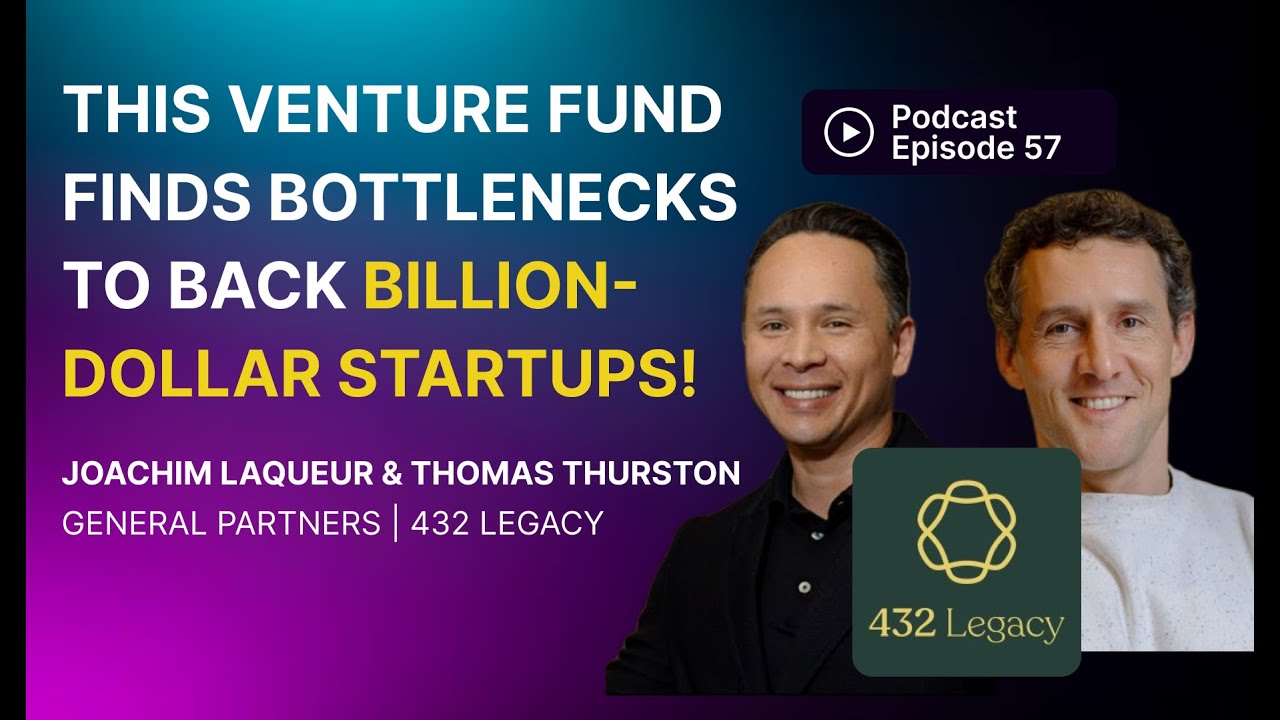
As Scarso notes, “the challenge isn’t deal flow—it’s the quality of investing and how you structure the investment.” That insight applies directly to Austria: the incentives exist, but structuring them properly requires local expertise.
What Infrastructure Does Austria Offer?
Austria’s infrastructure story improved dramatically in 2024 with the opening of HQ7 Studios in Vienna’s port area. The facility features two soundproof stages—1,000 and 2,000 square meters—plus offices, workshops, and warehouse space. This is Austria’s first real film studio since the historic Rosenhügel Studios was demolished in 2014.
Beyond HQ7, Austria offers:
- Unique locations: Schönbrunn Palace, Vienna’s underground canal system (featured in “The Third Man”), alpine regions, glaciers, castles, and both historical and contemporary architecture
- Experienced multilingual crews: Austrian crew members regularly work across German-language territories
- World-class scoring facilities: Synchronstage and Tonzauber handle major Hollywood scores
- Strong VFX and post-production capabilities
Nina-Anica Keidies, Austria’s film commissioner, emphasizes that projects approved in 2024 generated “over 70% more filming days” compared to 2023. The infrastructure is being tested—and it’s holding.
Frequently Asked Questions
What’s the maximum rebate I can get from Austrian film financing?
Through FISA+, you can access 30% base + 5% green bonus = 35% on Austrian spend. Maximum caps are €5M for films and €7.5M for series. When combined with ÖFI+ (for co-productions) and regional funds like Vienna Film Fund, the effective rate can exceed 40% on certain spending categories.
Do I need a local Austrian partner to access FISA+ funding?
Yes. FISA+ requires an Austrian service producer who handles the application and manages local spend compliance. This isn’t optional—international productions must work through a local production service company.
Can streaming platforms access Austrian film financing?
Yes. FISA+ explicitly covers TV and streaming productions. Netflix (“The Recruit,” “Crooks”), Hulu (“Nine Perfect Strangers”), and Amazon Prime have all used the incentive. Series have a higher maximum funding cap (€7.5M vs €5M for films).
Is Austrian film financing available for documentaries?
Yes. Both FISA+ and ÖFI+ support documentaries. ÖFI+ has a lower minimum Austrian spend threshold for documentaries (€80,000 vs €150,000 for features).
What happened to FISA+ in late 2024?
Following national elections in late 2024, FISA+ was temporarily suspended while new guidelines made their way through government. The program is expected to reopen for applications on January 2, 2026. The incentive structure remains intact—this was an administrative pause, not a policy change.
How long does Austrian funding approval take?
FISA+ is an automatic incentive, meaning approval is based on meeting defined criteria rather than jury selection. Once documentation is complete and compliant, processing is relatively quick. ÖFI’s selective funding meets at least four times per year—timing your application to the committee schedule matters.
Can I combine Austrian incentives with other European funding?
Yes. Austrian productions regularly access Eurimages (the European multilateral fund), Creative Europe MEDIA, and stack national incentives through co-production structures. Official co-productions under European Convention can access incentives in multiple territories simultaneously.
What’s the Vienna Film Incentive?
Separate from the Vienna Film Fund, the Vienna Film Incentive offers a 30% rebate specifically for international productions filming in Vienna. Requirements include at least two full shooting days in Vienna and minimum running time of 45 minutes. This can be combined with FISA+.
How Vitrina Helps You Navigate Austrian Film Financing
Finding the right Austrian production partner—one with experience structuring incentives, managing local spend compliance, and navigating the relationship between FISA+, ÖFI+, and regional funds—isn’t straightforward from outside the market.
Vitrina’s database includes Austrian production service companies, production financing specialists, and co-production partners—all searchable by budget range, genre experience, and incentive track record. You can filter specifically for companies that have successfully accessed FISA+ or ÖFI+ funding.
For producers actively structuring Austrian financing, our Concierge Service provides hands-on support—including introductions to vetted local partners and guidance on incentive stacking strategies.
The Bottom Line
Austria’s film financing transformation since 2023 has created genuine opportunities—particularly for co-productions, German-language projects, and productions that can use Vienna’s unique locations. The incentive math works: 35% rebates, stackable regional funds, and unique bonuses for green production and foreign capital. The key is finding the right local partner to structure it properly. Start exploring Austrian production partners on Vitrina to build your financing strategy.