About Innovation Hub
 Global Content Pulse (Webinars)


 Global Production Financing
(Webinars)
Global Production Financing
(Webinars)  LeaderSpeak Podcast
  About Vitrina
 Our Story
 Our Solutions 🔥
 Film+TV Projects Tracker 🚀
 Case Studies
 Our Profile
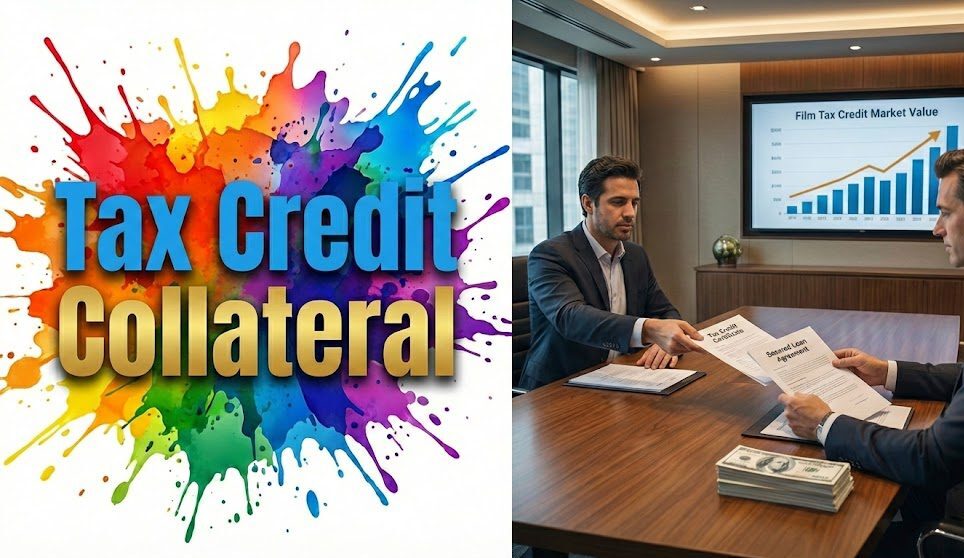
Using tax credit collateral is the fastest way to turn a “promised” government rebate into liquid cash to fund your production today. Instead of waiting 6–18 months after your wrap for a check from the revenue authorities, lenders advance you capital against the verified value of those incentives. It’s essentially a bridge loan where the government’s promise to pay acts as your security.
The reality? You can’t start a production on a promise. Whether you’re leveraging the UK’s new AVEC, Ireland’s Section 481, or the aggressive rebates in Saudi Arabia, understanding how to monetize these incentives is critical for your capital stack. But here’s the catch: not all credits are created equal, and lenders have zero appetite for “estimated” values that haven’t been audited or certified.
In This Guide:
Insider Tip: Producers exploring liquidity options can access our database of 140+ specialized lenders who accept tax credits as collateral for immediate production funding.
Stop Guessing Who’s Financing. Get Targeted Outreach.
Stop searching and start getting funded. We identify the exact decision-makers currently backing projects like yours, turning raw data into risk-aligned capital partnerships.
Major Studios
Scouting early stage projects, IP, and Regional partners for global studio pipelines.
IP Owners & Leads
Connecting creative leads with qualified financiers and major streaming platforms.
Streamers
Securing high-value pre-buy content and discovering early-stage global IP for platforms.
Indie Producers
Bridging the gap for indie filmmakers to reach executive production partners and capital.
Global Financing Ecosystems
Mapping complex markets and pairing projects with disciplined, risk-aligned capital across global territories worldwide.
How Tax Credit Collateral Actually Works
Lending against tax credits is a specialized form of Asset-Backed Lending (ABL). The “asset” in this case is a future receivable from a sovereign government. Lenders don’t look at your credit score; they look at the local film commission’s track record and your interim certificate.
The process typically involves a specialized lender or bank providing an advance—usually between 80% and 90% of the anticipated credit value. Why the haircut? Because audits happen. If you miscalculate your “qualifying spend” and the government pays out less than expected, that 10–20% margin is the lender’s safety net. And believe us, they’ll use it if your bookkeeping isn’t watertight.
Phil Hunt, CEO of Head Gear Films, discusses the current financing crunch:

The Vitrina Monetization Readiness Check™
Before you approach a lender to use your tax credit collateral, you need to verify if your project is “monetizable.” We’ve developed a simple framework to help you assess your leverage before the first meeting.
The Vitrina Monetization Readiness Check™
| Signal | Requirement | Lender Weight |
|---|---|---|
| Interim Certification | BFI/Revenue/Commission Approval | Critical (Pass/Fail) |
| SPV Isolation | Asset held in clean subsidiary | Mandatory |
| Opinion Letter | CPA/Accountant audit of spend | High |
| Chain of Title | Verified legal rights to the asset | Critical |
Find the Financiers Backing Your Genre
Stop searching and start getting funded. We identify the exact decision-makers currently backing projects like yours, turning raw data into risk-aligned capital partnerships.
How Much Does It Cost to Monetize Tax Credits?
Nothing is free, especially not “fast money.” Here’s what we’re seeing in the 2025 market: interest rates for tax credit collateral loans typically hover between 8% and 15% annually. If you’re shooting in a highly stable jurisdiction with a proven track record (like Canada or the UK), you might squeeze toward the 8–10% range. Emerging hubs with lower liquid caps? Expect closer to 15%.
But wait—there’s more. You’ll also need to budget for:
- Origination Fees: 1–2% of the total loan amount, usually deducted at funding.
- Legal and Due Diligence: $15,000–$25,000 to review the SPV and certify the credit.
- The “Discount”: If you sell the credit (rather than borrow against it), you’ll likely take a 10–15% haircut on the face value.
Need a tailored cost breakdown for your specific region? Ask VIQI for current interest rates by territory.
Regional Spotlight: UK Independent Film Tax Credit (IFTC)
As of April 2025, the UK’s Independent Film Tax Credit (IFTC) is the gold standard for monetization. It offers a 53% gross credit, which nets out to roughly 39.75% after tax. For an indie project with a £15 million budget, that’s nearly £6 million in potential collateral.
Because it’s a refundable credit (meaning the government pays cash, not just an offset), lenders love it. It’s essentially “sovereign debt” for filmmakers. Now, if you’re combining this with the VFX uplift (an extra 5% on qualifying spend), you’re looking at a remarkably healthy production financing stack. Just ensure your BFI cultural test is submitted early—lenders won’t even pick up the phone without an interim certificate in hand.
How Vitrina Helps with Incentive Monetization
Finding the right incentive is easy; finding a lender who understands the nuances of the MENA rebate versus the UK AVEC is hard. Vitrina bridges this information gap by mapping the entire financial supply chain.
Accelerate Your Financing
Don’t let your production stall while waiting for tax certificates. Use Vitrina’s tools to secure liquidity now:
Frequently Asked Questions
Can I use tax credit collateral for post-production only?
Yes. Many lenders specialize in “tail-end” financing. If you’ve finished principal photography and have a verified audit of your spend, you can often secure better rates because the production risk has been eliminated.
How long does it take to close a tax credit loan?
If your documentation is clean (Interim cert, SPV, Opinion Letter), expect 2–4 weeks. If you’re still cleaning up your chain of title or don’t have a CPA audit, it can stretch to 8 weeks or more. Start early.
What is the difference between a tax credit and a rebate?
A rebate is usually a direct cash payment from a government agency. A tax credit is an offset against taxes owed. For filmmakers who don’t have local tax liability, “refundable” tax credits act just like rebates, making them much easier to monetize.
The Bottom Line
Using tax credit collateral isn’t just about getting money early—it’s about capital efficiency. By bridge-funding your incentives, you protect your margins and keep production moving. If you’re ready to monetize your incentives, Vitrina’s Concierge team can connect you with matched lenders in 48 hours.
Find Film+TV Projects, Partners, and Deals – Fast.
VIQI matches you with the right financiers, producers, streamers, and buyers – globally.
Producers Seeking Financing, Co-Pros, or Pre-Buys?
Vitrina Concierge helps producers reach the right financiers, commissioners, distributors, and co-production partners — with precision outreach, not cold pitching.
Join Industry Briefings Trusted by Leaders

Format Adaptations: Global Trends
Where formats are traveling, which adaptations are breaking out, and how streamers are backing remakes in 2025–2026.

Books, Novels & Comics Adaptations: Global Trends
Books, webtoons, and manga driving the next global screen hits. Discover how in this webinar.

Micro-Dramas & Mobile-First Storytelling
Micro-dramas are building real audiences and revenue. Understand the platforms, buyers, and economics behind the growth.

Navigating Global Content Licensing Trends
How global content licensing is shifting beyond flat fees to flexible, deal-driven models.