About Innovation Hub
 Global Content Pulse (Webinars)


 Global Production Financing
(Webinars)
Global Production Financing
(Webinars)  LeaderSpeak Podcast
  About Vitrina
 Our Story
 Our Solutions 🔥
 Film+TV Projects Tracker 🚀
 Case Studies
 Our Profile
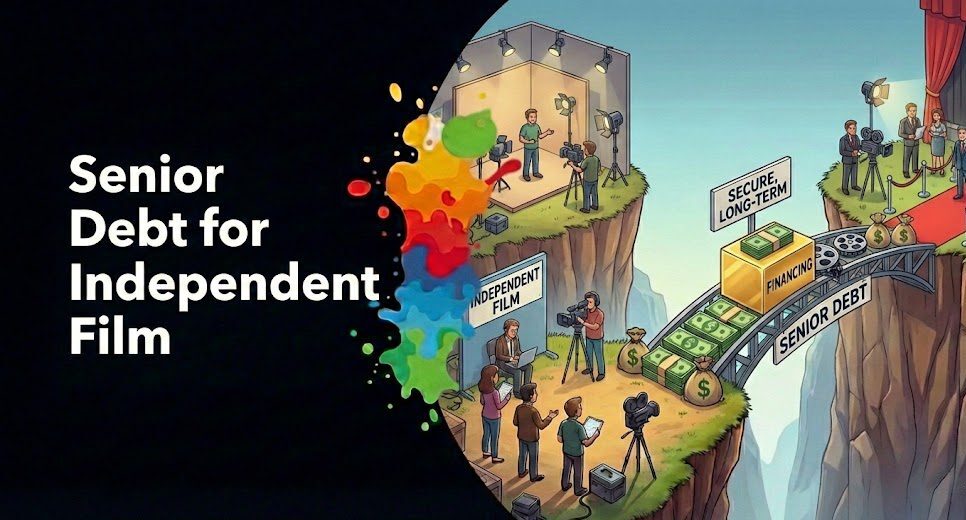
Senior debt for independent film is a low-interest loan provided by a bank or financial institution, secured by “hard collateral” like verified tax credits and signed pre-sale contracts.
In 2026, banks typically cap senior debt at 80% of the collateral’s value, sitting in the first-recoupment position of the capital stack. While institutional lenders have grown cautious due to market fragmentation, they remain active for projects with bonded delivery and bankable distributors.
In This Strategy Guide
Stop Guessing Who’s Financing. Get Targeted Outreach.
Stop searching and start getting funded. We identify the exact decision-makers currently backing projects like yours, turning raw data into risk-aligned capital partnerships.
Major Studios
Scouting early stage projects, IP, and Regional partners for global studio pipelines.
IP Owners & Leads
Connecting creative leads with qualified financiers and major streaming platforms.
Streamers
Securing high-value pre-buy content and discovering early-stage global IP for platforms.
Indie Producers
Bridging the gap for indie filmmakers to reach executive production partners and capital.
Global Financing Ecosystems
Mapping complex markets and pairing projects with disciplined, risk-aligned capital across global territories worldwide.
Let’s be clear—the old model of “closing on a handshake” is dead. Today’s lenders, from Comerica to specialty shops like Peachtree Group, aren’t looking at your script’s artistic merit. They’re looking at your data. With over 70% of independent films now relying on complex debt facilities to bridge the funding gap, understanding the “Senior” layer is the difference between a greenlight and a dead project.
“The independent film landscape has shifted dramatically. Banks aren’t taking creative risks anymore—they’re taking contract risk. If the paperwork isn’t airtight, the money doesn’t move.” — Phil Hunt, CEO of Head Gear Films
The Vitrina Capital Stack Risk Ladder™
To navigate the 2026 financing environment, you’ve got to understand where everyone sits when the money starts flowing back. We call this the Risk Ladder™. The higher you go, the more you pay.
| Layer | Lender Type | Cost (2026) | Risk |
|---|---|---|---|
| Senior Debt | Commercial Banks | SOFR + 2-4% | Lowest |
| Mezzanine/Gap | Specialty Lenders | 12-18% | Medium |
| Equity | Private Investors | 20% + Backend | Highest |
Senior debt sits at the very bottom of that ladder. It’s the “cheapest” capital because it’s the safest. If the film fails? The bank still gets paid from the tax rebate or the pre-sale guarantee. That’s why it’s called senior—everyone else waits in line behind the bank.
Why Banks are Cautious (The 80% Rule)
You’d think a signed contract is as good as gold, right? Not in 2026. Banks are increasingly worried about “counterparty risk”—the chance that a distributor might go bust before they pay your Minimum Guarantee (MG). Because of this, most senior debt lenders have moved to a strict 80% cap.
If you have a $1M tax rebate coming from the UK, the bank won’t lend you $1M. They’ll lend you $800,000. Why? To create a buffer for interest, fees, and the risk of a delayed audit. And—this is the big one—they’ll often require a completion bond to ensure the film actually gets finished. No delivery, no rebate, no bank repayment.
Phil Hunt explains the “Big Crunch” in film finance:

Find the Financiers Backing Your Genre
Stop searching and start getting funded. We identify the exact decision-makers currently backing projects like yours, turning raw data into risk-aligned capital partnerships.
How to Trigger Senior Debt in 2026
Securing senior debt isn’t about a pitch—it’s about a package. Here’s what your production financing package needs to look like to get a bank to say “Yes”:
- Verified Tax Credits: A letter from the regional film commission (like the Saudi Film Commission or the CNC) confirming your project qualifies.
- Bankable Distributors: Contracts with “Tier 1” players (Netflix, Disney, A24). If your distributor is a new indie shop without a balance sheet, the bank will “haircut” the value or reject it entirely.
- Completion Bond: A commitment letter from a guarantor like Film Finances Inc.
- CAMA Agreement: A Collection Account Management Agreement ensures the bank is at the top of the waterfall.
Want to see who’s actually lending right now? Producers can explore 140+ vetted lenders on Vitrina, filtered by territory and budget range. It beats cold-calling banks that don’t understand the “soft money” game.
How Vitrina Streamlines Senior Debt Research
Finding a bank that “gets” film is a nightmare. Most local branches will look at a tax incentive rebate like it’s monopoly money. Vitrina’s platform connects you to the specialists who live in this world.
- Vetted Lender Database: Access 140+ active debt partners, from major banks to private credit shops.
- Supply Chain Intelligence: See which financiers recently backed projects in your genre or territory.
- Expert Matching: Skip the gatekeepers and reach decision-makers.
Frequently Asked Questions
What is the interest rate for senior debt in 2026?
For established producers with “hard collateral,” rates typically sit between SOFR + 2% and SOFR + 4%. If you’re working with a private “hard money” lender for a riskier position, expect significantly higher—closer to 12-15%.
How much senior debt can a producer raise?
Banks usually cap senior debt at 80% of the collateral’s face value. If you have $2M in tax credits and pre-sales, you can realistically raise $1.6M in senior debt. The remaining 20% must be covered by mezzanine debt or equity.
Do I need a completion bond for a bank loan?
Almost always. Banks are not in the business of watching movies—they’re in the business of getting repaid. A completion bond guarantees the project will be delivered, which triggers the tax credit or the distributor’s payment.
What is the difference between senior debt and gap financing?
Senior debt is backed by sold territories and guaranteed credits. Gap financing is a loan against unsold territories. Because gap is riskier (there’s no buyer yet), it’s much more expensive and sits junior to the bank loan.
The Bottom Line
Senior debt is the bedrock of professional independent film finance. It’s the cheapest money you’ll ever find, but it requires the most discipline to unlock. In 2026, banks aren’t looking for a “vibe”—they’re looking for verified collateral and bonded delivery. If your paperwork is clean, the capital is active. If you’re currently structuring a deal and need to identify a banking partner who understands your territory, Vitrina’s Concierge team can match you with qualified lenders in 48 hours.
Find Film+TV Projects, Partners, and Deals – Fast.
VIQI matches you with the right financiers, producers, streamers, and buyers – globally.
Producers Seeking Financing, Co-Pros, or Pre-Buys?
Vitrina Concierge helps producers reach the right financiers, commissioners, distributors, and co-production partners — with precision outreach, not cold pitching.
Join Industry Briefings Trusted by Leaders

Format Adaptations: Global Trends
Where formats are traveling, which adaptations are breaking out, and how streamers are backing remakes in 2025–2026.

Books, Novels & Comics Adaptations: Global Trends
Books, webtoons, and manga driving the next global screen hits. Discover how in this webinar.

Micro-Dramas & Mobile-First Storytelling
Micro-dramas are building real audiences and revenue. Understand the platforms, buyers, and economics behind the growth.

Navigating Global Content Licensing Trends
How global content licensing is shifting beyond flat fees to flexible, deal-driven models.