About Innovation Hub
 Global Content Pulse (Webinars)


 Global Production Financing
(Webinars)
Global Production Financing
(Webinars)  LeaderSpeak Podcast
  Global Entertainment Digest (Newsletter)
  About Vitrina
 About VIQI
 Our Story
 Our Solutions 🔥
 Film+TV Projects Tracker 🚀
 Case Studies
 Our Profile

The role of sales agents in production financing is to act as the commercial bridge between content creators and global buyers, securing the financial commitments necessary to “greenlight” a project.
This involves issuing Minimum Guarantees (MGs), negotiating pre-sales contracts, and providing market-driven estimates that lenders use as collateral for production loans.
According to industry data from Vitrina AI, producers who utilize structured supply chain intelligence to identify active sales agents reduce their financing window by up to 60%.
In this guide, you will learn how sales agents structure deals, the difference between “soft” and “hard” financing, and how to vet partners using a data-first approach.
While traditional financing relied on fragmented networking at film markets, the modern “Weaponized Distribution” era demands that producers provide verifiable proof of demand before capital is deployed.
This comprehensive guide addresses critical gaps in the understanding of sales agency models, providing actionable steps to navigate term sheets and secure global distribution.

Your AI Assistant, Agent, and Analyst for the Business of Entertainment
VIQI AI helps you plan content acquisitions, raise production financing, and find and connect with the right partners worldwide.
- Find active co-producers and financiers for scripted projects
- Find equity and gap financing companies in North America
- Find top film financiers in Europe
- Find production houses that can co-produce or finance unscripted series
- I am looking for production partners for a YA drama set in Brazil
- I am looking for producers with proven track record in mid-budget features
- I am looking for Turkish distributors with successful international sales
- I am looking for OTT platforms actively acquiring finished series for the LATAM region
- I am seeking localization companies offer subtitling services in multiple Asian languages
- I am seeking partners in animation production for children's content
- I am seeking USA based post-production companies with sound facilities
- I am seeking VFX partners to composite background images and AI generated content
- Show me recent drama projects available for pre-buy
- Show me Japanese Anime Distributors
- Show me true-crime buyers from Asia
- Show me documentary pre-buyers
- List the top commissioners at the BBC
- List the post-production and VFX decision-makers at Netflix
- List the development leaders at Sony Pictures
- List the scripted programming heads at HBO
- Who is backing animation projects in Europe right now
- Who is Netflix’s top production partners for Sports Docs
- Who is Commissioning factual content in the NORDICS
- Who is acquiring unscripted formats for the North American market
Table of Contents
Key Takeaways for Producers
-
Commercial Intelligence Bridge: Sales agents transform creative IP into bankable assets by providing market-driven pre-sales and estimates.
-
MG as Collateral: A Minimum Guarantee (MG) from a reputable sales agent acts as “hard” collateral that lenders use to issue production loans.
-
Data-Driven Vetting: Producers should verify agents’ historical relationships and deal history using platforms like Vitrina to ensure they are active in specific genres and territories.
What is the Role of Sales Agents in Production Financing?
In the entertainment supply chain, sales agents are specialized intermediaries who represent a producer’s rights in international markets. Their primary role in financing is to generate “bankable” revenue streams before a project is even completed. This is achieved by creating a “sales roadmap” that identifies high-value territories and platforms interested in the project’s genre, talent, and scale.
By providing territory-by-territory revenue estimates, sales agents allow financiers to quantify the project’s market potential. Without this commercial validation, most independent films struggle to secure senior debt, as lenders require an objective “insider advantage” to mitigate the risks associated with production stalling or distribution failure.
Find active world sales agents for your genre:
How Do Minimum Guarantees (MGs) Drive Financing?
A Minimum Guarantee (MG) is a non-refundable sum paid by a sales agent or distributor to the producer in exchange for rights. In the financing phase, an MG from a vetted agent functions as “hard” collateral. Lenders—often specializing in media capital—will “discount” this MG, providing a loan that covers a portion of the production budget based on the agent’s proven ability to pay upon delivery.
Furthermore, “Pre-sales” represent contracts signed with regional distributors (e.g., in Germany, Japan, or Brazil) before the film is shot. A sales agent orchestrates these deals at major markets like Cannes or the EFM. Each signed contract adds to the project’s “collateral stack,” allowing the producer to bridge the financing gap between private equity and the final production budget.
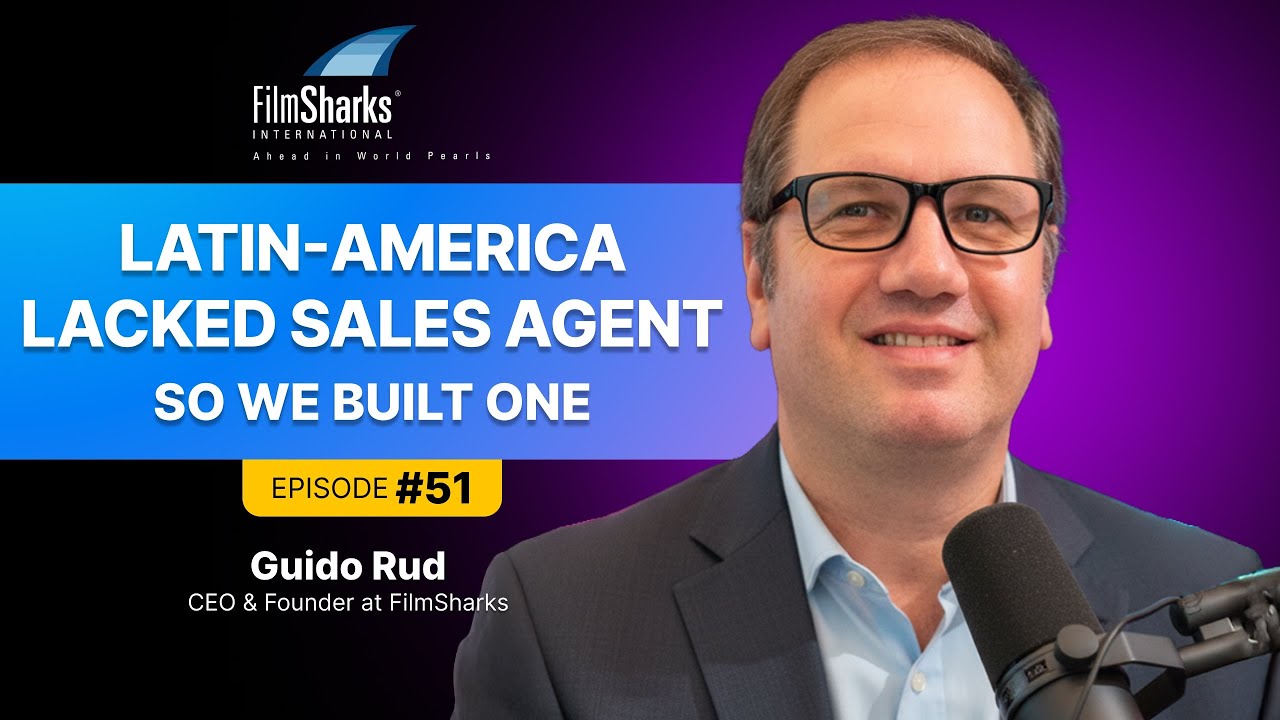
Industry Expert Perspective: Inside FilmSharks International
Guido Rud, CEO of FilmSharks, discusses the inception of his world sales powerhouse and the three critical business models—world sales, remake distribution, and production—that drive content success.
Key Insights
Sales agents like FilmSharks don’t just sell finished content; they provide the remake and production mastery needed to maximize IP value across the global supply chain.
Sales Agent vs. Distributor: The Financing Difference
Understanding the distinction between a sales agent and a distributor is vital for producers seeking capital. A distributor typically buys content for a specific territory (e.g., Amazon for North America) and pays a licensing fee. While this fee helps with financing, it is a localized “walled garden” approach.
A sales agent, however, manages the entire *global* rights strategy. In today’s market shift toward “Weaponized Distribution,” sales agents are increasingly licensing high-value content to rivals 18-24 months post-release to maximize ARPU. This rotational strategy creates a longer “recoupment tail,” which is a significant authority signal for board updates and strategic planning for senior M&E executives.
Access intelligence on recent content licensing deals:
Vetting Sales Agents: How to Avoid Opaque Deals
The reliance on word-of-mouth for partner discovery is structurally incapable of handling the volume and complexity of the modern content mandate. Producers must vet sales agents based on objective data rather than anecdote. Key considerations include territorial rights availability, genre specialization, and verified reputation scores.
Utilizing a “single source of truth” like Vitrina allows producers to perform due diligence on 140,000+ companies. This eliminates the “data deficit,” enabling producers to find the right distributor—like the LA-based producer who bypassed general submissions to secure direct engagement with Fifth Season and Netflix UK through data-driven precision outreach.
Moving Forward
The global entertainment landscape has entered a new phase of “Co-opetition” and rotational windowing. This transformation addressed the critical gaps this guide explored: the necessity of commercial validation through sales agents and the structural shift toward data-driven partner discovery.
Whether you are an independent producer looking to secure an MG for your next feature, or a sales agent trying to identify emerging FAST channel format licensees, the industrialization of “insider intelligence” is your definitive source of truth.
Outlook: Over the next 12-18 months, platform fragmentation will accelerate the “Weaponized Distribution” trend. Producers who leverage supply chain intelligence now will position themselves as priority partners for global acquisition leads.
Frequently Asked Questions
Quick answers to the most common queries about sales agents and financing.
What is the role of a sales agent in film production?
What is a Minimum Guarantee (MG)?
How do sales agents help secure production loans?
What is the difference between a sales agent and a distributor?
How to find a world sales agent for independent film?
What commission do film sales agents take?
When should you attach a sales agent to a production?
How does “Weaponized Distribution” affect financing?
“The modern media executive must bridge the ‘data deficit’ to navigate a borderless market. Sales agents who leverage vertical AI to map industry context are the ones who turn regional content into global phenomenon.”
About the Author
The Vitrina Intelligence Team specializes in mapping the global media supply chain. Connect with over 5 million professionals and discover bankable opportunities on Vitrina.
Find Film+TV Projects, Partners, and Deals – Fast.
VIQI matches you with the right financiers, producers, streamers, and buyers – globally.
Producers Seeking Financing, Co-Pros, or Pre-Buys?
Vitrina Concierge helps producers reach the right financiers, commissioners, distributors, and co-production partners — with precision outreach, not cold pitching.
Join Industry Briefings Trusted by Leaders
Format Adaptations: Global Trends
Where formats are traveling, which adaptations are breaking out, and how streamers are backing remakes in 2025–2026.

Books, Novels & Comics Adaptations: Global Trends
Books, webtoons, and manga driving the next global screen hits. Discover how in this webinar.

Micro-Dramas & Mobile-First Storytelling
Micro-dramas are building real audiences and revenue. Understand the platforms, buyers, and economics behind the growth.

Navigating Global Content Licensing Trends
How global content licensing is shifting beyond flat fees to flexible, deal-driven models.