

 Global Content Pulse (Webinars)


 Global Production Financing
(Webinars)
Global Production Financing
(Webinars)  LeaderSpeak Podcast
  About Vitrina
 Our Story
 Our Solutions 🔥
 Film+TV Projects Tracker 🚀
 Case Studies
 Our Profile

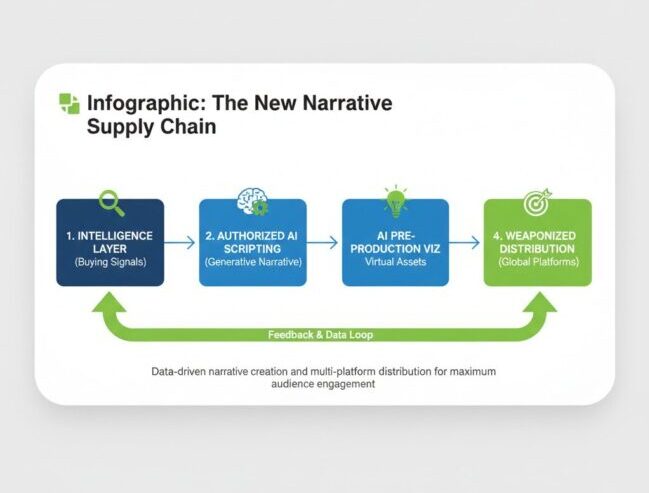
Revolutionizing Marketing Strategies in the 2026 cinematic landscape is no longer about simply selling a finished film; it is about weaponizing the narrative assets at the script stage to secure pre-buys and co-production deals. The industry is currently facing a “Fragmentation Paradox” where content demand is global, yet the development data remains siloed in opaque writers’ rooms. The reality? Projects often enter the “Timing Trap,” where scripts are polished for months only to find that commissioning editors have already reallocated their slates toward different genres. But here is the catch: AI scriptwriting tools are not just generating dialogue; they are surfacing “Buying Signals” by analyzing historical deal data and regional IP preferences to ensure a project is “pre-marketed” before a single frame is shot.
This report provides an executive roadmap for VPs of Production and Heads of Development looking to de-risk their slates through “Authorized Generative AI” and “Weaponized Storytelling.” We will analyze the transition from speculative writing to “Efficiency-First” narrative models, where scripts are dynamically adjusted to meet the margin requirements of the modern “Weaponized Distribution” era. By the end of this analysis, you will understand the top 10 platforms currently transforming the supply chain and how to bypass localized hurdles—from talent gaps in emerging hubs to the audit traps of unauthorized IP usage. Let’s be candid: in 2026, a script is either a data-backed asset or a liability.
⚡ Executive Summary
|
Contents
- Authorized Generative AI: The End of speculative scriptwriting
- Weaponized Narrative: Designing for Global Licensing Windows
- Financial Dynamics: De-risking Development Budgets
- Regional Friction: AI Localization and the Cultural Talent Gap
- Bypassing the Timing Trap in Development
- Top 10 AI Scriptwriting Platforms Transforming Hollywood 2026
- Strategic Conclusion: Transforming the Data Deficit
🎙️ Expert Intelligence: Josh Klein
“Scriptwriting 2.0 involves a transition to cloud-based solutions where live data drives production workflows, ensuring efficiency and collaboration from day one.”
Source: Vitrina Expert Series. Josh Klein, CEO of Scripto, discusses the evolution of scriptwriting platforms from static documents to dynamic, data-integrated environments.
Authorized Generative AI: The End of speculative scriptwriting
The industry is currently witnessing a structural metamorphosis in how “Story” is manufactured. For decades, scriptwriting was a high-risk manual art. The reality? In 2026, the shift toward “Authorized Generative AI” has established a new operational standard. We are moving away from unauthorized IP scraping toward models trained exclusively on studio-vetted archives. Revolutionizing Marketing Strategies begins here: by utilizing authorized data, studios ensure that every narrative beat is compliant with global licensing standards, effectively de-risking the project for financiers.
Let’s be candid: the “Data Trust Deficit” between creators and technology is closing as specialized platforms like Scripto and Scriptation integrate vertical AI layers. These tools do not just write; they audit. They check for “Authorized Data” usage, ensuring that no unauthorized likenesses or tropes trigger a legal cease-and-desist 18 months post-release. But here is the catch: if you are still using generic LLMs for development, you are likely creating a future audit trap that will disqualify your script from major distribution deals. The bottom line: authorized data is the only defensible currency in the script supply chain.
The strategic provocation? Narrative is being “Weaponized” to predict ROI. By analyzing audience emotion data from providers like Vionlabs, AI writing tools can now surface plot points that are statistically likely to drive engagement in specific territories. This is not about formulaic writing; it is about “Efficiency-First” storytelling. It allows the human writer to focus on the 20% creative “soul” while the AI handles the 80% structural mapping required for global commercial viability. This reallocation of effort accelerates the development cycle, allowing indies to compete with studio-level slates.
Surface the latest co-production partners and their IP preferences to align your script slates:
Identify co-pro partners in Europe currently commissioning scripted formats
Weaponized Narrative: Designing for Global Licensing Windows
In 2026, a script is no longer a static blueprint for a film; it is a modular asset designed for “Weaponized Distribution.” This strategy involves creating narrative “variants” within the script stage to maximize ARPU across different territories. The reality? A single “Hero Script” can now be dynamically adjusted for cultural nuance, ensuring that it meets the localized hurdles of markets like India, Brazil, or the MENA region without extensive reshoots. Revolutionizing Marketing Strategies through scriptwriting means designing for the “Frenemy Pact” era.
The bottom line: when you design for “Weaponized Distribution,” you are writing for the secondary and tertiary windows from day one. AI tools can analyze which “rotational windows” are most active—such as the 18-24 month post-release licensing to rivals—and suggest subplots or character arcs that appeal to those specific buyers. But here is the catch: this requires proximity to “Deals Intelligence.” If your writers aren’t aware of the latest $72B Netflix acquisition moves or Amazon’s ad inventory DSP shifts, they are writing for a market that no longer exists.
Let’s be candid: this is where the “Timing Trap” is most lethal. Speculative scripts often target trends that are dying by the time the project is greenlit. By using VIQI’s “Global Projects Tracker,” development heads can signal upcoming shifts in commissioning behavior. If the data surfaces a move toward “low-cost, high-concept thrillers,” as Phil Hunt of Head Gear Films suggests, your AI writing platform can immediately pivot your slate. This is the transition from speculative art to “Intelligence-led” production.
Financial Dynamics: De-risking Development Budgets
The financial dynamics of 2026 demand “Efficiency-First” models. Margin erosion in the traditional “Walled Garden” era has forced indies and studios alike to rethink their development spend. The reality? Speculative development is a luxury the current cost-of-capital environment does not permit. Revolutionizing Marketing Strategies involves using AI to compress the “Script-to-Greenlight” timeline, reducing “Sunk Assets” in the development phase. According to data from Ampere Analysis, AI-augmented development can reduce the time-to-market by up to 40%.
The strategic shift? Reallocating budget from “Speculative Drafts” to “Data-Backed Slates.” By using AI platforms that track global content funding, producers can de-risk their projects by only greenlighting scripts that show high-value co-production potential. But here is the catch: this requires “Verified Leadership Mapping.” You need to know which CXOs at which streamers are currently active in your genre. Vitrina mapping of 3 million professionals ensures that your script is being surfaced to the right decision-makers at the right time.
Let’s be candid: the “Big Crunch” is real. As Phil Hunt signals, the shift away from pre-sales means the script must work harder than ever as a “Sales Document.” AI writing tools in 2026 are increasingly integrating “Pitch Deck” generation, using script data to automatically create localized marketing materials. This ensures that your narrative is “Weaponized” for sales agents before the production team even sets foot on a stage. This is how you accelerate the path to recoupment in a hyper-competitive market.
Regional Friction: AI Localization and the Cultural Talent Gap
One of the most persistent obstacles in the global supply chain is “Regional Friction.” Localized hurdles—from talent gaps in emerging hubs to “ATA Carnets” for cross-border shoots—often stall projects. The reality? AI scriptwriting tools in 2026 are bridging this gap through “Cultural Localization Engine” modules. These tools analyze the business dynamics of regional cinema, such as India’s misunderstood regional potential as signaled by Naveen Chandra of 91 Film Studios, and adjust scripts to resonate with those specific audiences.
But here is the catch: localized adaptation is not just about translation; it is about “Cultural Nuance.” AI tools trained on “Authorized Data” from regional partners can surface localized hurdles before they become production blockers. For example, a script intended for a shoot in Brazil can be audited for localized rebate compliance and talent availability through Vitrina’s “Deep Company Profiling.” This de-risks the global expansion strategy, ensuring that your IP doesn’t face the “Fragmentation Paradox” where it works in one market but fails in another due to localized friction.
The strategic ROI? By identifying the “Hard-to-identify” regional specialists in Asia, LATAM, and Africa, you can use AI to tailor your narrative for co-production partners who have the localized infrastructure to deliver. This is the end of the “Hollywood-Centric” script. In 2026, a script is a global asset, and its ability to navigate regional friction is a primary metric of its value. Bypassing localized hurdles is no longer a manual art; it is a data-driven science facilitated by the intelligence layer of the supply chain.
Find regional specialists and co-pro partners in active production hubs globally:
Find me active production or development companies in Brazil specializing in Scripted
Bypassing the Timing Trap in Development
The “Timing Trap” is the most common cause of project death in Hollywood. It occurs when a project is developed in a vacuum, disconnected from the actual commissioning cycles of streamers and broadcasters. The reality? Professionals often struggle to identify who is *currently* financing or seeking co-productions. Revolutionizing Marketing Strategies through scriptwriting tools involves real-time alignment with the “Buying Signals” of the supply chain.
The bottom line: if you aren’t tracking when a streamer like Netflix or WBD is shifting their acquisition strategy, your script is already out of date. AI writing tools are now integrating “Market Sentiment” layers that analyze recent transactions and leadership statements. But here is the catch: static databases cannot tell you what is happening *now*. You need the “Censul-level” data of Vitrina’s 150,000+ companies to ensure your project doesn’t fall into the timing trap. This is how you transform aSPEC script into a qualified deal.
Let’s be candid: bypassing the timing trap requires a shift from speculative creation to “Demand-led Development.” By using VIQI to “Monitor upcoming competitive slates,” you can adjust your script’s “Hero Project” status before you even pitch. This intelligence layer ensures that your outreach happens with smart timing—aligning your offering with companies currently active in relevant initiatives. This is the only way to ensure your project moves from development to post-production without stalling in the opacity of the market.
Top 10 AI Scriptwriting Platforms Transforming Hollywood 2026
Revolutionizing Marketing Strategies: Conclusion
The narrative supply chain has entered a phase of “Data-Powered Framework” where the script is the primary signal for project viability. We have analyzed how Revolutionizing Marketing Strategies means moving beyond specimen writing into a world of “Authorized Data” and “Weaponized Narratives.” The transition from the speculation-driven methods of the past to the intelligence-led models of 2026 is the only way to transform the global “Data Deficit” into a strategic “Insider Advantage.”
The Bottom Line: Your immediate path forward is to utilize VIQI to surface “Buying Signals” and align your scripts with active commissioning slates. De-risk your workflow by partnering with “AI-Ready” platforms that audit for authorized data and localized friction. By bypassing the timing trap and design for global distribution windows, you secure your place as a leader in the new narrative economy. Start your precision outreach today to connect with the right decision-makers at the right time.
Explore Live Intelligence
Find me active production or development companies in [REGION] specializing in [SKILL]
Identify co-pro partners in [COUNTRY] currently commissioning scripted formats
Monitor upcoming competitive slates and licensing activities for [COMPANY_NAME]
Show decision makers for [COMPANY_NAME]
Find me active green-lit projects in Asia for licensing
Strategic FAQ
Why is “Authorized Data” critical for AI scriptwriting tools?
Authorized Data ensures that AI models are trained on studio-vetted, legally compliant archives rather than unauthorized web scraping. This de-risks the production supply chain by preventing future IP litigation and ensures that the script is bondable and eligible for distribution deals with major platforms like Netflix or Disney.
How does AI help in bypassing the development “Timing Trap”?
AI bypassing the Timing Trap by integrating real-time market sentiment and “Buying Signals” into the development process. Instead of speculating on trends, producers use vertical AI to monitor current commissioning slates, ensuring scripts are aligned with what streamers are actually buying now.
What is “Weaponized Narrative” in the context of global distribution?
Weaponized Narrative is the strategic design of modular script assets that are optimized for multiple licensing windows. This involves using AI to create narrative “variants” for different regional markets, maximizing ROI by ensuring the content is ready for rotational windowing and secondary licensing deals post-release.
How does Vitrina solve the “Fragmentation Paradox” for writers?
The Fragmentation Paradox describes an industry that is globally connected but operationally siloed. Vitrina solves this by providing a centralized “Census-level” database that tracks 150,000+ companies and 5M professionals, giving writers and producers the structured market intelligence needed to identify active partners across borders.