About Innovation Hub
 Global Content Pulse (Webinars)


 Global Production Financing
(Webinars)
Global Production Financing
(Webinars)  LeaderSpeak Podcast
  About Vitrina
 Our Story
 Our Solutions 🔥
 Film+TV Projects Tracker 🚀
 Case Studies
 Our Profile

Production incentives—whether they’re the 40% cash rebate in Saudi Arabia or the tax credits in Georgia—are often the “free money” that actually ends up bankrupting a production.
Here’s the catch: a production incentive isn’t cash until the audit is signed, the government has the funds, and the check clears. Until then, it’s just a high-risk receivable sitting on your balance sheet.
Primary production incentive risks include qualified spend slippage, high carrying costs on bridge loans, and legislative shifts that can nullify a rebate mid-production. Protecting these incentives requires a “Shadow Audit” approach—validating every dollar of spend against local regulations in real-time, rather than waiting for post-production to discover a 15% funding hole.
At Vitrina, we’ve analyzed hundreds of financing structures and expert interviews to understand why incentives fail. If you’re looking to de-risk your next project, you can ask VIQI for specific regional incentive requirements before you sign your first location agreement.
Table of Contents
- What Are the Core Production Incentive Risks?
- Risk 1: The “Qualified Spend” Slippage
- Risk 2: Carrying Costs & Interest Rate Erosion
- Risk 3: Local Spend Threshold Failures
- Risk 4: Legislative “Reset” & Policy Shifts
- Risk 5: Cultural Test Disqualification
- Risk 6: Recoupment Waterfall Misalignment
- Risk 7: The Government Liquidity Gap
- The Vitrina Incentive Safety Factor™ (ISF)
- How Vitrina Helps with Production Incentives
- Frequently Asked Questions
Stop Guessing Who’s Financing. Get Targeted Outreach.
Stop searching and start getting funded. We identify the exact decision-makers currently backing projects like yours, turning raw data into risk-aligned capital partnerships.
Major Studios
Scouting early stage projects, IP, and Regional partners for global studio pipelines.
IP Owners & Leads
Connecting creative leads with qualified financiers and major streaming platforms.
Streamers
Securing high-value pre-buy content and discovering early-stage global IP for platforms.
Indie Producers
Bridging the gap for indie filmmakers to reach executive production partners and capital.
Global Financing Ecosystems
Mapping complex markets and pairing projects with disciplined, risk-aligned capital across global territories worldwide.
What Are the Core Production Incentive Risks?
The core production incentive risks involve Audit Slippage (unqualified expenses), Legislative Expiry (incentives changing mid-production), and Lender Discounting. Most lenders will only advance 70-80% of a projected incentive because they know that government audits are inherently unpredictable. If your qualified spend drops by even 10% during the audit, it can wipe out your entire profit margin or stall your delivery to distributors.
Risk 1: The “Qualified Spend” Slippage (Audit Reality)
Behind closed doors, auditors are the real greenlight committee. They don’t care about your creative vision; they care about receipts. “Qualified spend” slippage happens when a producer assumes an expense qualifies for a rebate, but the auditor disagrees. This usually hits things like per diems, travel costs, or high-level executive fees.
We’ve seen productions in Europe lose 15% of their anticipated credit because they didn’t realize that certain “fringe” benefits weren’t considered “local spend.” It’s not just about spending money in a territory; it’s about spending it in the *right* accounting codes. Strategic players understand that you need a local accountant who does nothing but monitor the “qualified” status of every line item daily.
Risk 2: Carrying Costs & Interest Rate Erosion
Here’s the capital reality: you can’t spend a tax credit until you have it. That means you have to borrow against it to fund your physical production. This is where “Interest Rate Erosion” kicks in. If your bridge loan has an 11% interest rate and the government takes 24 months to pay out—a common occurrence in places like Greece or Italy recently—you aren’t actually getting a 40% rebate. After fees and interest, you might be netting closer to 28%.
Matthew Helderman, CEO of BondIt Media Capital, discusses navigating these complex finance environments:
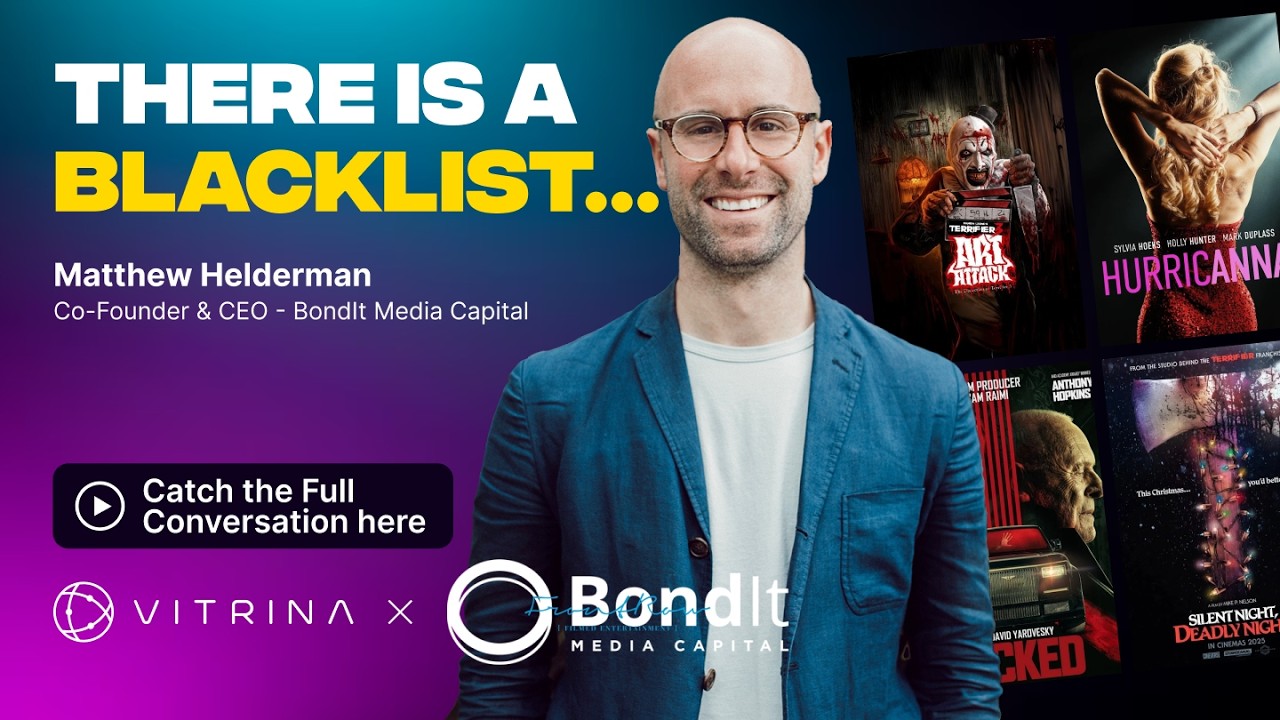
As Helderman points out, the “cost of capital” can weaponize or weaken your incentive. If you don’t compress your payout timeline, the debt service will eat your margin alive. Producers searching for competitive bridge lenders can explore 140+ verified lenders on Vitrina to compare rates and terms.
Risk 3: Local Spend Threshold Failures (The “Clawback” Danger)
Many incentives operate on an “All or Nothing” or “Tiered” threshold. In Saudi Arabia, the 40% rebate is tied to specific local spend requirements and the use of local talent. If your production shifts a major sequence to a different territory because of weather or scheduling, you might drop below the minimum spend threshold. The result? A “clawback” where you lose the entire incentive for the whole project, not just the part you moved. That’s a 30-40% hole in your budget that appears overnight.
Risk 4: Legislative “Reset” & Policy Shifts
The market signals change constantly. For instance, the UK shifted from the traditional Film Tax Relief to the new Audio-Visual Expenditure Credit (AVEC) in 2024. While the move was largely positive, the transitional period created significant production incentive risks for projects straddling the two systems. A sudden change in government or a shift in fiscal policy can lead to an incentive “sunset” clause you didn’t see coming. Always ensure your financing agreements have a “Legislative Out” or insurance coverage against policy changes.
Risk 5: Cultural Test Disqualification
In many jurisdictions—especially the EU and Middle East—incentives are contingent on passing a “Cultural Test.” It’s not just about the money; it’s about content. If you change a lead actor or a key script element during production to satisfy a sales agent, you might accidentally fail the cultural test. This isn’t a financial error; it’s a creative one with massive financial implications. Insiders recognize that keeping the “Incentive Officer” in the loop on all script changes is non-negotiable.
Risk 6: Recoupment Waterfall Misalignment
Who gets the incentive money first? If you have a bridge lender, a gap financier, and equity investors, the “recoupment waterfall” needs to be crystal clear. Often, incentives are the first money back into the budget, which makes them senior to everyone else. However, if your distribution deal is structured such that a sales agent takes their commission off the top of *all* revenue—including the tax credit—you’ve just lost 15-20% of your de-risking capital.
Phil Hunt, CEO of Head Gear Films, discusses the current challenges in the financing landscape:

As Hunt notes, the “Big Crunch” in financing means every dollar must be accounted for. Misaligning your waterfall isn’t just a mistake; it’s a structural failure that can stop you from getting your next production financing deal approved.
Risk 7: The Government Liquidity Gap (Delayed Payouts)
Governments are great at promising rebates but sometimes slow at paying them. We’re seeing regional hubs where administrative backlogs have pushed payouts from 6 months to 24 months. If your bridge loan has a “hard maturity” date—meaning the lender wants their money back in 12 months—and the government hasn’t paid, you’re in default. You’ll be forced to refinance at much higher rates, or worse, lose your equity position to the lender.
Find the Financiers Backing Your Genre
Stop searching and start getting funded. We identify the exact decision-makers currently backing projects like yours, turning raw data into risk-aligned capital partnerships.
The Vitrina Incentive Safety Factor™ (ISF)
The Vitrina Incentive Safety Factor™
Before you base your greenlight on a rebate, run your project through this 5-point risk audit. A score below 15 indicates a high-risk financing plan.
| Factor | Safe (5 pts) | At Risk (1 pt) |
|---|---|---|
| Paperwork | Shadow audit active | Post-production only |
| Local Spend | >20% buffer | Hitting exact minimum |
| Lender Discount | 25% hair-cut applied | Counting 100% of value |
| Cultural Test | Pre-approved script | Pending final review |
| Payout History | Known < 12 months | Market rumors of delays |
Note: Use the ISF to calibrate your contingency budget before approaching lenders.
How Vitrina Helps with Production Incentives
Navigating the global incentive landscape shouldn’t be a guessing game. Vitrina provides the data and connections you need to de-risk your capital stack from the start. Whether you’re comparing tax incentives across five European countries or finding a lender who understands the Saudi market, we’ve got you covered.
Platform Search
AI Research
Expert Help
Frequently Asked Questions
What are the biggest production incentive risks in 2025?
The biggest risks right now are “Administrative Backlogs” and “Audit Slippage.” With many governments facing fiscal pressure, auditors are becoming more aggressive in disqualifying non-local expenses. You shouldn’t assume your per diems or travel costs will qualify without explicit pre-approval from the regional film commission.
How much do lenders typically advance against tax credits?
Most lenders will advance between 70% and 85% of the estimated value of the production rebate. The 15-30% “haircut” covers their interest, fees, and a buffer for audit slippage. If your project is in a territory with a long payout history (over 18 months), expect a much lower advance rate or higher interest costs.
Can I use incentives as collateral for gap financing?
Incentives are rarely used as collateral for gap financing; they’re usually considered “senior debt” or “equity-like” cash. However, gap lenders will often require that your incentives are fully bridge-funded or bonded before they’ll commit to covering the unsold territory gap. They want to ensure the production is fully funded before they risk their capital.
What is “Incentive Fronting”?
Incentive fronting is when a local production company or financier provides the cash for the incentive portion of the budget upfront in exchange for a fee and a senior position in the waterfall. It’s essentially a bridge loan but often comes with more hands-on oversight to ensure the audit passes. It’s a great way to accelerate your greenlight if you can’t wait for traditional bank approval.
The Bottom Line
Protecting your incentives isn’t about hope—it’s about hedging. You’ve got to treat the government auditor like your most critical business partner. If you manage the audit daily, maintain a 20% local spend buffer, and select lenders who understand your territory’s specific rhythms, you’ll protect your margin. If you treat it as “guaranteed cash,” you’re setting yourself up for a nasty surprise in post-production.
Ready to secure your production’s financial future? Connect with Vitrina’s Concierge team to find matched financiers and incentive experts today.
Find Film+TV Projects, Partners, and Deals – Fast.
VIQI matches you with the right financiers, producers, streamers, and buyers – globally.
Producers Seeking Financing, Co-Pros, or Pre-Buys?
Vitrina Concierge helps producers reach the right financiers, commissioners, distributors, and co-production partners — with precision outreach, not cold pitching.
Join Industry Briefings Trusted by Leaders

Format Adaptations: Global Trends
Where formats are traveling, which adaptations are breaking out, and how streamers are backing remakes in 2025–2026.

Books, Novels & Comics Adaptations: Global Trends
Books, webtoons, and manga driving the next global screen hits. Discover how in this webinar.

Micro-Dramas & Mobile-First Storytelling
Micro-dramas are building real audiences and revenue. Understand the platforms, buyers, and economics behind the growth.

Navigating Global Content Licensing Trends
How global content licensing is shifting beyond flat fees to flexible, deal-driven models.