IHUB
IHUB
 Private Briefings (Webinars)


 LeaderSpeak Podcast
  Global Entertainment Digest (Newsletter)
  Premium Lists
 Membership Benefits
 About Vitrina
 Our Story
Mastering Content Acquisition: The Ultimate Guide for Entertainment Professionals
Global spending on content acquisition crossed $255 billion in 2024, according to Ampere Analysis, and that figure climbs every quarter. Streaming platforms, broadcasters, and distributors compete harder than ever for a finite pool of high-performing titles. The professionals who win are those who treat content acquisition as a repeatable, data-driven discipline rather than a relationship-driven art form.
Yet most acquisition teams still operate through fragmented spreadsheets, festival contacts, and inbound pitches. That approach worked in 2015. It does not scale in 2026, when a single misjudged rights deal can cost seven figures and a missed international hit can hand a competitor an entire subscriber cohort. The gap between structured and improvised acquisition is widening every year.
This guide covers everything an acquisition professional needs: clear definitions, a six-step process framework, cost benchmarks, international market dynamics, negotiation tactics, and the intelligence infrastructure that separates elite buyers from the rest. Whether you run a streaming platform, a broadcast network, or a distribution business, these frameworks apply directly to your day-to-day work.
- Global content acquisition spend reached $255 billion in 2024 (Ampere Analysis), making disciplined strategy a financial necessity for every buyer category.
- The global anime market alone is projected to reach $37.7 billion by 2027 (Grand View Research), signaling the scale of international content opportunity for acquisition buyers.
- Effective acquisition follows six repeatable steps: market analysis, content discovery, evaluation, negotiation, contracting, and integration.
- Windowing structures, MFN clauses, and output deals are the three most consequential deal mechanics acquisition professionals must master.
- Data-driven buyers using market intelligence platforms consistently close deals faster and at lower sunk cost than teams relying solely on festival discovery.
Content acquisition is the process by which entertainment companies – streaming platforms, broadcasters, and distributors – secure the rights to films, TV series, formats, and other media for distribution to their audiences. It encompasses rights negotiation, deal structuring, and integration of acquired titles into a platform’s content catalog. In 2026, content acquisition drives competitive differentiation across every segment of the media and entertainment industry.
Quick Answer
Content acquisition is the process by which streaming platforms, broadcasters, and distributors secure rights to distribute films, TV series, and digital content. It covers rights negotiation, territory mapping, content valuation, deal structuring, and delivery — the full commercial layer between content creation and audience access. Global content spend reached $255 billion in 2024 and is projected to grow to $265 billion by 2026.
What Is Content Acquisition in Entertainment?
Ampere Analysis pegged the global content spend market at over $255 billion in 2024, spanning everything from single-territory SVOD rights to global theatrical distribution deals. Content acquisition is the operational mechanism through which entertainment companies secure those rights – for finished titles, in-development projects, and format licenses alike. It is the engine behind every title that appears on a streaming platform, broadcast schedule, or distribution catalog.
At its core, acquisition involves identifying titles, evaluating their commercial fit, and negotiating rights packages. Those rights define territory, platform type, distribution window, exclusivity period, and language version. A deal might be as narrow as AVOD rights for Southeast Asia, or as broad as a global, multi-platform perpetual license. The scope of rights acquired directly determines a title’s revenue potential across its full commercial lifecycle.
Acquisition differs from content licensing in one directional way. Licensing describes the seller’s perspective – granting rights to a buyer. Acquisition is the buyer’s side of the same transaction. In practice, both parties sign the same contract; the terminology reflects which side of the table you occupy, not a substantive difference in the deal’s mechanics or legal structure.
Who performs content acquisition? The discipline spans multiple role types across the industry. Streaming platforms maintain dedicated acquisition teams organized by genre, territory, or content type. Broadcast networks employ programming acquisition executives who manage domestic and international pipelines simultaneously. Distributors acquire rights in bulk to sub-license across territories. Cable and FAST channel operators buy catalog packages to fill programming grids efficiently. Each buyer type has distinct criteria, budget cycles, and preferred deal structures – but the underlying process framework applies across all of them.
The Motion Picture Association reports that theatrical, home entertainment, and digital rights combined generated over $100 billion in global revenue in 2023. That figure illustrates how much economic value flows through acquisition decisions each year. Professionals who master this process operate at the center of the industry’s most consequential commercial activity.
$255 Billion
Global content acquisition and commissioning spend in 2024, spanning streaming platforms, broadcast networks, and distributors across all territories and genre categories. This figure has increased each year since 2020.
Source: Ampere Analysis, 2024
The Content Acquisition Process: Step by Step
A structured acquisition process is the difference between building a coherent catalog and accumulating expensive misjudgments. KPMG media sector research consistently shows that platforms with formalized acquisition frameworks outperform improvised buyers on both return on content investment and subscriber retention metrics. The six steps below map the full lifecycle from strategy to screen.
Step 1: Market Analysis
Every acquisition cycle starts with understanding what your audience wants and what your competitors already own. Market analysis means reviewing catalog performance data, identifying genre or demographic gaps, and tracking competitor acquisition activity. Platforms using entertainment market intelligence tools can complete this step in days rather than months. The output is a clear content brief: genre priorities, target audience segments, budget parameters, and rights requirements.
Step 2: Content Discovery
Discovery is where most acquisition teams spend the most time – and lose the most efficiency. Traditional discovery relies on film markets like MIPCOM, AFM, and Berlinale, plus agent relationships and inbound pitches. These channels are valuable but slow and structurally incomplete. Systematic buyers supplement market attendance with database-driven discovery, scanning thousands of titles against defined criteria before any human review. This approach surfaces projects that would never reach a traditional pitch meeting.
Step 3: Content Evaluation
Shortlisted titles move through a formal evaluation stage covering creative assessment, audience fit, rights availability, and financial modeling. Creative evaluation examines production quality, narrative structure, cast, and directorial track record. Audience fit analysis tests whether the title addresses a genuine gap in the existing catalog. Rights availability checks for encumbrances – prior sales, co-production obligations, or format restrictions that could complicate the deal. Financial modeling projects licensing fees against expected platform yield and subscriber impact.
Step 4: Negotiation
Negotiation covers territory scope, exclusivity windows, license duration, fee structure, and ancillary rights. Experienced acquisition executives enter every negotiation with a clear walk-away position and a ranked list of deal points. Understanding the seller’s constraints – cash flow timing, co-production obligations, format ambitions – often creates more deal value than any single concession. Section 7 covers specific negotiation tactics and deal structures in detail.
Step 5: Contracting
Once commercial terms are agreed, the deal moves to contracts. Acquisition agreements are complex documents covering payment schedules, delivery specifications, quality standards, audit rights, and breach remedies. Most platforms maintain standard long-form agreements adapted per deal rather than bespoke contracts built from scratch. Legal review typically adds two to six weeks to the closing timeline. Understanding licensing challenges common in cross-border deals prevents costly delays at this stage.
Step 6: Integration
The final step is getting acquired content onto the platform and in front of audiences. Integration covers delivery format compliance, metadata ingestion, localization (subtitling, dubbing, accessibility), marketing asset production, and scheduling. Weak integration wastes the value of even the best acquisition decision. Titles that launch late, without proper metadata, or without marketing support consistently underperform their rights cost – a failure that reflects process gaps, not acquisition misjudgment.
Content Acquisition Strategies That Win in 2026
The most effective content acquisition strategies in 2026 combine audience data, international market diversity, and format flexibility. Platforms relying on instinct-driven buying increasingly lag competitors who run structured acquisition funnels. A data-first approach does not remove human judgment – it focuses that judgment where it generates the highest return on investment.
Data-driven acquisition begins with performance analytics from your existing catalog. Which genres, run lengths, countries of origin, and release windows produce the highest completion rates and lowest churn? These signals become filters for every new acquisition decision. Platforms using this feedback loop consistently outperform those making acquisitions based on awards buzz or festival hype alone, where signal quality is lower and competition for titles is highest.
Genre diversification protects platforms from concentration risk. A catalog that over-indexes on one genre is vulnerable to audience fatigue and competitor counter-programming. Experienced acquisition teams balance anchor genres – the content that drives initial subscriptions – with complementary categories that retain subscribers month over month. A healthy catalog typically includes a mix of drama, factual, kids, and genre content across multiple production origins and release windows.
International content has shifted from a niche tactic to a core acquisition strategy. Korean drama, Turkish series, and anime have each built global fanbases that rival English-language content in key demographics. The anime market alone is projected to reach $37.7 billion by 2027 (Grand View Research), reflecting how completely non-English content has entered the mainstream. Platforms that built Korean and Turkish acquisition pipelines early hold catalog advantages that late movers will struggle to close.
Format rights represent one of the most underused acquisition levers available to buyers. Acquiring the format license for a proven international series – rather than the finished show itself – lets a platform commission a local-language adaptation with built-in concept validation. Format deals typically cost less than finished-goods acquisitions and generate higher audience resonance in local markets. Licensing International reports that format licensing revenues grew consistently through 2024 and 2025 as platforms expanded local production budgets.
FAST and AVOD acquisition has become a distinct strategic channel requiring its own deal logic. Free ad-supported television and AVOD platforms have created a large, monetizable market for catalog content that does not fit premium SVOD windows. Sophisticated acquisition teams now model content across its full rights lifecycle – including FAST window value – when calculating acquisition price ceilings. Treating FAST as an afterthought leaves real money on the table in every budget cycle.
What Does Content Acquisition Actually Cost?
Content acquisition costs vary by an order of magnitude depending on content type, rights scope, and platform scale. Netflix has publicly indicated content spend in the range of $17-20 billion annually. Apple TV+ allocates approximately $7 billion per year. Amazon Prime Video spends $7 billion or more, based on analyst tracking cited by Ampere Analysis. These headline figures mask the enormous per-title cost range that governs most platforms’ actual buying activity on a title-by-title basis.
Library content – films and series more than three years old – typically commands the lowest per-title fees. Depending on territory scope and platform type, library deals range from five figures for narrow SVOD rights in a single territory to seven figures for broad multi-territory packages. Library acquisitions offer cost efficiency but carry audience awareness risk: not every catalog title draws viewers without active marketing investment at launch, and that marketing spend must be factored into the total acquisition cost.
Original co-productions and output deals sit at the other end of the cost spectrum. When a streamer partners with a production company on original content, the acquisition cost is embedded in the production budget, which for premium drama can reach $5-10 million per episode. Output deals – advance commitments to acquire all content from a producer or studio over a defined period – provide pipeline certainty but require significant capital commitment upfront, limiting budget flexibility for opportunistic acquisitions.
Format rights acquisition typically costs 3-8% of the adapted production budget per season, making it a cost-effective entry point for platforms testing international concepts in local markets. This approach has proven effective in India, where local adaptations of Korean and Turkish formats have outperformed the original imported versions in audience completion metrics and subscriber acquisition per title cost.
Windowing strategy directly affects acquisition cost at every price point. Exclusive first-window rights command the highest premiums – sometimes 3-5x the cost of second-window or non-exclusive rights for the same title. Buyers must model whether the subscriber acquisition value of exclusivity justifies the price differential, a calculation that depends on the title’s awareness level and the competitive landscape expected at launch.
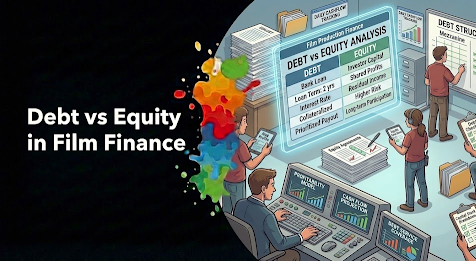
Understanding film financing structures informs cost negotiations directly. When a producer already has a gap financing partner or foreign pre-sales commitments in place, acquisition teams can negotiate more favorable terms, since the seller’s immediate cash flow needs are partially met elsewhere in the capital stack.
How Does International Content Acquisition Work?
International content acquisition requires buyers to understand not just creative quality, but regulatory environments, cultural context, co-production treaty structures, and currency risk. The Motion Picture Association tracks international trade flows showing content crossing borders at record volumes, with Asia-Pacific, Europe, and Latin America all serving simultaneously as major content suppliers and major buyers of non-domestic titles.
South Korea has become one of the world’s most important content export markets. The Korean Wave (“Hallyu”) evolved from a regional phenomenon into a global programming category that commands dedicated acquisition budgets at every major platform. Korean drama and variety formats now reach premium price levels in markets from the US to Brazil to the Middle East. Acquisition teams specializing in Korean content navigate specific licensing windows that often include shorter exclusivity periods and more granular platform-by-platform rights carve-outs than Western markets typically use.
Turkey is the world’s second-largest TV series exporter, with its drama catalog reaching over 150 countries according to data cited by KPMG. Turkish series perform particularly well in the Middle East, Latin America, and Eastern Europe. Buyers in these markets report that Turkish content delivers strong viewer engagement at price points significantly below comparable Korean or Western titles, making it one of the most cost-efficient international acquisition categories available to budget-conscious buyers.
Japan’s anime pipeline remains deep and diversified. The challenge for international buyers is not finding quality content – it is navigating the multi-layered rights committee structures that govern most major anime titles. Rights are often divided between manga publishers, animation studios, broadcast networks, and merchandising partners. Successful anime acquisition specialists build direct relationships with these committees rather than working through general intermediaries who may not have full rights clearance authority.
Nigeria (Nollywood), India, and the Philippines are emerging as high-potential acquisition markets. Nollywood produces over 2,500 titles per year, making it the world’s second most prolific film industry by volume. Indian content – Hindi and regional language – draws growing acquisition interest from platforms targeting diaspora audiences in the US, UK, Gulf, and Southeast Asia.
Regulatory considerations shape every cross-border deal. Content quotas, local-language dubbing requirements, classification standards, and foreign ownership restrictions all affect acquisition feasibility. International co-productions structured through bilateral treaty frameworks unlock co-production financing while satisfying local content regulations in both participating countries. Acquisition teams with co-production capabilities hold a structural advantage over pure buyers in regulatory-complex markets.
Streaming vs. Traditional Acquisition: What Has Changed?
Streaming has fundamentally restructured the economics and logic of content acquisition. Traditional broadcast acquisition optimized for linear schedules – filling time slots with predictable ratings performance. Streaming acquisition optimizes for catalog depth, subscriber acquisition, and long-term retention. These are genuinely different objectives that produce different buying behavior and different deal structures at every price point in the market.
Rights packages have become dramatically more complex over the past decade. A traditional broadcast deal might cover a single territory and window for a defined number of runs. A streaming acquisition deal now routinely encompasses SVOD, AVOD, FAST, mobile, download-to-own, and social clip rights across multiple territories – often in a single agreement. This complexity requires acquisition teams with broader legal and commercial expertise than the previous generation of television buyers needed to operate effectively.
Exclusivity calculus has shifted from binary to granular. For traditional broadcasters, exclusivity was simple – you either had it or you did not. For streaming platforms, exclusivity decisions are now tiered by platform type and territory simultaneously. A platform might hold exclusive SVOD rights in North America while the same title is available on AVOD in Europe and on broadcast in Asia-Pacific. Managing these tiered structures requires sophisticated rights tracking infrastructure that most platforms have had to build from scratch in recent years.
The convergence of studios and streaming platforms has created new tensions in acquisition markets. Major studios – having launched their own streaming services – now compete with their traditional licensing partners for the same content. Independent producers who once relied on studio distribution now bypass studios to deal directly with streaming buyers. This disintermediation has opened new acquisition channels for smaller platforms while reducing the volume of content flowing through traditional studio output deals.
FAST channel acquisition has created an entirely new buyer category with its own deal logic and pricing dynamics. FAST platform operators have built acquisition teams focused specifically on catalog content suitable for ad-supported linear channels. These buyers offer content owners a meaningful secondary window with minimal cannibalization of premium streaming rights – a proposition that has become attractive as content owners seek to monetize deep library holdings that premium platforms will not prioritize for marketing investment.
Content Acquisition Negotiation: Tactics and Deal Structures
Negotiation skill determines how much value an acquisition team extracts from its budget. A well-structured deal can deliver two to three times the catalog value of a poorly negotiated one at the same price point. The tactics below reflect practices documented in content licensing research and observed across deal patterns throughout the global entertainment industry.
Most Favored Nation (MFN) clauses protect buyers from overpaying relative to competitors. An MFN provision requires the licensor to offer the same terms to the buyer if any other buyer later receives more favorable terms for equivalent rights. Buyers should seek MFN on price, territory, and platform type where possible, though sellers increasingly resist broad MFN commitments for high-demand titles where they expect competitive bidding from multiple qualified buyers simultaneously.
Output deals provide pipeline certainty at the cost of capital flexibility. Under an output deal, a buyer commits in advance to license all content meeting defined criteria from a particular producer or studio over a set period – typically two to five years. These deals suit platforms that need guaranteed volume and want to avoid competing title-by-title in an open market. The risk is overpaying for weaker titles embedded in the output pipeline that the buyer would have passed on in individual negotiations.
First-look deals give a buyer the right to evaluate and bid on a producer’s projects before they go to market. First-look arrangements are typically funded – the buyer pays a holding fee for the option to negotiate exclusively. They work best when the buyer has a strong creative relationship with the producer and genuine confidence in their ongoing output quality. A first-look that routinely lapses without conversion is an expensive relationship management cost with no content return on investment.
Pre-sales are acquisition commitments struck before production completes – sometimes before it begins. Pre-sale commitments help producers close their film production funding gaps, giving buyers negotiating leverage in exchange for early financial commitment. The trade-off is delivery risk: the buyer commits capital before seeing the finished product, which requires strong creative diligence at the evaluation stage.
Common negotiation pitfalls include failing to define delivery specifications clearly, accepting vague exclusivity language, neglecting audit rights, and underestimating the cost of holdback obligations. Holdbacks – restrictions on distributing content through other channels during a defined period – can significantly reduce catalog utility if not negotiated carefully. A title acquired for SVOD with a 24-month AVOD holdback loses a full revenue cycle that should have been factored into the acquisition price ceiling from the start of negotiations.
2-5 Years
Typical term of output deals between streaming platforms and production studios, locking in content supply and pricing for extended periods. These structures now account for a significant portion of total platform content spend among major buyers worldwide.
Source: KPMG Media Outlook, 2025
Entertainment Procurement Strategy: How Studios and Platforms Plan Acquisition at Scale
Entertainment procurement strategy is how media companies plan, budget, and execute content acquisition decisions across an entire slate or fiscal year — not deal by deal, but as a structured commercial programme. According to PwC’s Global Entertainment & Media Outlook 2025–2029, the industry will reach $3.5 trillion in revenue by 2029, making disciplined acquisition planning a core competitive lever for every platform and distributor.
Where individual content acquisition is transactional — find a title, negotiate, close — procurement strategy is systemic. It answers: which genres should we prioritise this year? Which territories are under-served in our catalogue? What is the ratio of originals to licensed content that maximises retention at minimum cost? How do we diversify supplier relationships to reduce dependence on a single studio or sales agent?
The Four Pillars of a Content Procurement Strategy
1. Catalogue gap analysis. Before any acquisition decision, leading platforms audit their existing catalogue against subscriber viewing data. Gaps by genre, language, format, or age group drive acquisition priorities. A platform strong in English-language drama but weak in Korean thriller has a defined procurement target — not a general mandate to “acquire more content.”
2. Supplier diversification. Platforms that source exclusively from major Hollywood studios face pricing power asymmetry. A procurement strategy deliberately builds supplier breadth — independent producers, regional studios, international distributors — to maintain negotiation leverage and discover underpriced content before it reaches the open market.
3. Rights tier planning. Not every acquisition needs global, all-platform, perpetual rights. A mature procurement strategy tiers rights packages by content priority — flagship titles get premium multi-territory deals; catalogue filler gets narrow AVOD or FAST licensing. Matching rights scope to commercial purpose prevents overpaying for rights that will never be fully monetised.
4. Intelligence infrastructure. The companies executing the strongest entertainment procurement strategies in 2026 are those with live market intelligence — knowing which production companies are actively selling, which distributors have shifted acquisition mandates, and which titles are approaching rights reversion windows before they hit the formal market. Vitrina tracks 300,000+ entertainment companies globally, giving procurement teams the visibility to act before deals become competitive auctions.
Key Stat
Global entertainment and media industry revenue is forecast to reach $3.5 trillion by 2029, growing at a 3.7% CAGR from $3 trillion in 2024. For procurement teams, this growth compresses acquisition windows — the most commercially valuable content gets contracted earlier, making intelligence-led procurement strategy a structural competitive advantage (PwC Global E&M Outlook 2025–2029).
Content Windowing and Rights Sequencing
Content windowing is the sequencing of rights across platforms, territories, and time periods to maximise a title’s total revenue. A theatrical release might flow to premium VOD (PVOD) after 45 days, then SVOD after 90 days, then AVOD or FAST after 18 months. Each window carries different rights terms, different exclusivity requirements, and different pricing dynamics.
For acquisition teams, understanding the seller’s windowing plan is essential to pricing correctly. A title with a long SVOD exclusivity holdback from a competitor limits your platform’s monetisation window — and that constraint should be priced into the acquisition offer. Conversely, acquiring a title at the AVOD window stage is significantly cheaper than SVOD-first rights, giving procurement teams a cost-efficient way to build catalogue depth.
Content Valuation: How Acquisition Teams Price a Title
Content valuation in acquisition combines quantitative modelling with qualitative market judgment. The quantitative inputs: projected viewership based on comparable titles, subscriber acquisition or retention impact, territorial performance data, and competitive pricing benchmarks for similar rights packages. The qualitative inputs: talent attachment, franchise potential, awards positioning, and critical reception trajectory.
Most platforms apply a content ROI model that projects a title’s contribution to subscriber acquisition and retention against its licensing cost. A title that drives 50,000 new subscriptions at $12/month average revenue generates $600,000 in monthly recurring contribution — making a $1.2 million licensing fee a 2-month payback, well inside acquisition thresholds for most platforms.
How to Find the Right Content for Your Platform
The buyer discovery problem is one of the most persistent inefficiencies in the content acquisition industry. Licensing International research consistently identifies “difficulty finding the right counterparty” as a top friction point for both buyers and sellers in the entertainment rights market, despite the existence of established global markets and agent networks. The problem is structural: the market is large, fragmented, and operates with limited pricing transparency across most categories and territories.
Film markets remain essential for relationship building and deal closing. MIPCOM in Cannes, AFM in Los Angeles, and EFM in Berlin each attract thousands of buyers and sellers across a few compressed days. The meetings are valuable, but the volume of available content far exceeds what any acquisition team can review during market week. Buyers who rely solely on market attendance miss the majority of available inventory and the deals that close quietly between market cycles throughout the year.
Market intelligence platforms have emerged to address the discovery problem systematically. These tools index content availability, rights status, buyer preferences, and deal activity across the global market, enabling acquisition teams to run targeted searches rather than conducting sequential outreach. A platform searching for completed Korean thriller series with SVOD rights available in North America can surface that universe of titles in hours rather than months of manual research.
Content gap analysis is the most rigorous discovery framework available to buyers. It starts with your catalog’s performance data and identifies where audience demand exists that your current content does not satisfy. The gap analysis then drives targeted market searches for titles that fill those specific needs. This is more efficient than browsing available inventory hoping something fits – it defines the target first, then searches for qualified candidates against those criteria systematically.
Building a content acquisition strategy that integrates market attendance, intelligence platform usage, agent relationships, and direct producer outreach creates a discovery funnel that surfaces more qualified opportunities than any single channel alone. The best acquisition teams treat discovery as an ongoing operational process, not an event-driven scramble before each market cycle begins.
2,500+
Titles produced annually by Nigeria’s Nollywood, making it the world’s second most prolific film industry by volume. Platforms building international acquisition pipelines that exclude African content are missing a rapidly growing and cost-competitive supply market.
Source: Motion Picture Association / Industry estimates, 2024
Types of Content Acquisition: TV, Film, Anime & Digital Formats
TV content acquisition is the largest segment by volume, accounting for 58% of all licensing transactions globally in 2025 (MIPWorld Market Report, 2025). But the content acquisition landscape has expanded dramatically, with anime, short-form, and interactive formats each commanding dedicated acquisition pipelines.
TV Content Acquisition
TV content acquisition involves securing broadcast or streaming rights to scripted dramas, reality formats, documentaries, and daytime programming. The primary challenges are holdback windows (when linear and SVOD rights can air simultaneously) and format rights — the underlying IP that allows local remakes. Broadcasters typically license on a per-episode or per-series basis with 2–3 year windows.
Film Rights Acquisition
Film acquisition follows a strict theatrical windowing structure: theatrical → Pay-1 SVOD → AVOD/FAST → free-to-air TV. The content acquisition deal film rights timeline in 2026 is compressing — Pay-1 windows now often start at 45 days post-theatrical rather than the traditional 90 days. For context on how film rights connect to production-stage financing, see our film financing guide.
Anime Content Acquisition
Anime content acquisition has become one of the most competitive sub-markets. K-content demand outside Korea grew 400% post-Squid Game, and anime followed a similar trajectory — global anime streaming revenue reached $25B in 2025 (Grand View Research, 2025). Crunchyroll, Netflix, and Amazon compete aggressively for simulcast rights to seasonal anime. For a catalogue overview, our MAPPA anime list covers one of the most-sought anime studios in the current market.
Digital & Short-Form Formats
FAST (Free Ad-Supported Streaming TV) channels, short-form vertical video, and interactive formats require adapted acquisition models — often non-exclusive, revenue-share based, with shorter windows. Peacock’s 2026 content acquisition strategy is a notable example: the platform has pivoted toward FAST-channel content to reduce per-subscriber content cost while maintaining catalogue breadth.
Challenges in Content Acquisition for Broadcasters & Streamers
Challenges in TV content acquisition for broadcasters have multiplied since 2023. Rights fragmentation, rights inflation, and the collapse of traditional windowing models are compressing margins for everyone who isn’t Netflix or Amazon. Here are the five most acute challenges in 2026:
1. Rights Inflation
Average licensing fees for premium drama series rose 31% between 2022 and 2026 (Media Business Worldwide, 2026). Bidding wars between Netflix, Amazon, Apple TV+, and Disney+ have permanently elevated price floors for A-list content.
2. Windowing Complexity
A single film title in 2026 may have separate rights holders for theatrical, Pay-1 SVOD, Pay-2 SVOD, AVOD, FAST, linear free-to-air, and download-to-own — across dozens of territories. Tracking these windows without dedicated rights management infrastructure is operationally impossible for teams under 10 people.
3. Chain-of-Title Gaps
Independent content acquisitions are particularly vulnerable to chain-of-title defects — incomplete rights documentation from co-producers, music clearance gaps, or underlying IP disputes. A content acquisition specialist estimates 12–15% of independent film acquisitions have some chain-of-title defect requiring remediation (Production Legal, 2025).
4. Discoverability of Available Content
One of the most underreported challenges in TV content acquisition: finding what’s actually available. The global entertainment market has 160,000+ active companies with distribution capabilities — but there’s no single searchable database of available titles and their territorial rights status.
5. AI-Driven Competition for Catalogue
In 2025–2026, AI-recommendation engines have dramatically increased the value of deep back-catalogue. Titles that were “unsellable” in 2020 now attract competitive bids because algorithmic recommendations surface them to precisely matched audiences. This has reversed years of catalogue depreciation — and made content acquisition analyst roles more data-intensive than ever.
Emerging Markets in Content Acquisition: MENA, APAC & Beyond
Arabic content acquisition is one of the fastest-growing segments in global entertainment licensing. The MENA streaming market grew 28% year-on-year in 2025 (Media Partners Asia, 2025), with platforms like Shahid (MBC Group), OSN+, and Watch iT competing aggressively for Arabic-language originals and licensed international content.
MENA: Arabic Content Acquisition
Arabic content acquisition deals have unique structural requirements: dual-dialect licensing (Modern Standard Arabic vs. colloquial dialects), Ramadan programming windows (the highest-viewing period in the region), and careful content clearance for cultural compliance. Buyers should expect 18–24 month exclusivity windows for premium Arabic drama.
APAC: K-Drama, Anime & Bollywood
APAC content acquisition spans three dominant content flows: Korean drama (K-drama) licensing for global platforms, anime acquisition from Japanese studios, and Bollywood/South Indian film rights for diaspora audiences worldwide. The APAC streaming market is projected to reach $47B by 2028 (PwC Global Entertainment, 2026).
Africa: The Emerging Acquisition Frontier
Africa’s content acquisition market is nascent but accelerating. Nigeria’s Nollywood produces 2,500+ films annually — more than Hollywood by volume — and platforms like Netflix Africa, Showmax, and Canal+ Africa are competing for premium Nigerian and Kenyan content. Territory bundling across sub-Saharan Africa is the standard approach for cost efficiency.
Citation Capsule: Emerging markets now account for 37% of all global content acquisition transactions by volume, but only 18% of total deal value — reflecting the market’s structural asymmetry where high-demand emerging-market content trades at significant discounts to equivalent Western or Korean titles (Ampere Analysis, 2026). This gap represents a strategic window for acquirers willing to build expertise ahead of fee parity.
Explore Content Available in MENA, APAC & Africa
160,000+ entertainment companies. Filter by territory, genre, and rights availability.
How Vitrina Supports Content Acquisition Teams
Vitrina Intelligence (VIQI) is built specifically for the buyer discovery and entertainment market intelligence challenges that acquisition professionals face daily. The platform indexes over 300,000+ verified media and entertainment companies across every content category and territory, giving acquisition teams structured, searchable access to the global content supply chain without the manual overhead of traditional research methods.
For acquisition buyers, VIQI functions as a content discovery engine with filters built specifically for the M&E market. Teams can filter by content type, production status, country of origin, genre, rights availability, and company type to surface qualified sellers quickly. Rather than waiting for content to arrive in your inbox or at a market, you can proactively scan the available universe and initiate contact with sellers who match your acquisition criteria – before those titles reach competitive bidding situations.
For distributors and rights holders, VIQI maps the buyer landscape – identifying which platforms, broadcasters, and distributors are actively acquiring in specific genres and territories right now. This intelligence shortens sales cycles and reduces the cost of finding qualified buyers at the right moment in their acquisition cycle, rather than cold-calling through generic contact lists.
VIQI also supports the market intelligence function that underpins effective acquisition strategy. Competitive deal tracking, company profile research, and territory coverage maps give acquisition executives the context needed to make faster, better-informed decisions – without building a proprietary intelligence function from scratch inside the organization.
Conclusion
Content acquisition is the operational core of the modern entertainment business. With global spend at $255 billion and rising, the stakes attached to every acquisition decision have never been higher. Platforms that build disciplined, data-driven acquisition functions – covering systematic discovery, rigorous evaluation, structured negotiation, and clean integration – consistently outperform those that treat acquisition as an ad hoc activity driven by market cycles and inbound pitches.
The professionals who advance in acquisition roles combine creative instinct with analytical rigor. They understand the full rights lifecycle, from pre-sale through FAST window. They know how MFN clauses work and when to push for them. They maintain intelligence systems that surface the right content before it reaches a crowded market. They treat international markets not as an afterthought, but as a primary source of competitive advantage in an industry where English-language content no longer dominates global audience preference.
The frameworks in this guide provide a starting point. The next step is applying them to your specific context – your platform’s audience data, your content budget, your competitive set, and your rights priorities. Start with the catalog gap analysis. Build your discovery funnel. Make sure your negotiation playbook reflects the deal structures that actually govern 2026’s content market. The professionals who do this consistently are the ones closing the best deals.
Frequently Asked Questions About Content Acquisition