

 About Innovation Hub
 Global Content Pulse (Webinars)


 Global Production Financing
(Webinars)
Global Production Financing
(Webinars)  LeaderSpeak Podcast
  About Vitrina
 Our Story
 Our Solutions 🔥
 Film+TV Projects Tracker 🚀
 Case Studies
 Our Profile
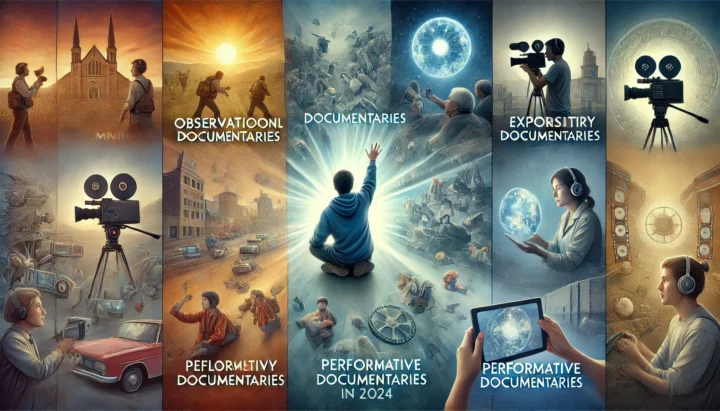
The documentary festival selection process is a competitive evaluation where festival programmers curate non-fiction films based on artistic merit, subject relevance, and premiere status.
This involves a multi-stage review including initial screening, committee shortlisting, and final selection by the Artistic Director.
According to industry analysis, top-tier festivals like Sundance and IDFA receive over 10,000 submissions annually, with acceptance rates often falling below 2%.
In this guide, you’ll learn how to leverage supply chain intelligence to optimize submission timing, target the right programmers, and convert festival laurels into distribution deals.
While traditional advice focuses solely on the creative cut, it often overlooks the “data trust deficit” that keeps independent projects from reaching the right decision-makers. In today’s hybrid festival landscape, submission is no longer a shot in the dark—it is a strategic entry into the global entertainment supply chain.
This comprehensive guide addresses the lack of beginner-friendly resources by providing a step-by-step roadmap—moving from cold submissions to data-powered outreach.

Your AI Assistant, Agent, and Analyst for the Business of Entertainment
VIQI AI helps you plan content acquisitions, raise production financing, and find and connect with the right partners worldwide.
- Find active co-producers and financiers for scripted projects
- Find equity and gap financing companies in North America
- Find top film financiers in Europe
- Find production houses that can co-produce or finance unscripted series
- I am looking for production partners for a YA drama set in Brazil
- I am looking for producers with proven track record in mid-budget features
- I am looking for Turkish distributors with successful international sales
- I am looking for OTT platforms actively acquiring finished series for the LATAM region
- I am seeking localization companies offer subtitling services in multiple Asian languages
- I am seeking partners in animation production for children's content
- I am seeking USA based post-production companies with sound facilities
- I am seeking VFX partners to composite background images and AI generated content
- Show me recent drama projects available for pre-buy
- Show me Japanese Anime Distributors
- Show me true-crime buyers from Asia
- Show me documentary pre-buyers
- List the top commissioners at the BBC
- List the post-production and VFX decision-makers at Netflix
- List the development leaders at Sony Pictures
- List the scripted programming heads at HBO
- Who is backing animation projects in Europe right now
- Who is Netflix’s top production partners for Sports Docs
- Who is Commissioning factual content in the NORDICS
- Who is acquiring unscripted formats for the North American market
Producers Seeking Financing & Partnerships?
Book Your Free Concierge Outreach Consultation
(To know more about Vitrina Concierge Outreach Solutions click here)
Table of Contents
Key Takeaways for Documentary Filmmakers
-
Data-Driven Targeting: Filmmakers using supply chain intelligence identify festivals with matching genre appetite 70% faster than those relying on manual list-building.
-
Premiere Status Priority: Securing a world premiere at a “Big Five” festival increases the likelihood of a distribution deal by 4x compared to secondary screenings.
-
Intelligence Over Luck: Tracking festival programmer movements and previous selection patterns reduces submission “noise” and focuses budgets on high-probability opportunities.
What is the Documentary Festival Selection Process?
The documentary festival selection process is a rigorous editorial filter designed to identify non-fiction projects that align with a festival’s specific mission, audience, and thematic focus. Unlike commercial distribution, which prioritizes ROI, festival selection prioritizes cultural impact, narrative innovation, and the “discoverability” of new voices.
For independent producers, this process begins with the “Call for Entries,” where thousands of filmmakers upload projects to platforms like FilmFreeway. Screeners—often industry volunteers or junior programmers—review the first 15–20 minutes of each submission to determine if it should move to the senior programming committee.
Find top-tier documentary festivals currently accepting submissions:
Navigating Hybrid Trends in 2025
The rise of hybrid festival models—combining in-person screenings with digital platform access—has fundamentally changed the selection criteria. Programmers now look for “transmedia potential,” where a documentary can engage a global digital audience while maintaining the “eventized” allure of a theatrical premiere.
Industry Expert Perspective: Getty Images and the Business of Visual IP
Discover how the documentary ecosystem is evolving through the lens of one of the world’s most iconic media companies. Ken Mainardis explores how ethical AI and rare archives are empowering storytellers to stand out in the festival circuit.
Ken Mainardis, Senior Vice President at Getty Images, discusses how the company is redefining its role in the documentary ecosystem—from unlocking rare archives to enabling ethical AI-driven storytelling that helps indies compete with major studios.
The Art of Professional Programmer Outreach
Cold submissions are the standard, but warm outreach to programmers can significantly move the needle. Programmers are looking for projects that solve their specific programming “gaps”—such as a lack of regional diversity or a need for high-impact social justice stories.
How to Approach a Festival Programmer:
- Research the Slate: Look at the last three years of winners. Does your film complement or duplicate their recent choices?
- Identify the Associate Programmer: Often, the “In-Competition” decisions are heavily influenced by regionally based associate programmers who act as scouts.
- Keep it Succinct: A 3-sentence email highlighting your unique perspective, premiere status, and any notable co-production partners is more effective than a full EPK.
Using Vitrina AI to Identify High-Appetite Festivals
The “data deficit” in the documentary world often leads to filmmakers wasting thousands in submission fees on festivals that don’t program their genre. Vitrina AI’s Global Projects Tracker and VIQI AI Assistant allow filmmakers to flip the script by analyzing which festivals have recently screened similar titles and identifying the specific distributors in attendance.
“The documentary model that worked five years ago—festival premieres followed by traditional sales agent representation—is being replaced by data-driven platform targeting. Filmmakers who understand where active buyers are gathering are securing deals 60-90 days faster than those relying on legacy methods.”
Identify co-production financing for your documentary project:
The Essential Documentary Submission Checklist
To maximize your chances of breaking through the noise, ensure your submission package contains these high-impact elements.
- Logline (Under 30 words): Must clearly state the stakes and the unique perspective.
- Director’s Statement: Explain why this story had to be told now. Focus on authenticity and access.
- High-Resolution Stills: 3-5 cinematic frames that represent the visual tone of the documentary.
- Password-Protected Screener: Ensure your Vimeo link is stable and includes subtitles for international programmers.
Moving Forward
The documentary festival landscape is no longer just about the red carpet; it is a critical node in a globalized content supply chain. By transitioning from speculative submissions to data-driven targeting, independent filmmakers can bridge the gap between creative excellence and commercial viability.
Whether you are an independent producer looking to secure world premiere status at Sundance, or a sales agent trying to leverage regional festival laurels for a multi-platform distribution deal, actionable intelligence is your most powerful tool.
Outlook: Over the next 12-18 months, expect major film festivals to increasingly use streaming performance data and social traction as “proof of concept” for documentary selections, creating a more circular relationship between festivals and digital platforms.
Frequently Asked Questions
Quick answers to help you navigate the complex documentary festival ecosystem.
How do film festivals select documentaries?
What is the most prestigious documentary festival?
Should I submit my documentary to festivals early?
Can I submit a “Work in Progress” to a film festival?
About the Author
Written by a Content Architect at Vitrina AI, specializing in entertainment supply chain intelligence and documentary distribution strategy. With experience analyzing global project pipelines for 140,000+ companies, we help storytellers navigate the business of non-fiction. Connect on Vitrina.
Find Film+TV Projects, Partners, and Deals – Fast.
VIQI matches you with the right financiers, producers, streamers, and buyers – globally.
Producers Seeking Financing & Partnerships?
Book Your Free Concierge Outreach Consultation
(To know more about Vitrina Concierge Outreach Solutions click here)
Producers Seeking Financing, Co-Pros, or Pre-Buys?
Vitrina Concierge helps producers reach the right financiers, commissioners, distributors, and co-production partners — with precision outreach, not cold pitching.
Join Industry Briefings Trusted by Leaders
Deep dive into Co-Pros
Ambitious co-productions are key to global hits, but most deals collapse. This deep-dive briefing is the strategic playbook. We’ll break down the financing models, partnership structures, and market insights behind today’s successful deals.
Film & TV Financing: Tax Credits & Incentives
A focused look at how 2025 tax credits and incentives are reshaping Film & TV financing decisions — and where the real value now sits.
Film & TV Financing: Pre-Buys
Learn how pre-buys work in current Film and TV financing, how they differ from pre-sales, and how they are used to close real finance plans.
Streamers – Netflix vs. Amazon – The 2026 Strategy
How Netflix and Amazon’s content and revenue strategies are diverging ahead of 2026.