

 About Innovation Hub
 Global Content Pulse (Webinars)


 Global Production Financing
(Webinars)
Global Production Financing
(Webinars)  LeaderSpeak Podcast
  About Vitrina
 Our Story
 Our Solutions 🔥
 Film+TV Projects Tracker 🚀
 Case Studies
 Our Profile
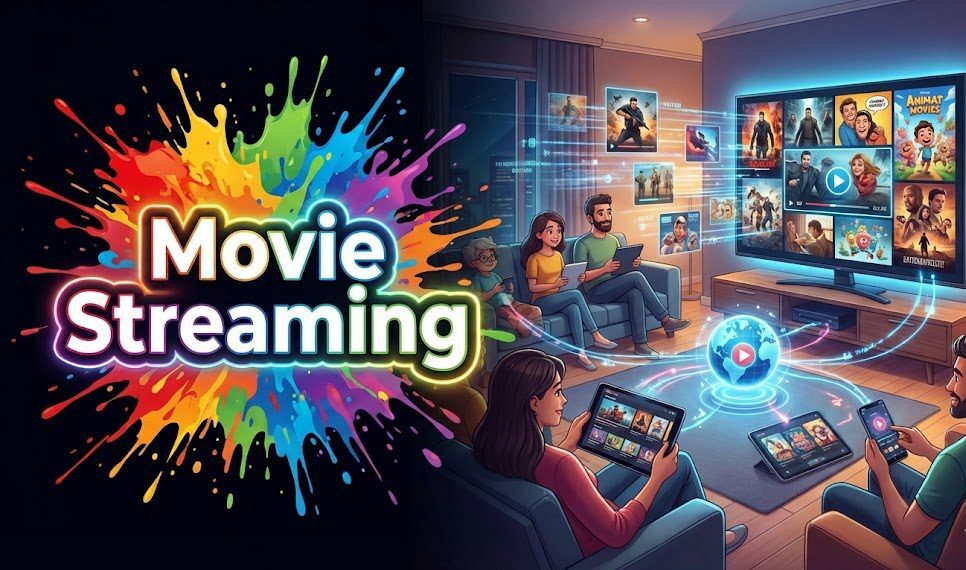
Movie streaming optimization is the technical process of enhancing video delivery, playback stability, and cross-device compatibility to ensure a premium viewer experience.
This involves managing high-efficiency video coding (HEVC), optimizing Content Delivery Networks (CDNs), and aligning bandwidth requirements with device capabilities.
According to recent industry data, platforms that prioritize technical optimization see a 35% increase in viewer retention and a significant reduction in churn.
In this guide, you will learn the strategic framework for technical optimization—from home network management to selecting global technology partners.
While many resources focus on what content to license, they often overlook the critical technical infrastructure that prevents buffering and low-resolution playback. This “technical deficit” creates friction for users and undermines the value of premium content slates.
This comprehensive guide addresses those gaps by providing actionable technical insights—bridging the gap between content acquisition and high-performance delivery.

Your AI Assistant, Agent, and Analyst for the Business of Entertainment
VIQI AI helps you plan content acquisitions, raise production financing, and find and connect with the right partners worldwide.
- Find active co-producers and financiers for scripted projects
- Find equity and gap financing companies in North America
- Find top film financiers in Europe
- Find production houses that can co-produce or finance unscripted series
- I am looking for production partners for a YA drama set in Brazil
- I am looking for producers with proven track record in mid-budget features
- I am looking for Turkish distributors with successful international sales
- I am looking for OTT platforms actively acquiring finished series for the LATAM region
- I am seeking localization companies offer subtitling services in multiple Asian languages
- I am seeking partners in animation production for children's content
- I am seeking USA based post-production companies with sound facilities
- I am seeking VFX partners to composite background images and AI generated content
- Show me recent drama projects available for pre-buy
- Show me Japanese Anime Distributors
- Show me true-crime buyers from Asia
- Show me documentary pre-buyers
- List the top commissioners at the BBC
- List the post-production and VFX decision-makers at Netflix
- List the development leaders at Sony Pictures
- List the scripted programming heads at HBO
- Who is backing animation projects in Europe right now
- Who is Netflix’s top production partners for Sports Docs
- Who is Commissioning factual content in the NORDICS
- Who is acquiring unscripted formats for the North American market
Producers Seeking Financing & Partnerships?
Book Your Free Concierge Outreach Consultation
(To know more about Vitrina Concierge Outreach Solutions click here)
Table of Contents
Key Takeaways for Content Leads
-
Infrastructure is Product: Technical delivery is as vital as content quality; poor streaming performance directly causes subscriber churn and brand erosion.
-
Data-Driven Intelligence: Leveraging supply chain platforms allows teams to identify the best technology vendors for specific regional needs in minutes.
-
Global Scalability: Effective CDN and bandwidth strategies must be localized to account for varying internet speeds across diverse global territories.
What is Movie Streaming Optimization?
Movie streaming optimization is the multi-layered process of refining the delivery pipeline to ensure high-fidelity video reaches viewers with minimal latency. It encompasses everything from video encoding formats like H.264 and HEVC to the sophisticated algorithms used by Adaptive Bitrate Streaming (ABR). When executed correctly, optimization ensures that the viewing experience remains consistent, even when local network conditions fluctuate.
For content leads, this process is critical because the perceived value of a film or series is tied to its presentation. A high-budget blockbuster loses its impact if plagued by pixelation or frequent pauses. Optimization acts as the silent guardian of the “Authorized Data” and premium IP, ensuring that the creative vision is preserved across all viewing platforms.
Find technology partners specializing in HEVC and ABR optimization:
Industry Expert Perspective: Medianova’s CDN Success Story in the Middle East
This video highlights the critical importance of localized technology enablement in the entertainment supply chain, specifically addressing how CDNs optimize video signals for streaming and FAST channels in high-growth regions.
Key Insights
Serkan Sevim, Founder and CEO of Medianova, discusses technology enablement and delivery of video signals in the supply chain, focusing on high-quality video content delivery for streaming and FAST channels in the Middle East.
Core Technical Requirements for High-Quality Playback
Achieving “broadcast quality” over IP networks requires adherence to strict technical standards. The baseline requirement for 4K movie streaming is typically an 18-25 Mbps stable connection, while 1080p content requires 5-8 Mbps. However, raw speed is only one variable. Content leads must also ensure their platforms support modern HDR standards (HDR10+ and Dolby Vision) to deliver the dynamic range audiences now expect.
Another critical factor is device compatibility. With viewers moving between mobile devices, smart TVs, and gaming consoles, content must be transcoded into multiple versions (profiles) that match the hardware decoding capabilities of each device. This cross-platform consistency is what separates industry leaders like Netflix from smaller, fragmented service providers.
Identify global partners for cross-device transcoding and HDR support:
Bandwidth Management and Network Optimization
Network congestion is the primary enemy of seamless movie streaming. While platforms cannot control a user’s local ISP, they can optimize how data is requested and buffered. Implementing per-shot or per-scene encoding allows for better bandwidth management by allocating more data to complex visual scenes (like action sequences) and less to static shots, reducing the overall bitrate without sacrificing quality.
Furthermore, the adoption of IP-based video distribution allows for more dynamic ad placement and localization. As noted by Marc Aldrich, CEO of Zixi, the industry’s move toward IP-based delivery is being accelerated by global regulatory shifts. This technological transition enables platforms to switch markets and localized content streams in real-time, providing a more personalized experience that feels “local” despite being delivered globally.
Analyze active IP-based video distribution projects globally:
Maximizing CDN Performance for Global Delivery
Content Delivery Networks (CDNs) are the backbone of global movie streaming. By caching content at the “edge”—servers physically closer to the user—CDNs drastically reduce the travel distance for data packets. This localization is essential for managing the high-volume traffic associated with global blockbuster releases. Without a robust CDN strategy, platforms risk catastrophic failures during peak viewership hours.
The “Weaponized Distribution” era, where premium content is licensed across multiple rival platforms to maximize ROI, makes CDN interoperability a critical business requirement. As content flows between Netflix, Warner Bros., and Amazon MGM Studios, the underlying technical infrastructure must remain agnostic and resilient. Successful teams use supply chain intelligence to vet CDN partners based on their performance metrics in specific regional markets like MENA or Southeast Asia.
“In a hyper-competitive, borderless market, technical delivery is the primary differentiator. If you can’t deliver content seamlessly to a mobile user in Mumbai or a smart TV in London, your premium IP loses its power. Data-driven supply chain intelligence is no longer optional—it’s the foundation of modern distribution.”
Moving Forward
The shift from opaque networking to data-powered supply chain frameworks is transforming movie streaming from a creative bet into a technical science. By addressing the technical gaps in bandwidth optimization and CDN selection, content leads can secure the ROI of their high-value acquisitions.
Whether you are a Content Lead looking to optimize global delivery or a Technical Operations Manager trying to reduce churn, actionable intelligence is your most valuable asset.
Outlook: Over the next 18 months, the integration of generative AI for localized dubbing and metadata enrichment will further compress the time-to-market for optimized global streaming content.
Frequently Asked Questions
Quick answers to the technical aspects of movie streaming optimization.
What is the minimum internet speed for 4K movie streaming?
How does Adaptive Bitrate Streaming (ABR) work?
Why is HEVC important for movie streaming?
Can I improve streaming quality on a home network?
About the Author
The Vitrina Editorial Team specializes in mapping the global entertainment supply chain. With decades of experience in media technology and data intelligence, we provide structured insights for senior M&E executives. Connect on Vitrina.
Find Film+TV Projects, Partners, and Deals – Fast.
VIQI matches you with the right financiers, producers, streamers, and buyers – globally.
Producers Seeking Financing & Partnerships?
Book Your Free Concierge Outreach Consultation
(To know more about Vitrina Concierge Outreach Solutions click here)
Producers Seeking Financing, Co-Pros, or Pre-Buys?
Vitrina Concierge helps producers reach the right financiers, commissioners, distributors, and co-production partners — with precision outreach, not cold pitching.
Join Industry Briefings Trusted by Leaders

Deep dive into Co-Pros
Ambitious co-productions are key to global hits, but most deals collapse. This deep-dive briefing is the strategic playbook. We’ll break down the financing models, partnership structures, and market insights behind today’s successful deals.

Film & TV Financing: Tax Credits & Incentives
A focused look at how 2025 tax credits and incentives are reshaping Film & TV financing decisions — and where the real value now sits.

Film & TV Financing: Pre-Buys
Learn how pre-buys work in current Film and TV financing, how they differ from pre-sales, and how they are used to close real finance plans.
Streamers – Netflix vs. Amazon – The 2026 Strategy
How Netflix and Amazon’s content and revenue strategies are diverging ahead of 2026.