IHUB
IHUB
 Private Briefings (Webinars)


 LeaderSpeak Podcast
  Global Entertainment Digest (Newsletter)
  Premium Lists
 Premium Reports
 Membership Benefits
 About Vitrina
 Our Story

By Vitrina Research Team | Published: July 2, 2026 | Updated: July 2, 2026 | 13 min read
The global media and entertainment industry is worth $2.93 trillion and spans every format humans use to create, distribute, and consume content — film studios, streaming platforms, broadcast networks, music labels, gaming publishers, live events operators, and publishers. When someone refers to “media and entertainment companies,” they might mean Comcast with $123.7 billion in annual revenue, or a 12-person independent production company in Mumbai with a Netflix development deal. Both are in the same industry. Understanding the landscape means understanding both.
The industry has never been more consolidated at the top — or more fragmented below the surface. Seven companies control the Motion Picture Association. But approximately 7,759 production businesses operate in the US alone, 130 streaming services compete globally, and independent box office grew 41% year-over-year in 2025 to reach a record $1.9 billion. The major conglomerate layer and the independent layer are moving in opposite directions simultaneously.
This guide maps the complete M&E company landscape for 2026 — the largest conglomerates by revenue, the full taxonomy of company types, geographic concentrations, tech platform entrants, consolidation trends, and the independent and PE-backed layer that represents most of the actual company count. For the broader market forces driving these companies, see our analysis of entertainment industry trends 2026.
Quick Answer
Global M&E reached $2.93 trillion in 2024 and is projected to hit $3.5 trillion by 2029 at 3.7% CAGR (PwC Global E&M Outlook 2025) The 12 largest M&E companies spent a record $210 billion on content in 2024 — up 4% YoY with a 10% CAGR since 2020 (Variety / KPMG, Jan 2025) Approximately 130 streaming services compete globally; the US alone has ~7,759 production businesses (AlixPartners; IBISWorld, 2025)
Key Takeaways
- Global M&E reached $2.93 trillion in 2024 and is projected to hit $3.5 trillion by 2029 at 3.7% CAGR (PwC Global E&M Outlook 2025).
- The 12 largest M&E companies spent a record $210 billion on content in 2024 — up 4% YoY with a 10% CAGR since 2020 (Variety / KPMG, Jan 2025).
- Approximately 130 streaming services compete globally; the US alone has ~7,759 production businesses (AlixPartners; IBISWorld, 2025).
- M&A is reducing major conglomerates to ~4 entities: the Paramount Skydance-WBD deal and Netflix-WBD acquisition mark a historic consolidation wave.
- Independent box office grew 41% YoY in 2025 to a record $1.9 billion — the fragmented layer is growing even as the top consolidates (Indy Film Library, Jan 2026).
Explore the Full M&E Company Landscape on VIQI
For Companies & Studios
List your company on VIQI and get discovered by buyers, investors, and partners across the global M&E landscape.
For Buyers & Investors
Research 159,223 M&E companies — studios, streamers, distributors, and independents — on VIQI.
The Major M&E Conglomerates — Revenue Rankings (2024)
The largest media and entertainment companies are measured by total revenue, not just content spend — and the gap between the top two and the rest is significant. Comcast’s $123.7 billion in FY2024 revenue reflects cable, internet, NBCUniversal, Sky, and Peacock combined. Disney’s $91.4 billion covers parks, consumer products, and streaming alongside its film studios. Both dwarf Netflix’s $39 billion, despite Netflix having 325 million+ subscribers and a $17 billion annual content budget.
| Company | FY2024 Revenue | Content Spend | Key Segments |
|---|---|---|---|
| Comcast / NBCUniversal | $123.7B | $37B | Cable, NBC, Universal, Peacock, Sky |
| Walt Disney Company | $91.4B | $28B | Studios, Disney+, Parks, ESPN |
| Sony Group | $89.8B | ~$10B (Pictures) | PlayStation, Music ($12.3B), Pictures ($10.1B) |
| YouTube (Google) | $33B (ad revenue) | $32B | Streaming, UGC, YouTube TV, Shorts |
| Warner Bros. Discovery | $39.3B | ~$14B | HBO, Max, Warner Bros. Studios, CNN |
| Netflix | $39.0B | $17B | Streaming (325M+ subscribers globally) |
| Paramount Skydance | $29.2B | ~$5B | CBS, Paramount+, MTV, Nickelodeon |
| Bertelsmann | ~$20.9B (€19B) | N/A | RTL Group, Penguin Random House, BMG |
Source: Company SEC filings / Variety / KPMG, FY2024. YouTube revenue = Google ad revenue attributed to YouTube.
Collectively, the 12 biggest M&E companies spent a record $210 billion on content in 2024 — up 4% year-over-year, with a 10% CAGR since 2020 (Variety / KPMG, January 2025). For individual company profiles, see our breakdowns of Disney Media and Entertainment Distribution and Sony Pictures Television.

Types of Media and Entertainment Companies — The Full Taxonomy
The M&E industry is not a single business category — it’s eight distinct company types with different economic models, regulatory environments, and competitive dynamics. Understanding the taxonomy is a prerequisite for any B2B strategy in the sector. The US Census Bureau classifies these businesses primarily under NAICS 512110 (Motion Picture Production), 512120 (Distribution), 516210 (Media Streaming), and the broader SIC 71 (Arts, Entertainment & Recreation).
Key Stat
The M&E industry is not a single business category — it’s eight distinct company types with different economic models, regulatory environments, and competitive dynamics. Understanding the taxonomy is a prerequisite for any B2B strategy in the sector. The US Census Bureau clas
| Company Type | Core Function | Market Scale (2024-2025) |
|---|---|---|
| Studios & Production Companies | Create original content (film, TV, digital) | ~7,759 US businesses (IBISWorld, 2025) |
| Streaming Platforms | Distribute content via subscription / ad models | ~130 globally; OTT market $165B+ in 2026 |
| Broadcasters & Networks | Linear TV, cable, satellite distribution | Still ~$170B in pay-TV revenue globally (Omdia) |
| Film Distributors | Theatrical, home entertainment, digital release | Box office $33B globally in 2024 (PwC) |
| Music Labels & Publishers | Record, license, and distribute music | $29.6B recorded music in 2024; 10th straight year of growth (IFPI) |
| Gaming Companies | Develop and publish interactive entertainment | $224B market in 2024; 5.7% CAGR to ~$300B by 2029 (PwC) |
| Live Events & Venues | Concerts, sports, theatre, experiential | $465.9B in 2024; projected $859B by 2034 (Custom Market Insights) |
| Publishers | Books, magazines, digital publishing | $244.2B globally; digital at $57.8B growing at 10.2% CAGR |
Sources: PwC Global E&M Outlook 2025, IFPI 2025, IBISWorld 2025, AlixPartners 2026, Custom Market Insights 2025.
Within studios and production, sub-categories matter enormously for B2B navigation. Major studios (Disney, Universal, Sony, Warner Bros., Paramount) are vertically integrated across production and distribution. Independent film production companies typically produce content for sale or licensing to platforms. Film distribution companies may handle theatrical, physical, or digital rights without producing content at all. Each type has different acquisition criteria, deal structures, and decision-making timelines.

Geographic Distribution — Where M&E Companies Are Concentrated
The United States holds the world’s largest national M&E market at $649 billion and remains the headquarters of most major conglomerates (ITA / SelectUSA, 2024). US copyright industries employed over 16 million workers and contributed $2.9 trillion to GDP — 12.52% of total US economic output. But the US is approximately 40% of a global market; the remaining 60% matters increasingly as streaming platforms drive non-English content investment across Asia-Pacific, Europe, and Latin America.
Key Stat
The United States holds the world’s largest national M&E market at $649 billion and remains the headquarters of most major conglomerates (ITA / SelectUSA, 2024). US copyright industries employed over 16 million workers and contributed $2.9 trillion to GDP — 12.52% of total US
| Region | Market Share | Key Players & Notes |
|---|---|---|
| North America | ~40% | Disney, Comcast, Netflix, Paramount, Fox. US market $649B. |
| Europe | ~28% | Bertelsmann (Germany), Vivendi (France), Sky/ITV (UK), Mediaset (Italy) |
| Asia-Pacific | ~20% | Fastest-growing at 9.96% CAGR through 2035; 1.7B 5G connections in 2025 |
| India | 11.5% of APAC | $30B market; 9.1% YoY growth; OTT at 14.9% CAGR (IBEF / PwC India, 2025) |
| Latin America | ~8% | Globo (Brazil), Televisa/Univision; Spanish-language streaming fastest-growing |
| MENA | ~4% | OSN, MBC Group, Shahid; identified as “next wave” investment priority by major streamers |
Sources: Business Research Insights 2025; IBEF / PwC India 2025; Mordor Intelligence 2025; ITA SelectUSA 2024.
Asia-Pacific’s 9.96% CAGR through 2035 is the fastest of any major region, driven by population scale, rising disposable incomes, and rapid streaming adoption. India’s OTT market is growing at 14.9% CAGR — faster than any other top-15 national market. For B2B players targeting co-production, distribution partnerships, or acquisition opportunities, the non-US company landscape is increasingly where the growth margin sits.
Consolidation — How M&A Is Reshaping the Landscape
The major M&E company count at the top has been falling for years, and 2025-2026 marks the steepest drop yet. Disney’s acquisition of 21st Century Fox in 2019 reduced major US studios from 6 to 5. The Paramount Skydance merger completed August 7, 2025 ($8.4 billion). The combined entity then pursued WBD — WBD shareholders approved Paramount Skydance’s acquisition at $31/share (approximately $81 billion equity value, $111 billion including debt) in April 2026. Separately, Netflix announced its $82.7 billion acquisition of Warner Bros. Discovery in December 2025. If both transactions complete, the major conglomerate count effectively falls to approximately 4.
Key Stat
The major M&E company count at the top has been falling for years, and 2025-2026 marks the steepest drop yet. Disney’s acquisition of 21st Century Fox in 2019 reduced major US studios from 6 to 5. The Paramount Skydance merger completed August 7, 2025 ($8.4 billion). The comb
| Deal | Value | Status (2026) | B2B Implication |
|---|---|---|---|
| Paramount + Skydance | $8.4B | Completed Aug 2025 | New ownership; new commissioning priorities at CBS/Paramount+ |
| Paramount Skydance + WBD | ~$111B (incl. debt) | Approved Apr 2026; pending regulatory | Would merge HBO, CNN, Max with CBS, MTV, Paramount+ |
| Netflix + WBD | $82.7B (enterprise value) | Announced Dec 2025; closing 2026-27 | Netflix gains HBO, DC, Harry Potter, WB Studios library |
| Blackstone + Hipgnosis Songs | $1.6B | Completed 2024 | PE entry into music IP signals catalog as institutional asset class |
Sources: Paramount press release; WBD investor relations; Netflix IR; FTI Consulting.
M&A activity averaged 326+ transactions annually from 2020 to 2024, with H1 2024 activity up 82% versus H2 2023 (FTI Consulting). More than half of 2024 M&E M&A involved a target or acquirer from outside the traditional entertainment industry — cross-sector deals now dominate, as tech, private equity, and sports rights holders all make major moves (Bain & Company, 2025). AlixPartners forecasts $80 billion+ in M&E deal value in 2026 alone.
Independent and PE-Backed M&E Companies
The major conglomerate count is shrinking, but the independent company layer is growing. The top-10 US independent films grossed a record $1.9 billion in 2025 — a 41% year-over-year increase — outpacing the studio system’s growth rate (Indy Film Library, January 2026). Independent production companies account for the vast majority of the ~7,759 US production businesses tracked by IBISWorld. Globally, the independent count runs into the hundreds of thousands across production, distribution, and music.
Private equity presence has intensified across the sector. Beyond Blackstone’s $1.6 billion Hipgnosis acquisition, Silver Lake co-led the $55 billion take-private of Electronic Arts alongside Saudi Arabia’s Public Investment Fund and Affinity Partners in 2025. Music and podcast M&A rose 157% in H1 2024, driven largely by PE interest in catalog IP as an asset class. PE-backed companies tend to operate with more aggressive acquisition timelines than legacy studios, and they’re less visible in trade press — which makes them a high-value target for structured company intelligence.
For content producers and distribution executives, the independent and PE-backed landscape presents both opportunity and complexity. Independent production companies with existing streaming relationships are increasingly valuable acquisition targets. PE-backed acquirers move faster and require different pitch positioning than traditional studio development processes. Identifying which companies in this fragmented layer have active commissioning mandates requires structured company intelligence.

Tech Giants as M&E Companies — Redefining the Landscape
Three technology companies are now among the largest content spenders in the entertainment industry — and none of them started as media companies. YouTube (Google) spent approximately $32 billion on content in 2024, ranking it second only to Comcast among all M&E content investors. Amazon Prime Video spent $20 billion. Apple TV+ deployed roughly $7.5 billion in 2025, part of a cumulative $20 billion invested in originals since launch. Together with Netflix, these four companies account for a disproportionate share of the $210 billion collective content spend tracked by Variety and KPMG.
YouTube: The Largest Content Economy by Scale
YouTube has paid creators and media companies over $100 billion across the past four years. YouTube Shorts generates 70 billion daily views. YouTube generated over $33 billion in advertising revenue in 2024 — roughly matching Netflix’s total company revenue. It operates simultaneously as a platform, distributor, broadcaster (YouTube TV), and content investor. Roblox paid $1 billion to creators in 2025 alone, signaling that the creator-first economy model is scaling across platforms.
Amazon and Apple: Content as Ecosystem Infrastructure
Amazon’s Prime Video investment functions as customer acquisition for Amazon Prime subscriptions — its content ROI calculation is fundamentally different from Netflix’s. Amazon acquired MGM Studios in 2022, adding a legacy film library and production infrastructure. Apple TV+ won the first streaming Academy Award (CODA, 2022) and maintains a consistent prestige slate, but remains primarily a subscriber retention tool for the Apple ecosystem rather than a standalone media business. For a detailed breakdown of how Netflix content acquisition works as a pure-play streaming business, see our full analysis.
How Vitrina Maps the Global M&E Company Landscape
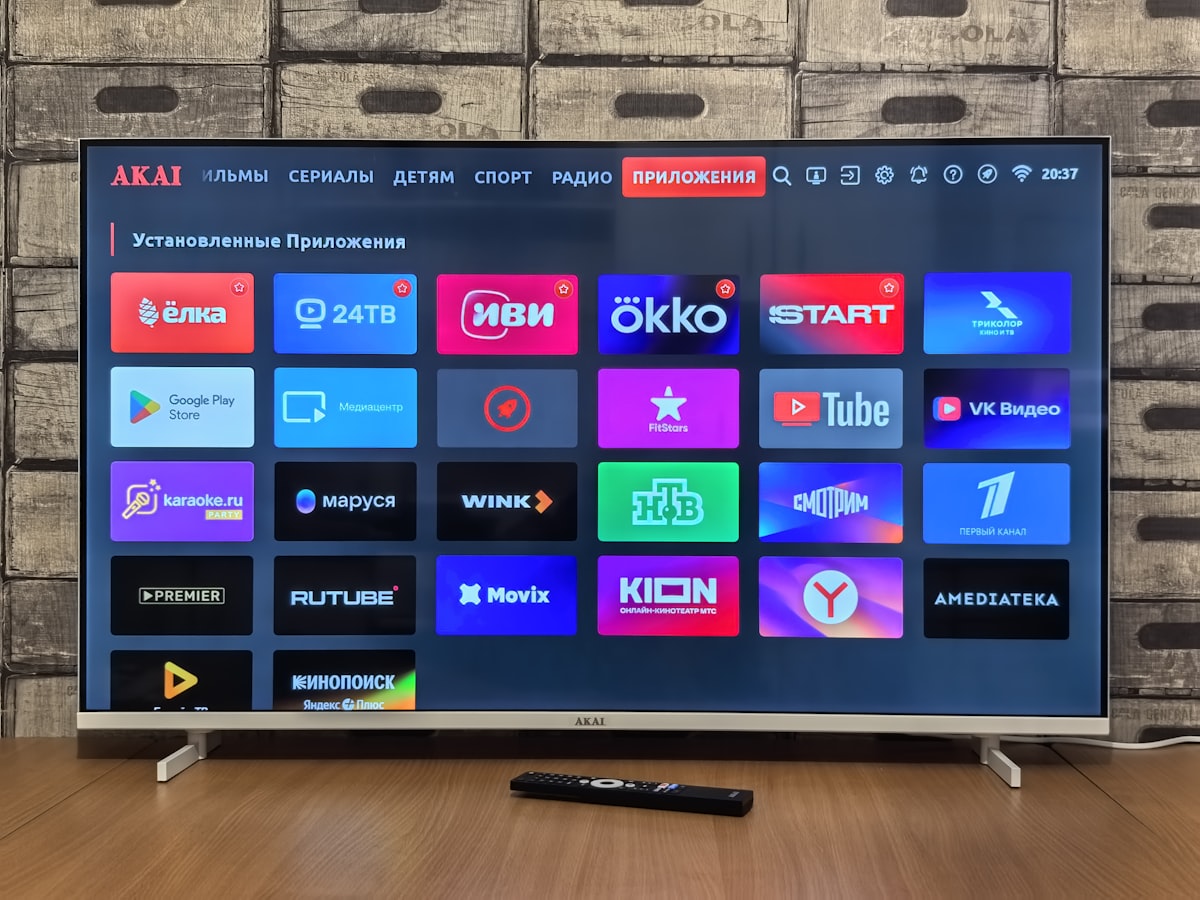
With 130+ streaming services, 7,759 US production businesses alone, and hundreds of PE-backed entrants across every segment, navigating the M&E company universe from public directories and press coverage isn’t viable. VIQI aggregates 300,000+ M&E companies globally — studios, streamers, distributors, music labels, gaming companies, broadcasters, and independent production houses — into a single searchable intelligence layer with deal activity, company relationships, and commissioning history.
The use cases we see most from VIQI users are specific and high-stakes: investors evaluating the M&E company universe for acquisition targets across segments and geographies before committing to a deal process; distribution executives mapping which independent production companies are active in a specific genre or territory before allocating development budget; co-production partners identifying which companies have existing streaming relationships in their target markets before entering conversations. Each requires structured data, not general industry knowledge.
The consolidation trend makes VIQI’s company-level coverage more valuable, not less. As major conglomerates absorb IP and distribution infrastructure, the remaining independent and PE-backed players become the primary source of new creative supply and deal opportunities. Tracking which of those companies is active, well-capitalized, and aligned with your strategic priorities requires intelligence that press coverage simply doesn’t provide.
Research the Full M&E Company Landscape on VIQI
For Companies & Studios
List your company on VIQI and get discovered by buyers, investors, and co-production partners searching the global M&E landscape.
For Buyers & Investors
Search 159,223 M&E companies across every segment and geography — studios, streamers, independents, PE-backed players.
Conclusion
The media and entertainment company landscape in 2026 is defined by a structural paradox: extreme consolidation at the top — five major conglomerates becoming approximately four, $80 billion+ in deal activity forecast for 2026 — coexisting with growing fragmentation below, where 7,759 US production businesses, 130+ competing streaming services, and a record-breaking independent box office tell a very different story. Both trends are real and both create distinct opportunities for B2B players who understand the difference.
For investors, producers, and distribution executives, the actionable insight is specificity. “Media and entertainment companies” is not a useful unit of analysis on its own — company type, segment, geography, ownership structure, and commissioning mandate are. A PE-backed independent production company with a Netflix first-look deal in Southeast Asia operates in a completely different competitive reality than a European broadcaster managing cable subscriber decline. The companies that succeed in this landscape are the ones with intelligence granular enough to make that distinction.
The $3.5 trillion total addressable market projected for 2029 is large enough to support both the Comcasts and the independents. Capturing a share of it — whether through a distribution deal, a co-production partnership, or a targeted acquisition — requires knowing exactly which companies are active, how they’re structured, and where their commissioning priorities sit right now. That is a data problem as much as a strategy problem.
Frequently Asked Questions
What are the biggest media and entertainment companies in the world?
By FY2024 revenue: Comcast/NBCUniversal ($123.7B), Walt Disney ($91.4B), Sony Group ($89.8B), Warner Bros. Discovery ($39.3B), Netflix ($39.0B), Paramount Skydance ($29.2B), and Bertelsmann (~$20.9B). YouTube (Google) spent $32B on content, placing it among the largest by investment even though M&E is one of several business lines.
How many media and entertainment companies are there globally?
The US alone has approximately 7,759 movie and video production businesses (IBISWorld, 2025) and about 130 streaming services compete globally (AlixPartners, 2026). Including music labels, gaming companies, broadcasters, live events operators, and publishers across all markets, the total runs into the hundreds of thousands — VIQI covers 159,223 of them.
What types of companies make up the media and entertainment industry?
Eight main types: studios and production companies, streaming platforms, broadcasters and networks, film distributors, music labels and publishers, gaming companies, live events and venues, and publishers. Each operates under different economic models, with primary NAICS classifications including 512110 (Production), 512120 (Distribution), 516210 (Streaming), and the broader SIC 71 (Arts & Recreation).
How is consolidation changing the media and entertainment company landscape?
M&A has been reducing major conglomerates for years: Disney-Fox (2019) cut US studios from 6 to 5. The Paramount Skydance merger (Aug 2025, $8.4B), the pending Paramount Skydance-WBD deal (~$111B), and Netflix’s $82.7B WBD acquisition could reduce the major entity count to approximately 4. AlixPartners forecasts $80B+ in M&E deal value in 2026 alone.
How can I research and find media and entertainment companies?
VIQI by Vitrina covers 300,000+ M&E companies globally — searchable by segment, geography, company type, deal activity, and commissioning relationships. For investors, producers, distributors, and executives who need company-level intelligence beyond press coverage, VIQI is the primary purpose-built tool for this research. Start free on VIQI →
About the Author
Vitrina Research Team
The Vitrina Research Team produces intelligence-led analysis on media and entertainment industry structure, deal activity, and market trends. Our research draws on VIQI’s proprietary dataset of 300,000+ M&E companies worldwide.