About Innovation Hub
 Global Content Pulse (Webinars)


 Global Production Financing
(Webinars)
Global Production Financing
(Webinars)  LeaderSpeak Podcast
  About Vitrina
 Our Story
 Our Solutions 🔥
 Film+TV Projects Tracker 🚀
 Case Studies
 Our Profile

India’s top film production companies aren’t just making movies anymore—they’re reshaping the entire global content supply chain. With the world’s largest film industry by output, a newly enhanced 40% federal production incentive, and Netflix, Amazon, and Disney+ all deepening their India footprints, what’s happening here in 2026 is a strategic inflection point that every international buyer, co-producer, and financier needs to understand.
The numbers back this up. India produces over 2,000 films annually across Hindi, Tamil, Telugu, Malayalam, Kannada, and a dozen other language markets. But here’s what’s changed: productions like RRR, Baahubali 2, and Pathaan have demonstrated that Indian IP can cross borders—not just for the diaspora, but for mainstream global audiences. That’s a different conversation than five years ago.
If you’re trying to find co-production partners or film financing opportunities in India, or you’re an Indian producer seeking international capital, you need a clear read on who’s actually operating at the top of the market right now. This is that read.
💡 Vitrina Analyst Note
From what we track on Vitrina, the India story most international operators are telling themselves is still a Bollywood story. It is not. The five highest-grossing Indian films of the past five years came from Telugu and Kannada productions. Stack India’s 40% federal incentive against state-level programs and you can reach 55 to 60% soft money coverage. Most international teams discover this after the capital stack is already closed.
Table of Contents
- Why India’s Production Market Matters More in 2026
- The Bollywood Majors: Hindi-Language Powerhouses
- South India’s Global Challengers
- Streaming-First Production Companies Rewriting the Rules
- Regional Players You’re Probably Missing
- The Fragmentation Problem: Finding the Right Indian Partner
- India’s Incentive Picture: What 40% Actually Means
- FAQ
- Conclusion
Ask VIQI: Which Indian Production Companies Are Actively Seeking Co-Production Partners Right Now?
VIQI is Vitrina’s AI assistant—trained on 1.6 million titles, 360,000 companies, and 5 million entertainment professionals. Get real-time intelligence on India’s production market in seconds.
✓ Included with 200 free credits | ✓ No credit card needed
Why India’s Production Market Matters More in 2026
India operates as one of Vitrina’s identified Sovereign Content Hubs™—territories where government-backed capital, local content mandates, and infrastructure buildout create production ecosystems capable of competing with traditional Western centers. The difference from five years ago isn’t just ambition. It’s execution.
The federal incentive increase to 40% (from 30%) in 2024, with an additional 5% bonus for productions with significant Indian content, has changed the capital stack math. On a $10M production, that’s $4M in soft money—before you’ve touched presales or gap financing. International producers who understood this first are already structuring international co-productions to access Indian incentives alongside their home territory benefits.
And the streaming math is compelling. Netflix has committed heavily to India—they even opened a new creative technology hub in Hyderabad in 2025. Amazon Prime Video commissions substantial Indian original content. Disney+ Hotstar remains deeply embedded in the market. That’s three major global streamers actively pre-buying and commissioning from Indian production companies—which means recoupment structures that simply didn’t exist a decade ago.
Here’s what’s actually happening behind closed doors: the most sophisticated Indian production companies are no longer just taking commissions from streamers. They’re retaining IP. Building libraries. And structuring deals where the streamer gets a window, not ownership. That’s a fundamental shift in leverage—and it’s driving valuations.
The Bollywood Majors: Hindi-Language Powerhouses
Dharma Productions
Founded by Karan Johar in 1976 and now one of India’s most commercially dominant studios, Dharma Productions has built a pipeline that spans theatrical blockbusters, OTT originals, and international co-productions. Films like Student of the Year, Brahmastra, and the Kuch Kuch Hota Hai legacy catalogue represent the kind of IP library that sustains financing conversations across multiple territory windows.
What makes Dharma operationally significant in 2026 is their co-production infrastructure. They’ve completed deals with international partners and have a track record for delivery—which matters enormously to completion bond insurers and gap financiers evaluating Indian projects.
Excel Entertainment
Excel Entertainment, headed by Ritesh Sidhwani and Farhan Akhtar, has become one of the more globally conscious production companies in Hindi cinema. Their work—Dil Dhadakne Do, Don, Mirzapur (Amazon)—demonstrates range across theatrical and streaming formats. The Mirzapur franchise particularly is worth noting: it’s built genuine streaming numbers internationally, not just in diaspora markets.
Yash Raj Films
Yash Raj Films (YRF) remains one of India’s most vertically integrated studios—producing, financing, distributing, and now actively building its streaming infrastructure. Their Spy Universe franchise, anchored by Pathaan (which crossed ₹1,000 crore globally at the box office), shows what coordinated franchise building looks like in Indian cinema. YRF doesn’t just make films—they build IP architectures designed for multi-window exploitation.
Red Chillies Entertainment
Shah Rukh Khan‘s production company, Red Chillies Entertainment, houses both production and one of India’s most respected VFX studios—Red Chillies VFX. Their work on Brahmastra, Zero, and Jawan (2023) demonstrates the kind of vertically integrated capability that international co-production partners find genuinely attractive. You’re not just hiring a production company; you’re accessing VFX, creative development, and SRK’s talent ecosystem simultaneously.
Track Every Indian Production Company’s Active Slate—Before It Hits the Trades
Trusted by Netflix, Warner Bros, and Paramount. Join 140,000+ companies tracking the global entertainment supply chain on Vitrina.
✓ 200 free credits | ✓ No credit card required | ✓ Full platform access
South India’s Global Challengers
The real story in 2026 isn’t Bollywood—it’s the south. Telugu, Tamil, and Malayalam cinema have produced the most internationally successful Indian films of the past five years. That’s not a coincidence. It reflects deeper storytelling ambition, more disciplined budgets relative to production value, and faster adoption of international co-production structures.
Hombale Films
Hombale Films, the Bangalore-based production company behind the KGF franchise and Salaar, has become impossible to ignore. KGF: Chapter 2 crossed ₹1,200 crore worldwide, making it one of the highest-grossing Indian films of all time. But what’s strategically interesting isn’t just the box office—it’s how Hombale structured international rights, dubbing windows, and streaming deals across territories simultaneously. Salaar has a sequel in active development, and Hombale is now a company international partners actively seek out rather than stumble across.
Mythri Movie Makers
Mythri Movie Makers, based in Hyderabad, produced Pushpa: The Rise and its sequel Pushpa 2: The Rule—which became a box office phenomenon in late 2024. Their slate operates at scale, financing and producing multiple major Telugu productions simultaneously. And they’ve been sophisticated about international streaming deals—the kind of recoupment structuring that protects EBITDA across production slates rather than betting everything on theatrical.
Dream Warrior Pictures
Dream Warrior Pictures is worth knowing in Tamil cinema—their output includes 96, which demonstrated that Tamil films can achieve international resonance with restrained budgets and strong character writing. That’s a different value proposition than the large-scale action franchises, and it opens different co-production conversations with European and independent international partners.
Prithviraj Productions
In Malayalam cinema, Prithviraj Productions—connected to actor-director Prithviraj Sukumaran—represents a new generation of Kerala-based content. Malayalam cinema’s global streaming numbers on Netflix and Amazon are routinely outperforming Hindi content on a per-dollar-budget basis. That efficiency story is what sophisticated financiers pay attention to.
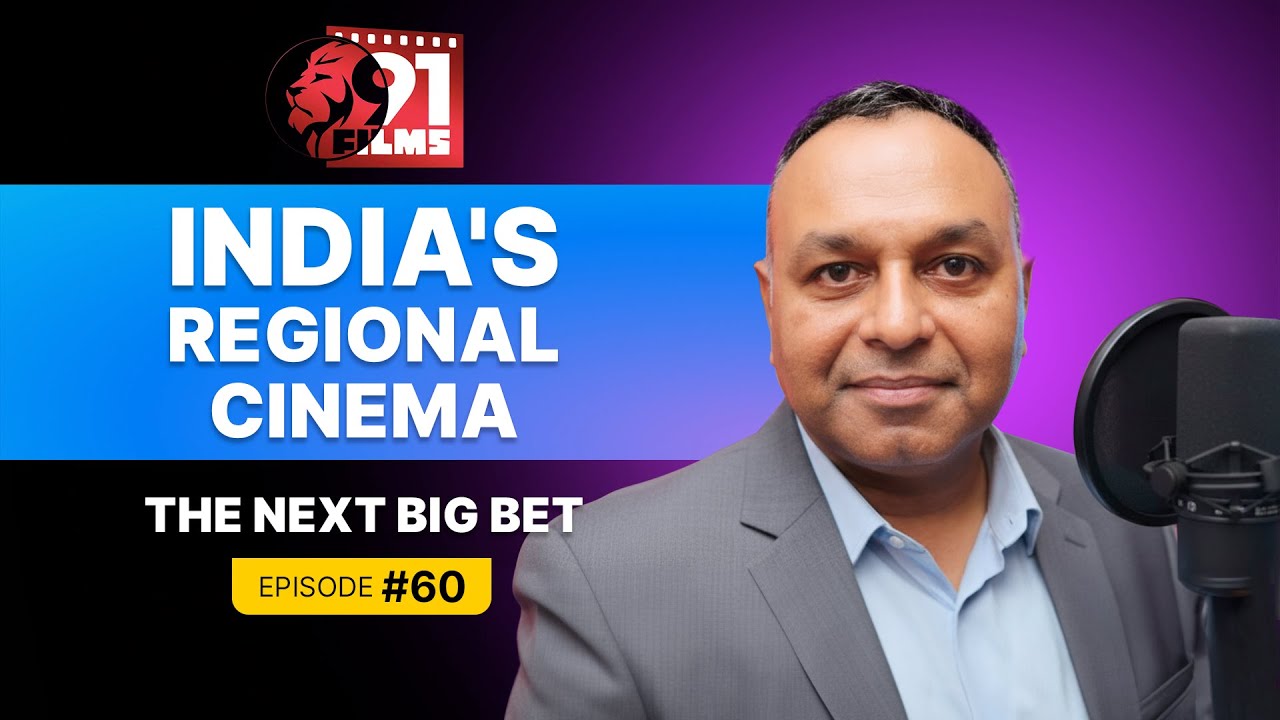
Naveen Chandra (CEO and Founder, 91 Film Studios) on the real business dynamics of India’s regional cinema markets—and why so much of the opportunity is misunderstood by international operators:
Streaming-First Production Companies Rewriting the Rules
A new category of Indian production company has emerged over the past four years. They’re not trying to replicate the theatrical model—they built for streaming from day one. And their deal structures reflect it.
Applause Entertainment
Applause Entertainment, backed by The Aditya Birla Group, has become a serious streaming content producer—adapting international formats for Indian audiences while developing originals for multiple OTT platforms. Their format adaptation approach (think Indian versions of Scam 1992, Rudra, and Aarya) is a co-production model worth studying. But what’s the real dynamic? They’re operating more like a studio than a traditional production house—managing multiple simultaneous commissions from different platforms with genuine development infrastructure.
Banijay Asia
Banijay Asia—the Indian arm of Banijay Group—is a different kind of player: the largest content producer and distributor in India by volume, with over 60 shows simultaneously in production at any given point. Their scale is genuinely without peer in the unscripted and format space. If you’re a format owner looking for an Indian production partner, Banijay Asia’s infrastructure is the benchmark for what execution at scale looks like here.
Emmay Entertainment
For crime and thriller genres specifically, Emmay Entertainment—produced by Nikkhil Advani—has carved out genuine territory. Mumbai Diaries and their expanding streaming slate show a production company that understands what international crime drama audiences want, filtered through specifically Indian settings. That’s the kind of IP that international buyers are actively hunting.
Regional Players You’re Probably Missing
Here’s a pattern that plays out constantly in the Indian market: international operators know Dharma, YRF, and Hombale. But India’s production market has thousands of active companies—many of them delivering world-class content at cost structures that would be impossible in any Western market. The fragmentation paradox hits hard here. You know 10 companies. The market has 10,000.
91 Film Studios, founded by Naveen Chandra, is an example of what’s been built specifically to bring organized capital and professional infrastructure to India’s regional cinema markets—not just Hindi, but the vast ecosystem of Tamil, Telugu, Kannada, Malayalam, and Marathi content. Chandra’s thesis—that regional cinema is dramatically underfinanced relative to its audience potential—is well-evidenced by the box office track record of South Indian productions over the past five years.
According to Variety‘s coverage of Indian cinema’s global expansion, the regional language markets collectively now represent a larger share of India’s total box office than Hindi-language Bollywood in many recent years—a structural shift that most international operators haven’t fully incorporated into their sourcing strategies.
And the Malayalam industry in particular deserves its own conversation. Films like The Great Indian Kitchen, Jallikattu, and the Malik franchise have shown that Kerala-based productions can achieve both awards recognition and streaming traction internationally. But most international content teams don’t have systematic relationships with more than two or three Malayalam production companies. That’s a sourcing gap—and a commercial opportunity.
If you want to understand India’s regional film markets beyond Bollywood, the data picture is genuinely surprising. The depth of production activity in Hyderabad, Chennai, and Kochi—companies building proper infrastructure, professional crews, and international-standard delivery pipelines—is invisible unless you’re actively mapping it.
Need Direct Access to India’s Top Production Companies? We’ll Make the Introduction.
Vitrina Concierge is your Virtual Agent. We don’t give you a list—we make warm introductions directly to decision-makers actively seeking your type of content.
- LA producer → Netflix UK, Fifth Season, Fox Entertainment (48 hours)
- Middle Eastern studio → Legendary Pictures (direct access)
- Korean animation studio → Netflix Adult Animation (week one)
The Fragmentation Problem: Finding the Right Indian Partner
Let’s be direct about the structural challenge here. India’s film production market has the same problem Vitrina’s Fragmentation Paradox™ identifies globally—but amplified. You’ve got a market with hundreds of actively producing companies across multiple language ecosystems, where verified capability data is scattered across IMDb credits, festival catalogues, trade press, and relationship networks. Finding the right partner for a specific project type, budget level, and delivery timeline is genuinely difficult without systematic intelligence.
The cost of that fragmentation is real. Producers relying on relationship networks access maybe 10-15 Indian companies. The market has hundreds of qualified operators. The information asymmetry between what insiders know and what new entrants can surface costs 3-6 months in deal timelines and routinely results in paying 15-20% above market rates for production services—because you can’t benchmark what you can’t see.
Strategic players understand this and use it. If you’re mapping the Indian market from a London or LA office, the companies with systematic intelligence on Indian production capacity—who’s booked, who’s available, what slate each company is actually running—close partnerships faster and on better terms. That’s not insider access in the traditional sense. It’s a data advantage.
As Screen International has covered extensively in its reporting on APAC production trends, international buyers increasingly need structured approaches to sourcing Indian content—because the volume of quality production makes informal discovery inadequate at scale.

Your AI Assistant, Agent, and Analyst for the Business of Entertainment
VIQI AI helps you plan content acquisitions, raise production financing, and find and connect with the right partners worldwide.
- Find active co-producers and financiers for scripted projects
- Find equity and gap financing companies in North America
- Find top film financiers in Europe
- Find production houses that can co-produce or finance unscripted series
- I am looking for production partners for a YA drama set in Brazil
- I am looking for producers with proven track record in mid-budget features
- I am looking for Turkish distributors with successful international sales
- I am looking for OTT platforms actively acquiring finished series for the LATAM region
- I am seeking localization companies offer subtitling services in multiple Asian languages
- I am seeking partners in animation production for children's content
- I am seeking USA based post-production companies with sound facilities
- I am seeking VFX partners to composite background images and AI generated content
- Show me recent drama projects available for pre-buy
- Show me Japanese Anime Distributors
- Show me true-crime buyers from Asia
- Show me documentary pre-buyers
- List the top commissioners at the BBC
- List the post-production and VFX decision-makers at Netflix
- List the development leaders at Sony Pictures
- List the scripted programming heads at HBO
- Who is backing animation projects in Europe right now
- Who is Netflix’s top production partners for Sports Docs
- Who is Commissioning factual content in the NORDICS
- Who is acquiring unscripted formats for the North American market
India’s Incentive Picture: What 40% Actually Means
The headline number is 40%—but the real capital stack math is more interesting than that.
India’s enhanced federal production incentive applies to features, documentaries, VFX, and animation, with a cap of $3.6M per project. Add the additional 5% bonus for significant Indian content, and you’re looking at effective incentive coverage of up to 45% on qualifying spend. On a $8M international co-production, that’s potentially $3.6M in soft money from the Indian side—which dramatically changes how you structure the rest of the capital stack.
Now layer in India’s co-production treaty network. India has bilateral agreements with Italy, Brazil, France, Germany, Spain, UK, and several others. Those treaties matter for two reasons: they allow the project to qualify for incentives in both territories simultaneously, and they smooth talent and crew mobility—which is the operational bottleneck most productions don’t think about until it’s too late.
State-level incentives add another dimension. Telangana, Tamil Nadu, Karnataka, and Maharashtra all run their own incentive programs—ranging from infrastructure subsidies to direct production grants. Stacking federal incentives against state programs can push total soft money coverage to 55-60% on the right project in the right location. That’s recoupment acceleration that fundamentally changes IRR calculations.
But here’s the catch. Navigating India’s incentive landscape requires on-the-ground expertise. The documentation requirements, cultural test thresholds, and state-level application processes are genuinely complex—and mistakes cost both money and timeline. The producers who close Indian incentives cleanly are the ones with either dedicated local expertise or partnerships with production companies that have done it before. This is exactly where the right Indian production partner de-risks your entire project.
Frequently Asked Questions
What are the top film production companies in India in 2026?
India’s top film production companies in 2026 span multiple language markets. In Hindi cinema, Yash Raj Films, Dharma Productions, Excel Entertainment, and Red Chillies Entertainment lead by commercial scale and IP value. In South Indian cinema, Hombale Films and Mythri Movie Makers have produced the most internationally successful Indian films of the past five years. Streaming-first operators like Applause Entertainment and Banijay Asia are reshaping the market with OTT-native production infrastructure.
What is India’s film production incentive rate in 2026?
India’s federal production incentive rate is 40% (increased from 30% in 2024), with a cap of $3.6M per project. An additional 5% bonus applies for productions with significant Indian content. State-level incentives in Telangana, Tamil Nadu, Karnataka, and Maharashtra can be stacked on top of federal incentives, potentially bringing total soft money coverage to 55-60% on qualifying projects in optimal locations.
How do I find Indian film production companies as an international co-producer?
Finding the right Indian production partner requires systematic intelligence beyond relationship networks. India’s production market has hundreds of active companies across multiple language ecosystems—but without structured data on capabilities, current slate commitments, and past project track records, most international operators access only 10-15 companies. Platforms like Vitrina provide verified production company data across 140,000+ active suppliers globally, with filtering by territory, budget range, genre capability, and active project status. This compresses the partner-finding timeline from months to days.
Which Indian production companies work with Netflix and Amazon?
Netflix commissions content from a wide range of Indian production companies, with notable partnerships including Applause Entertainment, Excel Entertainment (Mirzapur), and regional studios in South India. Amazon Prime Video works extensively with Excel Entertainment and has produced major originals with multiple independent production houses. Disney+ Hotstar remains deeply embedded in the Hindi-language market. Netflix opened a creative technology hub in Hyderabad in 2025, signaling a deepening operational commitment to India’s production infrastructure.
Is South Indian cinema more commercially successful than Bollywood right now?
By several metrics, yes. The highest-grossing Indian films of the past five years have largely come from Telugu and Tamil productions—KGF: Chapter 2 crossed ₹1,200 crore worldwide, and Pushpa 2: The Rule became a late 2024 phenomenon. South Indian productions have also achieved stronger international streaming traction relative to production budget than most Hindi-language films. That efficiency story, combined with storylines that translate across language barriers, is driving international buyer interest toward South Indian production companies at an accelerating pace.
What co-production treaties does India have with other countries?
India has bilateral co-production treaties with Italy, Brazil, France, Germany, Spain, the UK, and several other territories. These treaties allow qualifying productions to access incentives in both countries simultaneously—effectively doubling the soft money available in the capital stack. They also smooth crew and talent mobility between territories, which is often the operational bottleneck in international co-productions. Productions must meet cultural test requirements in both jurisdictions to qualify.
What is India’s position as a sovereign content hub for global production?
India operates as a Tier 1 Sovereign Content Hub™ in Vitrina’s global production framework—territories where government-backed capital, local content mandates, and infrastructure investment create production ecosystems that export content globally rather than simply service Western productions. India’s combination of a 1.4 billion-person domestic market, world’s largest film output by volume, competitive 40% incentive regime, and growing international streaming deal flow positions it as a dominant regional hub with expanding global reach.
How does the Malayalam film industry compare to other Indian regional markets?
Malayalam cinema (Kerala) is disproportionately successful relative to its production budgets. Films like The Great Indian Kitchen and Jallikattu have earned international festival recognition and strong streaming numbers. Malayalam films on Netflix and Amazon routinely outperform Hindi content on a per-dollar-budget basis—making them attractive to international buyers optimizing for cost-adjusted returns. The production community in Kochi is smaller than Mumbai or Hyderabad but has built genuine international co-production credibility over the past decade.
Conclusion: India’s Production Market Rewards the Well-Informed
India isn’t a single film market—it’s fifteen distinct production ecosystems operating simultaneously, with different financing structures, audience dynamics, and international opportunity profiles. The companies on this list represent the visible layer. But the full market runs much deeper, and the operators who understand the depth close better deals on better terms.
Key Takeaways:
- Incentive Stack: India’s 40% federal rate (up from 30% in 2024), with an additional 5% for significant Indian content and stackable state-level programs, can cover 55-60% of qualifying production spend—fundamentally reshaping capital stack math for international co-productions.
- South Indian Supremacy: The highest-grossing Indian films of the past five years come from Telugu and Kannada productions, not Bollywood. Companies like Hombale Films and Mythri Movie Makers are now active targets for international acquisition and co-production, not just discovery.
- Streaming Economics: Netflix, Amazon Prime Video, and Disney+ Hotstar are all active commissioners in India—creating pre-sale and commissioning structures that de-risk Indian productions for international financiers in ways that didn’t exist five years ago.
- The Fragmentation Gap: Most international operators know 10-15 Indian production companies. The market has hundreds of qualified operators. That information asymmetry costs 3-6 months in deal timelines and 15-20% in margin through legacy markup structures—solvable with real-time production intelligence.
- Regional Depth: Malayalam, Tamil, and regional language productions are generating international streaming returns that outperform Hindi content on a budget-adjusted basis. Systematic sourcing from these markets is a commercial opportunity most international buyers haven’t fully captured yet.
The operators who move first—with verified partner intelligence, structured incentive analysis, and real-time production tracking—don’t just find better deals. They find them 6 weeks before anyone else does. In India’s fast-moving production market, that timeline advantage compounds quickly.
Discover India’s Top Film Production Companies—and Their Active Slates—Right Now
Trusted by Netflix, Warner Bros, Paramount, and Google TV. Track 400,000+ projects. Access 3 million verified executives. Ask VIQI strategic questions about India’s production market.
✓ 200 free credits | ✓ No credit card required | ✓ Cancel anytime
Need direct introductions to India’s top production companies? Explore Concierge Service →