About Innovation Hub
 Global Content Pulse (Webinars)


 Global Production Financing
(Webinars)
Global Production Financing
(Webinars)  LeaderSpeak Podcast
  About Vitrina
 Our Story
 Our Solutions 🔥
 Film+TV Projects Tracker 🚀
 Case Studies
 Our Profile
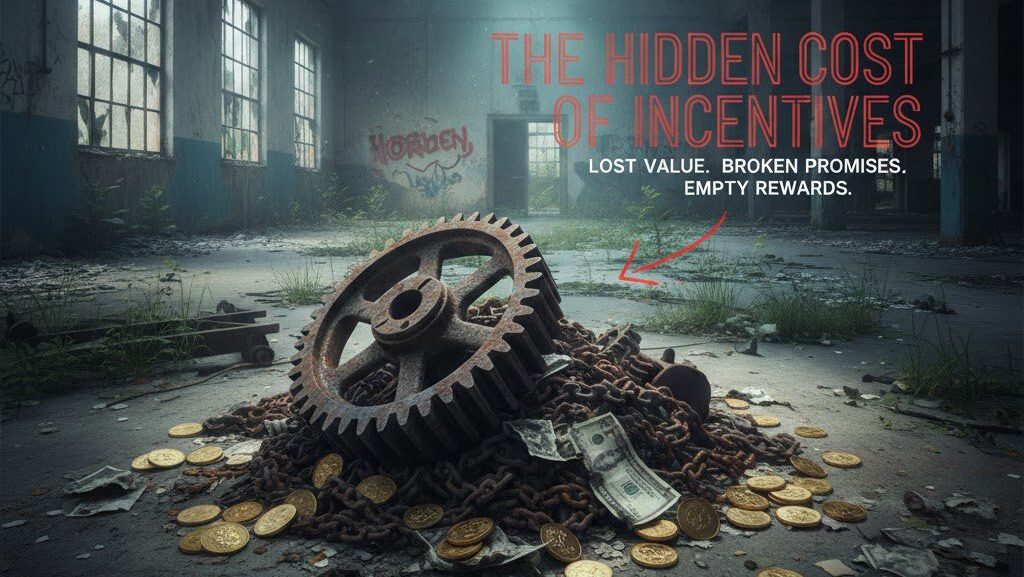
The hidden costs of production incentives refer to the significant capital disbursement delays and the financial exposure associated with rigorous government audits of local spend.
This involves managing the gap between production wrap and rebate receipt, which can often stretch between 12 to 24 months, while ensuring 100% compliance with territory-specific “Qualifying Production Expenditure” (QPE).
According to industry data from Vitrina AI, producers utilizing supply chain intelligence to vet local vendors with high reputation scores reduce audit friction by 40%.
In this guide, you will learn to calculate the true cost of “soft money,” identify common audit triggers, and leverage data to compress your financing timeline.
While many resources celebrate the high percentage of regional rebates, they often ignore the technical friction and interest carrying costs that can erode a project’s actual net ROI.
This analysis addresses those gaps by providing a risk-mitigation framework—from vendor due diligence to real-time compliance tracking.

Your AI Assistant, Agent, and Analyst for the Business of Entertainment
VIQI AI helps you plan content acquisitions, raise production financing, and find and connect with the right partners worldwide.
- Find active co-producers and financiers for scripted projects
- Find equity and gap financing companies in North America
- Find top film financiers in Europe
- Find production houses that can co-produce or finance unscripted series
- I am looking for production partners for a YA drama set in Brazil
- I am looking for producers with proven track record in mid-budget features
- I am looking for Turkish distributors with successful international sales
- I am looking for OTT platforms actively acquiring finished series for the LATAM region
- I am seeking localization companies offer subtitling services in multiple Asian languages
- I am seeking partners in animation production for children's content
- I am seeking USA based post-production companies with sound facilities
- I am seeking VFX partners to composite background images and AI generated content
- Show me recent drama projects available for pre-buy
- Show me Japanese Anime Distributors
- Show me true-crime buyers from Asia
- Show me documentary pre-buyers
- List the top commissioners at the BBC
- List the post-production and VFX decision-makers at Netflix
- List the development leaders at Sony Pictures
- List the scripted programming heads at HBO
- Who is backing animation projects in Europe right now
- Who is Netflix’s top production partners for Sports Docs
- Who is Commissioning factual content in the NORDICS
- Who is acquiring unscripted formats for the North American market
Table of Contents
Key Takeaways for Producers
-
Account for Disbursement Lag: Producers should model an 18-month “capital desert” into their cash flow to avoid predatory high-interest bridge loans during the audit period.
-
Vendor Reputation Matters: Utilizing Vitrina’s reputation scores ensures you partner with vendors who have verified experience in hitting local spend requirements, minimizing audit triggers.
-
Combat the Data Deficit: Centralized supply chain data allows strategy leads to benchmark compliance success rates in emerging markets before committing to high-cost physical production.
-
Disciplined Structuring: Following a “Finance-First” approach (as championed by Goldfinch) ensures that the artistic vision does not compromise the technical audit requirements of the rebate.
What are the Hidden Costs of Production Incentives?
The “Hidden Costs” refer to the financial and operational friction that producers encounter between the moment a rebate is promised and the moment cash is in hand. These costs often manifest as the “Fragmentation Paradox”—where a producer’s local spend is split across dozens of vendors, making centralized audit compliance a logistical nightmare.
According to the Vitrina Brief, senior executives face a critical “data deficit” regarding the reliability of cross-border partners. When a vendor fails to provide the necessary documentation for a government audit, the entire rebate for that production segment can be disqualified, leaving the producer to cover a 30-40% budget shortfall personally or through high-interest debt.
Find production partners with verified local spend compliance track records:
The Time-to-Capital Gap: Carrying Costs Explained
The primary “Time” cost is the interest accrued while waiting for the government to process the incentive claim. Most producers must “bridge” the rebate—taking a bank loan against the future incentive to fund the production. If the audit period stretches from 12 months to 18 months, the additional interest can erase the margin of the entire project.
By utilizing Vitrina’s Deals Intelligence, finance executives can monitor current disbursement trends in specific jurisdictions. This allow producers to identify hubs where the “Time-to-Capital” is faster, effectively choosing a 25% rebate with 6-month disbursement over a 35% rebate with a 2-year lag.
Understanding Technical Friction: Common Audit Triggers
Audit risk usually stems from “spend contamination”—where a production mistakenly includes non-qualifying expenses (like out-of-territory travel or non-resident talent) in their local rebate claim. Government auditors are increasingly using AI to scan line items, making manual spreadsheets a high-risk liability for modern producers.
To minimize these triggers, producers must vet every vendor for “Audit Readiness.” Vitrina’s Company Intelligence provides reputation scores and verified profiles for over 140,000 companies, allowing producers to filter for vendors who have a verifiable history of handling major studio audits (e.g., Netflix, Disney, WBD) without disqualifications.
Industry Expert Perspective: Goldfinch’s Strategy for Financial Sustainability
Kirsty Bell, founder and CEO of Goldfinch, discusses how a disciplined business model and creative financing can bridge the gap between art and enterprise. Her insights are critical for producers looking to secure financing while managing the rigorous audit requirements of global creative economies.
Key Insights
Kirsty Bell highlights the journey from the financial world to transforming the indie film industry through disciplined growth. She emphasizes bridging diverse revenue streams and global creative hubs to ensure long-term sustainability.
How to Mitigate Risk with Supply Chain Intelligence
To mitigate the hidden costs of incentives, producers must transition from a “Networking-First” model to a “Data-First” model. This involves utilizing centralized intelligence to verify that your co-production and commissioning partners have the technical infrastructure to support an international audit.
Vitrina’s VIQI AI Assistant allows strategy leads to ask plain-language questions such as “Which production hubs in Europe have the fastest disbursement timelines for thriller projects?” This transforms the financing process from a manual, high-risk art into a data-driven science, ensuring that your “soft money” actually lands in your bank account on schedule.
Analyze recent co-production funding and disbursement trends:
Moving Forward
The independent film distribution landscape has shifted from relationship-dependent networking to data-driven platform targeting. This guide addressed the critical hidden costs of incentives: the time-to-capital gap and the ever-present threat of audit risk.
Whether you are an independent producer looking to secure pre-sales financing, or a strategy lead trying to position projects in high-yield hubs like the Middle East, the principle remains: actionable intelligence drives deal velocity.
Outlook: Over the next 12-18 months, we expect governments to implement real-time “Blockchain Compliance” for rebates, rewarding producers who already maintain structured, verifiable supply chain data.
Frequently Asked Questions
Quick answers to common queries about production incentives and audit management.
How long does it typically take to receive a cash rebate?
What is a government audit in film production?
What are carrying costs?
How does Vitrina reduce audit risk?
About the Author
Written by the Vitrina AI Editorial Team. Our contributors include experts in global production finance and entertainment supply chain analytics, specializing in risk management for cross-border projects. Connect on Vitrina.
Find Film+TV Projects, Partners, and Deals – Fast.
VIQI matches you with the right financiers, producers, streamers, and buyers – globally.
Producers Seeking Financing & Partnerships?
Book Your Free Concierge Outreach Consultation
(To know more about Vitrina Concierge Outreach Solutions click here)
Producers Seeking Financing, Co-Pros, or Pre-Buys?
Vitrina Concierge helps producers reach the right financiers, commissioners, distributors, and co-production partners — with precision outreach, not cold pitching.
Join Industry Briefings Trusted by Leaders

Film & TV Financing: Pre-Buys
Learn how pre-buys work in current Film and TV financing, how they differ from pre-sales, and how they are used to close real finance plans.
Streamers – Netflix vs. Amazon – The 2026 Strategy
How Netflix and Amazon’s content and revenue strategies are diverging ahead of 2026.
Format Adaptations: Global Trends
Where formats are traveling, which adaptations are breaking out, and how streamers are backing remakes in 2025–2026.