About Innovation Hub
 Global Content Pulse (Webinars)


 Global Production Financing
(Webinars)
Global Production Financing
(Webinars)  LeaderSpeak Podcast
  About Vitrina
 Our Story
 Our Solutions 🔥
 Film+TV Projects Tracker 🚀
 Case Studies
 Our Profile

Film commission tax incentives are financial rebates or credits provided by government bodies to attract film and TV productions to specific regions.
This involves applying for qualifying status based on local spend, talent hiring, and production infrastructure usage within the commission’s jurisdiction.
According to industry data, over 70% of global productions now choose filming locations based on the depth and reliability of local tax incentive programs.
In this guide, you’ll learn proven strategies for location selection, application optimization, and how to leverage supply chain intelligence to find the best partners.
While many online resources offer broad lists of states and countries with incentives, they often lack the technical depth required to navigate complex application windows or common pitfalls.
This analysis bridges that gap by providing a strategic framework for location selection that balances financial benefits with creative excellence.

Your AI Assistant, Agent, and Analyst for the Business of Entertainment
VIQI AI helps you plan content acquisitions, raise production financing, and find and connect with the right partners worldwide.
- Find active co-producers and financiers for scripted projects
- Find equity and gap financing companies in North America
- Find top film financiers in Europe
- Find production houses that can co-produce or finance unscripted series
- I am looking for production partners for a YA drama set in Brazil
- I am looking for producers with proven track record in mid-budget features
- I am looking for Turkish distributors with successful international sales
- I am looking for OTT platforms actively acquiring finished series for the LATAM region
- I am seeking localization companies offer subtitling services in multiple Asian languages
- I am seeking partners in animation production for children's content
- I am seeking USA based post-production companies with sound facilities
- I am seeking VFX partners to composite background images and AI generated content
- Show me recent drama projects available for pre-buy
- Show me Japanese Anime Distributors
- Show me true-crime buyers from Asia
- Show me documentary pre-buyers
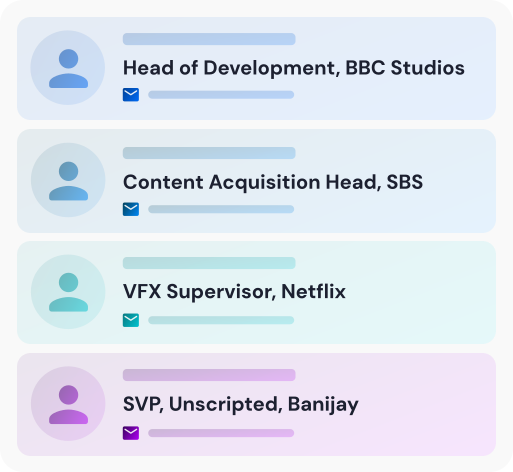
- List the top commissioners at the BBC
- List the post-production and VFX decision-makers at Netflix
- List the development leaders at Sony Pictures
- List the scripted programming heads at HBO
- Who is backing animation projects in Europe right now
- Who is Netflix’s top production partners for Sports Docs
- Who is Commissioning factual content in the NORDICS
- Who is acquiring unscripted formats for the North American market
Table of Contents
Key Takeaways for Producers
-
Data-Driven Selection: Modern producers use supply chain intelligence to identify commissions with the highest ROI and active funding pipelines.
-
Nuance Mastery: Success lies in understanding application windows and eligibility criteria specifically tailored for indie vs. studio projects.
-
Creative Synergy: Incentives should complement the creative vision, ensuring access to local talent and unique locations that enhance the project’s quality.
What are Film Commission Tax Incentives?
Film commission tax incentives are financial mechanisms designed to reduce the cost of production for film and TV projects. These programs are typically administered by state, regional, or national film commissions to stimulate local economies and create jobs for resident crews. By offering rebates, credits, or grants, commissions ensure that their region remains competitive in the global content marketplace.
These incentives generally fall into three categories: refundable tax credits, transferable tax credits, and cash rebates. For independent filmmakers, cash rebates are often the most desirable as they provide direct capital back to the production once audits are complete. Understanding which model a commission uses is critical for building an accurate production budget and financing plan.
Find active film commissions and their incentive programs:
Which Film Commissions Offer Production Incentives?
Globally, dozens of film commissions compete for productions with varying degrees of financial support. In the United States, states like Georgia and New Mexico have become production hubs due to their uncapped and reliable incentive programs. Internationally, the United Kingdom and Canada offer some of the most robust systems, often integrated with federal co-production treaties that can further bolster a project’s financial health.
For producers, the challenge is not just finding a commission that offers an incentive, but finding one that matches the specific needs of their project. This includes looking at minimum spend requirements, the availability of specialized crew (like VFX artists or stunt teams), and the local infrastructure. A 30% rebate in a region with no studios may end up being more expensive than a 20% credit in a well-established hub.
Industry Expert Perspective: Incentive Scheme For Production Of Foreign Films In India
This session explores how the Indian government is leveraging incentives to attract global productions, covering everything from live shoots to post-production and VFX services.
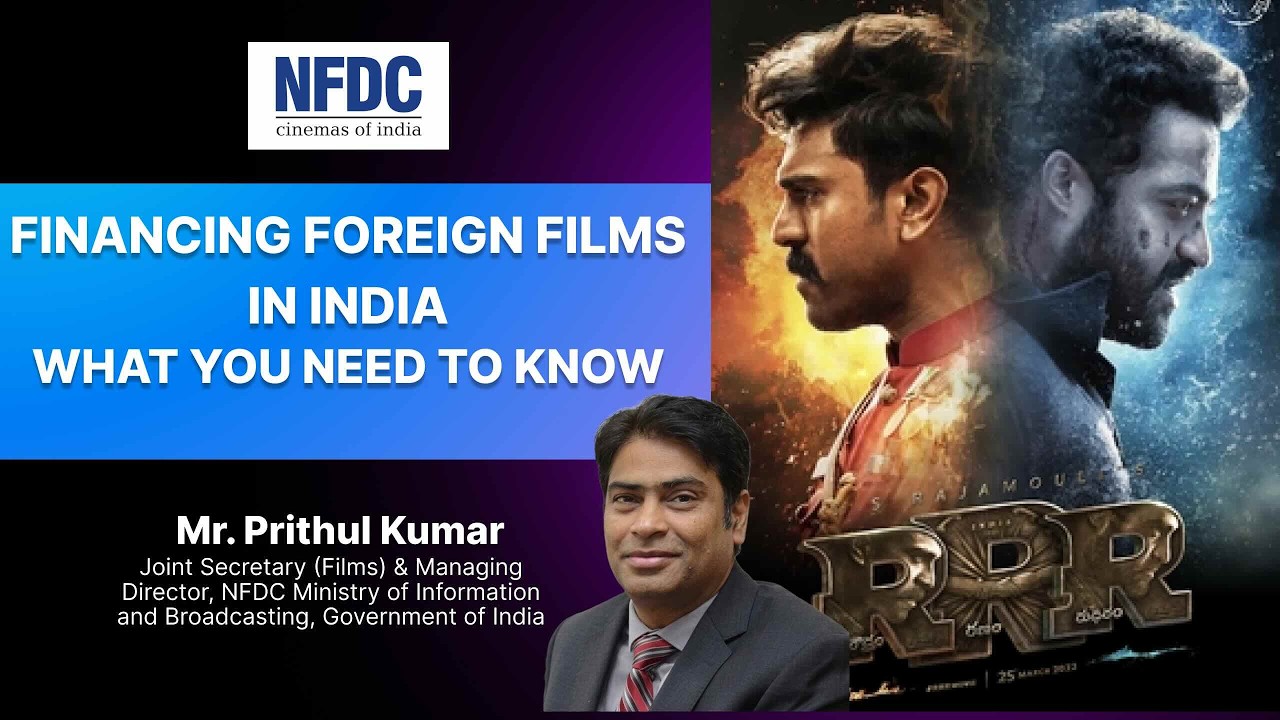
Mr. Prithul Kumar discusses initiatives aiding international film projects in India, including official co-productions and services for animation and post-production.
How Do You Apply for Commission-Backed Incentives?
Applying for tax incentives is a rigorous process that begins well before principal photography. Most commissions require a preliminary application that outlines the production’s estimated budget, shoot dates, and local spend. Once approved, the production is issued a letter of intent or a certificate of eligibility, which can often be used to cash-flow the production through specialized lenders like Head Gear Films or BondIt Media Capital.
During production, meticulous record-keeping is non-negotiable. Every dollar spent within the jurisdiction must be documented and tied to a local vendor or crew member. After wrap, a certified public accountant (CPA) familiar with that specific commission’s rules must perform an audit. This audit is then submitted to the commission for final approval and issuance of the credit or rebate.
Identify co-production partners in incentive-heavy regions:
How Can Producers Maximize Incentive Benefits?
Maximizing incentives requires a strategic approach that looks beyond the headline percentage. One effective tactic is “stacking” incentives—combining regional, national, and even municipal credits where possible. For instance, a production filming in a specific city might qualify for a city-level grant on top of the state-level tax credit. This can significantly reduce the net cost of production.
Another key strategy is focusing on “above-the-line” (ATL) vs. “below-the-line” (BTL) spend. Some commissions offer higher percentages for BTL crew hiring or specialized services like post-production. By leveraging platforms like Vitrina AI, producers can discover local vendors and studios with proven track records in qualifying for these specific bumps, ensuring every dollar spent works twice as hard for the production budget.
Common Pitfalls in the Application Process
The most common pitfall is the failure to understand the “sunset” clauses or funding caps of a specific incentive program. If a program is “first-come, first-served” and the annual budget has been exhausted, a production may be left with no financial support despite meeting all other criteria. Producers must verify the current funding status of a commission before committing to a location.
Additionally, missing an application deadline or failing to include a mandatory document can lead to immediate disqualification. Many commissions also have strict residency requirements for crew members to qualify for the incentive. Failure to verify the residency of a key hire can result in thousands of dollars of lost potential credits. Diligent due diligence and professional audit support are essential for success.
Moving Forward
Navigating the global landscape of film commission tax incentives has evolved from a simple checklist to a sophisticated data problem. By leveraging supply chain intelligence, producers can compress months of manual research into strategic, targeted location selection that maximizes both financial ROI and creative potential.
Whether you are an independent producer looking to secure pre-sales financing or a production executive evaluating global studio hubs, the principle remains: actionable intelligence drives deal velocity and project stability.
Outlook: Over the next 18 months, we expect to see an increase in “green production” bumps, where commissions offer additional percentages for sustainable filming practices.
Frequently Asked Questions
Quick answers to the most common queries about film commission incentives.
Which film commissions offer the highest tax incentives?
What is the difference between a tax credit and a rebate?
Can I use incentives to cash-flow my production?
What happens if the commission runs out of funds?
About the Author
Our editorial team consists of entertainment supply chain experts with decades of experience in production finance and location strategy. Connect on Vitrina.
Find Film+TV Projects, Partners, and Deals – Fast.
VIQI matches you with the right financiers, producers, streamers, and buyers – globally.
Producers Seeking Financing, Co-Pros, or Pre-Buys?
Vitrina Concierge helps producers reach the right financiers, commissioners, distributors, and co-production partners — with precision outreach, not cold pitching.
Join Industry Briefings Trusted by Leaders

Format Adaptations: Global Trends
Where formats are traveling, which adaptations are breaking out, and how streamers are backing remakes in 2025–2026.

Books, Novels & Comics Adaptations: Global Trends
Books, webtoons, and manga driving the next global screen hits. Discover how in this webinar.

Micro-Dramas & Mobile-First Storytelling
Micro-dramas are building real audiences and revenue. Understand the platforms, buyers, and economics behind the growth.

Navigating Global Content Licensing Trends
How global content licensing is shifting beyond flat fees to flexible, deal-driven models.