About Innovation Hub
 Global Content Pulse (Webinars)


 Global Production Financing
(Webinars)
Global Production Financing
(Webinars)  LeaderSpeak Podcast
  About Vitrina
 Our Story
 Our Solutions 🔥
 Film+TV Projects Tracker 🚀
 Case Studies
 Our Profile
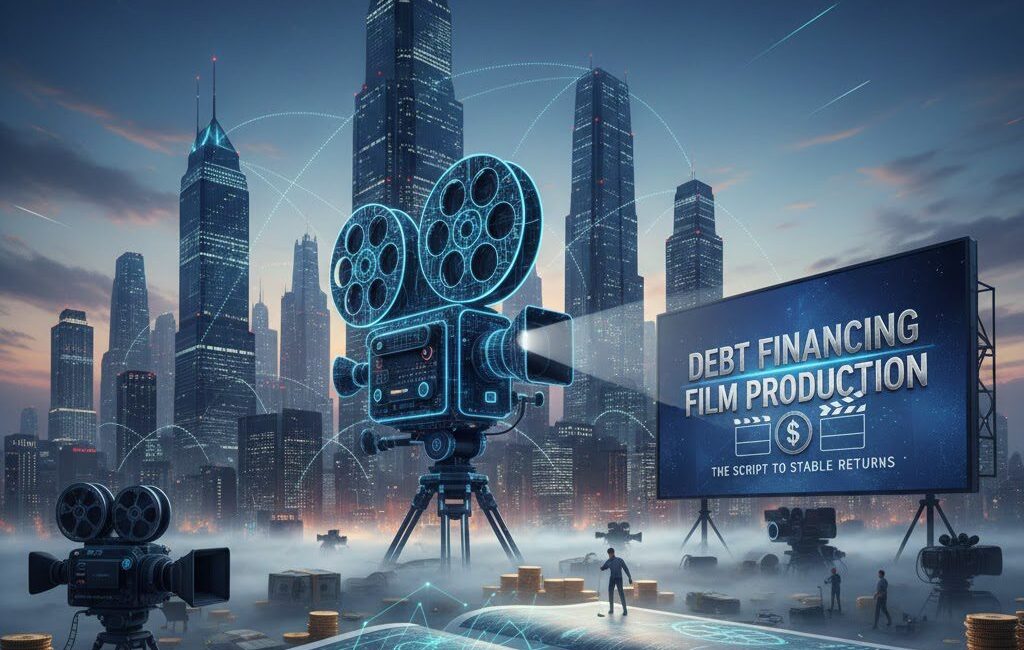
Equity vs. debt financing in film production represents the two primary pillars of a project’s capital stack, where equity involves selling ownership stakes for capital, and debt involves borrowing funds to be repaid with interest.
This involves balancing high-risk private investment (equity) with asset-backed loans (debt) secured against tax credits, pre-sales, or gap estimates.
According to industry intelligence from Vitrina AI, data-driven producers are now qualifying financing partners 73% faster by monitoring the global money movement of over 140,000 companies.
In this guide, you will learn how to structure your capital stack, minimize dilution, and leverage supply chain data to secure funding in today’s “Weaponized Distribution” era.
While legacy financing relied on opaque “country club” networks, the current landscape demands verifiable track records and real-time market signals to bridge the “data trust deficit” facing modern lenders.
This analysis addresses the lack of beginner-friendly financial resources by providing a clear, actionable framework for building a sustainable production model.

Your AI Assistant, Agent, and Analyst for the Business of Entertainment
VIQI AI helps you plan content acquisitions, raise production financing, and find and connect with the right partners worldwide.
- Find active co-producers and financiers for scripted projects
- Find equity and gap financing companies in North America
- Find top film financiers in Europe
- Find production houses that can co-produce or finance unscripted series
- I am looking for production partners for a YA drama set in Brazil
- I am looking for producers with proven track record in mid-budget features
- I am looking for Turkish distributors with successful international sales
- I am looking for OTT platforms actively acquiring finished series for the LATAM region
- I am seeking localization companies offer subtitling services in multiple Asian languages
- I am seeking partners in animation production for children's content
- I am seeking USA based post-production companies with sound facilities
- I am seeking VFX partners to composite background images and AI generated content
- Show me recent drama projects available for pre-buy
- Show me Japanese Anime Distributors
- Show me true-crime buyers from Asia
- Show me documentary pre-buyers
- List the top commissioners at the BBC
- List the post-production and VFX decision-makers at Netflix
- List the development leaders at Sony Pictures
- List the scripted programming heads at HBO
- Who is backing animation projects in Europe right now
- Who is Netflix’s top production partners for Sports Docs
- Who is Commissioning factual content in the NORDICS
- Who is acquiring unscripted formats for the North American market
Table of Contents
Key Takeaways for Producers
-
Risk Hierarchy: Senior debt sits at the top of the recoupment waterfall, meaning lenders are paid back before equity investors see a return.
-
Data-Driven Speed: Utilizing supply chain intelligence reduces the time spent on manual partner discovery from months to just 8 days of precision outreach.
-
Recoupment Visibility: Lenders require “hard” collateral (tax credits, pre-sales), while equity investors provide “soft” capital based on projected backend success.
What is Equity vs. Debt Financing in Film?
Equity financing is capital provided by individuals or funds in exchange for a percentage of ownership and a share of the project’s profits. This is considered “risk capital” because equity investors are often the last to be repaid in the recoupment waterfall. They bet on the long-term commercial success of the title, whether through theatrical box office, streaming licensing, or ancillary rights.
In contrast, debt financing involves borrowing money that must be repaid with interest, regardless of the film’s performance. Lenders—such as specialist media banks like BondIt Media Capital—typically require collateral. This collateral often comes in the form of government tax incentivesBondIt Media Capital, minimum guarantees (MGs) from distributors, or pre-sales contracts.
Find active co-production and financing partners:
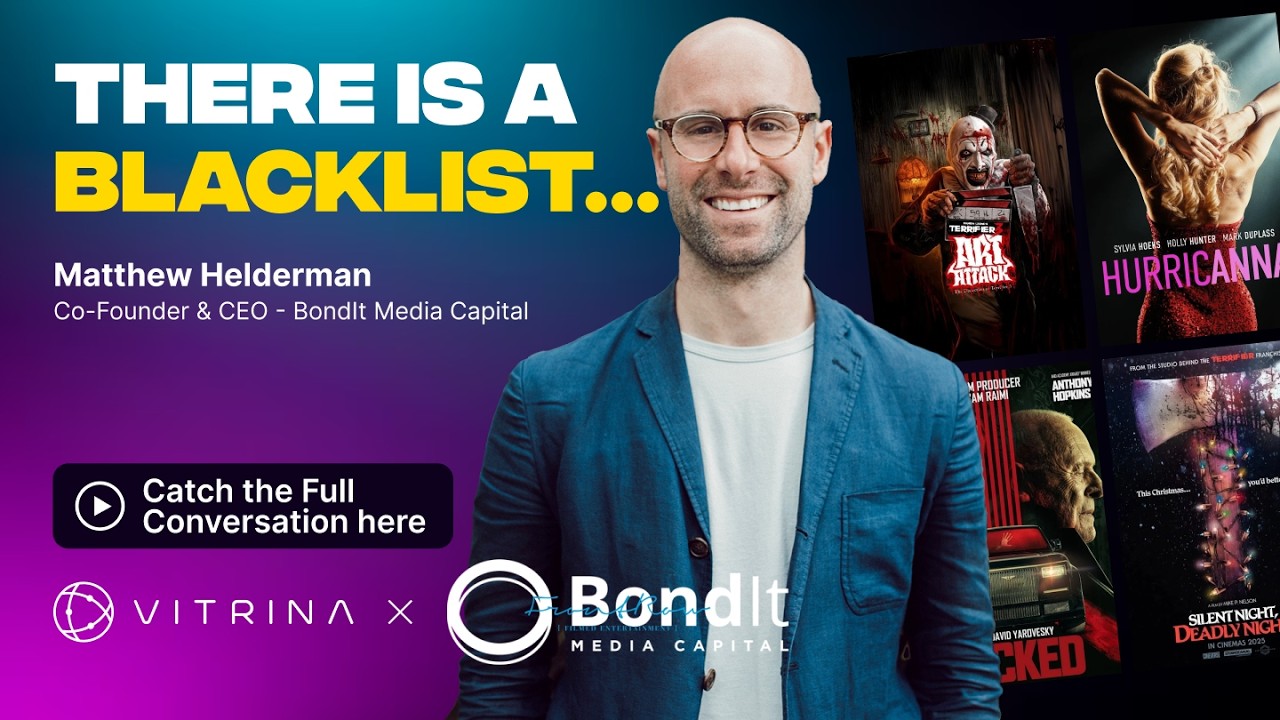
Industry Expert Perspective: Media Finance: Navigating a Post-Streamer World
Matthew Helderman, CEO of BondIt Media Capital, discusses how the credit crisis and streaming evolution forced a shift toward structured lending for creators.
Key Insights
BondIt Media Capital provides reliable capital to bridge the financing gap for creators, often securing debt against verifiable tax incentives and pre-sales.
How Does the Recoupment Waterfall Work?
The recoupment waterfall is the order in which revenue from a film’s release is distributed among stakeholders. Understanding this is critical for producers deciding between debt and equity. Lenders (Debt) are always at the front of the line. Before a producer or talent can see “net profits,” the senior debt—plus interest and fees—must be satisfied from the first dollar of gross receipts.
Equity investors typically receive their principal back plus a premium (often 10-20%) before the remaining profits are split between the “investor pool” and the “producer pool.” In the modern era of weaponized distribution, where content is licensed to rivals like the Netflix-Warner deal, these waterfalls can become complex, requiring real-time deals intelligence to navigate.
“The transition from a relationship-driven industry to a data-powered framework has transformed how capital is deployed. Producers who understand the ‘data trust deficit’ are the ones successfully bridging the gap between artistic vision and financial viability.”
Case Study: Scaling Adult Animation IP through Data Intelligence
The Situation: A Korean animation studio developed a high-concept adult animation IP but lacked the established networks to secure North American financing. Their primary pain point was the “fragmentation paradox”: while their content was ready for global scale, the data needed to find the right commissioning editors was siloed.
The Solution: The studio leveraged Vitrina’s pairing engine and VIQI AI assistant to bypass general submissions. By identifying active projects in the adult animation space and tracking recent deals at Netflix, they generated a precision outreach list of 100 high-value targets.
The Results: Within the first week of outreach, the studio was successfully connected to Netflix’s Adult Animation department. This direct engagement eliminated months of manual research and networking lag, resulting in a pre-sale agreement that functioned as collateral for senior debt.
Moving Forward
The independent film distribution landscape has shifted from relationship-dependent networking to data-driven platform targeting. This transformation addresses the critical gaps in accessible beginner resources and emerging platform coverage explored in this guide.
Whether you are an independent producer looking to secure pre-sales financing, or a strategic investor trying to monitor competitive slates, the principle remains: actionable intelligence drives deal velocity.
Outlook: Over the next 12-18 months, the “Authorized Data” market for AI and rotational licensing windows will create new, complex revenue streams that favor producers using supply chain intelligence.
Frequently Asked Questions
Quick answers to common queries about film production finance.
What is the difference between equity and debt financing?
Why is debt considered “senior” in recoupment?
How does a tax credit help secure a production loan?
About the Author
Written by the Vitrina Intelligence Team. We specialize in mapping the global entertainment supply chain to empower creators and financiers with data-driven decision-making. Connect with us on Vitrina.
Find Film+TV Projects, Partners, and Deals – Fast.
VIQI matches you with the right financiers, producers, streamers, and buyers – globally.
Producers Seeking Financing, Co-Pros, or Pre-Buys?
Vitrina Concierge helps producers reach the right financiers, commissioners, distributors, and co-production partners — with precision outreach, not cold pitching.
Join Industry Briefings Trusted by Leaders
Format Adaptations: Global Trends
Where formats are traveling, which adaptations are breaking out, and how streamers are backing remakes in 2025–2026.

Books, Novels & Comics Adaptations: Global Trends
Books, webtoons, and manga driving the next global screen hits. Discover how in this webinar.

Micro-Dramas & Mobile-First Storytelling
Micro-dramas are building real audiences and revenue. Understand the platforms, buyers, and economics behind the growth.

Navigating Global Content Licensing Trends
How global content licensing is shifting beyond flat fees to flexible, deal-driven models.