About Innovation Hub
 Global Content Pulse (Webinars)


 Global Production Financing
(Webinars)
Global Production Financing
(Webinars)  LeaderSpeak Podcast
  About Vitrina
 Our Story
 Our Solutions 🔥
 Film+TV Projects Tracker 🚀
 Case Studies
 Our Profile
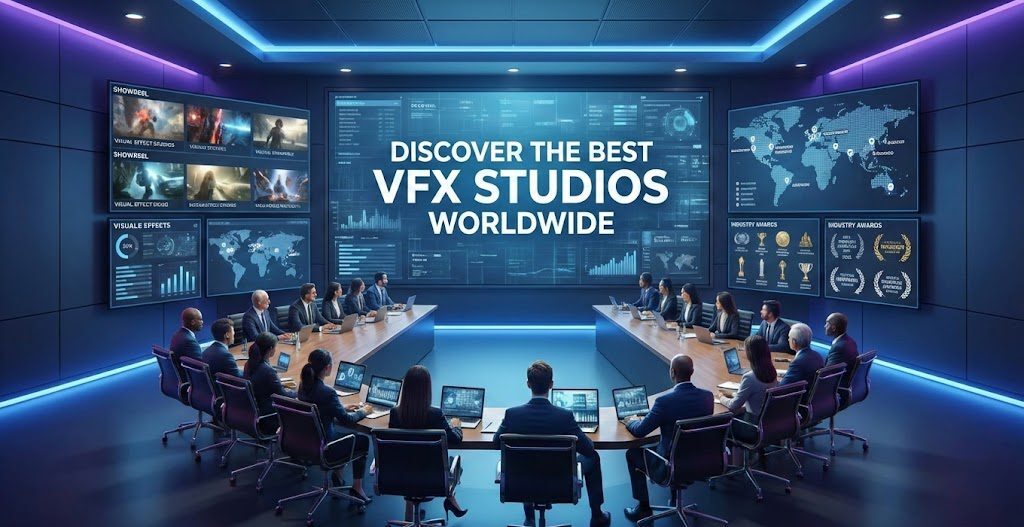
Discovering the best VFX studios worldwide is a strategic process of vetting global service providers based on technical capability, pipeline efficiency, and portfolio alignment.
This involves evaluating specialized expertise in areas such as real-time rendering, AI-driven automation, and virtual production to ensure project feasibility.
According to industry data from Precedence Research, the global VFX market is projected to reach $11.19 billion in 2025, driven by a 62% surge in OTT original content requiring high-end digital integration.
In this guide, you will learn the frameworks for studio comparison, the impact of emerging tech on selection criteria, and how to leverage supply chain intelligence to qualify partners 5x faster.
While many lists focus on employment opportunities or generic rankings, they often fail to provide the granular data points procurement leads need to mitigate financial risk in cross-border collaborations.
This analysis fills those gaps by offering a data-backed methodology for discovering, vetting, and engaging the world’s most capable VFX vendors.
Table of Contents
- 01What is Strategic VFX Studio Selection?
- 02How to Choose the Best VFX Studio for Collaboration?
- 03How is AI Transforming VFX Studio Capabilities?
- 04Why Do Leads Prioritize Real-Time Rendering?
- 05Where are the Top Global VFX Hubs Located?
- 06Using Supply Chain Data for Studio Vetting
- 07Success Case: Finding Global Post Partners
- 08Key Takeaways
- 09FAQ
- 10Moving Forward

Your AI Assistant, Agent, and Analyst for the Business of Entertainment
VIQI AI helps you plan content acquisitions, raise production financing, and find and connect with the right partners worldwide.
- Find active co-producers and financiers for scripted projects
- Find equity and gap financing companies in North America
- Find top film financiers in Europe
- Find production houses that can co-produce or finance unscripted series
- I am looking for production partners for a YA drama set in Brazil
- I am looking for producers with proven track record in mid-budget features
- I am looking for Turkish distributors with successful international sales
- I am looking for OTT platforms actively acquiring finished series for the LATAM region
- I am seeking localization companies offer subtitling services in multiple Asian languages
- I am seeking partners in animation production for children's content
- I am seeking USA based post-production companies with sound facilities
- I am seeking VFX partners to composite background images and AI generated content
- Show me recent drama projects available for pre-buy
- Show me Japanese Anime Distributors
- Show me true-crime buyers from Asia
- Show me documentary pre-buyers
- List the top commissioners at the BBC
- List the post-production and VFX decision-makers at Netflix
- List the development leaders at Sony Pictures
- List the scripted programming heads at HBO
- Who is backing animation projects in Europe right now
- Who is Netflix’s top production partners for Sports Docs
- Who is Commissioning factual content in the NORDICS
- Who is acquiring unscripted formats for the North American market
Key Takeaways for Acquisition Leads
-
Data Over Sentiment: Modern selection prioritizes verifiable track records over subjective reviews, utilizing supply chain intelligence to confirm studio capacity and delivery history.
-
AI Efficiency Gains: Studios integrating AI for rotoscoping and object tracking are reducing production timelines by up to 50%, a critical factor for tight episodic schedules.
-
Virtual Production ROI: Real-time rendering through Unreal Engine allows for instant creative iteration, eliminating costly post-production delays and enhancing director control.
-
Global Hub Optimization: Leveraging regional hubs like India and South Korea provides access to enterprise-grade VFX talent at optimized cost structures without sacrificing quality.
What is Strategic VFX Studio Selection?
VFX studio selection is the tactical process of identifying and vetting service providers that align with a production’s technical complexity and financial constraints. Unlike simple vendor hiring, this involves a deep audit of a studio’s pipeline, asset management security, and experience with specific genres. Acquisition leads must move beyond generic showreels to analyze actual delivery metadata.
Traditional methods rely on word-of-mouth or legacy databases that often lack real-time updates on a studio’s current capacity. In a fragmented market with over 140,000 media companies, the “insider network” is no longer sufficient to discover boutique specialists in emerging regional hubs. Strategic selection now requires high-velocity data to identify who is currently working on similar blockbusters.
Find active VFX studios working on episodic sci-fi:
How to Choose the Best VFX Studio for Collaboration?
Selecting a partner requires a multi-stage vetting process. First, assess the studio’s technical stack: are they cloud-native, and do they support secure remote collaboration? Second, verify their capacity by reviewing recent project volume—studios handling multiple 4K episodic titles simultaneously demonstrate robust infrastructure. Third, examine their “LookDev” capability to ensure aesthetic alignment.
- Scalability: Can the studio ramp up artists during peak production phases?
- Security Protocols: Are they TPN (Trusted Partner Network) certified for IP protection?
- Communication Flow: Do they provide real-time updates via tools like ShotGrid or ftrack?
How is AI Transforming VFX Studio Capabilities?
Artificial Intelligence is no longer a theoretical additive; it is a core pipeline accelerator. Leading studios now use machine learning models to automate “banal” tasks such as rotoscoping, object isolation, and tracking. This shift allows artists to focus on high-level creative problem-solving, effectively doubling productivity on complex shots.
For acquisition leads, studio AI maturity is a key indicator of cost-efficiency. Studios utilizing neural rendering techniques can interpolate frames and upscale imagery at a fraction of the traditional cost. However, it is vital to vet these “Authorized Data” sources to ensure no copyright infringement occurs during model training, a growing concern for major studios like Disney.
Identify studios using AI for automated rotoscoping:
Industry Expert Perspective: John Kilshaw on the Modern VFX Landscape
In this deep dive, Framestore’s Creative Director John Kilshaw explores how global episodic VFX teams collaborate with streamers like Netflix to bring complex worlds to life. This perspective is crucial for understanding the technical depth required for top-tier collaborations.
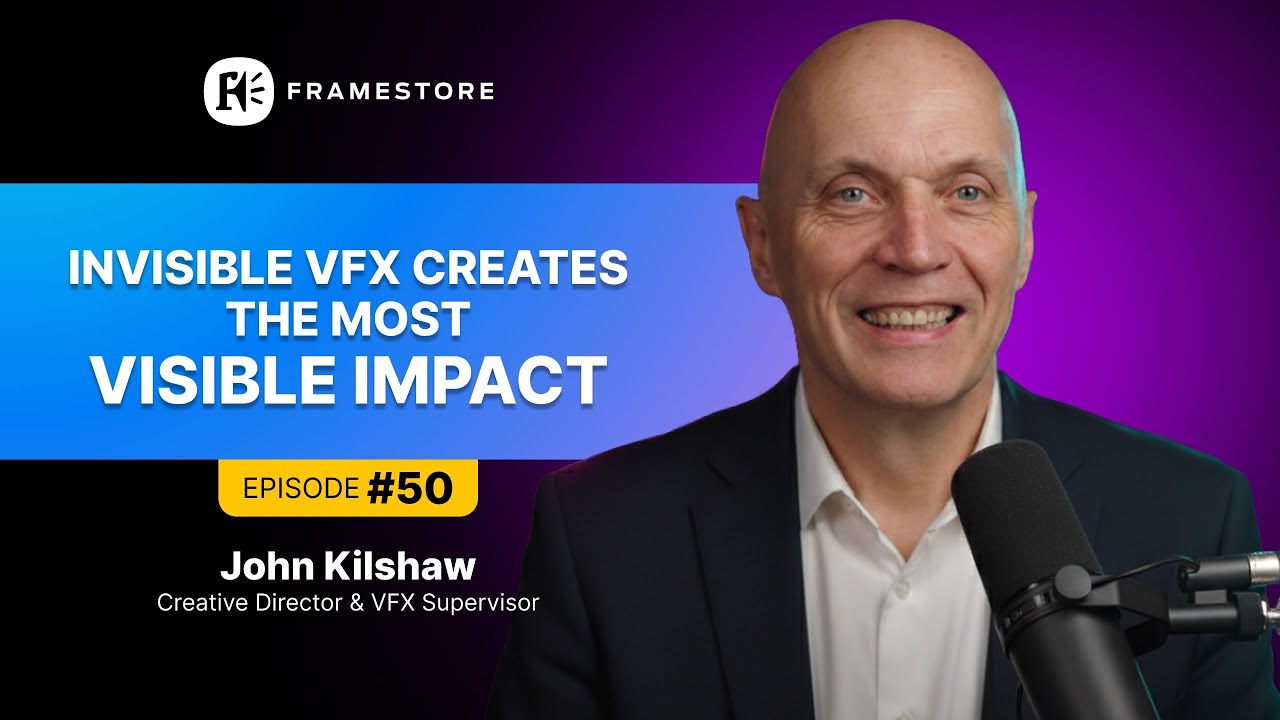
John Kilshaw shares his journey leading global episodic VFX teams, discussing the art of collaboration with studios like Netflix and the technical rigor needed to bring shows like ‘One Piece’ and ‘Avatar’ to fruition.
Why Do Leads Prioritize Real-Time Rendering?
Real-time rendering, powered by engines like Unreal and Unity, is redefining the traditional “post-production” timeline. By enabling directors to see final-pixel visual effects on-set via LED walls, virtual production eliminates the “black box” phase of editing. This immediate feedback loop reduces reshoot costs and ensures creative intent is captured accurately during principal photography.
In 2024, over 150 production studios adopted virtual production pipelines, increasing output efficiency by 30%. For content buyers, studios with these capabilities offer a faster time-to-market, which is vital in a hyper-competitive streaming landscape where “Weaponized Distribution” requires rapid content turnover.
Find studios with LED volume and Unreal Engine expertise:
Where are the Top Global VFX Hubs Located?
While North America remains a dominant force with a 41% market share, the industry is seeing explosive growth in the Asia-Pacific region. India, China, and South Korea have evolved from outsourcing centers to innovation hubs, offering high-fidelity simulations and creature animation at optimized price points.
European centers like London and Montreal continue to attract major productions through aggressive tax subsidies and a concentration of world-class talent (e.g., Framestore, DNEG). For acquisition leads, the choice of hub often depends on balancing creative specialty with local incentives, making global supply chain visibility a critical asset for strategic planning.
Using Supply Chain Data for Studio Vetting
Vitrina AI transforms studio discovery by providing a “single source of truth” for the global entertainment supply chain. With access to 140,000+ verified company profiles and a real-time tracking tool for 1.6 million titles, procurement leads can vet partners based on verifiable data rather than anecdotes.
The Global Film+TV Projects Tracker allows leads to monitor the production pipeline across four stages—development, production, post, and release. This “early-warning signal” ensures that you identify and engage with capable studios during their active bidding windows, maximizing your chance of securing premium talent.
Analyze verified VFX studio relationships and credits:
Real Success Stories: Finding Global Post Partners
Warner Bros. Discovery (WBD) Animation Group recently utilized Vitrina’s market intelligence to identify and strategize the establishment of new animation production hubs beyond traditional Hollywood borders. By leveraging AI-powered analytics, they mapped specialized vendors in emerging markets to support their global production mandate.
Similarly, GoogleTV executives used the platform to discover emerging distribution and post-production companies. This intelligence allowed them to sharpen strategic decision-making regarding global expansion and technological shifts. These cases prove that in a “weaponized distribution” era, data-driven discovery is the only way to maintain a competitive edge.
Frequently Asked Questions
Quick answers to the most common queries about the global VFX market.
How do I know which VFX studio is right for my project?
What are the top 3 types of VFX used in film?
Can AI replace traditional VFX artists?
What is the benefit of virtual production over green screens?
Which software is industry-standard for high-end VFX?
How do acquisition leads verify studio capacity?
Is it safe to outsource VFX to emerging regional hubs?
What is the role of a ‘LookDev’ artist?
Moving Forward
The global VFX landscape has shifted from relationship-driven networking to data-driven discovery. This transformation addresses the critical gaps explored in this guide: the need for verifiable studio metrics, the integration of AI efficiency, and the rise of virtual production standards. By leveraging supply chain intelligence, acquisition leads can now compress months of manual research into targeted, strategic outreach.
Whether you are an acquisition lead looking to source regional content, or a production executive trying to optimize vendor ROI, the principle remains: actionable intelligence drives partnership velocity. Understanding a studio’s true capacity transforms selection from speculation to strategy.
Outlook: Over the next 12-18 months, AI-enhanced rendering and real-time workflows will become the default industry standard, further democratizing access to high-end visual effects for independent and mid-budget productions.
About the Author
Lead Supply Chain Analyst at Vitrina AI with over 12 years of experience in content acquisition and vendor evaluation for global streamers. Connect on Vitrina.
Find Film+TV Projects, Partners, and Deals – Fast.
VIQI matches you with the right financiers, producers, streamers, and buyers – globally.
Producers Seeking Financing, Co-Pros, or Pre-Buys?
Vitrina Concierge helps producers reach the right financiers, commissioners, distributors, and co-production partners — with precision outreach, not cold pitching.
Join Industry Briefings Trusted by Leaders

Format Adaptations: Global Trends
Where formats are traveling, which adaptations are breaking out, and how streamers are backing remakes in 2025–2026.

Books, Novels & Comics Adaptations: Global Trends
Books, webtoons, and manga driving the next global screen hits. Discover how in this webinar.

Micro-Dramas & Mobile-First Storytelling
Micro-dramas are building real audiences and revenue. Understand the platforms, buyers, and economics behind the growth.

Navigating Global Content Licensing Trends
How global content licensing is shifting beyond flat fees to flexible, deal-driven models.