About Innovation Hub
 Global Content Pulse (Webinars)


 Global Production Financing
(Webinars)
Global Production Financing
(Webinars)  LeaderSpeak Podcast
  About Vitrina
 Our Story
 Our Solutions 🔥
 Film+TV Projects Tracker 🚀
 Case Studies
 Our Profile

De-risking your supply chain in the entertainment sector involves implementing a structured, data-driven framework to identify and verify production service vendors before engagement.
This process mitigates operational, financial, and reputational risks by leveraging verifiable track records and real-time market intelligence.
According to Vitrina AI, the global M&E supply chain consists of over 600,000 companies, yet senior executives often face a data deficit when vetting cross-border partners.
In this guide, you will learn a comprehensive framework for pre-vetting vendors in emerging markets, ensuring your projects remain on track and within budget.
While traditional vetting relies on personal referrals and fragmented trade reports, these methods are structurally incapable of handling the complexity of today’s borderless content mandate.
This guide solves these intelligence gaps by providing a professional vetting framework powered by vertical AI and structured supply chain data.
Table of Contents

Your AI Assistant, Agent, and Analyst for the Business of Entertainment
VIQI AI helps you plan content acquisitions, raise production financing, and find and connect with the right partners worldwide.
- Find active co-producers and financiers for scripted projects
- Find equity and gap financing companies in North America
- Find top film financiers in Europe
- Find production houses that can co-produce or finance unscripted series
- I am looking for production partners for a YA drama set in Brazil
- I am looking for producers with proven track record in mid-budget features
- I am looking for Turkish distributors with successful international sales
- I am looking for OTT platforms actively acquiring finished series for the LATAM region
- I am seeking localization companies offer subtitling services in multiple Asian languages
- I am seeking partners in animation production for children's content
- I am seeking USA based post-production companies with sound facilities
- I am seeking VFX partners to composite background images and AI generated content
- Show me recent drama projects available for pre-buy
- Show me Japanese Anime Distributors
- Show me true-crime buyers from Asia
- Show me documentary pre-buyers
- List the top commissioners at the BBC
- List the post-production and VFX decision-makers at Netflix
- List the development leaders at Sony Pictures
- List the scripted programming heads at HBO
- Who is backing animation projects in Europe right now
- Who is Netflix’s top production partners for Sports Docs
- Who is Commissioning factual content in the NORDICS
- Who is acquiring unscripted formats for the North American market
Key Takeaways for CXOs and Strategy Leads
-
Eliminate Anecdotal Bias: Replace subjective word-of-mouth vetting with objective, verifiable track records sourced from centralized supply chain platforms.
-
Mitigate Cross-Border Friction: Use structured data to assess vendor specializations and deal histories in emerging markets before initiating contact.
-
Real-Time Pipeline Visibility: Monitor active global productions to identify proven service providers currently operating within your target regions.
What are the Primary Risks of Production in Emerging Markets?
Entering emerging markets offers significant cost advantages and unique locations, but it also exposes production companies to structural fragmentation. The primary risk lies in the lack of a single source of truth for vendor capabilities, leading to what industry experts call a data trust deficit. Without verified intelligence, companies often rely on manual, high-risk discovery methods that fail to account for operational volatility.
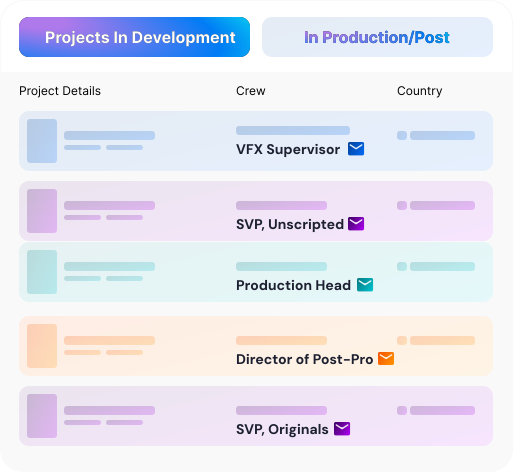
Identify active production service vendors in your target market:
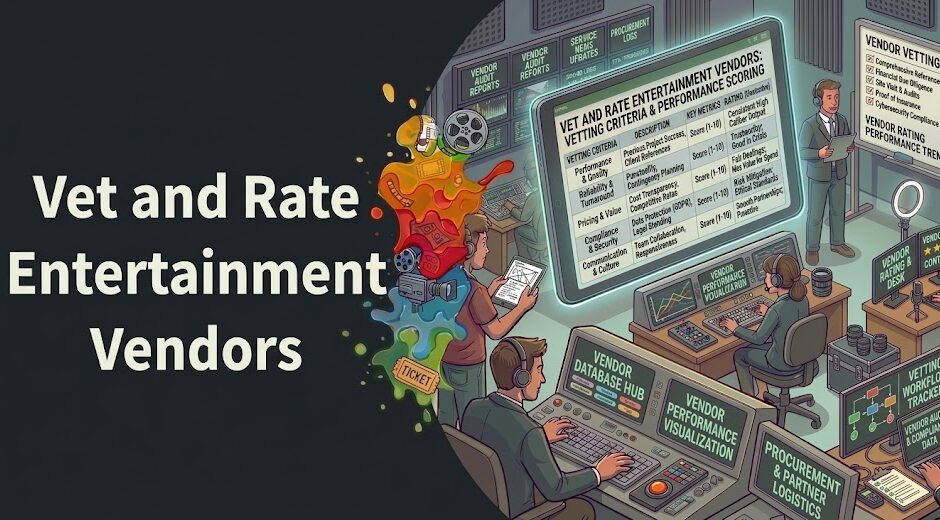
How to Implement a 4-Pillar Vetting Framework?
A robust vetting framework must move beyond surface-level credits to analyze deep operational data. The four pillars include: (1) Verified Credits and Relationships, (2) Historical Deal Intelligence, (3) Regional Specialization, and (4) Real-Time Project Status. By evaluating vendors against these criteria, strategy leads can transform partner discovery into a data-driven science.
Industry Expert Perspective: The Big Crunch: Phil Hunt on Why Film Finance is Harder Than Ever
In this masterclass, Phil Hunt explains why the shift toward high-concept, low-cost production requires deeper financial and operational vetting in a tightening market.

Phil Hunt, CEO of Head Gear Films, provides an overview of the challenging independent film landscape, highlighting the industry’s shift away from pre-sales and the current market’s demand for high-concept, low-cost thriller and horror genres.
Why is the Data Deficit Dangerous for Supply Chain Management?
The data deficit is a term describing the gap between a project’s operational needs and the verifiable information available on potential partners. For CXOs, this deficit results in missed opportunities and exposure to vendors who may lack the necessary infrastructure or financial stability for high-stakes projects. Industrializing insider intelligence is the only way to replace anecdotal noise with structured, actionable views.
How Does Verified Intelligence Accelerate Partner Discovery?
Verified intelligence platforms like Vitrina AI map the entire entertainment ecosystem, tracking over 140,000 companies and 5 million professionals. By using specialized AI trained on proprietary datasets, executives can analyze relationship patterns and deal histories instantly. This capability allows for the qualification of partners based on verified performance metrics rather than subjective reputations.
When Should You Assess Vendor Operational Readiness?
Operational readiness assessment should begin during the early development phase of a project tracker. Monitoring unreleased projects across development, production, and post-production stages provides visibility into a vendor’s current workload and capacity. This proactive approach ensures that service providers are not over-leveraged and have the bandwidth to deliver at the required quality level.
Frequently Asked Questions
Quick answers to the most common queries about vetting production vendors.
What is the most common risk when working with vendors in emerging markets?
How can I verify a production vendor’s reputation?
Why should I use a project tracker for vendor selection?
Moving Forward
The evolution of the entertainment supply chain from relationship-driven to data-powered necessitates a structural change in how partners are vetted. This framework addresses the critical data trust deficit by integrating verifiable intelligence into every stage of the procurement process.
Whether you are a CXO looking to expand into new territories, or a strategy lead trying to optimize production ROI, adopting a data-driven vetting framework is the only way to eliminate operational speculation.
Outlook: Over the next 12-18 months, vertical AI will become the standard for supply chain intelligence, rendering traditional, opaque networking models obsolete.
About the Author
A Content Strategist with over 15 years of experience in entertainment supply chain optimization and digital transformation. Specialized in helping global M&E companies leverage data to de-risk their international operations. Connect on Vitrina.
Find Film+TV Projects, Partners, and Deals – Fast.
VIQI matches you with the right financiers, producers, streamers, and buyers – globally.
Producers Seeking Financing, Co-Pros, or Pre-Buys?
Vitrina Concierge helps producers reach the right financiers, commissioners, distributors, and co-production partners — with precision outreach, not cold pitching.
Join Industry Briefings Trusted by Leaders

Format Adaptations: Global Trends
Where formats are traveling, which adaptations are breaking out, and how streamers are backing remakes in 2025–2026.

Books, Novels & Comics Adaptations: Global Trends
Books, webtoons, and manga driving the next global screen hits. Discover how in this webinar.

Micro-Dramas & Mobile-First Storytelling
Micro-dramas are building real audiences and revenue. Understand the platforms, buyers, and economics behind the growth.

Navigating Global Content Licensing Trends
How global content licensing is shifting beyond flat fees to flexible, deal-driven models.