About Innovation Hub
 Global Content Pulse (Webinars)


 Global Production Financing
(Webinars)
Global Production Financing
(Webinars)  LeaderSpeak Podcast
  About Vitrina
 Our Story
 Our Solutions 🔥
 Film+TV Projects Tracker 🚀
 Case Studies
 Our Profile
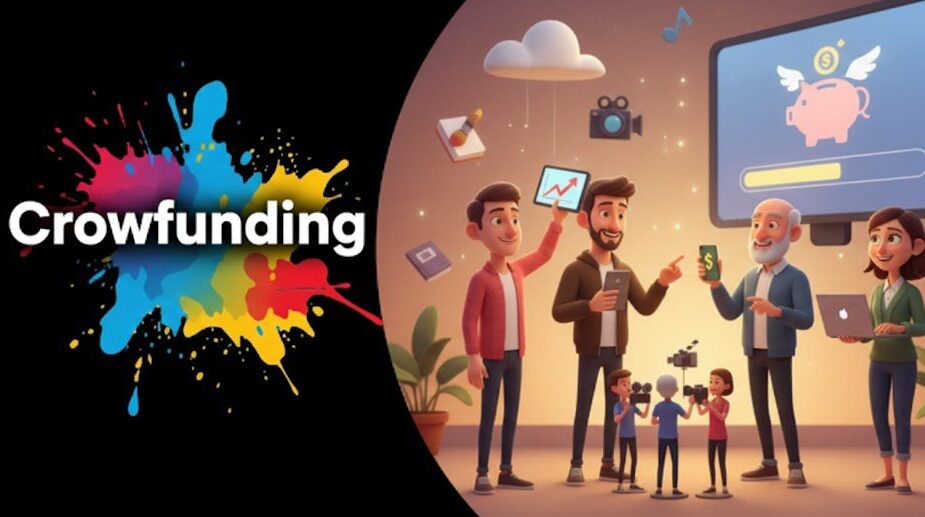
Strategic crowdfunding for film has evolved from a simple funding mechanism into a powerful form of “Market Proof of Concept” that executives use to secure pre-sales and distribution deals.
By demonstrating a pre-existing, paying audience, producers can mitigate the risk for traditional financiers and distributors.
Today, the real value of crowdfunding lies in the data—identifying geographic demand and demographic heatmaps that can be cross-referenced with Vitrina AI’s map of 140,000+ global production and distribution companies to find the perfect territorial partners.
In This Strategy Guide

Your AI Assistant, Agent, and Analyst for the Business of Entertainment
VIQI AI helps you plan content acquisitions, raise production financing, and find and connect with the right partners worldwide.
- Find active co-producers and financiers for scripted projects
- Find equity and gap financing companies in North America
- Find top film financiers in Europe
- Find production houses that can co-produce or finance unscripted series
- I am looking for production partners for a YA drama set in Brazil
- I am looking for producers with proven track record in mid-budget features
- I am looking for Turkish distributors with successful international sales
- I am looking for OTT platforms actively acquiring finished series for the LATAM region
- I am seeking localization companies offer subtitling services in multiple Asian languages
- I am seeking partners in animation production for children's content
- I am seeking USA based post-production companies with sound facilities
- I am seeking VFX partners to composite background images and AI generated content
- Show me recent drama projects available for pre-buy
- Show me Japanese Anime Distributors
- Show me true-crime buyers from Asia
- Show me documentary pre-buyers
- List the top commissioners at the BBC
- List the post-production and VFX decision-makers at Netflix
- List the development leaders at Sony Pictures
- List the scripted programming heads at HBO
- Who is backing animation projects in Europe right now
- Who is Netflix’s top production partners for Sports Docs
- Who is Commissioning factual content in the NORDICS
- Who is acquiring unscripted formats for the North American market
Executive Brief: Crowdfunding 2.0
-
De-Risking Distribution: Crowdfunding serves as a primary indicator of market appetite, allowing producers to approach distributors with hard evidence of audience demand.
-
Supply Chain Integration: Successful campaigns provide the leverage needed to negotiate better terms with BTL service providers and global creative economies.
-
Data Over Dollars: The heatmaps generated by backer locations are more valuable than the funds raised when pitching to territorial distributors in the Middle East, Africa, or Asia.
Beyond the Viral Campaign: Crowdfunding as Market Validation
The “success stories” from the early days of Kickstarter often focused on the sheer dollar amount raised. However, for a production executive, the dollar amount is only half of the story. The true value of a crowdfunding campaign lies in its ability to act as a live market simulation. If 5,000 people are willing to pay for a film before a single frame is shot, the “Concept Risk” has been significantly lowered.
This validation is a bridge between art and enterprise. In the modern entertainment supply chain, data is the currency of the “Weaponized Distribution” era. Crowdfunding campaigns provide first-party data that can be used to qualify production partners and distributors with pinpoint accuracy.
Identify distribution partners looking for validated indie content:
Industry Insight: Bridging Art and Enterprise with Disciplined Models
Kirsty Bell, founder of Goldfinch, discusses how independent producers are moving toward more sustainable business models by leveraging diverse revenue streams and creative financing—a framework where crowdfunding fits perfectly.
Key Takeaway
Sustainable filmmaking requires a multi-pronged approach to revenue. Crowdfunding isn’t just a “launchpad”; it’s a foundational layer of capital that proves the project’s viability to global creative economies in the Middle East and Asia.
Equity Crowdfunding vs. The Traditional Studio Model
The shift from “Reward-based” (Kickstarter) to “Equity-based” (Wefunder, Seedrs) crowdfunding is where professional studios are finding new leverage. In equity crowdfunding, backers aren’t just buying a t-shirt or a Blu-ray; they are buying a stake in the project’s future revenue. This creates a “Community Equity” model that aligns the audience’s financial interests with the film’s success.
For executives, this model acts as a “mini-studio” ecosystem. Instead of answering to one major studio that may pivot their distribution strategy, the producer answers to a thousand micro-investors who act as a decentralized marketing force. This structural autonomy is a major competitive advantage in a market dominated by “Weaponized Distribution.”
Benchmark your equity model against industry standards:
Weaponizing Audience Data for Distribution Deals
The “data trust deficitequity crowdfunding” is the biggest hurdle for independent films. When a producer tells a distributor their film has “global appeal,” the distributor is skeptical. However, when the producer presents a spreadsheet showing 2,000 backers in Brazil and 1,500 in the UK, the conversation changes from “Will people watch this?” to “How do we reach the people already waiting for this?”
Using Vitrina AI, producers can take this demographic heatmap and perform precision outreach to the top 100 high-value targets in those specific regions. By cross-referencing crowdfunding data with Vitrina’s database of 5 million professionals and 140,000 companies, executives can qualify territorial partners who have a track record of handling similar genre-specific content.
Moving Forward: The Post-Campaign Strategy
Crowdfunding is not an end; it is a strategic beginning. The campaigns that truly scale are those that use the initial momentum to build a sustainable production supply chain. The industry is transitioning to a centralized, data-powered framework, and crowdfunding is the first data set in that journey.
Outlook: Producers who treat their backers as strategic intelligence—not just donors—will find it easier to secure co-production deals and pre-sales in a borderless market.
Crowdfunding Strategy FAQ
What is the primary difference between reward and equity crowdfunding for film?
Reward crowdfunding provides backers with non-financial perks (merch, credits), while equity crowdfunding allows backers to own a percentage of the film’s future profits.
How does a successful campaign help with distribution deals?
It provides “Proof of Audience,” reducing the distributor’s marketing risk by demonstrating that a paying audience already exists for the content.
Which crowdfunding platform is best for professional filmmakers?
Kickstarter remains a leader for rewards, but platforms like Wefunder and Seedrs are increasingly popular for equity-based studio models.
Can crowdfunding data be used to secure pre-sales?
Yes. Showing a high concentration of backers in a specific territory is a powerful leverage point when negotiating with territorial sales agents and buyers.
How many films actually get distributed after crowdfunding?
While exact numbers vary, films with “high-engagement” campaigns have a significantly higher acquisition rate due to their built-in marketing momentum.
Does crowdfunding replace traditional film finance?
No, it usually acts as “gap financing” or “seed capital” that unlocks larger tranches of traditional debt or equity finance.
How does Vitrina AI help crowdfunded projects?
Vitrina allows producers to take their audience heatmaps and find verified distribution and production partners in the regions where their demand is highest.
Is it better to crowdfund for development or post-production?
Development is better for establishing “Proof of Concept,” while post-production is effective for finishing funds once the visual quality is already proven.
What is the average funding goal for a successful film campaign?
Most successful indie campaigns range from $50,000 to $250,000, though some “tentpole” indie projects have raised millions.
Does crowdfunding help with film festivals?
Yes. High-profile campaigns often catch the eye of festival programmers who are looking for films with a built-in community and marketing buzz.
“The most valuable asset from a crowdfunding campaign isn’t the capital; it’s the demographic intelligence. In the age of weaponized distribution, knowing exactly who your audience is—and where they live—is the ultimate leverage in a negotiation.”
About Vitrina AI
Vitrina AI is the first global supply chain platform for the entertainment industry. By mapping 30 million relationships across 140,000 companies, we help production executives navigate a borderless market with verifiable, real-time intelligence. From partner discovery to competitive analysis, Vitrina is the digital lighthouse for modern media professionals. Visit Vitrina.ai.
Find Film+TV Projects, Partners, and Deals – Fast.
VIQI matches you with the right financiers, producers, streamers, and buyers – globally.
Producers Seeking Financing & Partnerships?
Book Your Free Concierge Outreach Consultation
(To know more about Vitrina Concierge Outreach Solutions click here)
Producers Seeking Financing, Co-Pros, or Pre-Buys?
Vitrina Concierge helps producers reach the right financiers, commissioners, distributors, and co-production partners — with precision outreach, not cold pitching.
Join Industry Briefings Trusted by Leaders

Film & TV Financing: Pre-Buys
Learn how pre-buys work in current Film and TV financing, how they differ from pre-sales, and how they are used to close real finance plans.
Streamers – Netflix vs. Amazon – The 2026 Strategy
How Netflix and Amazon’s content and revenue strategies are diverging ahead of 2026.

Format Adaptations: Global Trends
Where formats are traveling, which adaptations are breaking out, and how streamers are backing remakes in 2025–2026.