About Innovation Hub
 Global Content Pulse (Webinars)


 Global Production Financing
(Webinars)
Global Production Financing
(Webinars)  LeaderSpeak Podcast
  About Vitrina
 Our Story
 Our Solutions 🔥
 Film+TV Projects Tracker 🚀
 Case Studies
 Our Profile
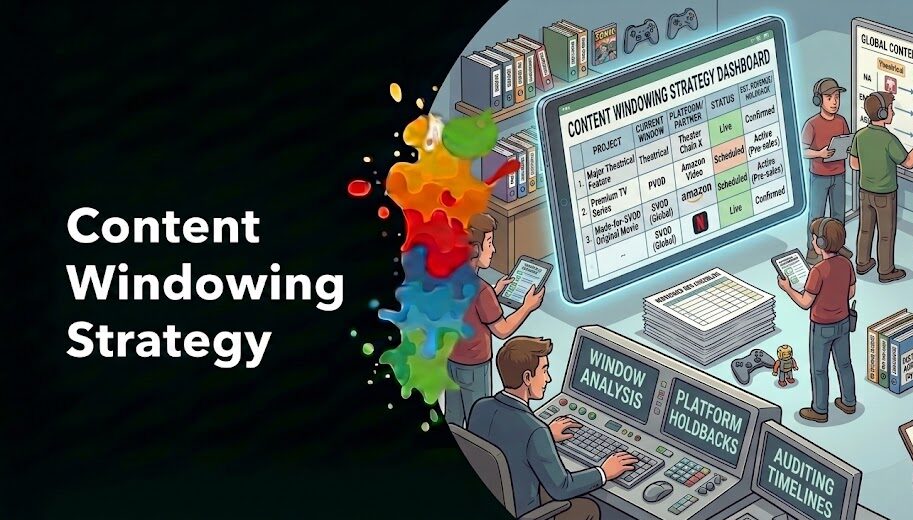
The theatrical window is no longer the organizing principle of content monetization. It’s one revenue lever among five—and in 2026, how you sequence and balance theatrical, PVOD, SVOD, AVOD, and FAST windows determines more of your film’s total financial performance than almost any other distribution decision you’ll make. Studios and independent producers who treat windowing as a fixed formula inherited from 2019 are leaving significant revenue on the table.
Those who treat it as a dynamic content windowing strategy—calibrated to budget tier, genre, audience demographic, and territory—are compressing their recoupment timelines and accelerating returns that used to take three years into eighteen months.
But the math here isn’t simple, and the tradeoffs are real. Shortening the theatrical window to hit PVOD faster risks alienating exhibitors and hurting the word-of-mouth flywheel that drives theatrical revenue in the first place. Moving directly to SVOD can gut the ancillary revenue stack entirely. And FAST—misunderstood by most producers as a library afterthought—is becoming a genuine first-window strategy for specific content categories. Understanding when to use which window, in what sequence, and why, is one of the most valuable strategic capabilities a distribution executive or producer can have in the current market.
In This Article
- How the Traditional Window Broke — and Why It Won’t Come Back
- The Theatrical Window in 2026: Not Dead, But Redefined
- PVOD: Premium Rentals as a Strategic Revenue Accelerator
- SVOD: When Flat-Fee Licensing Works—and When It Destroys Value
- AVOD and FAST: The Most Underestimated Windows in the Stack
- Windowing Strategy by Content Type and Budget Tier
- Weaponized Distribution: Licensing Across Windows for Maximum ROI
- Why Your Windowing Strategy Must Differ by Territory
- FAQ: Content Windowing Strategy
- Conclusion & Key Takeaways
Map Your Distribution Windows—Before You Lock Your Deal
Vitrina’s Smart Pairing engine connects producers and distributors with 140,000+ verified companies across theatrical, streaming, and FAST channels—so you can model the full window stack before committing to a deal structure. Trusted by Netflix, Warner Bros., and Paramount.
Ask VIQI About Distribution Strategy
200 free credits · No credit card required
How the Traditional Window Broke — and Why It Won’t Come Back
The classical windowing model was elegant in its logic: theatrical ran for 90-120 days, then home video, then pay TV, then free TV—each window separated by contractually mandated holdbacks that protected the revenue potential of the prior window before the next one cannibalized it. That system worked because each platform was discrete, consumer behavior was predictable, and studios held near-total control over the distribution pipeline.
Streaming didn’t just add a new window. It collapsed the structural logic underlying all the others. When Netflix, Disney+, and Amazon Prime Video conditioned audiences to expect content immediately—on any device, without the ritual of a cinema trip—the holdback model stopped making behavioral sense. Audiences who couldn’t see a film in theaters due to geography, cost, or access simply waited. Or, increasingly, they pirated it. The studios that moved fastest to compress windows weren’t destroying value; they were protecting it from leaking out through piracy and abandonment.
What emerged from that disruption wasn’t a new single model. It was a fragmented set of competing models, each optimized for a different combination of budget, audience, territory, and content category. The strategic challenge in 2026 isn’t finding the “right” window—it’s building a window stack that maximizes total lifetime value across all platforms simultaneously, without cannibalizing the revenue potential of each.
Phil Hunt, CEO of Head Gear Films—which finances 35-40 films per year and has backed 550+ projects across his career—has noted that the collapse of revenue windows through the digital revolution is one of the defining challenges of the current independent film market. The projects that navigate this landscape successfully aren’t just great films; they’re films that understood their distribution architecture before cameras rolled.
The Theatrical Window in 2026: Not Dead, But Redefined
Let’s address the misconception directly: theatrical isn’t dying. But it is stratifying—and the stratification is accelerating. The cinema experience in 2026 is bifurcating into two distinct value propositions: event cinema (blockbusters, franchise entries, tentpoles that demand the communal theatrical experience) and niche theatrical (arthouse, prestige drama, documentary—where festivals and limited runs serve marketing and awards functions rather than pure box office generation).
Everything in between is under genuine pressure. The mid-budget $30-60M film that used to anchor theatrical release slates doesn’t have a clear home anymore. It’s too expensive to risk without theatrical revenue, too mid-scale to command the event-cinema premium, and too undifferentiated to hold an audience against the SVOD library available on every screen in their house.
That said, the theatrical window still performs a function beyond box office revenue: it sets the licensing value for everything downstream. A film that grosses $100M+ worldwide doesn’t just recoup from that number—it commands materially higher PVOD pricing, stronger SVOD licensing fees, and better FAST placement and CPM rates than a title that bypassed theatrical entirely. The theatrical run is, in part, a market signal that inflates the value of every subsequent window.
The current industry consensus on theatrical window compression has settled around 45 days for wide-release commercial films and 17-21 days for premium theatrical titles where PVOD is the primary revenue strategy. But these aren’t universal rules—they’re negotiating starting points. Exhibitors will fight for longer windows on franchise titles; studios will push back for titles where P&A spend needs to be recouped faster than a traditional 90-day run allows.
PVOD: Premium Rentals as a Strategic Revenue Accelerator
Premium Video on Demand entered the mainstream conversation during COVID lockdowns as an emergency distribution mechanism. It stayed because, for the right titles, it generates extraordinary revenue density. A $19.99 PVOD rental on a title with strong opening-week theatrical demand can generate comparable per-transaction revenue to a theatrical ticket—without the exhibitor’s share, without the physical infrastructure, and with zero piracy-window risk.
The PVOD economics have matured considerably. Studios now model PVOD revenue as a dedicated window—typically 45-60 days post-theatrical for standard wide releases, with a pricing range of $5.99-$24.99 depending on title premium and release recency. Families pay more than individual renters. New releases command PVOD premiums that decay predictably over time toward EST (Electronic Sell-Through) and then standard rental pricing. Strategic PVOD pricing treats this as a yield management exercise—not a fixed price point.
What’s changed in 2026 is the emergence of day-and-date PVOD as an intentional strategy—not just for mid-budget titles, but for premium releases on specific platform-owned theatrical slates. Apple Original Films‘ hybrid theatrical-streaming release model is instructive: theatrical runs build critical buzz, awards eligibility, and cultural legitimacy, while Apple TV+ day-and-date or accelerated PVOD captures subscribers who would never have accessed a film through traditional theatrical distribution.
For independent producers, PVOD is increasingly important to model in your capital stack before the deal is signed. As we break down in our resource on how post-theatrical rights work across streaming and home entertainment, the revenue sequencing from theatrical through PVOD through EST through SVOD can represent dramatically different total returns depending on how rights are packaged and whether you’ve licensed each window independently or bundled them in a single deal.
Track Active Distribution Deals Across Every Window
Vitrina maps 400,000+ live projects across theatrical, PVOD, SVOD, and FAST—so you know which distributors are active in which windows, in which territories, right now. Join 140,000+ companies using Vitrina to accelerate distribution strategy.
No credit card required · Cancel anytime
SVOD: When Flat-Fee Licensing Works — and When It Destroys Value
SVOD is where most content windowing conversations get complicated—because SVOD deals don’t behave like other windows. Most streaming platforms license content for a flat fee, rather than a revenue-share or royalty arrangement tied to actual viewership. That’s a deliberate strategic choice by the platforms, and it creates a fundamental tension for rights holders.
Here’s the practical reality: a flat-fee SVOD deal collapses the revenue potential of your title into a single upfront payment, regardless of whether the content becomes a cultural phenomenon or quietly disappears into the library. The platform captures all the upside; you receive a lump sum that was negotiated against their subscriber acquisition projections, not against the title’s actual performance.
When does SVOD flat-fee work for rights holders? When:
- The MG is priced aggressively — platforms competing for exclusive first-SVOD rights on a commercially validated theatrical title will bid. Create that competition before committing.
- You’ve already monetized other windows — theatrical, PVOD, and EST revenue have been captured, and the SVOD fee represents incremental value on a title with reduced marginal returns.
- The holdback period is short — a 12-18 month SVOD exclusivity window followed by AVOD/FAST availability preserves your downstream monetization stack.
- Production financing required it — some budget structures use SVOD pre-sales as gap financing collateral, in which case the flat fee functions as debt repayment rather than pure upside.
When does SVOD flat-fee destroy value? When you’ve skipped the prior windows entirely and taken a single all-rights deal that bundles theatrical, PVOD, EST, SVOD, and downstream rights into one payment. That’s the Netflix “buy-out” model—and it makes financial sense for Netflix precisely because the bundled value of all those rights exceeds what they’re paying. For content owners, it can be the right decision when speed of capital return matters more than total value maximization. But walking in without understanding what you’re surrendering is not a strategic decision. It’s a negotiating failure.
The Weaponized Distribution™ model—where studios license premium owned content to competing platforms to maximize ROI while retaining ownership—is the structural antidote to the flat-fee trap. Warner Bros. Discovery‘s decision to license HBO content to Netflix in a $72 billion multi-year arrangement is the most visible expression of this logic. WBD didn’t surrender ownership; it monetized a competitor relationship while accelerating debt reduction and preserving the long-term value of the IP in its own library.

Your AI Assistant, Agent, and Analyst for the Business of Entertainment
VIQI AI helps you plan content acquisitions, raise production financing, and find and connect with the right partners worldwide.
- Find active co-producers and financiers for scripted projects
- Find equity and gap financing companies in North America
- Find top film financiers in Europe
- Find production houses that can co-produce or finance unscripted series
- I am looking for production partners for a YA drama set in Brazil
- I am looking for producers with proven track record in mid-budget features
- I am looking for Turkish distributors with successful international sales
- I am looking for OTT platforms actively acquiring finished series for the LATAM region
- I am seeking localization companies offer subtitling services in multiple Asian languages
- I am seeking partners in animation production for children's content
- I am seeking USA based post-production companies with sound facilities
- I am seeking VFX partners to composite background images and AI generated content
- Show me recent drama projects available for pre-buy
- Show me Japanese Anime Distributors
- Show me true-crime buyers from Asia
- Show me documentary pre-buyers
- List the top commissioners at the BBC
- List the post-production and VFX decision-makers at Netflix
- List the development leaders at Sony Pictures
- List the scripted programming heads at HBO
- Who is backing animation projects in Europe right now
- Who is Netflix’s top production partners for Sports Docs
- Who is Commissioning factual content in the NORDICS
- Who is acquiring unscripted formats for the North American market
AVOD and FAST: The Most Underestimated Windows in the Stack
FAST channels—Free Ad-Supported Streaming Television—are consistently underestimated as a late-window monetization tool, and increasingly misunderstood as a distribution category entirely. They’re not just a dumping ground for library content. Done strategically, FAST represents a genuine discovery and monetization layer that extends a title’s revenue lifecycle by 3-5 years beyond its initial SVOD window.
Carol Hanley, CEO of Whip Media, has discussed how analytics across FAST, SVoD, TVoD, and AVoD platforms reveal materially different audience behavior and monetization performance than traditional window sequencing models predict. The key insight: FAST audiences skew toward longer-tail engagement with catalog content—the kind of sustained viewing that generates CPM-based advertising revenue over months, not the burst-consumption pattern of SVOD premieres. For library titles with strong genre identity (horror, action, sci-fi), FAST can deliver ongoing revenue that outlasts the original SVOD licensing term.
Carol Hanley (CEO, Whip Media) explains how streaming analytics across FAST, SVoD, TVoD, and AVoD platforms are reshaping how content owners model their windowing revenue stacks:
Tim Cutting, who drives strategic revenue initiatives at Gracenote across FAST channel distribution and monetization across North America, EMEA, LATAM, APAC, and India, frames FAST visibility as a metadata problem as much as a distribution problem. Titles that aren’t properly indexed, tagged, and discoverable within FAST channel ecosystems don’t generate revenue—regardless of how good the content is. The distribution infrastructure is only as valuable as the discoverability it creates.
The AVOD picture is equally nuanced. Ad-supported video on demand sits between SVOD and FAST in the revenue hierarchy—higher CPMs than most FAST channels, lower per-view revenue than PVOD, but significantly broader reach than either. Platforms like Tubi, Pluto TV, and Peacock’s free tier have built substantial audiences on the back of library content that would otherwise generate nothing after its SVOD window expired. For independent producers and distributors with catalog titles, AVOD is increasingly a managed revenue channel rather than an afterthought.
The practical point: don’t negotiate SVOD deals that bundle AVOD and FAST rights into the same flat fee. These are discrete revenue streams, and separating them—even at the cost of a slightly lower SVOD fee—preserves monetization optionality for the full lifecycle of your content. Our detailed analysis on streaming distribution models and licensing strategies for 2026 breaks down how to structure these separations contractually.
Windowing Strategy by Content Type and Budget Tier
There’s no universal window stack. The right sequencing is determined by the intersection of content category, budget tier, audience profile, and distribution partner capability. Here’s how the strategic calculus breaks down across the primary content categories operating in the current market:
Theatrical Blockbusters ($150M+ Budget)
Maximum theatrical window of 45 days (negotiated, not given). PVOD at day 45-60 at premium pricing ($24.99). EST 30 days post-PVOD launch. First-pay SVOD window at 90-120 days post-theatrical—priced competitively to capture the post-theatrical urgency curve. AVOD/FAST after SVOD exclusivity expires. This stack maximizes total lifetime value by preserving the premium pricing opportunity at each window before transitioning to the next.
Mid-Budget Commercial Films ($20M-$80M)
This is the contested tier. Shorter theatrical of 21-30 days (unless awards-track, in which case 45-60). Faster PVOD at competitive pricing to recoup P&A before audience attention fully migrates. SVOD as primary window—and here, the flat-fee negotiation matters most, because the theatrical and PVOD revenue may not fully recoup production costs. AVOD/FAST rights should be retained separately.
Prestige / Awards-Track Films ($10M-$40M)
Theatrical run is a marketing spend as much as a revenue window—limited release building to wide, with festival circuit preceding the commercial window. PVOD is less relevant here (audience for this tier skews toward theatrical or SVOD, not home-rental transactional). The SVOD deal is the primary revenue event; platforms like MUBI, Apple TV+, and Prime Video actively compete for prestige titles. MUBI recently received a $100M investment led by Sequoia Capital at a $1B+ valuation—signaling that premium specialty streaming is attracting serious capital.
Genre Films and Lower-Budget Independents (Under $10M)
Skip theatrical in most cases (or use it as a limited marketing event in key cities). Day-and-date PVOD plus AVOD launch maximizes discovery without the P&A spend that would destroy margin on sub-$10M productions. FAST channels are frequently the highest-ROI window for genre content—horror and action titles can generate years of sustained CPM revenue on FAST with zero additional marketing investment after initial launch. Structure the rights to keep FAST available even if SVOD exclusivity is granted.
Weaponized Distribution: Licensing Across Windows for Maximum ROI
The most sophisticated content owners in 2026 don’t treat distribution as a sequential process—they treat it as a parallel monetization architecture. Different rights, licensed to different platforms, in different territories, generating overlapping revenue streams that together produce returns no single-window deal could match.
That’s the Weaponized Distribution™ thesis applied at the individual title level. Here’s what it looks like in practice:
- Theatrical rights: Licensed to or retained by the studio for maximum P&A support and marketing infrastructure
- First-PVOD rights: Licensed exclusively for a defined window (45-90 days) at premium pricing—potentially to a different platform than SVOD
- First-SVOD rights: Sold in competitive auction process, with holdback protecting PVOD revenue potential. Territory-by-territory licensing maximizes total fee vs. worldwide bundle deals
- Second-window SVOD: After first-SVOD exclusivity expires, re-license to a competing platform or package into a multi-title library deal
- AVOD rights: Retained or licensed separately, with non-exclusive deals across multiple platforms to maximize reach and CPM revenue
- FAST rights: Non-exclusive, enabling placement across multiple FAST ecosystems (Pluto TV, Tubi, Samsung TV Plus, LG Channels) simultaneously for maximum long-tail exposure
This model requires robust rights tracking and deal management infrastructure. The Fragmentation Paradox™ hits hardest here: with 600,000+ companies operating across the global distribution ecosystem, identifying which platforms are actively acquiring in each window—in which territories, at which budget tiers—requires real-time intelligence that relationship-based deal-making simply can’t provide at scale. As Vitrina tracks across our 400,000+ active projects, the producers and distributors who structure these parallel licensing arrangements most effectively are doing so with systematic platform intelligence, not intuition.
Structure Your Window Stack With Expert Support
Vitrina’s Concierge service connects producers and distributors with verified platform acquisition leads across theatrical, PVOD, SVOD, and FAST windows—identified from 140,000+ companies actively tracked on the platform. Producers have secured distribution partners in 48 hours, not 6 months.
200 free credits to start · No commitment required
Why Your Windowing Strategy Must Differ by Territory
Global windowing uniformity is a distribution myth. The same title needs a materially different window sequence in the US versus France versus Saudi Arabia versus India—because platform infrastructure, consumer behavior, theatrical culture, regulatory frameworks, and available buyers differ dramatically by market.
In France, the chronologie des médias regulation mandates specific holdback periods between theatrical and each subsequent window—theatrical to PVOD is 4 months, theatrical to SVOD is 6 months (for platforms that invest in French production) or 17 months (for those that don’t). You don’t have flexibility there. You comply, or you don’t distribute in France.
In MENA, the picture is entirely different. Rolla Karam, Senior Vice President of Content Acquisition at OSN—the premium pay TV and streaming platform covering 23 countries across MENA and North Africa—explains that the market operates both a traditional linear channel product (OSN TV) and a streaming-first app (OSN Plus) simultaneously. Both products require content in both first-window and library positions. For content owners, that means the MENA deal may need to service multiple window positions within a single licensing arrangement—a structural complexity that North American-trained distribution executives often underestimate.
In key Sovereign Content Hubs™—Saudi Arabia, UAE, India, South Korea—theatrical culture is growing, not contracting. Saudi Arabia has added 350+ cinema screens since 2018, and theatrical box office is a meaningful first window in ways it simply wasn’t five years ago. Building a MENA windowing strategy without accounting for theatrical in Saudi Arabia—and the Saudi Film Commission’s active interest in co-productions that include theatrical distribution—misses a material revenue opportunity and a strategic relationship worth cultivating.
India’s theatrical market—Bollywood and regional language films combined—operates on a compressed window model that can move theatrical to SVOD in as few as 21-30 days for mainstream commercial films. The streaming platforms investing heavily in Indian content (Netflix, Prime Video, JioStar following its acquisition of Disney+Hotstar) have trained audiences to expect fast SVOD availability, which changes the economics of holdback negotiation for international titles entering the Indian market.
The practical implication: your distribution deal for each territory should be structured to reflect that territory’s actual window economics, not a globally uniform template. Territory-by-territory licensing—rather than a single worldwide all-rights deal—preserves the flexibility to optimize each market independently. As we detail in our resource on mastering content rights across territories, windows, and exclusivity, the upside on territory-split deals can exceed bundled worldwide deals by 25-40% for titles with genuine international commercial potential.
FAQ: Content Windowing Strategy in 2026
What is a content windowing strategy?
A content windowing strategy is the deliberate sequencing of distribution rights across multiple platforms and revenue channels—theatrical, PVOD, SVOD, AVOD, and FAST—to maximize total lifetime revenue from a film or TV title. It determines the order, timing, exclusivity, and pricing of each distribution window, and is negotiated contractually with each distribution partner. A well-structured windowing strategy can increase total revenue from a title by 25-40% versus a single bundled all-rights deal.
How long is the theatrical window in 2026?
The theatrical window in 2026 has settled around 45 days for wide-release commercial films and 21-30 days for titles pursuing an accelerated PVOD strategy. Blockbusters and franchise entries can still command 60-90 day windows through exhibitor negotiations. The 90-day standard window of the pre-streaming era is effectively dead for most content categories outside major tentpoles. Territory-specific regulations (particularly France’s chronologie des médias) may mandate longer holdbacks in specific markets regardless of studio preference.
What’s the difference between PVOD, SVOD, AVOD, and FAST?
PVOD (Premium Video on Demand) is a transactional model—viewers pay per title, typically $5.99-$24.99, to rent or buy. SVOD (Subscription Video on Demand) is flat-fee subscription access; content is licensed to platforms like Netflix or Disney+ for a fixed fee or revenue share. AVOD (Ad-Supported Video on Demand) is free to the viewer but generates CPM-based advertising revenue for rights holders. FAST (Free Ad-Supported Streaming Television) is linear-style streaming—scheduled programming on virtual channels, monetized through advertising. Each has distinct audience profiles, revenue structures, and strategic positions in a windowing stack.
Should independent films skip theatrical and go straight to streaming?
For most films under $10M, a theatrical-first strategy only makes sense if the P&A budget is proportionate to theatrical potential—and for most independents, it isn’t. A hybrid day-and-date PVOD launch plus AVOD/FAST placement can generate comparable or better returns without the capital outlay of a full theatrical release. That said, theatrical—even a limited run—performs a marketing and awards-eligibility function that can improve downstream SVOD licensing fees and cultural positioning. The decision should be modeled financially, not made by default.
How does FAST differ from traditional TV broadcast windows?
FAST channels are digital, platform-hosted, and ad-monetized—but they mimic the linear broadcast experience with scheduled programming grids. Unlike traditional broadcast licensing, FAST deals are typically non-exclusive, allowing rights holders to simultaneously distribute across multiple FAST platforms (Tubi, Pluto TV, Samsung TV Plus, etc.) without territorial holdbacks for most markets. Revenue is CPM-based advertising share rather than fixed licensing fees. For library titles, FAST can generate sustained revenue over 3-5 years post-SVOD window expiry with minimal additional investment.
How does windowing strategy affect film financing?
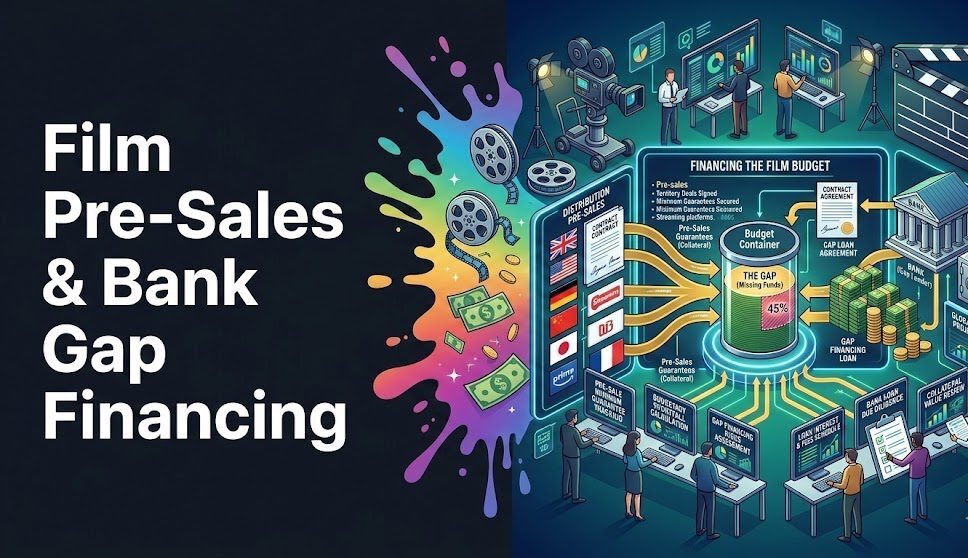
Distribution windows directly affect financing structure. SVOD pre-sales can be used as gap financing collateral before production, providing capital against future streaming licensing revenue. PVOD revenue models accelerate recoupment timelines compared to theatrical-only models. Lenders and equity investors increasingly require a documented windowing strategy as part of their due diligence—it’s a material factor in projecting recoupment schedules and understanding the capital stack waterfall. Films entering production without a clear window plan are harder to finance, not easier.
What is Weaponized Distribution in the context of windowing?
Weaponized Distribution™ is Vitrina’s framework for describing the strategic practice of licensing premium owned content to competing platforms across multiple windows to maximize ROI while retaining IP ownership. Rather than selling all rights in a single bundled deal, content owners license each window independently—theatrical to one partner, PVOD to another, first-SVOD to a third, AVOD/FAST retained or licensed non-exclusively. The WBD-Netflix $72B multi-year licensing arrangement is the most prominent example: WBD licenses HBO content to Netflix, a direct competitor, to accelerate debt reduction and maximize content library value without surrendering ownership.
How does Vitrina help producers and distributors optimize windowing strategy?
Vitrina’s platform tracks 400,000+ active projects and 140,000+ verified companies across the global entertainment supply chain—including real-time acquisition activity from theatrical distributors, PVOD platforms, SVOD buyers, AVOD services, and FAST operators. Producers and distributors use Vitrina to identify which platforms are actively acquiring in each window, in which territories, at which budget tiers—before approaching them for deals. The result is a faster, more competitive deal process: Vitrina users have identified distribution partners in 48 hours versus the 3-6 month industry standard through traditional network channels.
Conclusion: Your Window Stack Is a Financial Architecture Decision
In 2026, content windowing strategy isn’t a distribution afterthought—it’s a financing decision, a production decision, and a competitive intelligence exercise that should be resolved before greenlight, not after delivery. The producers and studios who understand how theatrical flows into PVOD into SVOD into AVOD into FAST—and who structure their rights to preserve optionality at every transition—are generating materially better returns than those who sign all-rights deals because the paperwork is simpler.
What’s actually happening among the most sophisticated distribution operators: they’re treating each window as a discrete asset—valued, priced, and licensed independently, often to competing platforms in the same or adjacent markets. As Deadline has reported, the volume of multi-window, multi-platform licensing deals has increased significantly as studios and larger independents reject bundled all-rights arrangements in favor of window-by-window monetization. The intelligence deficit that prevents most smaller producers from accessing this approach is the problem Vitrina’s platform is specifically built to solve.
The global distribution landscape is more fragmented than it’s ever been—and, as a result, richer with opportunity for those who can navigate it with precision. For a complete breakdown of how to structure distribution rights across territories and platforms, our guide to distribution deals in film and TV covers the full contractual framework from MGs through holdback provisions and window sequencing.
Key Takeaways
- The 90-day theatrical window is dead for most films: 45 days is the new commercial standard; 21-30 days is viable for accelerated PVOD strategies where P&A recoupment speed matters
- Don’t bundle SVOD with AVOD and FAST: License each window separately to preserve downstream monetization—the upside from separating these rights typically exceeds the premium a bundled deal commands
- FAST is a revenue channel, not a dumping ground: Genre titles on FAST can generate sustained CPM revenue for 3-5 years post-SVOD, with zero additional marketing investment
- Territory-by-territory licensing outperforms worldwide bundles for commercially viable titles: the premium can reach 25-40% in total returns versus all-rights deals
- Your window stack must be modeled before greenlight: SVOD pre-sales as gap collateral, PVOD revenue in recoupment projections, and FAST as terminal value—these affect your capital stack, not just your distribution strategy
Track Live Distribution Activity Across Every Window
Vitrina maps acquisition activity from 140,000+ verified companies across theatrical, PVOD, SVOD, AVOD, and FAST—in real time, by territory, by budget tier. Know which platforms are buying before you’re in the room.
No credit card required · Trusted by Netflix, Warner Bros., and Paramount
Need a Dedicated Distribution Strategy Partner?
Vitrina’s Concierge team works directly with producers and rights holders to identify, vet, and connect with the right platform buyers for each window in your distribution stack.
Find Film+TV Projects, Partners, and Deals – Fast.
VIQI matches you with the right financiers, producers, streamers, and buyers – globally.
Producers Seeking Financing & Partnerships?
Book Your Free Concierge Outreach Consultation
(To know more about Vitrina Concierge Outreach Solutions click here)
Producers Seeking Financing, Co-Pros, or Pre-Buys?
Vitrina Concierge helps producers reach the right financiers, commissioners, distributors, and co-production partners — with precision outreach, not cold pitching.
Join Industry Briefings Trusted by Leaders

Film & TV Financing: Pre-Buys
Learn how pre-buys work in current Film and TV financing, how they differ from pre-sales, and how they are used to close real finance plans.
Streamers – Netflix vs. Amazon – The 2026 Strategy
How Netflix and Amazon’s content and revenue strategies are diverging ahead of 2026.
Format Adaptations: Global Trends
Where formats are traveling, which adaptations are breaking out, and how streamers are backing remakes in 2025–2026.
Top animation studios in the Philippines are premier technical service providers specializing in high-volume 2D/3D production, VFX, and post-production for global networks.
This involves leveraging a specialized labor force of over 10,000 artists to provide scalable animation solutions that meet the standards of studios like Disney, Netflix, and Warner Bros. Discovery.
According to Vitrina AI’s supply chain data, the Philippines remains a top-tier hub for international co-productions, with over 140,000 companies globally tracking Filipino vendors for project-ready technical capabilities.
In this guide, you will learn the frameworks for studio vetting, identifying regional production hubs, and leveraging data intelligence to secure the right animation partner.
While traditional directories offer surface-level listings, they often lack the “insider advantage” required to verify project history or current pipeline availability. This leads to sourcing friction for buyers seeking reliable technical partners in a fragmented Southeast Asian market.
This comprehensive guide addresses these gaps by providing a data-driven framework for studio selection—from identifying technical specializations to monitoring real-time production slates.
Your AI Assistant, Agent, and Analyst for the Business of Entertainment
VIQI AI helps you plan content acquisitions, raise production financing, and find and connect with the right partners worldwide.
- Find active co-producers and financiers for scripted projects
- Find equity and gap financing companies in North America
- Find top film financiers in Europe
- Find production houses that can co-produce or finance unscripted series
- I am looking for production partners for a YA drama set in Brazil
- I am looking for producers with proven track record in mid-budget features
- I am looking for Turkish distributors with successful international sales
- I am looking for OTT platforms actively acquiring finished series for the LATAM region
- I am seeking localization companies offer subtitling services in multiple Asian languages
- I am seeking partners in animation production for children's content
- I am seeking USA based post-production companies with sound facilities
- I am seeking VFX partners to composite background images and AI generated content
- Show me recent drama projects available for pre-buy
- Show me Japanese Anime Distributors
- Show me true-crime buyers from Asia
- Show me documentary pre-buyers
- List the top commissioners at the BBC
- List the post-production and VFX decision-makers at Netflix
- List the development leaders at Sony Pictures
- List the scripted programming heads at HBO
- Who is backing animation projects in Europe right now
- Who is Netflix’s top production partners for Sports Docs
- Who is Commissioning factual content in the NORDICS
- Who is acquiring unscripted formats for the North American market
Table of Contents
- 01
The Philippines as a Global Animation Production Hub - 02
How Do Acquisition Leads Vet Top Animation Studios? - 03
Top Specializations: 2D, 3D, and VFX Capabilities - 04
Leveraging Supply Chain Intelligence for Vendor Sourcing - 05
Analyzing Cost-Efficiency in the Filipino Animation Sector - 06
Key Takeaways - 07
FAQ - 08
Moving Forward
Key Takeaways for Acquisition Leads
-
Scalable Talent Access: Philippines offers a massive talent pool of 10,000+ artists, enabling quick ramp-up for episodic series production.
-
Technical Vetting Imperative: Buyers prioritize studios with verified track records in Marvel or Disney pipelines to ensure security compliance.
-
Data-Driven Discovery: Using Vertical AI to map studio relationships reduces vendor sourcing time by 5x compared to manual research.
What Makes the Philippines a Premier Animation Hub?
The Philippines has evolved from a simple outsourcing destination into a high-value content partner within the global entertainment supply chain. With a rich history of collaborating with major US and European studios, Filipino animation houses are integrated into the technical pipelines of the world’s most recognizable franchises. This maturity allows them to handle complex creative mandates while maintaining cost efficiencies that are difficult to replicate in Western markets.
Central to this hub’s success is its cultural affinity with Western storytelling and its proficient English-speaking workforce, which eliminates communication bottlenecks during high-stakes production phases. Industry data shows that the region’s top animation studios now contribute significantly to episodic streaming content, which reached a global market value of $18.2 billion in 2024.
Find vetted animation partners in the Philippines:
Industry Expert Perspective: Animating the Future: Toonz Media Group’s Evolution
Jayakumar P, CEO of Toonz Media Group, discusses the shift toward global creative economies and how animation hubs in Asia are integrating AI and strategic partnerships to scale preschool and adult animation content.
Key Insights
The video explores market expansion, strategic partnerships, and the integration of AI tools in animation. It highlights the importance of adapting to the preschool audience shift and exploring diverse applications of animation in the modern supply chain.
How Do Acquisition Leads Vet Top Animation Studios?
Vetting an animation partner in the Philippines requires moving beyond reel evaluation to technical audit and pipeline verification. Acquisition leads focus on “Supply Chain Intelligence”—analyzing a studio’s previous collaborations, their technology stack (e.g., Harmony, Maya, Blender), and their adherence to TPN (Trusted Partner Network) security standards.
- Infrastructure Audit: Verification of hardware capability and secure data transfer protocols.
- Pipeline History: Mapping historical credits to identify experience with specific genres or target demographics.
- Project Tracking: Using tools like Vitrina’s Global Film+TV Projects Tracker to see if the studio is currently overleveraged or has upcoming capacity.
Verify studio credits and pipeline status:
Top Specializations: High-Value Service Tiers
1. Full-Service 2D/3D Episodic Production
Acquisition teams often struggle with inconsistent output quality when scaling from 26 to 52 episodes. Filipino studios solve this through robust middle-management and standardized asset pipelines. For producers, this means a reliable partner for “work-for-hire” models that can transition into co-production as relationships mature.
Real-World Signal: Over 60% of top-tier Filipino studios have existing relationships with major streamers, indicating a high “trust score” in the supply chain.
2. VFX and Technical Post-Production
Beyond character animation, the region has become a hub for rotoscoping, clean-up, and compositing. Without these high-volume technical services, global blockbusters face significant timeline delays and budget overruns. Filipino VFX houses provide the technical backbone for premium episodic streaming content.
Real-World Signal: Vitrina data tracks over 30 million industry relationships, showing a surge in VFX contracts moving toward Southeast Asian hubs in Q4 2024.
Why Do Strategy Teams Use Supply Chain Intelligence?
In an era of “Weaponized Distribution” and rapid market consolidation—highlighted by Netflix’s $72 billion acquisition of Warner Bros. assets—strategy teams lack real-time visibility into vendor reliability. Supply chain intelligence transforms partner discovery from a manual networking task into a data-driven science.
Executives use Vitrina AI to identify studios for acquisition, monitor competitive slates, and find top distributors. By mapping the entire ecosystem of 600,000+ companies, Vitrina provides an “insider advantage” that allows buyers to identify regional hubs before they become oversaturated.
Analyze competitive vendor strategies:
Moving Forward
The Philippines’ animation sector is transitioning from a high-volume service hub into a strategic creative partner. By leveraging supply chain intelligence, acquisition leads can now compress months of vendor vetting into targeted, data-backed decisions that maximize ROI and project quality.
Whether you are a Content Buyer looking for scalable outsourcing or a Studio Executive trying to identify M&A targets, the principle remains: actionable data drives production velocity.
Outlook: Over the next 12-18 months, expect deeper integration of AI-powered workflows within Filipino studios, making them even more competitive against traditional Western production models.
Frequently Asked Questions
Quick answers to sourcing animation in the Philippines.
Which animation studios in the Philippines work with Disney?
What is the cost of animation production in the Philippines?
How do I vet a Filipino animation studio?
Do Filipino studios offer 3D and VFX services?
What are the top animation hubs in the Philippines?
Is co-production possible with Filipino animation houses?
How does Vitrina AI help in sourcing Filipino vendors?
What are the security standards for animation outsourcing?
About the Author
Specialist in Entertainment Supply Chain Intelligence with 15+ years experience in global content acquisition and production hub analysis. Connect on Vitrina.
Find Film+TV Projects, Partners, and Deals – Fast.
VIQI matches you with the right financiers, producers, streamers, and buyers – globally.
Producers Seeking Financing & Partnerships?
Book Your Free Concierge Outreach Consultation
(To know more about Vitrina Concierge Outreach Solutions click here)
Producers Seeking Financing, Co-Pros, or Pre-Buys?
Vitrina Concierge helps producers reach the right financiers, commissioners, distributors, and co-production partners — with precision outreach, not cold pitching.
Join Industry Briefings Trusted by Leaders
Film & TV Financing: Pre-Buys
Learn how pre-buys work in current Film and TV financing, how they differ from pre-sales, and how they are used to close real finance plans.
Streamers – Netflix vs. Amazon – The 2026 Strategy
How Netflix and Amazon’s content and revenue strategies are diverging ahead of 2026.
Format Adaptations: Global Trends
Where formats are traveling, which adaptations are breaking out, and how streamers are backing remakes in 2025–2026.