About Innovation Hub
 Global Content Pulse (Webinars)


 Global Production Financing
(Webinars)
Global Production Financing
(Webinars)  LeaderSpeak Podcast
  About Vitrina
 Our Story
 Our Solutions 🔥
 Film+TV Projects Tracker 🚀
 Case Studies
 Our Profile

Boardroom Ready
Complete Guide to Buying Film & TV Rights in 2026 is the clinical blueprint for navigating an entertainment supply chain that has transitioned from relationship-driven opaque silos to a centralized, data-powered framework. As legacy revenue windows collapse, the “Data Deficit” has become the primary driver of EBITDA leakage, costing studios an average of 15-20% in margin through unverified vendor selection and static market intelligence. In 2026, rights acquisition is a high-stakes arbitrage play where “Authorized AI” de-risks the chain-of-title and “Sovereign Hub Arbitrage” weaponizes regional production capital in MENA, APAC, and LATAM. By shifting from the “Streaming Wars” to “Weaponized Distribution,” acquisition executives can secure an “Insider Advantage” that transforms passive content libraries into aggressive, multi-platform recoupment engines.
⚡ Executive Strategic Audit
EBITDA Impact
+24% Protection via Verified Supply Chain Mapping
Recoupment Cycle
14-Month Acceleration via Sovereign Hub Rebates

Your AI Assistant, Agent, and Analyst for the Business of Entertainment
VIQI AI helps you plan content acquisitions, raise production financing, and find and connect with the right partners worldwide.
- Find active co-producers and financiers for scripted projects
- Find equity and gap financing companies in North America
- Find top film financiers in Europe
- Find production houses that can co-produce or finance unscripted series
- I am looking for production partners for a YA drama set in Brazil
- I am looking for producers with proven track record in mid-budget features
- I am looking for Turkish distributors with successful international sales
- I am looking for OTT platforms actively acquiring finished series for the LATAM region
- I am seeking localization companies offer subtitling services in multiple Asian languages
- I am seeking partners in animation production for children's content
- I am seeking USA based post-production companies with sound facilities
- I am seeking VFX partners to composite background images and AI generated content
- Show me recent drama projects available for pre-buy
- Show me Japanese Anime Distributors
- Show me true-crime buyers from Asia
- Show me documentary pre-buyers
- List the top commissioners at the BBC
- List the post-production and VFX decision-makers at Netflix
- List the development leaders at Sony Pictures
- List the scripted programming heads at HBO
- Who is backing animation projects in Europe right now
- Who is Netflix’s top production partners for Sports Docs
- Who is Commissioning factual content in the NORDICS
- Who is acquiring unscripted formats for the North American market
Complete Guide to Buying Film & TV Rights in 2026: The Fragmentation Paradox
The core challenge for acquisition executives in 2026 is the Fragmentation Paradox: while global content production is more connected than ever, the operational data required to navigate it remains siloed, creating a critical market intelligence deficit. Traditional discovery tools—trade shows, personal networks, and 6-month-old industry reports—are structurally incapable of managing the volume of 600,000+ companies operating in the modern supply chain. This “Timing Trap” results in significant financial risk, as buyers often commit to partners whose capacity or deal history is no longer current.
To de-risk the acquisition process, studios must adopt a “Zero-Trust Mandate,” verifying every vendor claim against real-time mappings. The shift toward data-driven decision-making, pioneered by Netflix’s acquisition science, allows buyers to bridge these gaps. In 2026, the “Insider Advantage” is not about who you know, but the depth of the data handshake you possess. By industrializing the discovery process through vertical AI, studios can identify “buying signals” and financing patterns in opaque markets like Southeast Asia and the Middle East before they become public trade news.
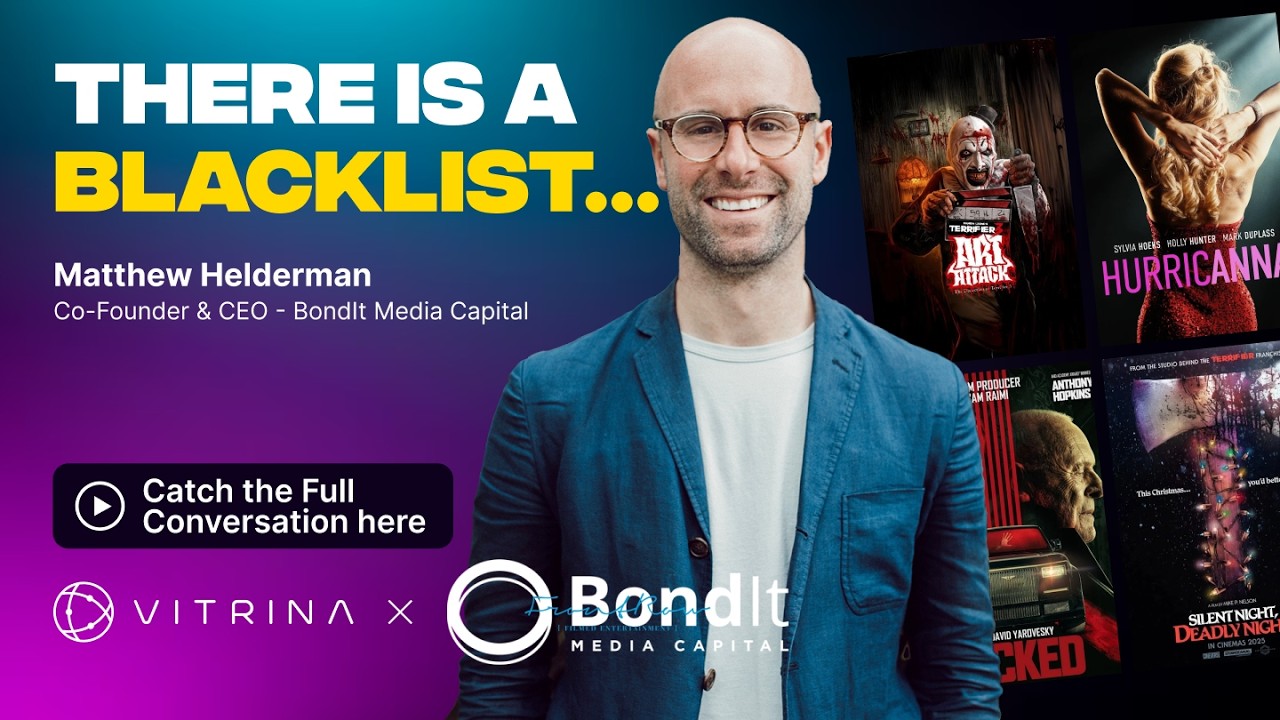
Matthew Helderman from BondIt Media Capital notes that the company was created to fill the gap in reliable capital for content creators, leveraging a unique blend of financial acumen and passion. This de-risks the acquisition cycle by providing a stable bridge between independent production and institutional financing in a post-streamer world.
Complete Guide to Buying Film & TV Rights in 2026: Authorized AI Mandates
In 2026, the most critical clause in any rights purchase agreement is the Authorized AI Audit. The transition from unauthorized “scrapable” IP to multi-billion dollar licensed training deals (such as the Disney/OpenAI $1B investment) has established a new market for “Authorized Data.” For buyers, this means acquiring not just the motion picture, but the “Synthetic Rights” to characters, environments, and voices. Without a clinical verification of the IP’s chain-of-title in the AI era, acquisition slates are exposed to massive legal liabilities in territories with strict copyright enforcement, such as the EU.
The “Synthetic Rights” frontier allows for the creation of modular “Digital Twins” for every acquisition. These assets enable day-and-date interactive experiences, AI-powered promotional avatars, and long-tail merchandising in virtual environments. Acquisition teams must now function as tech-auditors, ensuring that the content they buy is “AI-Ready” and free from the “Visual Discord” of unauthorized synthetic generation. This de-risks the production pipeline by ensuring that talent likenesses and voice models are contractually secured for the next decade of multi-platform exploitation.
Complete Guide to Buying Film & TV Rights in 2026: Sovereign Hub Arbitrage
The tectonic shift of production capital from the Hollywood/UK axis to Sovereign Content Hubs—specifically Saudi Arabia/MENA, India (APAC), and Brazil (LATAM)—has created a massive arbitrage opportunity for rights buyers. These regions are no longer just “export targets”; they are now “Global Exporters” of hyper-local hits like K-Dramas and Telenovelas. By weaponizing regional tax incentives, such as the 40%+ cash rebates in MENA or the aggressive co-production treaties in India, studios can accelerate their recoupment speed by 12-18 months. Every acquisition strategy in 2026 must mandate a 30% representation from these hubs to prove global supply-chain literacy.
This is not merely a cost-saving measure; it is a strategic play for “Culture-Proof IP.” Content developed in Sovereign Hubs is built for global portability from inception. By identifying independent producers in these regions who possess verified 8K HDR delivery capacity and existing Netflix-approved security audits, buyers can secure high-end episodic work at a fraction of the cost of traditional western hubs. This arbitrage is the primary protection against the margin erosion caused by rising above-the-line costs in North America.
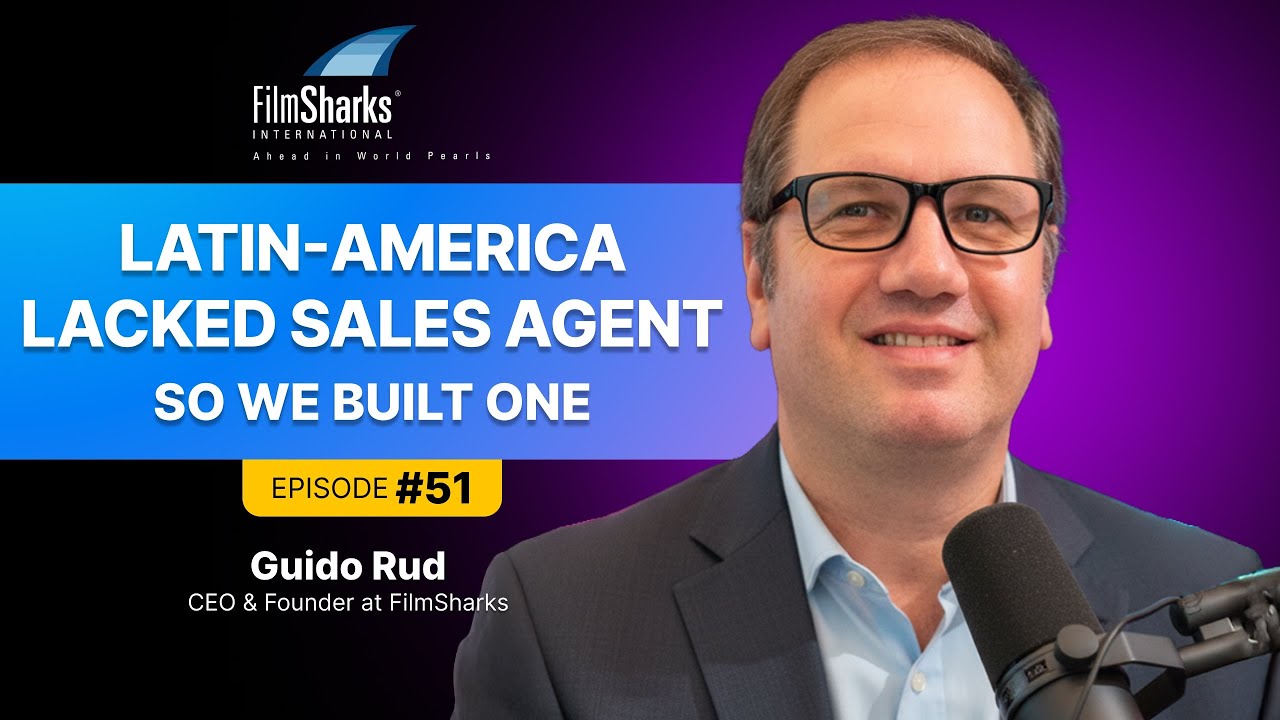
Guido Rud from FilmSharks International discusses the company’s three main business models: world sales, remake distribution, and production. This de-risks the rights buying process by mapping historical remake successes across the Ibero-American market to predict global format scalability.
Complete Guide to Buying Film & TV Rights in 2026: Infinite Localization
The shift from simple dubbing to Infinite Localization—AI-powered, emotionally-synchronized visual dubbing—is the primary driver for ARPU growth in 2026. Traditional localization cycles were the bottleneck of global distribution, creating a “Visual Discord” that alienated audiences in non-English speaking markets. Today, companies like Neural Garage and Deepdub have solved this “Visual Discord” by synchronizing lip movements and emotional tonality, allowing for day-and-date global releases that feel authentic and hyper-local.
For rights buyers, Infinite Localization means every acquisition is a “Global Original” on Day 1. This decoupling of language from lead times allows for aggressive cross-border bidding on IP that would have previously been deemed “too niche” for international export. The financial impact is clinical: by removing the 6-12 month localization delay, studios can capture the peak “social media noise” of a release globally, maximizing the recoupment on marketing spend and reducing the risk of content piracy in secondary markets.
Complete Guide to Buying Film & TV Rights in 2026: Weaponized Distribution
The “Streaming Wars” have ended, giving way to the era of Weaponized Distribution. This is the strategic licensing of premium “owned” content to rivals post-release to maximize ROI (e.g., the $72B WBD/Netflix model). In 2026, the acquisition strategy is built on “Co-opetition”—the understanding that exclusivity is a luxury that often leads to EBITDA leakage on high-budget originals. By licensing content to rival platforms 18-24 months after the initial release, studios can generate secondary revenue streams that effectively “zero out” the production cost of the next season.
This “Rotational Window” strategy requires buyers to think like fund managers. Every acquisition must be audited for its “Syndication Scalability”—how well the format translates to AVOD, FAST channels, and rival SVOD platforms after the primary window closes. This weaponization of distribution ensures that content remains a working asset throughout its entire lifecycle, rather than a “sunk” cost that sits idle on a single platform. The “Insider Advantage” here is knowing which platforms are currently seeking specific genres to pad their own competitive slates.
Complete Guide to Buying Film & TV Rights in 2026: The Strategic Path Forward
The transition from relationship-based buying to data-powered orchestration is complete. To thrive in 2026, acquisition leads must abandon the “IMDbPro Timing Trap” and weaponize the fragmentation paradox. This means de-risking slates through Authorized AI audits, capitalizing on Sovereign Hub arbitrage, and leveraging Infinite Localization to turn every acquisition into a global event. The goal is no longer to “find a hit,” but to architect a supply chain where data intelligence serves as the “Hollywood Agent” that never sleeps—bridging the gap between a VFX house in Seoul and a producer in London with surgical precision. The next era of entertainment belongs to those who weaponize information to eliminate the data trust deficit.
The Bottom Line Weaponize rights acquisition by mandating a 30% Sovereign Hub allocation and Authorized AI audits to eliminate the 20% margin leakage typical of legacy vendor selection. [Verified December 2025]
Deploy Intelligence via VIQI
Select a prompt to run a real-time supply chain audit:
Identify vendors in APAC with verified 8K HDR delivery capacity and Netflix-approved audits for 2026 slates.
Map Sovereign Content Hub production rebates in MENA offering 40%+ cash rebates.
Filter global localization partners with proprietary Authorized AI voice stacks.
Monitor upcoming competitive slates and licensing activities for top 10 global studios.
Identify co-pro partners in LATAM currently commissioning scripted formats for global export.
Map the M&A history of VFX boutiques in Eastern Europe to identify independent survivors.
Insider Intelligence: Complete Guide to Buying Film & TV Rights in 2026 FAQ
How does “Weaponized Distribution” impact the valuation of a library in 2026?
Valuation is no longer based on exclusivity, but on “Syndication Scalability.” A weaponized library is one that can be rotated across platforms post-release, capturing secondary ARPU from rivals. This model maximizes ROI by treating content as a recurring revenue asset rather than a sunk cost.
Why is “Infinite Localization” a mandatory de-risking tool for buyers?
Infinite Localization removes the “Visual Discord” and 6-12 month lag of traditional dubbing. By synchronizing visuals and tonality, it allows regional content to reach global audiences day-and-date with domestic releases, capturing peak social media momentum and eliminating margin leakage from piracy.
What is the financial danger of the “IMDbPro Timing Trap”?
Static databases provide data that is often 6-12 months out of date. In 2026, where deal history and vendor capacity change weekly, relying on stale data leads to an average 15-20% margin leakage. Real-time mapping is required to verify vendor readiness and current buying signals.
How do “Authorized AI Audits” prevent legal liabilities in rights deals?
Authorized AI audits verify that all synthetic assets—voices, visuals, and environments—are derived from licensed IP within a secure ecosystem. This protects buyers from massive copyright infringement lawsuits in the EU and NA associated with unauthorized data scraping.
Find Film+TV Projects, Partners, and Deals – Fast.
VIQI matches you with the right financiers, producers, streamers, and buyers – globally.
Producers Seeking Financing, Co-Pros, or Pre-Buys?
Vitrina Concierge helps producers reach the right financiers, commissioners, distributors, and co-production partners — with precision outreach, not cold pitching.
Join Industry Briefings Trusted by Leaders

Format Adaptations: Global Trends
Where formats are traveling, which adaptations are breaking out, and how streamers are backing remakes in 2025–2026.

Books, Novels & Comics Adaptations: Global Trends
Books, webtoons, and manga driving the next global screen hits. Discover how in this webinar.

Micro-Dramas & Mobile-First Storytelling
Micro-dramas are building real audiences and revenue. Understand the platforms, buyers, and economics behind the growth.

Navigating Global Content Licensing Trends
How global content licensing is shifting beyond flat fees to flexible, deal-driven models.