About Innovation Hub
 Global Content Pulse (Webinars)


 Global Production Financing
(Webinars)
Global Production Financing
(Webinars)  LeaderSpeak Podcast
  Global Entertainment Digest (Newsletter)
  About Vitrina
 About VIQI
 Our Story
 Our Solutions 🔥
 Film+TV Projects Tracker 🚀
 Case Studies
 Our Profile
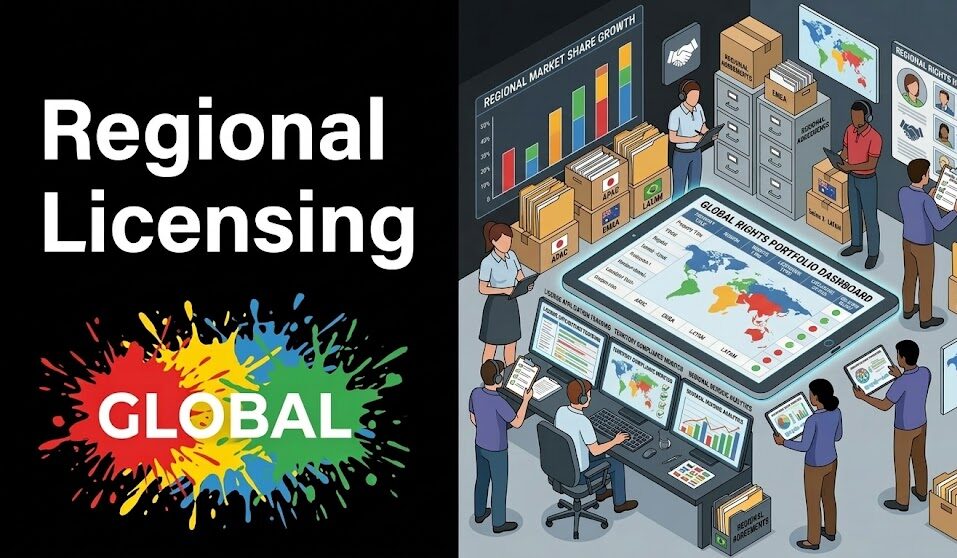
You open the app, search for the title everyone’s talking about, and there it is—that message. “Not available in your region.” It’s not a glitch. It’s not a mistake. It’s the result of a legal architecture that was assembled title by title, territory by territory, long before you ever searched for it. Anime regional licensing restrictions aren’t arbitrary walls. They’re the direct output of how rights are sold, split, and assigned across the global content market.
Here’s what’s actually happening behind that error message—and why the system works the way it does. Whether you’re a fan frustrated by geo-blocks or a content professional navigating acquisition, the mechanics are the same. Understanding them changes how you read every streaming catalog gap.
In This Article
- What “Not Available in Your Region” Actually Means
- How Japan Packages Anime Rights Territory by Territory
- The Companies Controlling Global Anime Distribution
- Why No Single Platform Can License Everything
- Simulcast vs. Delayed Licensing: The Access Gap
- How Exclusivity Deals Shape Your Catalog
- The Fragmentation Paradox in Anime Rights
- How Global Licensing Is Evolving
- FAQ: Anime Regional Licensing Restrictions Explained
Track Every Anime Licensing Deal Before It Hits the Trades
Ask VIQI—Vitrina’s AI—to surface which titles are unlicensed in your territory, which distributors are actively acquiring, and where the next catalog gaps are opening up. Join 140,000+ companies already using Vitrina’s intelligence to stay ahead of the rights market.
No credit card required
What “Not Available in Your Region” Actually Means
The message doesn’t mean the platform is broken. It means the platform never acquired the rights to show that title in your country. Simple as that. Anime regional licensing restrictions exist because rights aren’t sold globally by default—they’re licensed territory by territory, and every territory requires a separate deal.
Think of it this way. When a Japanese studio produces an anime series, the IP belongs to a rights holder—typically a production committee (seisaku iinkai) made up of the original manga publisher, animation studio, music label, and sometimes a broadcaster. That committee doesn’t sell the world in one transaction. They sell slices of it—North America to one buyer, Western Europe to another, Southeast Asia to a third. If no one bought your slice, you get the block.
And the block isn’t passive. Geo-restriction technology is actively applied by platforms based on their license agreements. You’re not being blocked by a firewall that didn’t notice your country—you’re being blocked by a contract that explicitly excluded it. These aren’t accidents. They’re compliance.
For a deeper look at how rights carve-outs work across genres, our anime licensing and distribution guide covers the full contractual mechanics.
How Japan Packages Anime Rights Territory by Territory
The Japanese production committee model is central to why anime regional licensing restrictions exist at all. When a new series is greenlit, each stakeholder in the committee retains specific rights—merchandise, theatrical, broadcast, streaming—and those rights get carved further by geography when international sales begin.
A single major title like One Piece, controlled by Toei Animation and tied to Shueisha‘s manga rights, can have completely different licensees in North America, Latin America, MENA, Western Europe, Eastern Europe, Australia, and across Southeast Asia. That’s not unusual. It’s standard practice. The committee maximizes revenue by selling each territory to whichever buyer offers the best minimum guarantee (MG) for that market.
Here’s the thing: those MGs were often negotiated years before streaming existed in its current form. Legacy deals signed by Funimation in North America or Madman in Australia locked in rights windows that now sit inside streaming catalogs—or don’t, if the window expired. Expired rights create catalog holes that aren’t anyone’s fault. They’re just the lifecycle of a deal.
The territories themselves can be surprisingly granular. “Latin America” isn’t always sold as a block—some deals separate Brazil from Spanish-language LatAm. “Southeast Asia” might mean Thailand and Vietnam but not the Philippines. Understanding this granularity is precisely why anime streaming availability varies so dramatically by region.
The Companies Controlling Global Anime Distribution
A handful of companies control the majority of internationally-licensed anime. Knowing who they are explains a lot about why specific titles appear—or don’t—on specific platforms in your territory.
Crunchyroll, now a subsidiary of Sony Pictures Entertainment, dominates the sector with over 145 million registered users across its platform. After absorbing Funimation in 2022, Sony consolidated the two largest Western anime licensees under a single roof—giving Crunchyroll an acquisition reach across thousands of titles and dozens of territories simultaneously. That scale lets them negotiate simulcast rights (same-day releases as Japan) that smaller platforms simply can’t match.
Netflix entered the space aggressively, committing over $2.5 billion to anime content and co-production through its multi-year investment push. But Netflix’s strategy differs fundamentally from Crunchyroll’s. Netflix pursues exclusives—often globally—through direct co-production deals with studios like Production I.G, Wit Studio, and David Production. That’s why certain titles appear only on Netflix worldwide rather than licensing territory by territory in the traditional model.
Amazon Prime Video stakes out selective exclusives—Vinland Saga, The Eminence in Shadow—in certain windows and regions, while HIDIVE (operated by Sentai Filmworks) runs a catalog of over 2,000 titles focused on niche and legacy content. And then there’s the regional picture: platforms like Bilibili in China, Muse Asia across Southeast Asia, and Wakanim in Europe (now absorbed into Crunchyroll) each hold rights for their specific footprints. For a broader picture of who’s acquiring what, the top anime distributors operating globally includes many of these players and their catalog strategies.

Your AI Assistant, Agent, and Analyst for the Business of Entertainment
VIQI AI helps you plan content acquisitions, raise production financing, and find and connect with the right partners worldwide.
- Find active co-producers and financiers for scripted projects
- Find equity and gap financing companies in North America
- Find top film financiers in Europe
- Find production houses that can co-produce or finance unscripted series
- I am looking for production partners for a YA drama set in Brazil
- I am looking for producers with proven track record in mid-budget features
- I am looking for Turkish distributors with successful international sales
- I am looking for OTT platforms actively acquiring finished series for the LATAM region
- I am seeking localization companies offer subtitling services in multiple Asian languages
- I am seeking partners in animation production for children's content
- I am seeking USA based post-production companies with sound facilities
- I am seeking VFX partners to composite background images and AI generated content
- Show me recent drama projects available for pre-buy
- Show me Japanese Anime Distributors
- Show me true-crime buyers from Asia
- Show me documentary pre-buyers
- List the top commissioners at the BBC
- List the post-production and VFX decision-makers at Netflix
- List the development leaders at Sony Pictures
- List the scripted programming heads at HBO
- Who is backing animation projects in Europe right now
- Who is Netflix’s top production partners for Sports Docs
- Who is Commissioning factual content in the NORDICS
- Who is acquiring unscripted formats for the North American market
Why No Single Platform Can License Everything
The natural follow-up question: why doesn’t one platform just buy all the rights globally and end the fragmentation? The economics don’t work. And neither does the IP history.
Rights that were sold 10 or 15 years ago to regional distributors come with long-term windows. If Madman Entertainment in Australia holds streaming rights through 2028 for a classic title, Crunchyroll can’t override that deal—no matter how much they’d like to. Those contracts have exclusivity provisions. Buying out existing deals is costly, time-consuming, and sometimes legally impossible before the window expires.
But there’s a financial reality here too. Securing worldwide rights for an entire season of a popular series—say, Demon Slayer (controlled by Aniplex, itself a Sony subsidiary)—requires an MG that reflects global demand. For top-tier IP, that number can run into tens of millions of dollars. Not every platform can or wants to deploy that capital simultaneously across hundreds of titles.
Insiders recognize that the real challenge isn’t willingness—it’s timing. Rights windows open and close continuously, and the platform that’s best positioned to acquire a territory at renewal is the one with the deepest relationships with the Japanese rights committee. That’s a relationship game as much as a financial one.
Find Unlicensed Anime Titles in Your Territory—Before Your Competitors Do
Vitrina tracks 400,000+ projects across the global content market. Use 200 free credits to map acquisition opportunities in your region—no credit card required.
Simulcast vs. Delayed Licensing: The Access Gap That Frustrates Fans
Simulcast rights are arguably the most commercially valuable in anime licensing right now. A simulcast deal means a platform can stream each new episode on the same day—sometimes within hours—of its Japanese broadcast. Crunchyroll has built much of its subscriber value on simulcast access. But securing simulcast rights requires being at the table in Japan before production even wraps, which is why relationships with rights committees matter so much.
When simulcast rights aren’t available—or when a platform acquires rights late—you get delayed licensing. The series exists. Episodes are airing in Japan. But your territory has to wait 6 weeks, 3 months, or sometimes more than a year for legal access. That gap is why anime piracy spikes around popular seasonal titles: demand is real, supply is legally unavailable in certain regions.
And it’s not always about cost. Sometimes it’s classification. Some countries require content rating approvals before a title can legally stream. Australia, for example, has a classification system that content must pass before distribution—which adds a regulatory layer between a Japanese premiere and your local app. The anime didn’t fail to launch in your country. It’s navigating an approval process that doesn’t care about your weekend plans.
How Exclusivity Deals Shape What You Can Watch
Exclusivity is where anime regional licensing restrictions become most visible to everyday viewers. When a platform secures exclusive rights to a title in your region, every other platform is legally barred from carrying it there. You’re not missing a technical feature—you’re missing a contract.
Netflix’s co-production model is the most aggressive form of this. When Netflix funds Aggretsuko or co-produces with a studio, they typically secure global exclusive rights from day one. That’s the opposite of the traditional territory-by-territory sale—it’s a clean, worldwide lock. Effective for Netflix. Frustrating for anyone who subscribes only to Crunchyroll and expected to find the title there.
But exclusivity doesn’t always mean global. Amazon might hold exclusive SVOD rights to a title in the UK and Germany while Crunchyroll holds them in North America and Muse Asia covers Southeast Asia. Same title. Four different platforms. Zero overlap. Anime exclusives on streaming platforms have become one of the defining competitive battlegrounds—and understanding who holds what, where, is increasingly a professional skill.
The Fragmentation Paradox in Anime Rights
What’s actually happening across the global anime market is a textbook example of what Vitrina identifies as The Fragmentation Paradox™—where an abundance of content and suppliers creates less access, not more, due to information opacity and opaque deal structures.
Anime fans experience the consumer face of this paradox: titles split across 6-8 platforms, regions with no legal access to titles they want, and catalog gaps that seem inexplicable. Content professionals experience the business face: rights committees with fragmented interests, legacy deals blocking new acquisition windows, and rights holders who don’t always know which territories are unsold until someone asks.
The real dynamic here is that the anime rights market—despite its massive scale—still runs on relationship networks and manual research. There’s no centralized registry of “who holds rights to Title X in Territory Y.” Acquiring teams at streaming platforms piece this together through agent relationships and direct outreach to Japanese licensors. And gaps in that intelligence create both consumer frustrations and acquisition opportunities. For distributors tracking the full picture of global content acquisition across regional rights, the anime category remains one of the most complex to navigate.
How Global Licensing Is Evolving—And What It Means for Access
The territory-by-territory model isn’t disappearing. But it’s changing. Three forces are reshaping how anime regional licensing restrictions get structured—and they’re moving in opposite directions simultaneously.
First: the push toward global deals. Netflix’s investment model, Crunchyroll’s post-Funimation scale, and Amazon’s selective worldwide acquisitions all signal that the largest buyers increasingly want global or near-global rights from day one. Japanese rights holders—recognizing this demand—are starting to structure some deals that way, especially for new IP where no legacy rights exist.
Second: the renewal cycle. Older titles—the kind with 15-year-old exclusive deals scattered across regional distributors—are coming up for renewal. As each window expires, rights revert or get rebid. That’s where access improves for viewers: Crunchyroll or another global player wins the renewal, rolls the title into a worldwide catalog, and the geo-block disappears. This is happening quietly across hundreds of catalog titles every year.
Third: the Weaponized Distribution™ dynamic. Some rights holders are now treating their anime IP the way major studios treat their film libraries—licensing to multiple platforms simultaneously to maximize revenue rather than betting on a single exclusive partner. As streaming globalization reshapes anime distribution, the exclusive vs. multi-platform question is being renegotiated title by title.
But the fundamental architecture—rights sold in layers, territory by territory, with varying window lengths—won’t change overnight. Too many contracts depend on it. Too many business models were built around it. What changes is the speed at which rights clear and the growing commercial appetite for deals that remove the regional friction entirely.
Need Help Navigating Anime Rights Acquisition?
Vitrina’s concierge team works with content buyers, distributors, and acquirers to map rights availability, identify unlicensed territories, and connect you with the right rights holders. Trusted by platforms including Netflix, Warner Bros, and Paramount.
FAQ: Anime Regional Licensing Restrictions Explained
Why is anime blocked in my country but available elsewhere?
Because another company purchased the rights for your country—or no one did. Anime regional licensing restrictions are contractual, not technical. Each territory requires a separate rights deal, and if a platform didn’t buy your region, you’re legally outside the license coverage window. Geo-blocking is how platforms enforce that boundary.
How do anime regional licensing restrictions actually work?
Japanese rights holders—typically production committees involving studios, publishers, and broadcasters—sell international rights territory by territory. Each buyer negotiates a minimum guarantee and an exclusivity window for their territory. The platform then applies geo-restriction technology to comply with those contract terms. It’s a chain of agreements, not a single decision.
Why doesn’t Crunchyroll have every anime available everywhere?
Even with 145 million registered users and Sony’s backing, Crunchyroll can’t override existing deals. If a regional distributor holds exclusive rights through 2027 or 2028, those rights are locked until renewal. Crunchyroll acquires what’s available to acquire—and builds its catalog as windows expire and rights revert. The Funimation merger in 2022 significantly expanded their territory coverage, but legacy deals still create gaps.
What is a simulcast license and why does it matter?
A simulcast license grants a platform the right to stream episodes on the same day they air in Japan—often within hours. It’s the most time-sensitive and commercially valuable type of anime license. Securing simulcast rights requires direct relationships with Japanese rights committees and typically higher MGs. Without simulcast rights, platforms either wait for the season to complete or acquire it on a delayed basis.
Can anime regional licensing restrictions change over time?
Yes. Rights deals have fixed windows—typically 3-10 years for major titles. When those windows expire, rights revert to the original rights holder and can be relicensed to a different platform or extended under new terms. This is why a title that was blocked in your country last year might now be available: the original deal expired, and a platform with broader territory coverage acquired the renewal.
Why does Netflix have different anime than Crunchyroll?
Two reasons. First, Netflix has invested over $2.5 billion in anime co-productions, meaning it funds shows directly with Japanese studios and secures global exclusive rights from the outset. Second, Netflix targets theatrical and premium-tier titles where global exclusivity justifies the higher MG. Crunchyroll focuses on volume licensing across seasonal titles. Different strategies produce entirely different catalogs—even when both platforms operate in your territory.
How does a production committee control anime licensing internationally?
A Japanese seisaku iinkai (production committee) typically includes the original IP holder (manga publisher like Shueisha or Kodansha), the animation studio, a broadcaster, and often a music label and merchandise company. Each stakeholder holds specific rights categories. International licensing decisions—which territory to sell, at what price, with what exclusivity window—are made collectively by the committee, which is why deals can take time and why certain titles are harder to acquire than others.
Are anime regional licensing restrictions becoming less common?
They’re shifting rather than disappearing. The push from Netflix and Crunchyroll for global or near-global rights is compressing territory-level fragmentation for new titles. But the legacy catalog—thousands of titles with existing regional deals—will remain fragmented for years as those windows expire on their own timelines. Expect gradual consolidation for new releases, continued patchwork for older titles.
The Bottom Line on Anime Regional Licensing
That geo-block on your screen isn’t random. It’s the end result of a rights architecture built deal by deal, territory by territory, over decades—and it’s only recently starting to consolidate around global models that could eventually end the fragmentation fans experience daily. Anime regional licensing restrictions will persist as long as legacy deals hold exclusivity windows. But the direction is toward broader access, not less.
For content professionals—distributors, acquirers, and platform strategists—the insight is practical: rights gaps are acquisition opportunities. The titles unavailable in your territory aren’t unavailable because no one wants them. They’re unavailable because no one’s bought them yet, or because the window is about to open. That’s the gap you need to track.
Key Takeaways
- Geo-blocks are contractual: When you can’t access an anime title, it’s because the platform doesn’t hold rights for your territory—not a technical failure.
- Japan licenses territory by territory: Production committees sell rights region by region, creating the patchwork access fans experience globally.
- Simulcast rights are the premium tier: Same-day access to new episodes requires early, direct relationships with Japanese rights holders—not just money.
- Legacy deals create lasting gaps: Rights locked in 10-year-old exclusive deals won’t clear until the window expires, regardless of which platforms now want the title.
- Global licensing is emerging: Netflix co-productions and Crunchyroll’s post-Sony scale are pushing toward worldwide deals that reduce territory fragmentation for new titles.
Map Your Anime Rights Opportunities in 48 Hours
Vitrina gives you verified intelligence on 140,000+ companies across the global content market. Start with 200 free credits—no credit card required.
Trusted by Netflix, Warner Bros, Paramount and teams across the global supply chain.
Find Film+TV Projects, Partners, and Deals – Fast.
VIQI matches you with the right financiers, producers, streamers, and buyers – globally.
Producers Seeking Financing, Co-Pros, or Pre-Buys?
Vitrina Concierge helps producers reach the right financiers, commissioners, distributors, and co-production partners — with precision outreach, not cold pitching.
Join Industry Briefings Trusted by Leaders

Format Adaptations: Global Trends
Where formats are traveling, which adaptations are breaking out, and how streamers are backing remakes in 2025–2026.

Books, Novels & Comics Adaptations: Global Trends
Books, webtoons, and manga driving the next global screen hits. Discover how in this webinar.

Micro-Dramas & Mobile-First Storytelling
Micro-dramas are building real audiences and revenue. Understand the platforms, buyers, and economics behind the growth.

Navigating Global Content Licensing Trends
How global content licensing is shifting beyond flat fees to flexible, deal-driven models.