IHUB
IHUB
 Private Briefings (Webinars)


 LeaderSpeak Podcast
  Global Entertainment Digest (Newsletter)
  Premium Lists
 Membership Benefits
 About Vitrina
 Our Story
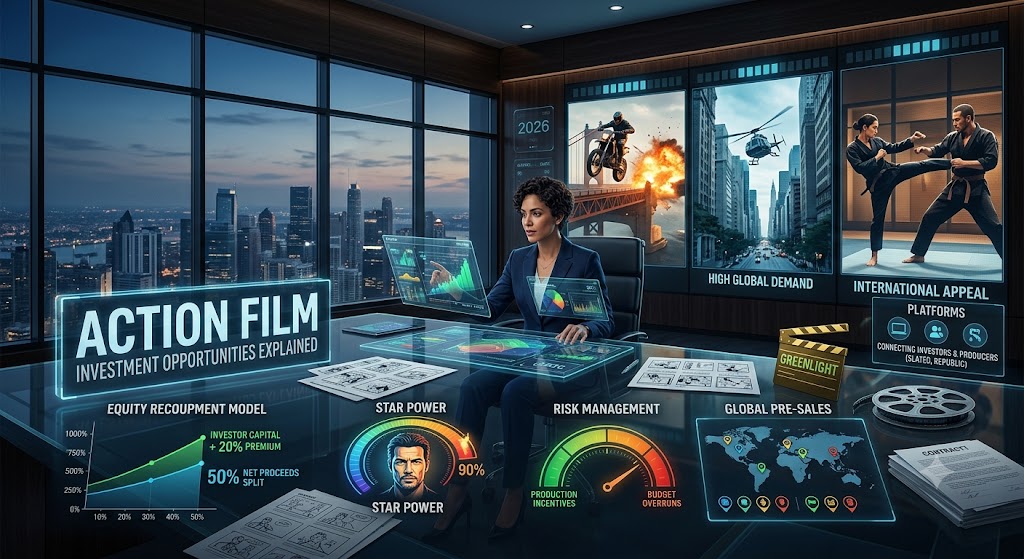
By Vitrina Research Team | Published: July 15, 2026 | 9 min read
Action is the world’s most commercially durable film genre. The global action and adventure segment generated over $14.9 billion in worldwide box office revenue in 2023, representing roughly 38% of total theatrical gross across all genres, according to the Motion Picture Association (MPA). For investors evaluating entertainment assets, that dominance is hard to ignore.
Yet action film investment carries a different risk profile than investing in drama, documentary, or even horror. Budget floors are higher, cast requirements are more demanding, and production complexity introduces risks that don’t exist in talky, low-movement genres. Understanding this structure is the first step toward placing smart capital.
This article walks through the full economics, from micro-budget action all the way to franchise-level studio tentpoles. It covers investment structures, exit routes, risk categories, and a due diligence checklist built specifically for the action genre. Whether you’re a private equity associate screening a first film deal or a family office considering a co-production, this guide gives you the framework to evaluate action film investment with discipline. See also our broader guide to film financing strategies in 2026.
Key Takeaways
- Action and adventure commands 38% of global theatrical box office revenue, making it the genre with the most consistent commercial demand (MPA, 2023).
- Investment entry points range from $500K micro-action to $50M+ studio co-productions, each with distinct risk and return profiles.
- Exit routes include theatrical, SVOD, AVOD, pay TV, and home video — multi-window monetization is a key genre advantage.
- Production risk (stunt overruns, VFX delays) is the leading cause of budget blowouts in independent action films.
- Due diligence on action films requires evaluating cast attachments, completion bond terms, and international pre-sale coverage before committing capital.
Table of Contents
- The Economics of Action Film
- Why Action Commands Premium Budgets and Premium Returns
- Action Film Investment Tiers Explained
- Why Independent Action Is Harder to Finance
- Investment Structures for Action Films
- Exit Routes for Action Film Investors
- Risk Analysis: What Can Go Wrong?
- Case Studies: John Wick and The Raid
- How Vitrina Helps Investors Evaluate Action Film Opportunities
- Conclusion
- FAQ
The Economics of Action Film
Action film sits at the top of the commercial food chain. In 2023, the top 10 highest-grossing films worldwide were all either action, action-adventure, or action-adjacent superhero titles, according to data compiled by Box Office Mojo. That concentration reflects a structural truth about how audiences spend money at the cinema: they pay for spectacle, and action delivers it at scale.
The global action and adventure film market was valued at approximately $18.2 billion in 2024, combining theatrical, streaming, and ancillary revenue streams. This figure comes from industry analysis published by Variety‘s research division and aligns with MPA data on genre performance trends. It’s a market with depth across every revenue window.
Streaming has reinforced, not replaced, theatrical action demand. Netflix, Amazon Prime Video, and Apple TV+ have all signaled through acquisition patterns and original production slates that action is a subscriber acquisition driver. Original action titles consistently appear in streaming platforms’ weekly viewership charts. That dual-window demand — both theatrical and streaming — means action projects often have multiple monetization paths from day one.
The global action and adventure film segment generated over $14.9 billion in worldwide box office revenue in 2023, representing approximately 38% of total theatrical gross across all genres. This makes action the single most commercially dominant genre by box office share, outperforming drama, comedy, and horror combined. (Motion Picture Association, 2023 Theatrical Report)
Why Action Commands Premium Budgets and Premium Returns
Action’s commercial upside comes with a cost floor that other genres don’t have. The average production budget for a wide-release action feature in 2025 sat at $68 million, compared to $24 million for drama and $18 million for horror, per data from The Numbers. That gap exists because action production demands stunt coordinators, VFX pipelines, location shooting, and specialized equipment that simply don’t apply to dialogue-driven films.
The return multiple at scale, though, is compelling. Films that break through in the action genre frequently generate 3x to 8x their production budget in global box office alone, before streaming and ancillary revenue. Horror achieves comparable multiples at low budgets, but action’s ceiling is much higher, particularly when franchise potential exists. A successful action film can launch sequels, merchandise, video games, and theme park attractions.
International performance is also a key action genre advantage. Action translates across language barriers far better than comedy or drama. International markets, led by China, Southeast Asia, and Latin America, often contribute 60% or more of total box office for major action releases. Investors should model international revenue separately, accounting for currency risk and local distribution structures.
Understanding the difference between film financing and equity financing is essential before choosing your entry structure in any action project.
What Are the Action Film Investment Tiers?
Action film investment doesn’t mean writing a nine-figure check to a major studio. The market spans multiple budget tiers, each with distinct risk, return, and liquidity profiles. Investors can participate at the level that matches their capital base and risk appetite. Here’s how the tiers break down in 2026.
| Investment Tier | Budget Range | Avg Global Gross Potential | Primary Exit Routes | Key Risk Factors |
|---|---|---|---|---|
| Micro-Action | $500K – $2M | $500K – $5M | Streaming SVOD, AVOD, pay TV | No theatrical ceiling; VFX quality limits |
| Mid-Budget Indie | $5M – $20M | $10M – $80M | Limited theatrical, streaming, international sales | Cast access, distribution guarantee gaps |
| Upper-Indie / Mini-Studio | $20M – $50M | $40M – $200M | Wide theatrical, streaming licensing | Opening weekend dependency, P&A exposure |
| Studio Tentpole | $50M+ | $150M – $1B+ | Full theatrical, global streaming, franchise | Studio gate, high marketing spend required |
Micro-Action: The Accessible Entry Point
Micro-budget action films in the $500K to $2M range are typically direct-to-streaming projects with modest theatrical ambitions. They rely heavily on one or two B-list action names and practical stunt sequences rather than VFX. Platforms like Tubi, Pluto, and regional streaming services actively license this content. Investors in this tier are effectively backing content library plays, not theatrical bets.
Mid-Budget Indie: The Risk-Return Sweet Spot
The $5M to $20M tier is where independent action investment gets interesting. This is the budget range that produced John Wick, The Raid, and several other breakout action titles with genuine theatrical runs. The risk here is real: cast access is difficult, VFX quality is budget-constrained, and distribution guarantees are rarely solid before production starts. But the upside multiples in this tier can be dramatic when a film connects.
Research Action Film Production Companies
VIQI’s database of 300,000+ M&E companies lets investors screen action production companies by output volume, deal history, and distribution partnerships — before committing capital.
Why Is Independent Action Harder to Finance Than Studio Action?
Independent action faces a structural financing disadvantage compared to studio productions. Studios self-finance through slate deals and studio overhead, control distribution from day one, and carry completion risk on their own balance sheets. Independent productions must assemble financing from multiple sources, negotiate distribution after the fact, and rely on completion bonds that limit creative decisions. According to Deadline, independent action films with budgets below $20M close distribution deals pre-production less than 30% of the time.
Cast is the central challenge. Action audiences expect recognizable names attached to projects, especially in the $10M to $30M budget range. But A-list action stars command fees that can consume 20% to 30% of an independent production’s entire budget. Producers often resort to “name packaging” — assembling one B-list international name with a strong local market following rather than one globally recognized star.
VFX is the other pressure point. Audiences expect polished visual effects even in mid-budget action. Post-production VFX on a $15M action film can run $2M to $4M. That’s 13% to 27% of the total budget on one line item, leaving less room for cast, locations, and action sequences. Many independent action films use “practical-first” production design to limit VFX dependency. Read our guide on securing funding for action and thriller films for a deeper look at how producers navigate these constraints.
What Investment Structures Are Available for Action Film Deals?
Action film investment comes in several structural forms, each with different risk profiles, return timing, and control rights. The right structure depends on investor goals, capital availability, and risk tolerance. According to Screen International, equity participation remains the most common structure among private investors entering film for the first time.
Equity Participation
Equity investors provide production capital in exchange for a defined percentage of net profits. Returns are back-ended: investors recoup after distribution fees, P&A costs, and other deductions are settled. This structure offers the highest potential return multiple but requires patience and exposes investors to full production and distribution risk. Most independent film equity deals include a “waterfall” structure defining payout priority.
Pre-Sale Financing
Pre-sale financing involves selling distribution rights to specific territories before production begins. A German distributor might pay $800K for German-speaking rights to an English-language action film. Those contracts are then used as collateral for bank loans or private debt. This structure de-risks the project significantly but requires strong cast attachments to generate pre-sale interest. It’s common in mid-budget international co-productions.
Co-Production Credit Deals
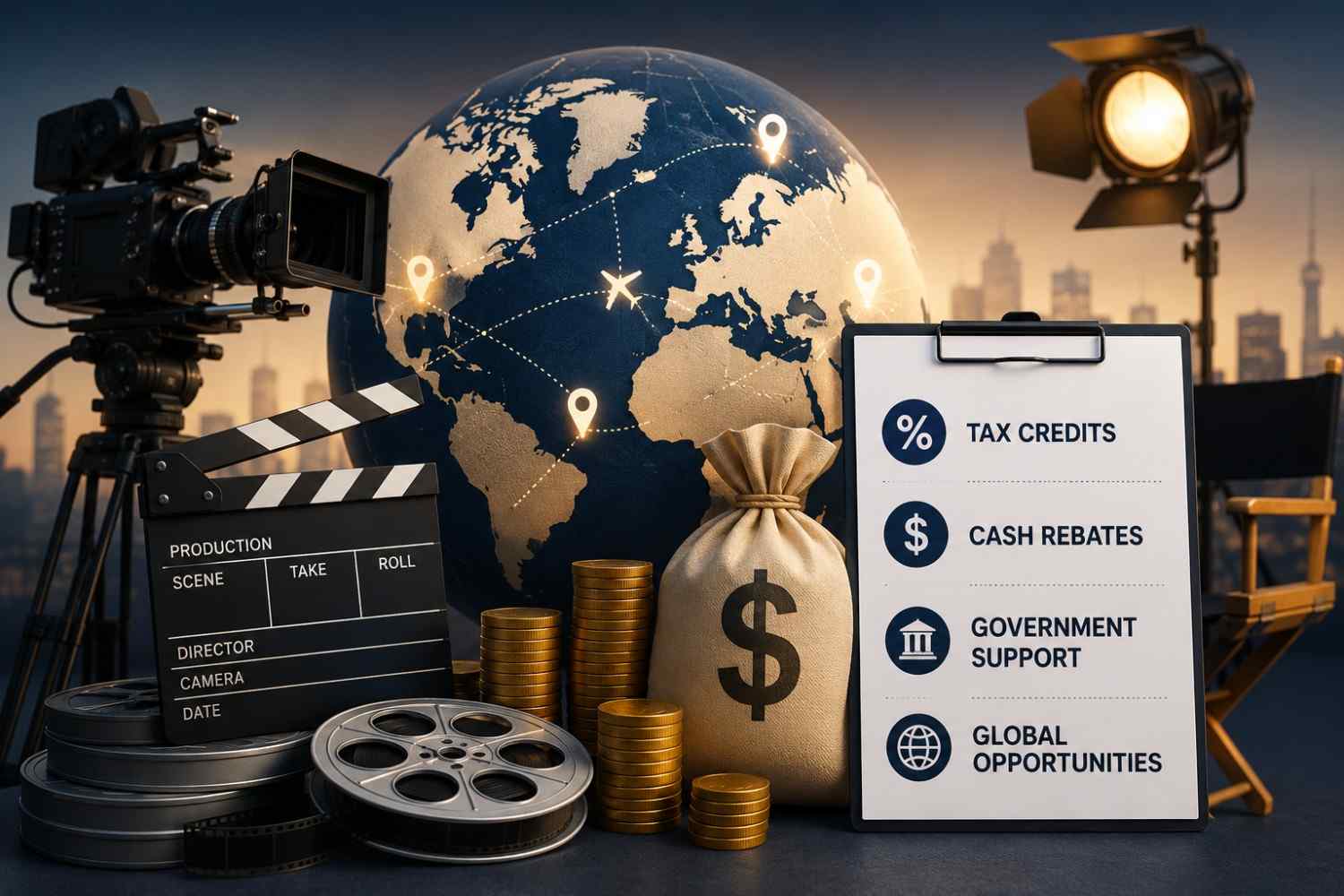
Co-production structures allow investors to contribute capital in exchange for co-producer credits and access to tax incentive regimes across multiple jurisdictions. A UK-Australia co-production, for example, may access both countries’ film tax relief programs simultaneously. This can reduce effective production costs by 20% to 40%, improving investor economics considerably. The paperwork complexity is real, though, and requires experienced entertainment legal counsel.
Gap Loans
Gap loans fill the financing gap between secured pre-sales and total production budget. Lenders charge a premium for this position, typically 8% to 15% per annum, because gap loans are unsecured by specific distribution contracts. They’re a short-term instrument — usually repaid from first distribution proceeds. For investors comfortable with senior debt positions, gap lending offers relatively predictable returns compared to equity.
What Are the Exit Routes for Action Film Investors?
One structural advantage of action film investment is the number of monetization windows available. Unlike investments in single-platform digital content, a film can generate revenue across five or more distinct channels over a multi-year period. Deadline’s analysis of distribution windows shows that action titles, particularly those with strong international performance, consistently outperform other genres in pay TV and home video revenue per title.
Theatrical remains the most visible exit but often not the most profitable for independent films. A strong domestic opening drives press and awareness, unlocking better streaming licensing deals downstream. International theatrical — particularly across Southeast Asia and Latin America — can match or exceed domestic gross for action titles with the right casting.
SVOD licensing deals have compressed in value since 2022, as major platforms reduced content spending. But AVOD (ad-supported video on demand) has grown significantly to fill that gap. Platforms like Tubi, Peacock Free, and Pluto TV actively acquire action content. AVOD deals are lower per-title value but offer faster recoupment timelines than traditional licensing windows. See our producer’s guide to raising capital for more on how exit structures affect investor conversations.
Risk Analysis: What Can Go Wrong in Action Film Investment?
Action film carries a distinct risk profile that investors from other asset classes often underestimate. Production risk is the most immediate. A study by the Producers Guild of America found that films with significant stunt work experience schedule overruns at twice the rate of non-action productions. A single stunt injury can halt production for weeks. Completion bonds address some of this risk, but bond claims raise future insurance costs and signal production dysfunction to distributors.
Production Risk
Stunt safety incidents, VFX pipeline delays, and weather-dependent location shoots are the primary production risks in action films. Practical action sequences involving vehicles, explosions, or heights require extensive pre-production planning and specialized crews. Schedule overruns in action productions often compound: a one-day delay on a stunt day can cost $200K to $500K depending on crew size, equipment rental, and location fees.
Distribution Risk
The action theatrical market is crowded. A major studio tentpole opening the same weekend as an independent action release can effectively kill the smaller film’s theatrical window. Release date strategy matters enormously in action, more than in niche genres like documentary or horror where audience overlap with studio films is lower. Independent action films without guaranteed distribution at the time of investment face real downside risk from this market timing exposure.
Currency and International Co-Production Risk
International co-productions introduce foreign exchange risk at multiple points: pre-sale contracts denominated in euros or pounds, production spend in lower-cost jurisdictions, and revenue collection from international distribution partners. A shift in USD/EUR rates between pre-sale contract signing and revenue collection can meaningfully affect investor returns. Investors in cross-border action productions should require hedging provisions or USD-denominated contract terms where possible.
Case Studies: John Wick and The Raid
The action genre’s most instructive investment lessons come from its breakout independent films. Two titles stand out as models for what intelligent, disciplined production can achieve at modest budgets: John Wick (2014) and The Raid (2011). Both started with limited financing and generated franchise-level returns.
John Wick: The Franchise That Almost Wasn’t
John Wick was produced on a $20 million budget and opened without significant studio marketing support. It grossed $88.4 million worldwide on its original theatrical run, per Box Office Mojo. What followed was one of the most successful independent action franchise launches in modern cinema history. By 2023, the John Wick franchise had generated over $1 billion in total global box office across four films. Early equity investors who stayed in the franchise structure saw returns that few other film investments in the same budget class have matched.
The lesson for investors is not that every $20M action film becomes John Wick — it won’t. The lesson is that choreography-driven, world-building action with a strong central performance can generate audience loyalty that compounds across sequels. Investors who structure participation rights across sequels and franchise extensions, not just the first film, are positioned to capture that compounding upside.
The Raid: International Breakout Playbook
The Raid, an Indonesian action film produced for approximately $1.1 million, grossed over $9 million worldwide and triggered a global distribution bidding war after its Sundance premiere. It became one of the most-cited examples of micro-budget action investment economics working as designed: low downside, high upside, festival as distribution launchpad. The film’s success also validated international language action as a viable investment category, opening doors for Southeast Asian action productions that followed.
Are You a Production Company in the Action Genre?
Get discovered by investors, co-producers, and distributors actively sourcing action film opportunities. List your production company on Vitrina and put your deal history in front of the right capital.
Due Diligence Checklist: 10 Questions Before Committing Capital to an Action Film
Disciplined due diligence separates investors who build sustainable entertainment portfolios from those who learn expensive lessons. These ten questions cover the critical decision points specific to action film investment. They should be answered with documentation, not verbal assurances from producers.
- Is there a completion bond in place, and who is the bonding company? A completion bond guarantees the film will be finished to a deliverable standard. Review the bond terms carefully for exclusions related to stunt work and VFX.
- What cast is attached, and are contracts signed or are they soft commitments? Verbal attachments don’t protect investors. Demand executed pay-or-play contracts for key cast before funding is released.
- What is the current distribution coverage across key territories? Ask for a pre-sale summary by territory. Calculate what percentage of the budget is covered by executed distribution deals, not letters of intent.
- What is the all-in budget, including P&A and contingency? Many action film budgets presented to investors exclude marketing spend, which can equal 50% to 100% of production cost for wide-release films. Get the true all-in number.
- Who is the action director, stunt coordinator, and VFX supervisor? These three roles determine the quality ceiling of an action film. Review their previous credits and verify their availability for the full shoot period.
- What is the recoupment waterfall, and where does investor capital sit? Understand exactly when your money comes back. Does investor recoupment happen before or after distributor fees and overhead deductions?
- Are there tax incentive claims in the budget, and are they proven receivables? Tax credit projections should come with written legal opinions from local counsel, not producer estimates.
- What is the production’s insurance coverage for stunt and aerial work? Request the insurance binder. Check for exclusions that would leave investors exposed to liability in case of a production accident.
- Does the producer have a track record with completed action films at this budget level? Experience at $5M doesn’t mean experience at $20M. Match the producer’s prior completed film credits to the scale of the project you’re evaluating.
- What are the sequel and franchise rights provisions? If the film succeeds, who controls sequel rights? Investors who fund the first film should negotiate participation rights in sequels during the original deal, not after success is confirmed.
How Vitrina Helps Investors Evaluate Action Film Opportunities
Information asymmetry is one of the biggest challenges in entertainment investment. Producers know their projects far better than investors do, and finding trustworthy third-party intelligence on production companies, deal histories, and distribution relationships is difficult using public sources alone. VIQI, Vitrina’s M&E intelligence platform, addresses this gap directly with a database of over 300,000+ media and entertainment companies worldwide.
For action film investors, VIQI enables systematic screening of production companies by genre output, budget range, and prior distribution partnerships. Investors can identify which independent production companies have a track record of completing action films in a target budget range, which distributors they’ve worked with previously, and what financing structures those deals used. That kind of institutional-grade intelligence is what separates data-driven entertainment investment from gut-feel capital placement.
VIQI also tracks M&A activity and deal flow across the action genre, helping investors understand who is actively acquiring, co-producing, or licensing action content. For family offices and private equity firms building entertainment portfolio exposure, that deal-flow visibility is essential for sourcing opportunities before they reach general market awareness.
VIQI’s proprietary database of 300,000+ M&E companies worldwide enables investors to screen action production companies by deal history, distribution partnerships, and budget tier — providing institutional-grade intelligence that is not available through public industry directories or general financial databases. (Vitrina Research Team, 2026)
Conclusion
Action film investment is not a monolithic category. It spans micro-budget streaming plays at $500K to franchise-building studio co-productions north of $50M. Each tier carries distinct economics, risk factors, and exit strategies. The investors who succeed in this space treat film like any other asset class: with structured due diligence, defined return expectations, and clear documentation of their capital position.
The action genre’s commercial durability — 38% of global theatrical box office across multiple years, consistent streaming demand, and strong international performance — makes it a genuinely compelling category for portfolio exposure to entertainment. The John Wick and Raid case studies show that the upside at mid-budget is real. But the production risks, cast requirements, and distribution complexity mean that capital placed without proper intelligence and structural protection will underperform.
Use the ten-question due diligence checklist before any action film commitment. Understand your position in the recoupment waterfall. Negotiate sequel rights from day one. And use intelligence tools like VIQI to verify producer track records and distribution relationships before ink meets paper. Explore our full film financing strategies guide for a broader framework on entering the entertainment investment space.
See VIQI in Action
Explore how VIQI’s M&E intelligence platform helps investors, PE firms, and family offices screen entertainment companies, track deal flow, and identify action film investment opportunities with institutional-grade data.
Frequently Asked Questions
What is the minimum investment amount to participate in an action film deal?
There is no universal floor, but most independent action film equity rounds require minimum commitments of $250,000 to $500,000 from individual investors. Some producers structure smaller “unit” participations at $50,000 to $100,000 for films in the $1M to $5M budget range. Institutional co-productions at the $20M+ level typically require minimum equity checks of $2M or more. The entry point reflects the deal structure and the producer’s financing strategy.
How long does it take to recoup investment in an action film?
Recoupment timelines vary widely depending on the distribution structure. Films with theatrical distribution can see initial returns within 12 to 18 months of release, but full recoupment often takes 24 to 48 months as revenues flow in from multiple windows. Direct-to-streaming deals sometimes provide faster, more predictable recoupment timelines but lower total returns. Gap loans recoup faster, usually within 12 to 24 months, because they’re debt instruments with fixed repayment schedules. Compare film financing structures here.
Are action films good investments compared to other film genres?
Action films have the highest commercial upside of any genre at scale, but they also carry higher floor budgets and production complexity than horror or drama. Horror is often cited as the most consistently profitable genre by return multiple (due to extremely low budgets), while action wins on total revenue ceiling and franchise potential. For investors seeking mid-to-large capital deployment in entertainment with multi-window exit options, action is a strong category. For investors seeking high multiples on small capital, micro-budget horror competes effectively.
What tax incentives apply to action film production investments?
Numerous jurisdictions offer film production tax incentives that reduce effective production costs and improve investor economics. The UK’s Film Tax Relief offers up to 25% on qualifying production spend. Georgia (USA) offers a 30% tax credit on qualified expenditures. Hungary, Czech Republic, and Colombia all have competitive incentive regimes popular with international action productions due to their infrastructure and cost advantages. Investors should require independent legal verification of all tax credit claims before treating them as confirmed budget offsets.
How do I find credible action film investment opportunities?
Credible action film investment opportunities typically surface through entertainment law firms, entertainment-specialist financial advisors, film market co-production forums (Cannes Marché du Film, Toronto, American Film Market), and M&E intelligence platforms that track production company activity. Unsolicited investment proposals sent cold via email should be treated with significant skepticism. Building relationships with established entertainment attorneys and using institutional intelligence sources to vet production companies are the two most reliable sourcing strategies for legitimate opportunities.
About the Author
Vitrina Research Team
The Vitrina Research Team produces intelligence-led analysis on media and entertainment industry structure, deal activity, and market trends. Our research draws on VIQI’s proprietary dataset of 300,000+ M&E companies worldwide.