About Innovation Hub
 Global Content Pulse (Webinars)


 Global Production Financing
(Webinars)
Global Production Financing
(Webinars)  LeaderSpeak Podcast
  About Vitrina
 Our Story
 Our Solutions 🔥
 Film+TV Projects Tracker 🚀
 Case Studies
 Our Profile

Here’s what nobody tells you before you lock a post-production deal: the showreel rarely lies, but the delivery timeline often does. You’re a commissioning executive, a line producer, or a studio head — and you need post-production companies that don’t just have the technical firepower, but the capacity, the reliability, and the workflow infrastructure to hit your air date without blowing your P&A budget. That’s a very different ask than simply picking the house with the flashiest credits reel.
The global post-production industry has never been more fragmented — or more full of genuine world-class talent. According to Variety, post-production spending by major studios and streamers exceeded $28 billion globally in 2024, driven by the streaming content arms race and surging demand from sovereign content hubs across MENA and APAC. But here’s the paradox: more money flowing into post doesn’t mean it’s easier to find the right partner. It means 10,000+ VFX and post-production companies are now competing for your project’s attention — most of them invisible unless you know where to look.
This guide does something different. Rather than listing the same five legacy houses every trade mag covers, we’re giving you a strategic vetting framework alongside the 10 post-production companies globally that M&E executives actually trust with their most valuable projects. We’ll also show you how platforms like Vitrina’s post-production company intelligence network can compress a 3-month partner search down to days.
💡 Vitrina Analyst Note
From our analysis, most producers treat post-production partner selection as a creative decision and miss that it is a capital one. Where you finish your project now directly affects your incentive capture. This guide is essential reading for any executive who wants to stop leaving 15 to 20% of their post budget on the table through avoidable information gaps.
Table of Contents
- What Top Post-Production Companies Actually Deliver
- The 5-Point Vetting Framework for Global Post Partners
- Top 10 Post-Production Companies in Global
- The Fragmentation Paradox in Post-Production
- Sovereign Hubs Reshaping Global Post Geography
- How to Connect with the Right Post Partner Fast
- FAQ
- Conclusion
Ask VIQI: Which global post-production companies have capacity for my project right now?
VIQI is Vitrina’s AI assistant — trained on 1.6 million titles, 360,000 companies, and 5 million entertainment professionals. Ask it about verified post-production partner availability, budget benchmarks, or delivery timelines — and get answers in seconds.
✔ Included with 200 free credits | ✔ No credit card needed
What Top Post-Production Companies Actually Deliver (And Why the Tier Gap Matters)
Let’s be blunt. The difference between a Tier 1 and a Tier 3 global post-production company isn’t just resolution or render quality. It’s pipeline reliability. It’s whether they have multi-territory redundancy when a critical team member goes dark in week four. It’s whether their colorist understands your DCP delivery specs for IMAX versus a regional SVOD platform. And it’s whether their VFX pipeline integrates with your production’s existing software ecosystem — or requires a painful rebuild mid-project.
Most post-production relationships go wrong before the first render. They go wrong in the contract — when a producer assumes “full post services” means the same thing in Mumbai as it does in Soho. They go wrong in capacity planning — when you book a company that’s running at 95% capacity on a competing slate and can’t actually give your project the senior supervisor attention it needs. And they go wrong in handoffs — when the editorial house, the VFX facility, and the sound stage aren’t talking in synchronized file formats.
The companies that earn long-term relationships with Netflix, Warner Bros, and Paramount aren’t just technically excellent. They’re operationally disciplined. That distinction matters enormously when you’re evaluating a post-production partner for a project with a fixed delivery date and a non-negotiable MG recoupment timeline.
The 5-Point Vetting Framework Every M&E Executive Should Apply
Before we get into the list, let’s arm you with the actual criteria. These aren’t soft considerations — they’re the five variables that predict whether a post-production partnership will protect your EBITDA or erode it.
1. Verified Delivery Track Record — Not Just Showreel Credits
Any post house can show you beautiful frames. But can they show you confirmed delivery dates versus actual delivery dates on their last 10 projects? That’s the intelligence you want. On-time delivery rate is the single most predictive metric for project stress. Ask for it explicitly. If they won’t provide it, that’s your answer.
2. Pipeline Compatibility With Your Production Stack
Are they working in the same editorial format you’re shooting? Do their VFX tools integrate with your production’s pipeline — or will you be paying for six weeks of technical onboarding? Studios like DigitalFilm Tree have built their entire value proposition around pipeline flexibility and data-driven collaboration, which is why they’ve become go-to partners for productions that can’t afford workflow friction.
3. Current Capacity — Not Historical Availability
This is where most executives get burned. A company’s IMDb page tells you what they’ve done. It tells you nothing about what they’re running right now. A top-tier post house booked solid through Q3 is effectively unavailable to you — even if their rate card says otherwise. You need real-time capacity data, and that requires either a direct relationship or an intelligence platform.
4. Geographic and Incentive Alignment
If your production qualifies for UK tax incentives, your post work needs to happen in qualifying facilities. If you’re shooting under a Canadian co-production treaty, your post budget might need to clear minimum local spend thresholds. The right post-production company isn’t just technically capable — it’s jurisdictionally optimized for your capital stack. Executives who understand how to structure post-production for incentive eligibility routinely save 15–25% on their effective post budget.
5. Financial Stability — Will They Actually Complete?
Post-production companies — particularly mid-size independents — are not immune to cash flow pressure. Before you commit significant MG advances tied to delivery milestones, you should understand a company’s financial health. Have they had personnel changes in senior leadership recently? Are they growing their client roster, or quietly losing major accounts? These aren’t comfortable questions, but your completion bond depends on the answers.
Discover & Vet Post-Production Partners in 48 Hours
Trusted by Netflix, Warner Bros, and Paramount. Join 140,000+ companies tracking the global entertainment supply chain — including verified post-production partner profiles with delivery history, capacity status, and incentive eligibility data.
✔ 200 free credits | ✔ No credit card required | ✔ Full platform access
Top 10 Post-Production Companies in Global
These aren’t ranked by prestige. They’re selected by the criteria that actually matter to working executives: track record, pipeline sophistication, geographic reach, and the kind of institutional relationships that get your project through customs — figuratively and literally. And yes, some of these are household names. Others are the best-kept secrets in global post.
1. DNEG (Double Negative) — London, Los Angeles, Mumbai, Montreal, Singapore
DNEG is arguably the most globally integrated VFX and post-production studio on earth. With over 9,000 employees across 12 offices, they’ve handled the visual effects for Christopher Nolan’s entire filmography, multiple Marvel Cinematic Universe installments, and some of the most technically demanding episodic content on streaming platforms. Their multi-territory pipeline means they can move work between London, Mumbai, and Montreal seamlessly — an advantage when you need talent availability without sacrificing supervision continuity.
What makes DNEG strategically valuable to M&E executives isn’t just their Oscar track record — it’s their ability to absorb scope changes mid-production without pipeline collapse. That flexibility is worth more than any showreel when your VFX bid balloons at picture lock.
2. Framestore — London, New York, Los Angeles, Montréal
Framestore has earned its reputation through consistent delivery on some of the most technically demanding VFX and post-production projects of the last two decades. They were the creative force behind the visual effects in Paddington and the DC Extended Universe, and they’ve built a significant advertising and immersive content division that gives them revenue stability most boutique houses lack.
But here’s what separates Framestore for strategically minded producers: their Montréal operation is structured to qualify for Canadian co-production incentives, making them an intelligent choice when your capital stack includes Canadian financing or broadcaster obligations that require qualifying local expenditure.
3. MPC (Moving Picture Company) — Bangalore, London, Los Angeles, Amsterdam
MPC — now operating under the Technicolor Creative Studios umbrella — is the company behind the jaw-dropping photorealistic VFX in The Jungle Book and The Lion King. But their real strategic value for international productions is their Bangalore operation: a world-class facility combining Hollywood-level output with Indian cost structures, making them a powerful lever for productions trying to protect visual effects budgets without sacrificing quality.
It’s worth noting that MPC went through significant restructuring during the pandemic era. If you’re vetting them today, verify their current supervisory bandwidth — specifically, who’s actually running your show, not just who signs the contract.
4. Company 3 — Los Angeles, New York, Toronto, London
Company 3 is the dominant force in high-end color grading — full stop. Under colorist Stefan Sonnenfeld, they’ve handled final color on blockbuster franchises from Fast & Furious to Aquaman, and their streaming credits include some of Netflix and HBO’s most prestigious series. If color and finishing are a priority — and for theatrical and premium streaming they should be — Company 3 is the reference standard.
Their multi-territory presence also means you can do your online edit in Los Angeles and your HDR mastering in London without changing vendors or losing creative continuity. That’s a significant workflow advantage for international co-productions.
5. Harbor Picture Company — New York, Los Angeles
Harbor Picture Company has become the preferred post facility for prestige independent film — the kind of project that goes to Sundance and Cannes before it hits your SVOD platform. With dedicated sound, color, VFX, and finishing departments under one roof in Manhattan, they’ve developed a reputation for treating every project — not just the studio tentpoles — with the same level of creative attention.
What Harbor does exceptionally well is festival delivery. They understand the technical requirements, the political timeline of submission, and how to move quickly when a film gets into competition unexpectedly. That’s a niche competence that’s genuinely hard to find.
6. Deluxe Entertainment Services — North America, Europe, Asia Pacific
Deluxe Entertainment Services is one of the most globally diversified post-production and content services companies in the world, with operations spanning distribution, localization, and digital delivery alongside traditional post. For producers who need a single-vendor solution across multiple markets — including localization workflows for streaming delivery — Deluxe’s integrated service architecture is difficult to match.
But like any large organization, their senior attention isn’t guaranteed. Negotiate your project’s placement explicitly. A mid-budget independent can get lost in the machine. Ask who specifically will be your DI supervisor and your technical account manager before you sign.
7. DigitalFilm Tree — Los Angeles
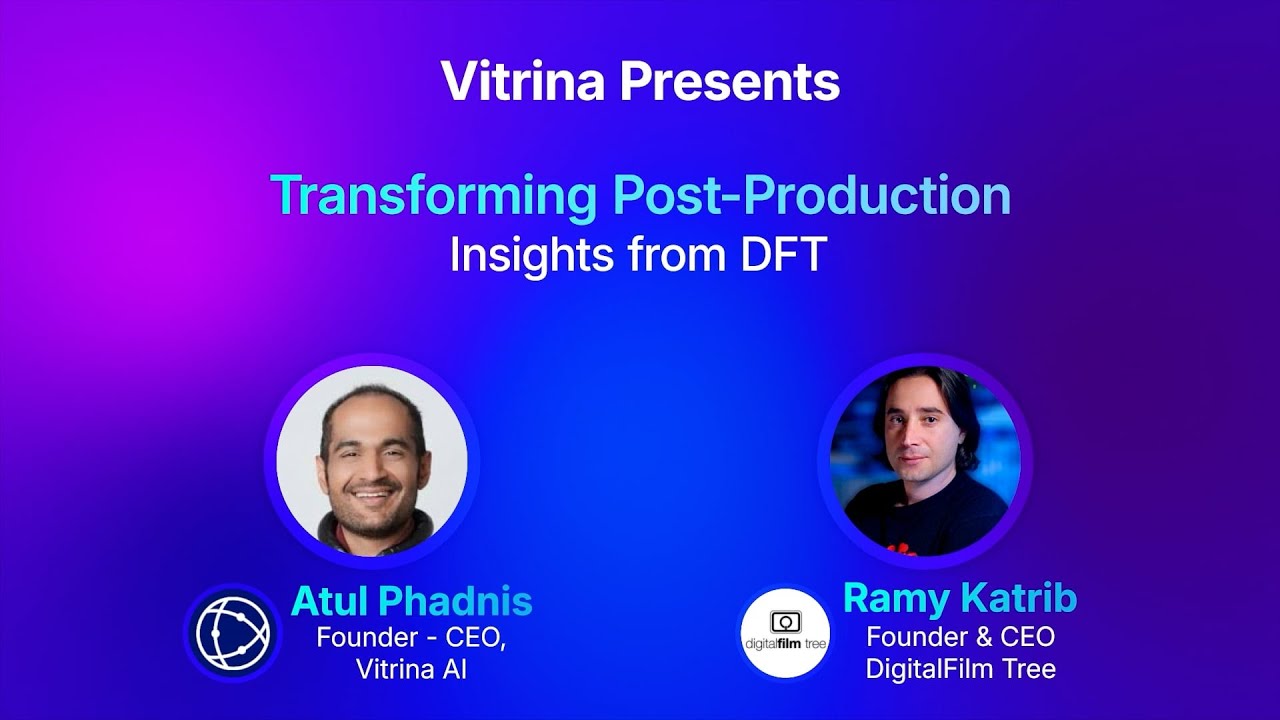
DigitalFilm Tree, led by CEO Ramy Katrib, has built something genuinely interesting in the post-production ecosystem: a company that prioritizes data infrastructure and collaborative workflows as much as creative output. Katrib describes their approach as fundamentally about democratizing storytelling through better tooling — and they back that up through the Global Post Network, which connects post-production companies and shared resources across global markets.
For complex productions that need flexible cloud-based post workflows and pipeline integration across multiple vendor relationships, DigitalFilm Tree operates at a level of technical sophistication that few boutique houses can match. They’re particularly strong for productions where the editorial and VFX pipelines need to speak to each other continuously.
Ramy Katrib (CEO, DigitalFilm Tree) discusses how data infrastructure and collaborative workflows are reshaping the global post-production industry — and what the Global Post Network means for M&E executives seeking trusted partners across markets.
8. Dinamita Post — Mexico City
Dinamita Post, founded by Paulo Carballar, is Mexico’s leading post-production house — and one of the most strategically important names in LATAM post. They’ve handled the finishing on Grammy Award-winning documentary Fandango at the Wall and work consistently with both Latin American and international clients who need top-tier finishing with genuine knowledge of regional delivery ecosystems.
For productions with LATAM distribution, co-production agreements with Mexico, or shoots that leverage Mexico’s increasingly competitive production incentives, Dinamita Post gives you world-class technical output without the USD pricing of Hollywood facilities. That cost differential is real — and it compounds meaningfully across a full post budget.
9. Goldcrest Post — London
Goldcrest Post in London is the kind of facility that doesn’t shout about itself — but the credits don’t lie. Operating from a landmark facility in Soho, they handle picture, sound, and digital intermediate for theatrical features and premium television, with a particular reputation for discretion and senior-level attention on challenging projects.
They qualify as a UK-approved facility for the film and high-end television tax relief, making them relevant for any production structured to capture UK incentives. Their sound department — particularly their mixing stages — consistently earns praise from directors who’ve worked in both US and UK facilities.
10. Light Iron (a Panavision Company) — Los Angeles, New York
Light Iron, operating under the Panavision umbrella, has carved out a distinctive position as a technology-forward post-production partner. Their integration with Panavision’s camera ecosystem creates a natural workflow advantage for productions shooting on Panavision or RED systems — the camera-to-post pipeline is built for continuity. And their dailies and on-set workflows have made them the choice for productions that need post-production thinking to begin on day one of principal photography — not after the wrap party.
Light Iron’s colorists have worked on major theatrical releases and premium streaming originals. For producers who want their post house in the room during production — not just waiting at the finish line — Light Iron’s integrated production services model delivers real strategic value.
The Fragmentation Paradox in Post-Production: Why Finding the Right House Is Harder Than It Looks
Here’s the uncomfortable truth about the global post-production landscape: there are now more than 10,000 companies offering VFX and post services across 195 countries. And the Fragmentation Paradox — Vitrina’s framework for understanding the information asymmetry in entertainment supply chains — hits nowhere harder than in post. More suppliers theoretically means more competition and lower costs. In practice, it means less transparency, more opaque pricing, and longer vetting timelines.
Think about how a production typically sources its post house. A line producer asks trusted contacts — maybe 3 or 4 relationships from previous projects. They get referrals that are biased by those relationships, not by the current reality of the market. They have no pricing benchmark. They have no way to verify current capacity. And they close a deal with a vendor whose actual delivery track record is opaque because post companies rarely publish their on-time performance data publicly.
The result? Vitrina’s research suggests producers routinely leave 15–20% of their post budget on the table through information deficits — either by overpaying vendors who lack a pricing alternative in the negotiation, or by booking partners who can’t actually deliver what was promised. At a $5 million post budget, that’s up to $1 million in preventable leakage. And that’s before you account for the timeline extension costs when a partner misses a critical delivery milestone.
But here’s what’s changing. Platforms are beginning to map this information — verifying capabilities, tracking delivery history, monitoring capacity in real time. The executive who can access that data isn’t just better-positioned to find a good partner. They’re better-positioned to negotiate, to protect their EBITDA, and to de-risk their production.
Sovereign Hubs Are Reshaping Where Post-Production Happens
If you haven’t updated your mental map of global post-production geography in the last three years, you need to. Sovereign Content Hubs — government-backed production ecosystems in MENA, APAC, and LATAM — aren’t just building stages and attracting shoots. They’re investing heavily in post-production infrastructure, because they understand that a territory without post capability doesn’t capture the full economic value of production incentives.
Saudi Arabia’s Vision 2030 program has allocated $71.2 billion to entertainment, with meaningful investment flowing into post-production facilities in AlUla and Riyadh. Abu Dhabi offers up to a 50% post-production incentive for qualifying projects, structured to pull finishing work into UAE facilities. South Korea — already a global Hallyu export powerhouse — has developed post infrastructure that handles the finishing on Netflix co-productions at a level that competes directly with Western facilities.
What does this mean for your next project? It means the post-production company decision is now also a financing decision. Running your DI and sound mix through a UAE facility on a qualifying production isn’t just logistically convenient. It’s a capital stack optimization. And as Screen International has noted, regional incentive regimes are increasingly being structured to reward full post-production activity — not just principal photography location.
For Mexico specifically — where Dinamita Post operates — the country’s proximity to Hollywood, combined with increasingly competitive incentives, is making LATAM post facilities a serious consideration for US studio productions that want to keep finishing close to home without paying Los Angeles rates.
Need Vetted Post-Production Partners? We’ll Connect You Directly.
Vitrina Concierge makes warm introductions to post-production partners actively seeking projects like yours — not a list of names, but verified contacts with confirmed availability and budget alignment.
- LA producer → Netflix UK, Fifth Season, Fox Entertainment (48 hours)
- Korean animation studio → Netflix Adult Animation (week one)
- Middle Eastern studio → Legendary Pictures (direct access)
How to Connect With the Right Post-Production Partner — Without a 3-Month Search
The traditional process for sourcing a post-production partner takes between 8 and 14 weeks — if you’re doing it properly. That means issuing creative briefs, vetting demo reels, negotiating rate cards, running reference calls, and doing your own capacity diligence. By the time you’ve completed that cycle for a project with a Q2 delivery date, you’ve eaten a significant portion of your pre-production timeline.
Vitrina’s platform changes this dynamic fundamentally. With 140,000+ verified entertainment companies mapped across the platform — including dedicated post-production company profiles with capability verification, project history, and real-time status data — you can identify qualified partners in hours. Then you can use VIQI to ask strategic questions: “Which post-production companies in the UK have delivered VFX at $10M+ scope with confirmed on-time delivery in the past 18 months?” That’s the kind of query that turns a 12-week search into a 48-hour shortlist.
And if you need direct warm introductions rather than just a list of profiles, Vitrina’s post-production partner discovery tools connect to the Concierge service — where our team makes verified introductions to companies actively looking for projects with your specific parameters. No cold calls. No gatekeepers. Just direct access to the decision-makers who can actually move your project forward.
But whether you use Vitrina or build your own vetting process, the underlying discipline is the same: prioritize verified delivery data over showreel impressiveness, verify current capacity before you negotiate, and treat post-production partner selection as a capital allocation decision — not just a creative one.
Frequently Asked Questions
What are the top post-production companies in the world for film and TV?
The leading global post-production companies include DNEG, Framestore, MPC (Moving Picture Company), Company 3, Harbor Picture Company, Deluxe Entertainment Services, DigitalFilm Tree, Dinamita Post, Goldcrest Post, and Light Iron. Each excels in different areas — from high-end VFX to color grading, sound design, and digital intermediate finishing. The right choice depends on your budget, delivery territory, incentive requirements, and pipeline needs.
How do I vet a global post-production company before committing?
Use a 5-point framework: verify their delivery track record on comparable projects, confirm pipeline compatibility with your production stack, assess current capacity (not just historical availability), check incentive eligibility in your target territory, and validate financial stability. Platforms like Vitrina provide verified capability data and real-time capacity status for post-production companies globally, reducing vetting time from months to days.
Which post-production companies qualify for UK tax incentives?
Companies like DNEG, Framestore, Goldcrest Post, and Company 3’s London operation work within the UK’s qualifying post-production facility framework, making them eligible for the UK film tax relief and high-end television tax relief structures. Always confirm current BFI accreditation status and verify that your specific deliverables qualify under HMRC guidelines — the rules around what post spend counts toward cultural test points change periodically.
What is the Global Post Network and how does it affect my partner selection?
The Global Post Network is an initiative championed by companies like DigitalFilm Tree that connects post-production facilities across global markets through shared infrastructure and workflow standards. For M&E executives, it’s relevant because it enables multi-territory post workflows without rebuilding pipelines from scratch at each facility. Ramy Katrib, CEO of DigitalFilm Tree, has described it as a framework for collaborative, data-driven post-production at scale — reducing friction in complex international productions.
How are sovereign content hubs changing the global post-production landscape?
Sovereign content hubs — particularly in MENA (Saudi Arabia, UAE) and APAC (South Korea, Singapore) — are investing heavily in post-production infrastructure to retain economic value from productions that shoot locally. Saudi Arabia’s Vision 2030 program has committed $71.2 billion to entertainment, with post facilities developing in AlUla and Riyadh. Abu Dhabi offers up to a 50% post-production incentive. For M&E executives, this means post partner selection in these territories now has direct implications for your capital stack and recoupment timeline.
What is the Fragmentation Paradox in post-production, and how does it affect my budget?
The Fragmentation Paradox describes how the existence of 10,000+ VFX and post-production companies globally creates information asymmetry rather than competitive pricing transparency. Producers lack verified data on capacity, pricing benchmarks, and delivery track records — so they rely on referral networks that are biased and often outdated. Vitrina’s research indicates this results in 15–20% margin leakage for productions that don’t use verified intelligence platforms to vet and negotiate with post-production vendors.
Which post-production company is best for LATAM productions?
Dinamita Post in Mexico City is widely recognized as the leading post-production house in Latin America, with strong credentials in color, sound, and finishing for both domestic and international productions. For productions with LATAM distribution or co-production agreements involving Mexico, they offer Hollywood-level technical capability at a significant cost advantage over US facilities. Their work on the Grammy Award-winning documentary Fandango at the Wall demonstrates their ability to handle internationally prominent projects.
How can Vitrina help me find and connect with post-production companies globally?
Vitrina maps 140,000+ verified entertainment companies globally, including dedicated post-production partner profiles with capability data, project history, and capacity status. Their AI assistant VIQI can answer strategic queries — like which post companies have UK incentive eligibility and confirmed availability in your window — in real time. For direct introductions, Vitrina’s Concierge service makes warm connections to companies actively seeking projects with your specific parameters, with results delivered in as little as 48 hours.
Conclusion: Choose Post-Production Partners Like the Capital Decision It Is
The top post-production companies in global — from DNEG’s multi-territory pipeline to Dinamita Post’s LATAM precision — aren’t just technical services vendors. They’re strategic partners whose performance directly affects your recoupment timeline, your EBITDA, and your ability to deliver on distribution commitments. Treating the selection process with the same rigor as a co-financing negotiation isn’t excessive caution. It’s professional discipline.
Key Takeaways:
- Fragmentation Creates Cost: With 10,000+ post-production companies globally, information asymmetry causes 15–20% margin leakage for producers who don’t use verified intelligence to vet and negotiate partners.
- Capacity Beats Showreel: Current capacity status — not historical credits — is the single most important variable in post-production partner selection. A brilliant facility booked solid is effectively unavailable.
- Incentives Are Part of the Post Decision: Sovereign content hubs — including Abu Dhabi’s 50% post incentive and UK film tax relief for qualifying facilities — make post-production partner geography a financing variable, not just a creative one.
- Data Infrastructure Matters: Companies like DigitalFilm Tree and the Global Post Network are reshaping post-production around pipeline interoperability — a critical consideration for complex international productions with multi-vendor workflows.
- Speed to Shortlist: Vitrina’s platform compresses a 3-month post partner search to 48 hours through verified capability data, real-time capacity tracking, and VIQI-powered intelligence queries across 140,000+ companies.
The executives who protect their productions’ margins in post-production aren’t the ones with the best relationships — they’re the ones with the best information. And in 2026, there’s no longer a good reason to source that information through guesswork and referral networks when real-time verified intelligence is available. Your completion bond depends on the decision. Your EBITDA depends on the negotiation. Make both count.
Find Your Next Post-Production Partner in 48 Hours
Trusted by Netflix, Warner Bros, Paramount, and Google TV. Track 400,000+ projects. Access 3 million verified executives. Ask VIQI strategic questions about post-production partner availability, budget benchmarks, and incentive eligibility in your target territory.
✔ 200 free credits | ✔ No credit card required | ✔ Cancel anytime
Need direct introductions to post-production partners? Explore Concierge Service →
Find Film+TV Projects, Partners, and Deals – Fast.
VIQI matches you with the right financiers, producers, streamers, and buyers – globally.
Producers Seeking Financing, Co-Pros, or Pre-Buys?
Vitrina Concierge helps producers reach the right financiers, commissioners, distributors, and co-production partners — with precision outreach, not cold pitching.
Join Industry Briefings Trusted by Leaders

Format Adaptations: Global Trends
Where formats are traveling, which adaptations are breaking out, and how streamers are backing remakes in 2025–2026.

Books, Novels & Comics Adaptations: Global Trends
Books, webtoons, and manga driving the next global screen hits. Discover how in this webinar.

Micro-Dramas & Mobile-First Storytelling
Micro-dramas are building real audiences and revenue. Understand the platforms, buyers, and economics behind the growth.

Navigating Global Content Licensing Trends
How global content licensing is shifting beyond flat fees to flexible, deal-driven models.