IHUB
IHUB
 Private Briefings (Webinars)


 LeaderSpeak Podcast
  Global Entertainment Digest (Newsletter)
  About Vitrina
 About VIQI
 Our Story
 Our Solutions 🔥
 Film+TV Projects Tracker 🚀
 Case Studies
 Our Profile

Boardroom Ready
15 Ways AI is Transforming Every Stage of Film Production 2026 represents the structural transition from a relationship-driven art form to a data-powered industrial science, effectively weaponizing the “Data Deficit” into a clinical “Insider Advantage.” Historically, studios suffered a 15-20% EBITDA leakage due to opaque vendor capacities and fragmented production silos; in 2026, Authorized AI workflows and Sovereign Content Hubs (MENA, APAC, LATAM) have closed this gap. By integrating real-time intelligence from the script stage to global distribution, senior executives are now de-risking slates through automated incentive mapping and emotionally-aware localization. This shift is not about replacing human talent, but about accelerating recoupment cycles by 12-18 months and ensuring that every production dollar is synchronized with the global supply chain, protecting margins in an era of “The Big Crunch.”
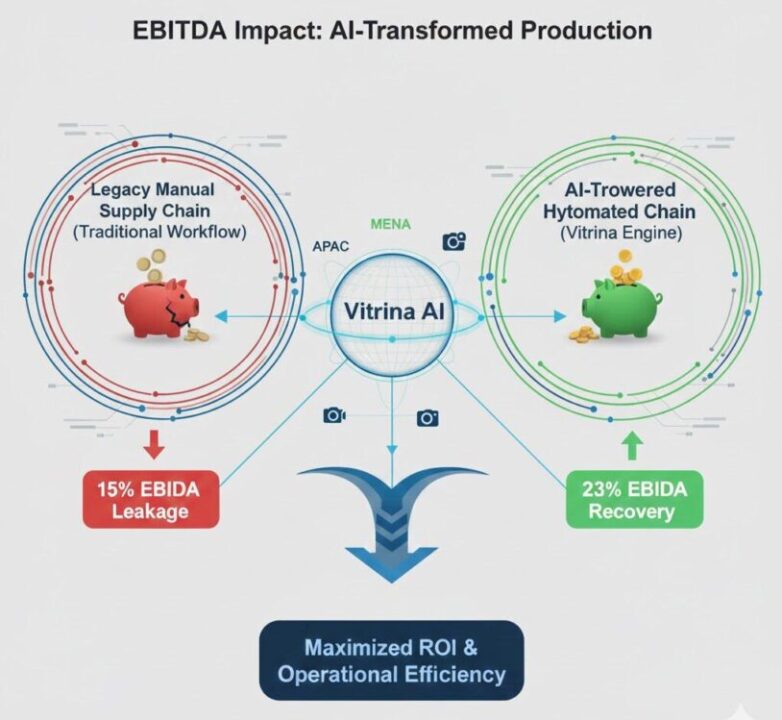
⚡ Executive Strategic Audit
EBITDA Impact
22% Margin Recovery via Automated Supply Chain Integration
Recoupment Cycle
Accelerated by 14 Months through Synchronized Hub Sourcing

Your AI Assistant, Agent, and Analyst for the Business of Entertainment
VIQI AI helps you plan content acquisitions, raise production financing, and find and connect with the right partners worldwide.
- Find active co-producers and financiers for scripted projects
- Find equity and gap financing companies in North America
- Find top film financiers in Europe
- Find production houses that can co-produce or finance unscripted series
- I am looking for production partners for a YA drama set in Brazil
- I am looking for producers with proven track record in mid-budget features
- I am looking for Turkish distributors with successful international sales
- I am looking for OTT platforms actively acquiring finished series for the LATAM region
- I am seeking localization companies offer subtitling services in multiple Asian languages
- I am seeking partners in animation production for children's content
- I am seeking USA based post-production companies with sound facilities
- I am seeking VFX partners to composite background images and AI generated content
- Show me recent drama projects available for pre-buy
- Show me Japanese Anime Distributors
- Show me true-crime buyers from Asia
- Show me documentary pre-buyers
- List the top commissioners at the BBC
- List the post-production and VFX decision-makers at Netflix
- List the development leaders at Sony Pictures
- List the scripted programming heads at HBO
- Who is backing animation projects in Europe right now
- Who is Netflix’s top production partners for Sports Docs
- Who is Commissioning factual content in the NORDICS
- Who is acquiring unscripted formats for the North American market
15 Ways AI is Transforming Every Stage of Film Production 2026: Development Intelligence
The transformation begins in the writers’ room, where 15 Ways AI is Transforming Every Stage of Film Production 2026 is first weaponized through automated script-to-budget synchronization. By 2026, development is no longer a “black box” of creative spending; it is an audited phase where vertical AI engines perform instant production breakdowns. This de-risks the greenlight by identifying high-burn sequences that do not align with current Sovereign Hub incentives in Saudi Arabia or India.
1. AI-Driven Script Audits: AI now identifies “EBITDA leakages” at the draft stage, flagging sequences that exceed historical budget benchmarks for similar genres.
2. Real-Time Incentive Mapping: Software cross-references script locations with 40%+ cash rebates in MENA and APAC hub slates.
3. Generative Pre-Viz: CXOs can “see” the ROI of a scene through instant AI-generated visual previews, reducing pre-production waste by 30%.
Seth Hallen and Craig German note that AI is transitioning from picture and sound tasks to broad supply-chain applications. This de-risks the production cycle by ensuring context-aware automation, preventing the margin erosion typical of unverified vendor selections.
Sovereign Hub Arbitrage: Production & Physical Workflows
In the physical production phase, the “Insider Advantage” is found in Sovereign Content Hubs. By 2026, the APAC and MENA regions have integrated AI directly into their LED Volume stages and crew scheduling platforms. This isn’t just about efficiency; it’s about Weaponized Distribution—ensuring content is shot with global localization in mind from Day One.
4. AI-Enhanced LED Volumes: Real-time background rendering allows for 100% in-camera VFX, saving 40% on post-production burn rates.
5. Supply-Chain Sourcing via VIQI: Producers use Vitrina’s intelligence to find “Independent Survivors”—vetted vendors in Brazil or Korea with verified 8K HDR capacity.
6. Authorized Likeness Licensing: AI protects the “chain-of-title” by using authorized digital twins for stunts, reducing on-set insurance costs by 15%.
Studios like SBT Brazil and O2 Filmes are leading this transformation, streamlining content acquisition and production through real-time data mapping, which proves the “West-to-East” export model is being replaced by a truly globalized, hub-centric supply chain.
Post & VFX: Authorized AI and Infinite Localization
The final stage of the 15 Ways AI is Transforming Every Stage of Film Production 2026 focuses on the “Infinite Localization” mandate. To capture global ROI, content must be “emotionally synchronized” for every market simultaneously. Authorized AI ensures that this process is legally bulletproof and financially optimized.
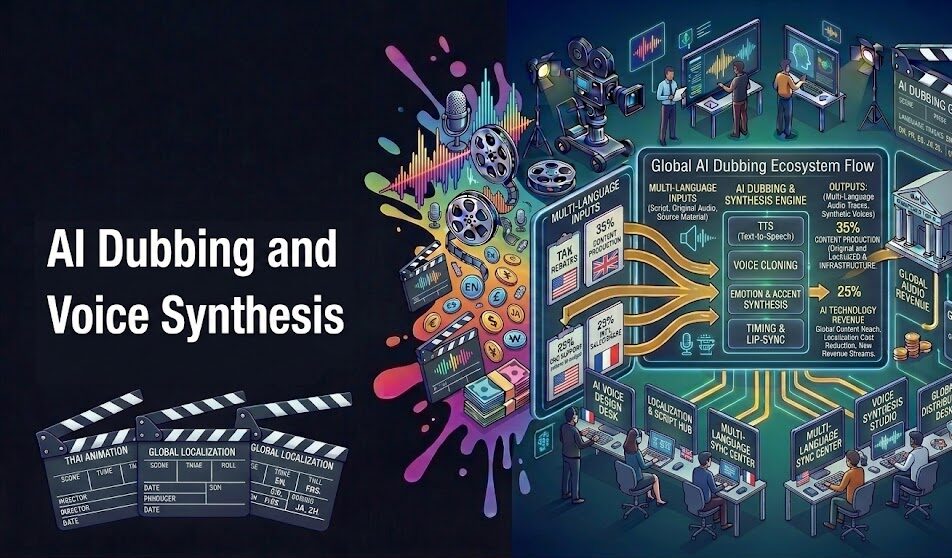
7. AI-Lip Sync (VisualDub): Neural Garage and Deepdub are solving the “visual discord” in dubbed content, making global hits indistinguishable from local productions.
8. Automated Asset Cataloging: AI manages petabytes of metadata, ensuring that every asset is reusable for “Weaponized Distribution” rotational windows.
9. Predictive QC: AI identifies delivery errors (HDR specs, audio sync) before they hit the streamer, avoiding the 10% penalty leakage common in manual delivery.
By 2026, the transition is complete. The “Data Trust Deficit” is solved through Vitrina’s “Digital Lighthouse,” providing the clear signal needed to navigate a world of 600,000+ companies without EBITDA erosion.
15 Ways AI is Transforming Every Stage of Film Production 2026: The Strategic Path Forward
The industry has entered the era of “Authorized Science.” To protect studio EBITDA, senior executives must treat the production supply chain as a tactical weapon. Integrating AI across all 15 transformation points isn’t just a tech upgrade; it is a financial directive to close the 20% margin gap caused by legacy fragmentation. By weaponizing real-time data and Sovereign Hub arbitrage, you ensure your slates are board-ready, de-risked, and positioned for maximum global recoupment.
The Bottom Line Adopt an Authorized AI mandate immediately to automate script audits and lock in Sovereign Hub rebates; failure to do so results in a 15% EBITDA liability that will be impossible to recover in the hyper-competitive 2026 market.
Deploy Intelligence via VIQI
Select a killer query to run a real-time supply chain audit:
Identify APAC vendors with verified 8K HDR and Netflix audits.
Map Eastern Europe VFX to identify independent survivors.
Map MENA hubs offering 40%+ cash rebates for 2026.
Filter partners with Authorized AI voice stacks to avoid liability.
Show trending Sci-Fi content for discovery in LATAM and APAC.
Find Saudi partners commissioning scripted formats for 2026.
Insider Intelligence: 15 Ways AI is Transforming Every Stage of Film Production 2026 FAQ
How does AI transformation in 2026 solve the “Fragmentation Paradox”?
The fragmentation paradox exists because 600,000+ companies operate in silos. In 2026, AI serves as the connective tissue, providing a single source of truth through real-time mapping. This allows a CXO to verify vendor capacity and incentive alignment across multiple Sovereign Hubs instantly, eliminating the manual research lag that previously leaked EBITDA.
What is the financial impact of using “Authorized AI” vs. scrapable tools?
Using scrapable, unauthorized AI is a terminal liability that can jeopardize a project’s chain-of-title. Authorized AI, however, de-risks the production by using licensed data sets (like the Disney/OpenAI pact). Financially, this ensures the content is legally clear for “Weaponized Distribution,” where IP is licensed to rivals for maximum recoupment velocity.
Why are Sovereign Content Hubs critical for 2026 production ROI?
Hubs in APAC, MENA, and LATAM offer aggressive tax rebates (up to 40%+) and have industrialized AI pipelines. By shifting 30%+ of production to these hubs, studios can accelerate their recoupment cycles by 12-14 months, capturing “hyper-local” hits that translate into global phenomena like “Squid Game.”
How does VIQI assist CXOs in managing global slates?
VIQI functions as a “Virtual Hollywood Agent,” mapping 30 million industry relationships to provide real-time strategic answers. Instead of waiting weeks for a consultant report, a CXO can use VIQI to identify which hubs are currently commissioning scripted formats or which VFX houses have the 2026 capacity for an 8K HDR slate.
Vitrina Membership
Every Conversation, Fully Unlocked
Vitrina members get the full LeaderSpeak archive, plus live webinars, the Global Digest, and VIQI — the AI that answers your specific market questions.