IHUB
IHUB
 Private Briefings (Webinars)


 LeaderSpeak Podcast
  Global Entertainment Digest (Newsletter)
  Premium Lists
 Membership Benefits
 About Vitrina
 Our Story
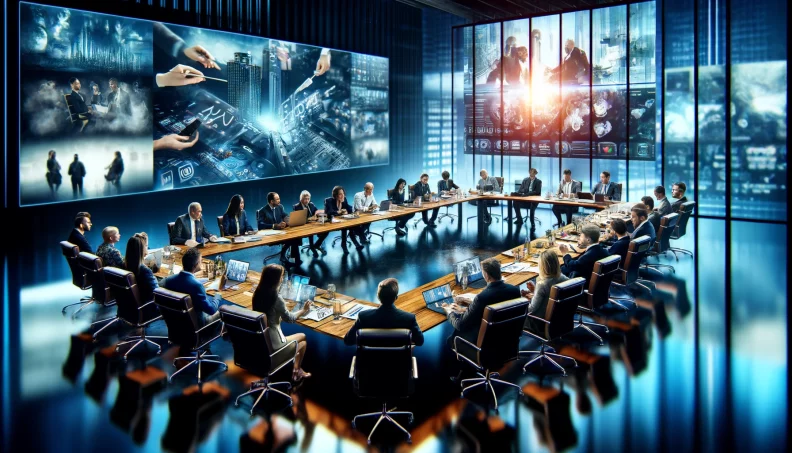
Three different people inside the same buyer company can all have the word “content” somewhere in their title, and still have almost nothing to do with each other’s job. A commissioning editor, an acquisitions executive, and a licensing or business-affairs lead each sit at a different stage of the same supply chain — and pitching the wrong one isn’t a minor inefficiency, it’s a meeting that was never going to go anywhere.
This is a functional breakdown of what each role actually does, with named 2025–2026 examples of each deal type, so you can tell which door to knock on before you send the deck.
Stop pitching finished projects to commissioning editors, and ideas to acquisitions teams.
Vitrina maps the right contact by deal type across 159,223 M&E companies.
- 1Commissioning, acquisition, and licensing are three different functions handling three different deal stages — pitching a finished film to a commissioning editor, or an unmade idea to an acquisitions exec, wastes the meeting before it starts.
- 2Commissioning editors fund and co-develop ORIGINAL projects before they exist — NBC’s 2026-27 series orders (Rockford Files, Sunset P.I., Line of Fire among them) were greenlit from pitches, not bought as finished products.
- 3Acquisitions teams license or buy FINISHED, already-produced projects — Netflix’s Cannes 2026 worldwide-rights deal for the completed animated feature “In Waves” is an acquisition, not a commission.
- 4Licensing teams (often business affairs or distribution, not editorial) handle format rights, catalog/library deals, and territory-by-territory distribution — Banijay Rights’ “Deal or No Deal” format licensing across 13+ territories is a licensing deal, distinct from both of the above.
- 5The practical tell: ask what stage the project is in. An idea or script goes to commissioning. A finished film or series goes to acquisitions. A format, brand, or existing catalog title goes to licensing/business affairs.
Commissioning editors fund and shape ORIGINAL projects before production starts; acquisitions teams buy or license projects that are already FINISHED; licensing teams (usually business affairs or distribution) handle format rights, library/catalog deals, and territory-by-territory distribution. The quickest way to pick the right contact is to ask what stage your project is actually in — idea, finished product, or existing IP/format — and match it to the function built to handle that stage.
Three Functions, Three Deal Stages
The easiest way to tell these three functions apart isn’t by title — titles vary wildly by company and territory — it’s by asking what stage the content is in when the function gets involved. Commissioning starts before a project exists. Acquisition starts after a project is finished. Licensing usually isn’t about a single project at all — it’s about a format, a brand, or an existing catalog being made available in a new territory or medium.
This is a companion piece to Vitrina’s two org-chart articles (Org Chart of Major Production Companies, The Org Chart of a Major Production Company: Who Reports to Whom), which map reporting lines and greenlight authority. This piece maps function instead of hierarchy — useful when you already know who’s senior, but not which of three different senior people actually handles your kind of deal.
Commissioning: Funding What Doesn’t Exist Yet
A commissioning editor or exec pays for production of specific content before it exists, with editorial input running through development, casting, and often the edit. The deal is a pitch, not a finished product — which means the commissioner is evaluating the idea, the team, and the track record, not a cut you can screen.
NBC’s 2026-27 series orders — including Rockford Files, Sunset P.I., and Line of Fire — were greenlit directly from pitches as part of a broader broadcast-network scripted comeback at the 2026 upfronts, not acquired as finished products. Source: Deadline and Deadline.
A useful contrast for how editorial (not acquisitions) titles work in practice: the BBC named Poppy Dixon as its new Head of Documentaries in 2026 — an editorial, commissioning-side role responsible for shaping and greenlighting original documentary projects, structurally distinct from the acquisitions function covered next (Deadline).
Acquisition: Buying What’s Already Finished
An acquisitions executive evaluates completed, or at minimum fully packaged and shot, projects and licenses or buys the rights to distribute them. There is no creative development input — the project exists as a finished cut, and the question is rights, territory, and price.
Netflix bought worldwide rights (outside France) to the completed animated feature In Waves directly out of its Cannes 2026 premiere — a textbook acquisition: a finished film, evaluated after a festival screening, with no commissioning or development involvement from the buyer. Source: Variety.
Netflix also acquired US rights to the already-completed Spanish film La Bola Negra, reportedly in the $4–5 million range, ahead of a record 47-day theatrical window (Variety). The BBC’s own acquisitions function is now led by Nick Lee, who joined as Head of Acquisitions in late 2025 after holding the equivalent role at Channel 4, where he acquired finished series including The Handmaid’s Tale, Fargo, and The Great (Deadline) — a clean illustration of acquisitions as a distinct, named career track separate from commissioning.
Buyer Intelligence — Function, Not Just Title
Find the Acquisitions Lead, Not the Commissioning Editor
Vitrina’s verified company profiles let you filter by function — commissioning, acquisitions, or licensing — across 159,223 M&E companies, so your pitch reaches the person actually evaluating your deal type.
Licensing: Formats, Catalogs, and Territory Rights
Licensing covers a different category entirely: format rights (the underlying concept and production bible of a show, licensed for a local remake), library or catalog licensing (an existing finished title or back-catalog made available in a new territory or on a new platform), and brand licensing (merchandise, games, or products tied to an existing IP). This function usually sits in business affairs or distribution, not editorial, because the underlying creative work already exists in some form — what’s being negotiated is rights, not content.
Banijay Rights’ format Deal or No Deal is now locally licensed and produced in 13+ territories, with new 2026 format deals struck in the Philippines (ABS-CBN) and Turkey (atv Türkiye) — each a separate licensing negotiation for the same underlying format, not a new commission or a one-off acquisition. Source: Banijay.
The same format generates a parallel brand-licensing track entirely separate from the TV deals: Scientific Games extended its licensing agreement with Banijay Brands to keep producing Deal or No Deal lottery products across 24 named territories (License Global) — a reminder that one successful format can run three distinct licensing conversations (TV format, brand/merchandise, and territory distribution) at once, each with a different counterpart inside the buyer.
Buyer Intelligence — Licensing & Format Rights
Reach Business Affairs, Not Editorial
Vitrina profiles licensing and distribution contacts separately from commissioning and acquisitions across 159,223 companies — so your format or catalog pitch reaches the team actually negotiating rights.
Which One Should You Actually Pitch?
Run your own project through a simple test before you request a single meeting: write down, in one sentence, exactly what stage it’s in right now. If that sentence contains the word “idea,” “pitch,” or “treatment,” you’re looking for commissioning. If it contains “finished,” “shot,” “cut,” or “premiered,” you’re looking for acquisitions. If it contains “format,” “remake,” “catalog,” or “back-library,” you’re looking for licensing or distribution. Most pitch failures trace back to skipping this one-sentence check.
The Mistake That Wastes the Most Meetings
The most common and most avoidable error is pitching across the stage boundary in either direction: bringing a finished film to someone whose job is funding ideas that don’t exist yet, or bringing an unproduced concept to someone whose job is buying things that are already shot and cut. Both conversations end quickly, and both cost you a relationship you’ll want intact for the deal you actually bring them next time.
Buyer-facing industry events are explicit about this distinction for a reason: commissioning editors and acquisitions buyers at markets like MIPCOM routinely publish what stage of project they want pitched, precisely because sellers default to pitching whatever they have to whoever will take the meeting, rather than matching the pitch to the function. Matching the two in advance is the single highest-leverage thing a seller can do before requesting a meeting at all.
The confusion compounds when a seller’s own project moves between stages. A script that was a commissioning pitch six months ago becomes an acquisitions target once it’s shot and cut — which means the right contact inside the same buyer company can change mid-project, even if nobody else’s job description does. Sellers who track a project’s own stage transitions, not just their target buyer’s org chart, avoid pitching a finished cut to the same commissioning editor who passed on the original idea and is no longer the right person to ask.
The same applies in reverse for licensing: a project commissioned and produced in one territory often becomes a licensing conversation the moment a second territory wants to remake the format rather than air the original — at which point the original commissioning relationship is no longer relevant, and the deal moves to whoever handles format rights for that buyer.
One more wrinkle worth planning for: a single company can run all three functions simultaneously on the same piece of IP, just through different teams. A studio might have a commissioning editor developing a new season of a series, an acquisitions lead separately evaluating a documentary about the same subject matter, and a licensing team negotiating a board-game or merchandise tie-in to the existing show — three live conversations, three different internal counterparts, zero overlap in who to contact for each. Treating the company as a single entity with one buying decision is the structural version of the same mistake as pitching the wrong stage to the wrong person.
Conclusion
Commissioning, acquisition, and licensing aren’t interchangeable synonyms for “buying content” — they’re three distinct functions built around three distinct stages of a project’s life, usually staffed by three different people who rarely sit in the same meeting. The quickest diagnostic is also the simplest: does your project exist yet, is it finished, or is it an existing format or catalog someone else already made? That answer tells you which door to knock on, and it’s worth confirming before the pitch, not during it.
Frequently Asked Questions
What’s the simplest way to tell commissioning and acquisitions apart?
Ask what stage the project is in. Commissioning funds and shapes content before it exists, like NBC’s 2026-27 series orders greenlit from pitches. Acquisitions buys content that’s already finished, like Netflix’s Cannes 2026 purchase of the completed film In Waves.
Is licensing the same thing as acquisition?
No. Acquisition is usually a single finished project bought outright or for a specific territory. Licensing covers formats (a production bible licensed for a local remake), catalog/library deals, or brand licensing, like Banijay Rights’ Deal or No Deal format deals across 13+ territories.
Can the same person handle more than one of these functions?
Yes, especially at smaller or regional companies, which is exactly why relying on job titles alone is unreliable. Larger companies, like the BBC with a dedicated Head of Acquisitions and a separate Head of Documentaries, typically split these into distinct roles.
What happens if I pitch a finished film to a commissioning editor?
The meeting usually goes nowhere, because a commissioning editor’s job is evaluating ideas and teams for projects that don’t exist yet, not assessing a finished cut. That evaluation sits with acquisitions instead.
Where do format rights deals usually get negotiated?
Typically through business affairs or a dedicated distribution/rights team, not editorial commissioning, since the underlying creative work and production bible already exist and what’s being negotiated is the right to remake or distribute it.
How can I confirm which function a specific contact handles before pitching?
Vitrina’s VIQI platform profiles 159,223 M&E companies with function-level detail on commissioning, acquisitions, and licensing contacts, which is more reliable than inferring function from a job title alone.
Related Reading
- →Org Chart of Major Production Companies: 2026 Guide
- →The Org Chart of a Major Production Company: Who Reports to Whom
- →Entertainment Executive Moves Tracker: 2026 Guide
- →Who Is Buying What by Region in 2026? A Buyer Map for Film & TV Sellers
- →Top Film & TV Buyer Signals: How to Tell When a Company Is Actually Ready to Buy
- →How to Approach a Movie Distributor
About the Author
Vitrina Research Team
The Vitrina Research Team produces intelligence-led analysis on media and entertainment industry structure, deal activity, and market trends. Our research draws on VIQI’s proprietary dataset of 159,223 M&E companies worldwide.
Vitrina Intelligence — Global Buyer Database
Pitch the Right Function, Every Time
Search 159,223 verified media & entertainment companies by function — commissioning, acquisitions, or licensing — and reach the contact actually evaluating your deal type.