IHUB
IHUB
 Private Briefings (Webinars)


 LeaderSpeak Podcast
  Global Entertainment Digest (Newsletter)
  Premium Lists
 Membership Benefits
 About Vitrina
 Our Story
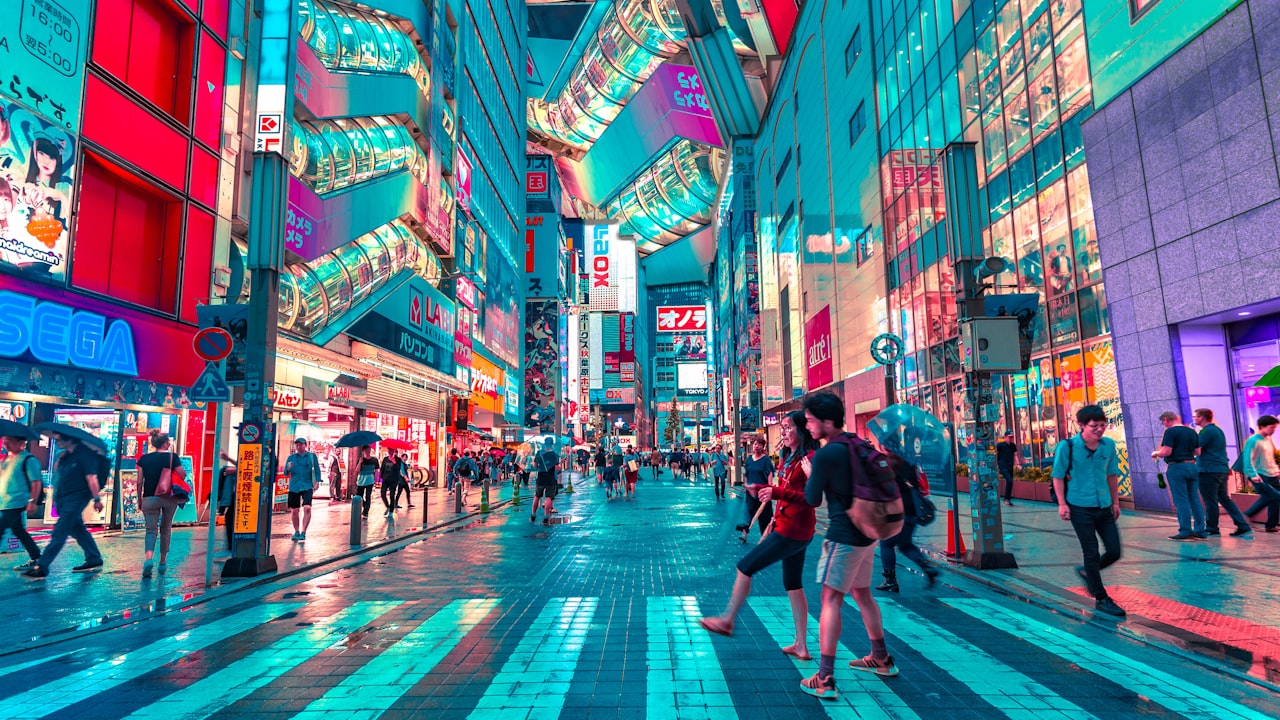
Japan stands in a category of its own among global VFX markets — the only country where world-class anime VFX and Hollywood-calibre live-action visual effects coexist at scale. With a VFX and animation market generating an estimated ¥380 billion ($2.5B USD) annually in 2026, and a broader anime market valued at ¥2.74 trillion ($18B USD), Japan commands one of the largest entertainment content ecosystems on earth (Japan Animation Association, 2026). In 2024, Godzilla Minus One became the first Japanese film to win the Academy Award for Best Visual Effects — a milestone confirming that Japan’s live-action VFX can match any studio in the world.
This directory lists verified VFX studios headquartered in Japan — spanning anime CG, creature effects, compositing, tokusatsu VFX, digital characters, and real-time rendering. Studios are drawn from Vitrina’s live global entertainment company database and verified for active operations, production credits, and contact accuracy. Use the filters to narrow by service type, city, and studio size, then connect directly with studio decision-makers through Vitrina’s B2B platform. For a global comparison, see our top VFX companies in India, top VFX companies in the USA, and top VFX companies in Australia directories.
- 1Japan’s VFX and animation market generates an estimated ¥380 billion ($2.5B USD) annually in 2026, anchored by the world’s largest anime market at ¥2.74 trillion ($18B USD) and a workforce of 45,000+ animation and VFX professionals (Japan Animation Association, 2026).
- 2Toho VFX won the 2024 Academy Award for Best Visual Effects for Godzilla Minus One — the first Japanese film to win in this category — proving Japan’s live-action VFX competes directly with Hollywood at the highest level.
- 3Japan’s Content Localization & Promotion Support Program offers grants covering up to 50% of qualifying digital content costs. The Agency for Cultural Affairs also provides production co-financing, making Japan one of the most subsidy-rich VFX markets in Asia (Agency for Cultural Affairs).
- 4Polygon Pictures and Marza Animation Planet are Japan’s two TPN Assessed studios — trusted by Netflix, Disney, and major Hollywood buyers for co-productions and original content pipelines requiring stringent content security.
- 5Japanese VFX artist day rates run ¥70,000–150,000/day ($465–$1,000 USD) at top Tokyo studios — significantly below comparable US or UK rates — with government grants that can reduce net production cost by up to 50% on qualifying projects.
The top VFX companies in Japan include Toho VFX (2024 Academy Award — Godzilla Minus One), Polygon Pictures (TPN Assessed — Netflix CG originals), Digital Frontier (Dragon Ball, One Piece Film Red), Ufotable (Demon Slayer), and Orange (Land of the Lustrous, Beastars). Tokyo is Japan’s dominant VFX hub. Japan is the only country where anime VFX and live-action VFX co-exist at world-class level. Vitrina indexes verified Japanese VFX studios with direct contacts, TPN status, and production credits.
Why Japan Is a Unique Global VFX Market
Japan’s VFX industry is unlike any other market in the world. It combines the global cultural dominance of anime — a form that Japan pioneered and still leads with unmatched creative depth — with a live-action VFX capability that, as of 2024, is Academy Award-winning. The market generates an estimated ¥380 billion ($2.5B USD) in VFX and animation revenue annually, anchored by a broader anime ecosystem valued at ¥2.74 trillion ($18B USD) — the largest of any country (Japan Animation Association). Japan employs 45,000+ animation and VFX professionals with deep specialisation in CG animation, tokusatsu monster effects, compositing, and digital characters. Productions ranging from Demon Slayer: The Movie — Mugen Train (Japan’s all-time domestic box office record) to Netflix originals have relied on Japan’s studios.
Key Stat
Japan’s Content Localization & Promotion Support Program provides grants covering up to 50% of qualifying digital content production costs. The Agency for Cultural Affairs additionally provides production co-financing for qualifying projects — making Japan one of the most subsidy-rich VFX markets in Asia and a strategically compelling destination for international co-productions.
The 2024 Academy Award for Best Visual Effects — won by Toho VFX for Godzilla Minus One — was a historic milestone: the first Japanese film ever to win in this category. It confirmed that Japan’s live-action VFX pipeline has crossed the threshold into Hollywood-grade territory, joining a short list of countries capable of producing Oscar-winning visual effects. Simultaneously, studios like Polygon Pictures (Netflix’s CG animation partner) and Orange (creator of Land of the Lustrous and Beastars) are redefining what 3D anime CG looks like globally. For an international cost comparison, see our top VFX companies in India and top VFX companies in USA directories.
Top VFX Companies in Japan — Full Directory
The companies below are verified VFX studios and post-production companies headquartered in Japan, sourced live from Vitrina’s global entertainment company database. Filter by service specialty, studio size, and city. Click any company card to view the full profile, contact details, and past production credits. Looking for studios outside Japan? Compare our USA VFX directory and India VFX directory for cost and capability benchmarks.
Tatsunoko Production
Musashino, Japan

Services
2D & 3D Animation3D Animations & Motion GraphicsAnimationPost-Production ServicesProduction+2 more
Genres
Polygon Pictures
Tokyo, Japan

Services
3D Animations & Motion GraphicsAnimationDesign ServicesPost-Production FacilitiesPost-Production Services+4 more
Genres
Oriental Light and Magic
Tokyo, Japan

Services
2D & 3D Animation2D Animation3D Animations & Motion GraphicsAnimationAnimation / Computer Graphics (CGI)+6 more
Genres
Imagica Entertainment
Tokyo, Japan

Services
3D Modeling & Simulation3D Texturing (VFX)ADR StudioAnimationAnimation / Computer Graphics (CGI)+47 more
Genres
Japan VFX Hubs: Tokyo, Osaka/Kyoto & Beyond
Japan’s VFX industry is heavily concentrated in Tokyo, which accounts for the vast majority of the country’s top-tier studios. Within Tokyo, two distinct creative clusters have emerged: Shibuya/Shinjuku for live-action and premium anime VFX, and Akihabara/Nerima for tokusatsu, 3D anime, and game-oriented CG. Osaka and Kyoto form a secondary hub anchored by Kyoto Animation, while Fukuoka and regional cities host a growing layer of indie and commercial VFX production.
Key Stat
Japan employs 45,000+ animation and VFX professionals nationally, with Tokyo concentrating the highest density of TPN-assessed facilities in Asia. Japanese VFX artist day rates run approximately ¥70,000–150,000/day ($465–$1,000 USD) at top Tokyo studios — substantially below US or UK equivalents — with government grants covering up to 50% of qualifying project costs that further reduce net production expenditure.
Tokyo (Shibuya/Shinjuku) is Japan’s premium VFX district — home to Digital Frontier (the studio behind Dragon Ball Super: Broly and One Piece Film Red), White Fox (Steins;Gate, Re:Zero), and Ufotable (the renowned creator of the Demon Slayer franchise VFX, known globally for its water and fire simulation quality). This cluster handles the most internationally visible live-action and premium anime productions at day rates reaching ¥150,000/day ($1,000 USD) for senior artists.
Tokyo (Akihabara/Nerima) houses Japan’s most internationally celebrated VFX names. Toho VFX — a subsidiary of Toho (Japan’s largest studio) — produced the Oscar-winning effects for Godzilla Minus One using creative techniques that impressed the Academy with their quality-to-budget ratio. Polygon Pictures operates its Netflix and Hollywood CG animation pipeline here, while Orange continues to push 3D anime CG with Land of the Lustrous and Beastars — work that has become a global reference point for stylised CG animation.
Osaka and Kyoto form Japan’s cultural heartland and its second VFX hub. Kyoto Animation — one of Japan’s most beloved studios — operates from Uji, Kyoto Prefecture, producing meticulously crafted anime with strong in-house VFX integration. The Kansai region offers day rates approximately 20–30% lower than Tokyo at ¥60,000–110,000/day, making it attractive for mid-budget anime series and regional co-productions. For a broader Asia comparison, see our top VFX companies in India and top VFX companies in Australia directories.
How to Choose the Right Japanese VFX Studio
Selecting a Japanese VFX partner requires evaluating five criteria beyond base rate: anime vs. live-action specialisation, government incentive eligibility, pipeline compatibility with international DCPs and deliverables, TPN certification status, and English-language communication capacity. Japan’s top studios (Polygon Pictures, Toho VFX, Digital Frontier, Marza Animation Planet) are accustomed to international co-productions and can engage in English; smaller boutique studios (Orange, Ufotable) may require a Japanese-speaking liaison or producer. For a comparison of international co-production markets, see our top VFX companies in Australia directory.
Specialisation alignment is critical in Japan because the skill sets for anime VFX and live-action VFX diverge significantly. Anime studios like Ufotable and Orange have developed proprietary hand-crafted CG pipelines that produce a uniquely stylised aesthetic — ideal for anime films and series, but not always suited to photorealistic live-action demands. Live-action VFX studios like Toho VFX and Digital Frontier operate Maya/Houdini/Nuke pipelines compatible with Hollywood deliverable requirements. Define your project’s visual style and deliverable standard before shortlisting studios.
Government incentive eligibility is the most financially significant factor for international productions. The Content Localization & Promotion Support Program covers up to 50% of qualifying digital content costs; the Agency for Cultural Affairs provides co-financing for qualifying productions with cultural alignment to Japan. Both programs require advance applications before production begins — early engagement with the relevant Japanese agency is essential for maximising incentive recovery.
TPN certification is non-negotiable for any production involving unreleased content from Netflix, Disney, or other major buyers. The Trusted Partner Network (administered by the MPA) assesses facilities annually. Polygon Pictures and Marza Animation Planet are Japan’s TPN Assessed studios. Request current TPN documentation and verify the assessment date before sharing any unfinished content with any Japanese facility.
TPN Certification & Japan Government Incentives: Key Studios
Japan’s leading VFX studios include two TPN (Trusted Partner Network) Assessed facilities — a growing number as Japanese studios pursue more international co-productions with major Hollywood studios and global streaming platforms. TPN Assessed status allows studios to receive unreleased content from major buyers with streamlined security review, dramatically reducing onboarding friction for international productions.
Key Stat
50%
Japan’s Content Localization & Promotion Support Program provides grants covering up to 50% of qualifying digital content production costs. The Agency for Cultural Affairs additionally provides production co-financing for culturally qualifying projects — making Japan one of the most subsidy-rich VFX co-production markets in the Asia-Pacific region. Prefecture-level incentives in Tokyo, Osaka, and Fukuoka provide further support for regional productions.
Beyond TPN, leading Japanese studios handling international content operate under strict MPA Content Security Program (CSP) requirements: physical access controls, network segmentation, encrypted asset delivery, and personnel background verification. Request the studio’s most recent TPN assessment report and MPA CSP compliance documentation before signing any agreement involving unreleased content.
The eight leading Japanese VFX studios span Tokyo’s two creative districts and the broader national ecosystem. Polygon Pictures (Tokyo, ~250 staff, TPN Assessed) is Japan’s leading Netflix CG animation partner — with credits including Tron: Uprising, Godzilla: Planet of the Monsters, and multiple Netflix originals. Digital Frontier is Japan’s foremost live-action/anime crossover VFX house, responsible for the Dragon Ball franchise films and One Piece Film Red. White Fox produces premium anime with industry-leading in-house VFX, including Steins;Gate, Re:Zero, and Goblin Slayer. Toho VFX — a Toho subsidiary — won the 2024 Academy Award for Godzilla Minus One, cementing its place among the world’s top live-action VFX facilities. Orange (small but globally influential) pioneered the 3D anime aesthetic with Land of the Lustrous and Beastars. Ufotable is renowned for the Demon Slayer franchise’s water and fire effects — the highest-quality anime VFX pipeline in the industry. Marza Animation Planet (Sega subsidiary, TPN Assessed) produced the Sonic the Hedgehog opening sequences and multiple game cinematics. CloverWorks is a leading Netflix-partnered anime studio with credits including Oshi no Ko and Spy x Family.
VFX Costs in Japan: What Productions Pay
Japanese VFX costs vary by studio tier, city, and project type. Tokyo’s premium Shibuya/Shinjuku district commands the highest rates, reflecting talent concentration and the highest-profile productions. However, Japan’s government grants fundamentally reshape the cost calculation: the Content Localization & Promotion Support Program covers up to 50% of qualifying costs — making even top-tier Tokyo studios highly competitive on a net basis with major Western markets. For a full international comparison, see our top VFX companies in India and top VFX companies in Australia.
Japan’s government content grants fundamentally reshape the VFX cost map. A production spending ¥100 million on qualifying Japanese VFX costs could recover up to ¥50 million through the Content Localization Support Program — reducing net spend to ¥50 million ($330,000 USD equivalent), which is competitive with mid-tier Indian VFX facilities while accessing a talent pool with decades of world-class anime and live-action expertise. For Tier 1 studios with Hollywood crossover capability (Polygon Pictures, Toho VFX, Marza Animation Planet), the combination of Oscar-winning pedigree and 50% grant eligibility makes Japan uniquely compelling for international co-productions seeking both quality and cost efficiency.
Conclusion
Japan’s VFX industry in 2026 is a ¥380 billion ($2.5B USD) market that occupies a singular position in global entertainment. It is simultaneously the world’s premier anime production ecosystem — driving a ¥2.74 trillion ($18B USD) content market — and, since Godzilla Minus One’s 2024 Academy Award win, a proven peer of Hollywood’s best live-action VFX facilities. Government grants covering up to 50% of qualifying digital content costs, combined with day rates significantly below US or UK equivalents, make Japan uniquely cost-competitive for international co-productions seeking world-class talent (Agency for Cultural Affairs, Mordor Intelligence, 2026).
For productions evaluating Japanese studios, the key decision is specialisation alignment: Tokyo’s Tier 1 studios (Polygon Pictures, Toho VFX, Digital Frontier, Marza Animation Planet) for Hollywood crossover live-action and CG animation; Tier 2 premium anime studios (Ufotable, White Fox, Orange) for stylised animation with internationally recognised aesthetic quality; and regional Kansai and Fukuoka studios for cost-effective anime series and commercial production. Use the directory above to explore verified Japanese VFX studios with direct contacts, and compare against our USA VFX directory and India VFX directory for global benchmarking.
Related Reading
Frequently Asked Questions
What is the best VFX studio in Japan?
Toho VFX is Japan’s most acclaimed live-action VFX facility, winning the 2024 Academy Award for Best Visual Effects for Godzilla Minus One — the first Japanese film ever to win in this category. For CG animation, Polygon Pictures (Netflix partner, TPN Assessed) and Orange (Land of the Lustrous, Beastars) are the most internationally acclaimed.
What government incentives are available for VFX in Japan?
Japan’s Content Localization & Promotion Support Program offers grants covering up to 50% of qualifying digital content production costs. The Agency for Cultural Affairs provides additional co-financing for culturally qualifying projects. Prefecture-level incentives are also available in Tokyo, Osaka, and Fukuoka for regional productions.
How much do Japanese VFX studios charge per day?
Senior VFX artists at top Tokyo studios (Polygon Pictures, Toho VFX, Digital Frontier) typically bill ¥80,000–150,000/day ($530–$1,000 USD). Mid-tier premium anime studios (White Fox, Ufotable, Orange) run ¥70,000–120,000/day. Kansai and regional studios offer comparable quality at ¥50,000–110,000/day — all before government grants that can reduce net cost by up to 50%.
What is the difference between anime VFX and live-action VFX in Japan?
Japan excels at both, but the pipelines diverge significantly. Anime VFX studios like Ufotable and Orange use proprietary stylised CG pipelines optimised for a distinctive aesthetic — ideal for anime films and series. Live-action studios like Toho VFX and Digital Frontier operate Maya/Houdini/Nuke pipelines compatible with Hollywood photorealistic deliverables. Japan is the only country where both exist at world-class level simultaneously.
What major productions have used Japanese VFX?
Major productions include: Toho VFX — Godzilla Minus One (2024 Academy Award); Polygon Pictures — Tron: Uprising, Star Wars: The Clone Wars, Netflix originals; Digital Frontier — Dragon Ball Super: Broly, One Piece Film Red; Ufotable — Demon Slayer: Mugen Train; Marza Animation Planet — Sonic the Hedgehog opening sequences.
Are Japanese VFX studios TPN-certified?
Polygon Pictures and Marza Animation Planet are Japan’s two TPN Assessed studios. The number is growing as Japanese studios pursue more international co-productions requiring content security compliance with major Hollywood buyers. Always request current TPN documentation before sharing unreleased content with any facility.
What makes Japan unique as a global VFX market?
Japan is the only country where anime VFX and live-action VFX coexist at a world-class level. Anime studios like Ufotable and Orange pioneered techniques that have influenced global animation style. Toho VFX’s 2024 Oscar for Godzilla Minus One — achieved on a relatively modest budget — proved Japan’s live-action VFX pipeline matches Hollywood. Government grants of up to 50% make it one of the most cost-competitive markets in Asia.
How do I find VFX companies in Japan on Vitrina?
Use the Vitrina directory filter for Japan — it lists studios by city, service type, TPN status, and specialisation (anime vs. live-action), allowing direct contact with decision-makers and quote requests through the platform. Filter by company_location=JP to surface all Japan-headquartered VFX studios with verified contact data and production credits.
Vitrina Intelligence
Japan VFX Market Research · B2B M&E Data Platform
Updated Jul 2026
This directory was compiled by Vitrina’s Asia-Pacific M&E intelligence team. Every studio is verified from direct submissions, TPN/MPA assessments, production credit databases, the Japan Animation Association, Agency for Cultural Affairs documentation, and Mordor Intelligence sector reports. Vitrina covers all active VFX facilities across Tokyo, Osaka/Kyoto, Fukuoka, and beyond.
Research Methodology
✓ Mordor Intelligence VFX Market 2026
✓ Japan Animation Association (AJA) data
✓ TPN/MPA Assessed Vendor List
✓ Agency for Cultural Affairs documentation
✓ Direct studio submissions & verification
✓ Variety / Hollywood Reporter coverage
Japan M&E Market
Content Grants 50%
Academy Award 2024