Why Overseas Animation Studio Partnerships Are Growing

Share
Share
overseas animation studio partnerships

By Vitrina Research Team | Published: July 10, 2026 | 7 min read

The global animation industry crossed $400 billion in combined market value in 2024, according to PwC’s Global Entertainment and Media Outlook. That number alone explains why content producers everywhere are rethinking where animation gets made. Studios that once worked entirely in-house are now building overseas animation studio partnerships as a core production strategy, not a fallback option.

For decades, international co-production was treated as a cost-cutting move. Send the labor offshore, pay less, get the frames back. That framing is now outdated. Today’s leading animation partnerships combine creative development, original IP, and distribution across multiple territories. The economics shifted first. The creative philosophy caught up later.

This article breaks down the structural reasons behind the growth of overseas animation studio partnerships, identifies the regions and studios driving that growth, and explains what producers need to understand before they sign a co-production agreement. If you’re evaluating an animation studio partner, the structural context matters as much as the individual studio’s reel.

Key Takeaways

  • Global animation demand is rising fastest in streaming, with platforms commissioning 40% more original animated content year-over-year (PwC, 2024).
  • Cost and creative capability now drive overseas partnerships equally β€” the purely cost-led model is fading.
  • Japan, South Korea, India, the Philippines, and France are the five most active hubs for international animation partnerships.
  • The rights structure of a partnership depends on whether the overseas studio is a vendor or a co-creator β€” this distinction must be settled before production begins.
  • Structured discovery tools like VIQI help producers map qualified overseas studios before outreach begins.

The Cost and Quality Equation: What Changed?

Animation production costs in the United States and Western Europe average $300,000 to $500,000 per finished minute for premium content, compared to $60,000 to $150,000 for comparable quality in Asia-Pacific studios, according to industry benchmarks tracked by the British Film Institute. That cost differential has always existed. What changed is the quality side of the equation.

Asian animation studios spent two decades building technical capability while handling service contracts for Western IP. Japanese studios like Production I.G and Wit Studio developed a visual grammar recognized globally. South Korean studios industrialized their pipelines to deliver high volumes with consistent quality. Indian studios upgraded from basic outsourcing work to full-cycle production of original content. Quality parity with Western output is now achievable in multiple markets at a fraction of the cost.

The streaming era accelerated this shift sharply. Platforms like Netflix, Disney+, and Amazon Prime Video needed more content faster than any single domestic market could supply. Overseas animation production moved from niche workaround to primary strategy. The question for producers is no longer whether to pursue international partnerships, but how to choose the right structure and the right studio.

“Cost parity has been broken for years. The new question is creative parity β€” and in many overseas markets, that threshold was crossed a long time ago.”

Vitrina Research Team analysis, 2026

What Are the Three Structural Drivers Behind Overseas Animation Studio Partnerships?

Three forces are driving the current expansion of global animation partnerships beyond simple cost arbitrage. Streaming volume requirements, co-production treaty incentives, and the IP ambitions of Asian studios are reshaping what these deals look like and why producers pursue them. Understanding each driver separately helps producers match their strategy to the right type of partnership.

1. Streaming Platforms Require Volume at Speed

Netflix alone committed to releasing new animated content every week globally by 2023, a pace no single domestic studio system can sustain. Platforms have invested billions in animation slates that require partners across time zones to keep pipelines moving continuously. This volume demand is structural, not cyclical. It won’t slow down when subscriber growth moderates, because animation is now a retention tool, not just an acquisition hook.

2. Co-Production Incentives Make Overseas Deals Financially Attractive

Treaty co-productions unlock funding mechanisms unavailable to purely domestic projects. A French-Korean animation co-production can access CNC funding in France, the Korean Film Council’s international co-production fund, and qualify for territorial tax rebates in both markets simultaneously. The European Audiovisual Observatory reported that European animation co-production volume grew 31% between 2020 and 2024, with Asia-Pacific partners accounting for the largest share of that increase.

The International Film and Television Alliance (IFTA) tracks co-production treaty utilization across 45+ active bilateral agreements. Producers who understand these treaties use them to reduce the net cost of international animation partnerships by 20-35%, depending on territory. This isn’t a loophole. It’s what these treaties were designed to enable.

3. Asian Studios Are Building Original IP, Not Just Providing Services

This is the most consequential driver of all. Studios in Japan, South Korea, and India are no longer content to be service providers executing someone else’s creative vision. They’re developing original properties, seeking co-development partnerships, and retaining IP rights as a condition of collaboration. Western producers who approach them purely as vendors will find fewer willing partners than they did five years ago. Producers who approach them as creative co-owners will find the most capable studios in the world ready to engage.

Ready to Find the Right Overseas Animation Studio?

VIQI maps 400,000+ M&E companies globally, including animation studios by region, capability, and co-production history.

Find Overseas Animation Studios on VIQI →

Which Regions Are the Key Overseas Animation Hubs?

Five regions dominate the global landscape for overseas animation studio partnerships. Each offers a distinct combination of style, capability, pricing, and regulatory context. Matching your project’s needs to the right region is the first decision you’ll make β€” and it shapes everything that follows.

Japan: Style Authority, Talent Density, IP-Protective Culture

Japan remains the benchmark for animation craft in global markets. The country’s anime studios in Japan have built internationally recognized aesthetics and storytelling frameworks that command premium pricing even relative to other Asian markets. According to Statista’s Media and Entertainment Outlook, Japan’s animation export revenue exceeded $18 billion in 2024, driven largely by streaming licensing and co-production deals.

Japanese studios are IP-protective by culture and by contract. Entering a Japanese co-production requires genuine creative alignment and willingness to share or cede certain rights. Studios that treat Japanese partners as outsourcing vendors consistently report failed partnerships. Producers who approach these studios as creative co-owners consistently report their most artistically successful projects.

South Korea: High Volume, Competitive Pricing, Growing Original IP

South Korea has industrialized animation production to a degree few markets match. Studios like Lotto Animation, Mir Animation, and DR Movie have built pipelines capable of delivering broadcast-quality content at volumes that satisfy streaming platform demand. Pricing sits 30-50% below comparable Japanese work, making Korea the default choice for high-volume projects where cost efficiency is the primary variable.

South Korean studios are also developing original IP at an accelerating rate, backed by Korea Creative Content Agency (KOCCA) funding. For producers open to animation co-production opportunities that include Korean creative ownership, the financial incentives from KOCCA can reduce production costs by an additional 15-25%.

India: Growing Capacity, English-Language Advantage

India’s animation industry grew at 17% annually between 2021 and 2025, according to the Animation, Visual Effects, Gaming and Comics (AVGC) sector report published by India’s Ministry of Information and Broadcasting. English fluency across the talent pool makes communication barriers substantially lower than in Japan or Korea. Studios like DQ Entertainment and Tata Elxsi Animation have handled major international commissions, demonstrating the capability to operate at international broadcast standards.

Philippines: Long Service History, English Fluency

The Philippines has served Western animation producers for over four decades, making it one of the most experienced service markets globally. Studios there have worked on productions for Disney, Warner Bros., and major European broadcasters. English is an official language, which eliminates translation overhead. The market is best suited to service-model partnerships where creative direction comes from the commissioning producer rather than co-development arrangements.

France: Co-Production Treaty Network, CNC Funding

France operates the most sophisticated animation co-production support infrastructure in Europe. The Centre National du CinΓ©ma et de l’Image AnimΓ©e (CNC) provides selective and automatic funding for animation projects meeting French content criteria. France has bilateral co-production treaties with over 50 countries, making it the most treaty-connected animation market globally. For international producers looking to access European funding, a French co-production partner is often the most efficient route.

From Vendor to Co-Creator: Why Does This Distinction Matter for Rights?

The most important question in any overseas animation partnership is not which studio to use, but what role that studio plays. A vendor executes a brief. A co-creator contributes to the IP’s development and typically retains rights in specific territories or formats. These two models require fundamentally different contracts, different financing structures, and different creative processes.

In the vendor model, the commissioning producer retains full IP ownership globally. The overseas studio is paid a production fee and has no claim on downstream revenues from merchandise, licensing, or sequels. This model is common in the Philippines and in many Indian studio arrangements. It’s straightforward, but it limits the overseas studio’s motivation to bring creative energy to the project.

In the co-creator model, the overseas studio contributes original elements, whether that’s character design, story concepts, or cultural adaptation, and receives IP rights in specific windows or territories. Japanese and increasingly Korean studios expect this arrangement. It requires early-stage negotiation of IP splits, and those conversations need to happen before a single frame is produced. Producers who leave rights discussions until post-production face disputes that can halt releases entirely. Explore global production opportunities with a clear rights framework from the start.

What Can Go Wrong in Overseas Animation Studio Partnerships?

The growth of overseas animation partnerships has been accompanied by a corresponding rise in partnership failures. Producers who understand where deals go wrong can build processes that prevent the most common failure modes. Four categories of risk appear repeatedly across failed international animation partnerships.

Communication Barriers

Language differences create cascading production problems when creative feedback isn’t transmitted accurately. A character direction note that requires specific emotional tone can arrive at the overseas studio as a technical instruction about line weight. Creative alignment requires investment in translation infrastructure and in-country producers who understand both creative briefs and local production culture. Don’t underestimate this cost.

Quality Mismatches

A studio’s portfolio reel reflects their best work, not their average work. Producers who sign agreements based on reel samples without visiting facilities, reviewing production pipelines, or speaking with previous clients consistently report quality disappointments mid-production. Build quality gates with rejection and rework provisions into every contract. Establish style guides and approved reference materials before any production begins.

IP Disputes

Rights disputes arise most often when the IP contribution of the overseas studio was never clearly documented at the outset. If a Korean studio’s character designer creates a visual element that becomes central to the property’s identity, that designer’s employer will have grounds to claim a stake. Document creative contributions at every stage, establish work-for-hire agreements where appropriate, and register IP in all relevant territories before the production relationship begins.

Delivery Delays

Delivery delays in animation production are expensive. Streaming platform delivery windows are contractual obligations on the commissioning producer’s side. A two-week delay from an overseas studio can trigger penalty clauses with the platform. Build buffer milestones into your production schedule, require weekly delivery of work-in-progress, and retain 15-20% of the production fee as a completion holdback released only on final delivery to broadcast specification.

How Should You Structure an Overseas Animation Partnership to Minimize Risk?

Structuring an overseas animation studio partnership well requires attention to five elements: studio selection criteria, contract architecture, rights documentation, quality governance, and communication protocols. Getting all five right before production begins is the difference between a successful international partnership and an expensive dispute.

Studio Selection: Match Capability to Project Needs

Start with the creative requirements of your project. A stylistically demanding prestige series requires a different partner than a high-volume children’s content slate. Map specific studio capabilities against your actual production requirements, not just broad regional reputations. Visit shortlisted studios in person, or via trusted in-market representatives, before committing. Review their work-in-progress on current productions, not just completed reel samples.

Contract Architecture: Rights and Recourse

The co-production agreement must specify IP ownership splits by territory and by content type (original property vs. derivative works), delivery milestones with penalty provisions, quality standards with objective measurement criteria, dispute resolution jurisdiction, and termination rights with clear asset return provisions. Use local legal counsel in the overseas studio’s jurisdiction, not just your home market attorney. Local enforcement matters when a dispute arises mid-production.

Communication Protocols: Build Structure Early

Establish a single point of contact on each side with the authority to approve creative decisions. Define response time expectations in writing. Use visual reference systems (style guides, annotated frame samples, approved character sheets) rather than relying on written descriptions alone. Schedule synchronous review sessions at every major milestone, even across difficult time zones. The upfront investment in communication infrastructure pays dividends throughout a 12-to-24-month production.

How VIQI Identifies Overseas Animation Studio Partners

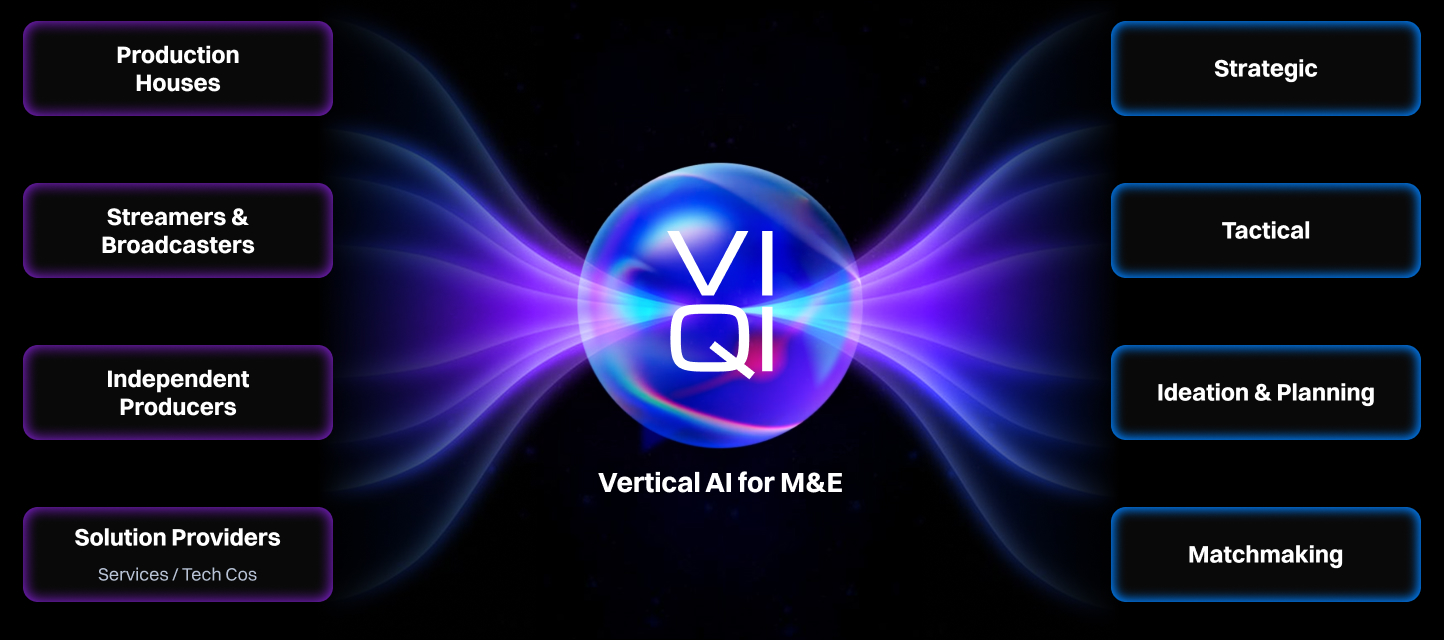
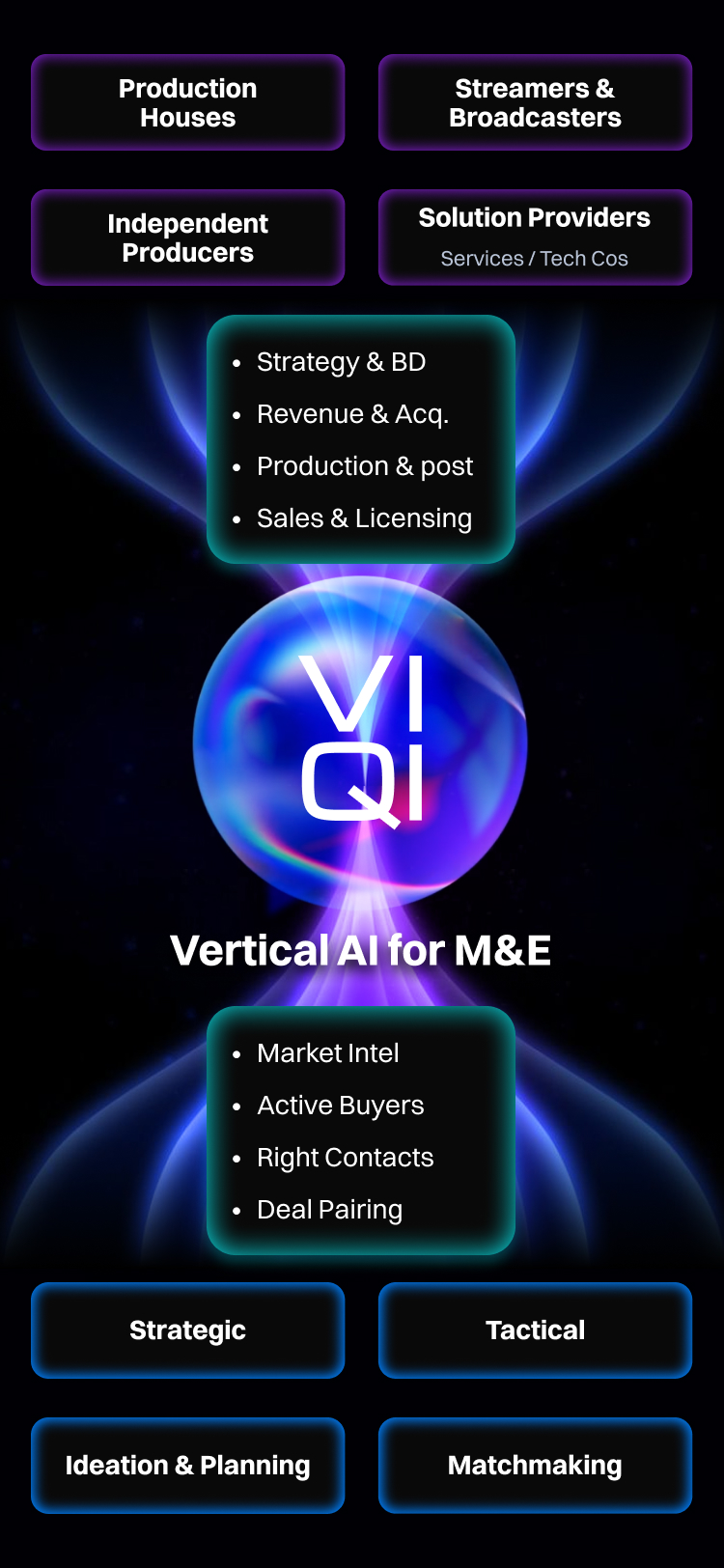
Finding qualified overseas animation studios historically required expensive in-market research, trade festival attendance, and referral networks that favored established producers. VIQI β€” Vitrina Intelligence β€” changes that equation by providing structured, searchable data on animation studios across every major production hub. The platform covers 400,000+ media and entertainment companies globally, with filtering by country, production type, co-production history, and company size.

A producer evaluating overseas animation production options can use VIQI to shortlist studios by region, filter by co-production treaty eligibility, and review company profiles that include deal history, ownership structure, and key contacts. This reduces the studio discovery process from months to days. The Vitrina Vitrina Intelligence blog regularly publishes analysis on emerging animation markets and studio capability shifts, complementing the live database with context that helps producers understand what they’re looking at.

VIQI’s data also surfaces partnership activity, showing which studios are currently in active co-productions, which are seeking new partners, and which have recently completed international deals. For producers who need to move quickly on a streaming commission, this intelligence layer is the difference between entering outreach with qualified targets and spending weeks on cold research that may not surface the best options. The platform is available to producers at all scales, not just the major studios with established international networks.

Is Your Animation Studio Visible to International Partners?

Thousands of producers search VIQI for overseas animation studios every month. List your studio to be found by the right partners.

List Your Animation Studio on Vitrina →

Conclusion

Overseas animation studio partnerships are growing because the structural conditions that drove them have not changed β€” and won’t. Streaming platforms require volume that no single domestic market can deliver. Co-production treaties make international partnerships financially superior to domestic-only production for many project types. Asian studios have built creative capabilities that make them genuine co-creators, not just service providers. These three forces operate independently and reinforce each other simultaneously.

For producers, the practical implication is clear: the question is no longer whether to pursue international animation partnerships, but how to choose the right structure, the right region, and the right studio for each specific project. Vendor relationships and co-creator relationships require completely different contract architectures, different financing approaches, and different creative processes. Confusing the two is the most expensive mistake in this space.

The producers building the most durable international animation partnerships share one characteristic: they invest in studio discovery and qualification before outreach, rather than after. They understand the structural context of the regions they’re entering, they speak to previous co-production partners before signing agreements, and they treat rights documentation as a creative exercise as much as a legal one. The tools for doing this work efficiently now exist. The ones who use them well build partnerships that outlast individual projects.

Frequently Asked Questions

What is an overseas animation studio partnership?

An overseas animation studio partnership is a formal production arrangement between a commissioning company (typically a broadcaster, streamer, or independent producer) and an animation studio located in a different country. These partnerships range from pure service contracts, where the overseas studio executes a fully developed brief, to co-production agreements where both parties share creative development and IP rights. The structure of the arrangement determines the rights each party holds in the finished property.

Why are overseas animation studio partnerships growing so rapidly?

Three structural drivers account for most of the growth. Streaming platforms require more animated content than any single market can produce, creating demand for international production capacity. Co-production treaty networks make overseas deals financially attractive through combined funding access and tax incentives. Asian studios have developed original IP creation capabilities, making them sought-after creative partners rather than pure service providers. All three forces are operating simultaneously and none are expected to reverse in the near term.

Which countries are the best overseas animation partners for Western producers?

The best choice depends on project type and creative requirements. Japan offers the strongest aesthetic authority and highest quality ceiling, but at premium pricing and with strong IP protection expectations. South Korea delivers high volume at competitive pricing with growing co-production treaty infrastructure. India provides English fluency and rapidly improving capability at the most competitive price points. The Philippines offers decades of service history for execution-focused partnerships. France provides the most extensive treaty network for accessing European public funding.

How do co-production treaties affect overseas animation partnerships?

Co-production treaties between countries allow productions that qualify as a co-production under the treaty terms to access the funding mechanisms of both countries simultaneously. This includes tax credits, broadcaster spending quotas, and direct public funding from bodies like France’s CNC or Korea’s KOCCA. The European Audiovisual Observatory reported that European animation co-production volume grew 31% between 2020 and 2024, with much of that growth driven by treaty-structured partnerships with Asian studios. Producers who use these treaties correctly can reduce net production costs by 20-35%.

What is the difference between a vendor relationship and a co-creator relationship with an overseas studio?

In a vendor relationship, the overseas studio executes the commissioning producer’s creative brief and receives a production fee. The commissioning producer retains all IP rights globally. In a co-creator relationship, the overseas studio contributes original creative elements and receives IP rights in specific territories or formats in exchange. Co-creator arrangements are more common with Japanese and South Korean studios, which typically expect creative ownership as a condition of collaboration. The rights split must be negotiated and documented before production begins to avoid disputes later.

What are the biggest risks in overseas animation studio partnerships?

The four most common failure modes are communication barriers that distort creative feedback, quality mismatches between reel samples and production-level output, IP disputes arising from undocumented creative contributions, and delivery delays that trigger contractual penalties with streaming platforms. Each risk is manageable with the right contractual provisions and production governance. The producers who encounter these problems most frequently are those who prioritize speed-to-partnership over rigor in selection and contract structuring.
How can producers find qualified overseas animation studios efficiently?

Traditionally, studio discovery relied on trade festivals, referral networks, and expensive in-market research. VIQI (Vitrina Intelligence) provides a structured alternative, offering searchable data on 400,000+ media and entertainment companies globally, including animation studios filterable by region, capability, co-production history, and deal activity. This compresses the studio discovery process from months to days and surfaces partners that might not appear in referral networks dominated by established producers. For producers new to a region, this kind of structured data is essential.

Start Discovering Overseas Animation Studios Now

VIQI is free to explore. Search animation studios by region, filter by co-production capability, and build your shortlist in minutes.

Explore VIQI Free →

About the Author

Vitrina Research Team

The Vitrina Research Team produces intelligence-led analysis on media and entertainment industry structure, deal activity, and market trends. Our research draws on VIQI’s proprietary dataset of 400,000+ M&E companies worldwide.