How to Find the Right Animation Studio Partner for Your Project

Share
Share
animation studio partner

By Vitrina Research Team | Published: July 10, 2026 | 8 min read

Finding the right animation studio partner is one of the most consequential decisions a producer or content owner can make. Get it right and you unlock creative scale, territory reach, and co-production financing. Get it wrong and you face blown budgets, IP disputes, and a finished product that looks nothing like your original vision. The global animation market is projected to reach $587 billion by 2030, according to PwC’s Global Media and Entertainment Outlook, which means the pool of studios chasing deals is growing fast β€” but so is the complexity of choosing among them.

The challenge isn’t finding studios. A quick internet search returns hundreds of options. The real challenge is identifying which studio is the right structural fit for your project: your genre, your budget tier, your target territories, and your IP ownership requirements. Most producers learn this the hard way, through a failed partnership rather than a disciplined evaluation process.

This guide walks through the full process β€” from defining your requirements to running due diligence on shortlisted studios. It covers the types of animation studio relationships available, the seven criteria that separate strong partners from risky ones, and where to find vetted candidates across global markets. Whether you’re sourcing a top anime studio in Japan or a full-service co-production house in Europe, the framework here applies.

Key Takeaways

  • Animation studio partnerships fail most often because of IP ownership misalignment, not creative differences.
  • Four distinct deal structures exist: full co-production, service production, co-financing, and output deals β€” each with different risk and rights implications.
  • Seven criteria should drive your studio evaluation: style portfolio, capacity, co-production track record, territory expertise, financial stability, IP policies, and workflow infrastructure.
  • The global animation market is set to reach $587 billion by 2030 (PwC, 2025), making studio selection even more competitive.
  • Structured databases and markets like MIFA, Cartoon Forum, and VIQI reduce partner discovery time significantly versus cold outreach.

Why Animation Partner Selection Is Harder Than It Looks

Selecting an animation studio for hire involves far more variables than most producers anticipate. According to the European Audiovisual Observatory, more than 60% of animated co-productions that stall before delivery cite contractual misalignment β€” not creative disputes β€” as the primary cause. Style, pipeline fit, IP ownership, and territory rights must all be resolved before a single frame is rendered.

Style compatibility is the first filter most producers apply, but it’s rarely the most important one. A studio can replicate a visual style it hasn’t originated. What it can’t easily change is its production pipeline. If a studio runs a fully proprietary CG pipeline and your project requires traditional 2D with digital ink, the workflow mismatch creates delays regardless of how talented the team is.

IP ownership is the issue that derails the most deals. Many studios, particularly those with established original IP, have standard contract language that claims co-ownership of derivative works. If you’re building a franchise β€” not just a single series β€” that language can cost you the sequel rights. Localization and language requirements add another layer. A studio based in South Korea may produce excellent English-language animation but have no infrastructure for MENA dubbing or Latin American Spanish. Know your distribution footprint before you shortlist.

“More than 60% of animated co-productions that stall before delivery cite contractual misalignment β€” not creative disputes β€” as the primary cause.” (European Audiovisual Observatory)

What Types of Animation Studio Relationships Exist?

Not every animation studio relationship is a co-production. Four distinct deal structures exist, and each carries fundamentally different implications for rights, revenue, and creative control. Understanding which structure fits your project is step one β€” choosing the wrong structure is almost impossible to unwind mid-production.

Full Co-Production

In a full co-production, two or more parties share creative control, financing, and IP ownership. Both parties typically receive territorial distribution rights in their home markets. This structure is common in European animation, partly because many public funding bodies (France’s CNC, the UK’s BFI, Germany’s FFA) require a co-production element to unlock subsidies. The BFI reports that UK-co-produced animated titles consistently outperform domestically produced titles in international sales volume.

Service Production (Work-for-Hire)

Service production is the simplest structure. You own all the IP. The studio executes your creative brief against a fixed fee. It’s essentially outsourced production. Many studios in India, the Philippines, and Vietnam primarily operate on this model. The risk is quality control over distance. Without strong production oversight systems, you may receive work that technically meets the specification but misses the creative intent.

Co-Financing

A co-financing arrangement means the studio contributes capital rather than just production services. In exchange, it typically receives a share of revenues or a specific territory’s rights. This model is popular with studios building their own distribution arms, particularly in East Asia. The upside: reduced budget burden on the primary producer. The downside: the studio now has a financial stake in the project, which can complicate creative decisions if the relationship sours.

Output Deal

An output deal commits a studio to deliver a volume of content over a defined period, usually for a fixed per-episode or per-minute fee. Broadcasters and streamers most commonly use this structure when they’ve validated a studio’s quality and need consistent throughput. For first-time partnerships, output deals carry real risk β€” you’re committing to a multi-series relationship before the first project has proven the working dynamic.

Ready to Search Animation Studio Partners?

VIQI gives you access to 400,000+ verified M&E companies worldwide β€” filter by territory, format, production type, and co-production history.

Search Animation Studios on VIQI β†’

7 Criteria for Evaluating an Animation Studio Partner

Evaluating a potential animation co-production partner requires a structured framework, not just a portfolio review. Studios can look impressive in a showreel but fall apart under the pressures of a real production schedule. These seven criteria give you a consistent basis for comparison across studios in very different markets. Use them as a scoring rubric, not a checklist.

1. Style Portfolio Depth

Look beyond the showreel highlights. Request deliverable files, not just finished broadcast cuts. A studio that can only show you three examples in your genre hasn’t proven it can sustain that output across a full series run. Ask specifically which projects the current team worked on, as studios often showcase legacy work that pre-dates staff turnover.

2. Production Capacity

Request a current capacity statement: how many production minutes are they delivering per month, and what’s already committed? A studio with 80% of its capacity locked into existing contracts cannot reliably serve a new partner, even if it promises to. This is one of the most common causes of delivery delays in animation.

3. Co-Production Track Record

Has the studio actually co-produced with international partners before? There’s a significant difference between a studio that has handled service work from foreign clients and one that has genuinely co-produced β€” shared IP, negotiated financing splits, and delivered to an international broadcast standard. Ask for reference contacts at previous co-production partners, not just testimonials.

4. Territory Expertise

Does the studio have real distribution relationships in the territories you’re targeting? Studios often overstate their distribution reach. A studio that says it “has connections” with a major streamer is very different from one that has delivered content to that streamer’s technical specifications and understands its content acquisition process. Explore the broader anime studio landscape to understand how territory shapes studio value.

5. Financial Stability

A studio that runs out of cash mid-production becomes your problem. Request basic financial health indicators: years in operation, client concentration (are they dependent on one big client?), and whether they’ve survived a market downturn. In markets where animation funding is heavily public subsidy-dependent, also check their subsidy renewal status.

6. IP Handling Policies

Request the studio’s standard contract terms before you begin serious negotiations. Pay specific attention to clauses covering derivative works, sequel rights, character IP ownership, and what happens to the IP if the studio is acquired. This is non-negotiable due diligence. Some of the most respected studios in the world have standard contracts that are not suitable for franchise development without significant revision.

7. Communication and Workflow Infrastructure

Time zone differences of 8-12 hours are workable if a studio has structured its workflow to accommodate asynchronous collaboration. What does their review cycle look like? Do they use a shared asset management system? Can your team access production files in real time or only through a weekly batch delivery? These operational details determine whether the working relationship is sustainable across a multi-year production.

Where to Find Animation Studio Partners

The best animation studio partners are rarely found through the first page of a Google search. Serious partner discovery happens through structured industry channels. IFTA notes that the majority of co-production agreements in animation originate from established market contacts rather than cold outreach, underscoring why knowing which channels to use matters as much as knowing what to look for.

Animation-Specific Industry Markets

Cartoon Forum (Toulouse, September) and MIFA at Annecy (June) are the two highest-density events for animation co-production deal-making in the world. MIFA specifically hosts a co-production market where studios and producers pitch projects and scout partners. Asia Animation Summit covers East and Southeast Asian studio activity with increasing focus on international co-production. These events are expensive, but the quality of conversations is far higher than a general entertainment market.

Industry Databases and Intelligence Platforms

A structured production database lets you filter studios by territory, production type, format specialization, and co-production history β€” without the logistics and cost of attending every market. This is how most professional producers now build their initial longlist before entering a market or picking up the phone. The key differentiator between databases is data freshness and verification quality.

Agent Referrals and Producer Networks

Animation agents and entertainment attorneys who specialize in co-production structures often know which studios are actively looking for partners and which are fully booked. They also know about reputational issues that never appear in a studio’s public profile. A warm introduction from a trusted network contact reduces due diligence time significantly and signals to the studio that you’re a serious operator.

Direct Outreach

Cold outreach works, but it requires a specific approach. Studios receive large volumes of unsolicited partnership enquiries. An outreach email that opens with your project brief and explicitly states what you’re offering the studio (not just what you need) gets a much higher response rate. Mention specific titles from their slate that are stylistically aligned with your project. This signals you’ve done genuine research.

How Do You Run Due Diligence on an Animation Studio?

Due diligence on an animation studio partner goes well beyond watching their showreel. According to Statista’s global media and entertainment data, the animation sector saw a 14% increase in co-production partnerships between 2022 and 2024, with deal complexity increasing in parallel. More deals means more due diligence failures for those who skip the process.
Start with independently verifiable information. Search their credit history on publicly accessible production databases. Cross-reference their claimed broadcast credits against actual broadcast records. Ask for three references from previous international co-production partners β€” not executive producers they’ve worked with before, but partners who have gone through a full production cycle and can speak to delivery and IP resolution.

Red flags to watch for include studios that are reluctant to share standard contract terms before a term sheet is signed, vague answers about current production capacity, inconsistency between their claimed slate and verifiable credits, and an unwillingness to provide financial references. Any one of these is a caution signal. Multiple red flags together should end the conversation.

Also review what the studio publicly says about IP. Studios that actively develop and sell original IP think about ownership very differently from pure service studios. That’s not necessarily disqualifying β€” but it means the contract negotiation will be more complex and requires specialist legal support from an attorney experienced in animation co-production structures.

Why Territory Changes Everything in Studio Selection

Territory is the single most underweighted factor in animation studio partner selection. Where a studio is based determines not just its creative sensibility but its access to public funding, its natural broadcaster relationships, and its IP law environment. A French studio brings access to CNC funding and a strong European broadcast network. A Japanese studio brings cultural credibility for anime-style content and connections into the East Asian distribution market. Your target audience’s geography should drive your studio geography β€” not the other way around.

South Korean studios are particularly strong for high-volume 2D animation at competitive price points, with a well-developed pipeline infrastructure built through decades of service production for US networks. They’re a natural fit for projects targeting North American or global streaming platforms. However, their strength in volume production doesn’t automatically translate to co-production experience with European funding structures. Know which market you’re building for before you define your target studio geography.

The global entertainment intelligence layer matters here too. Territory-based incentives change frequently. Canada’s tax credit structures, Ireland’s Section 481, and Australia’s Producer Offset have all been modified in the last three years. A studio that was financially optimal under last year’s incentive regime may not be the best choice today. Staying current on territory-level incentive changes is part of intelligent partner selection β€” not just a CFO’s concern.

How VIQI Helps You Find Animation Studio Partners

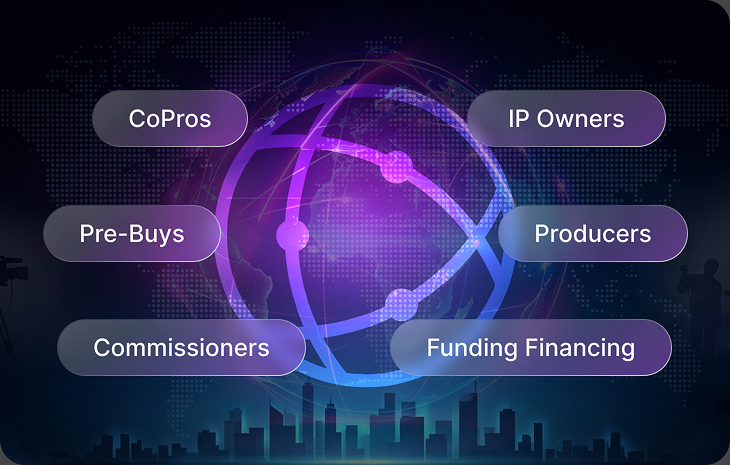
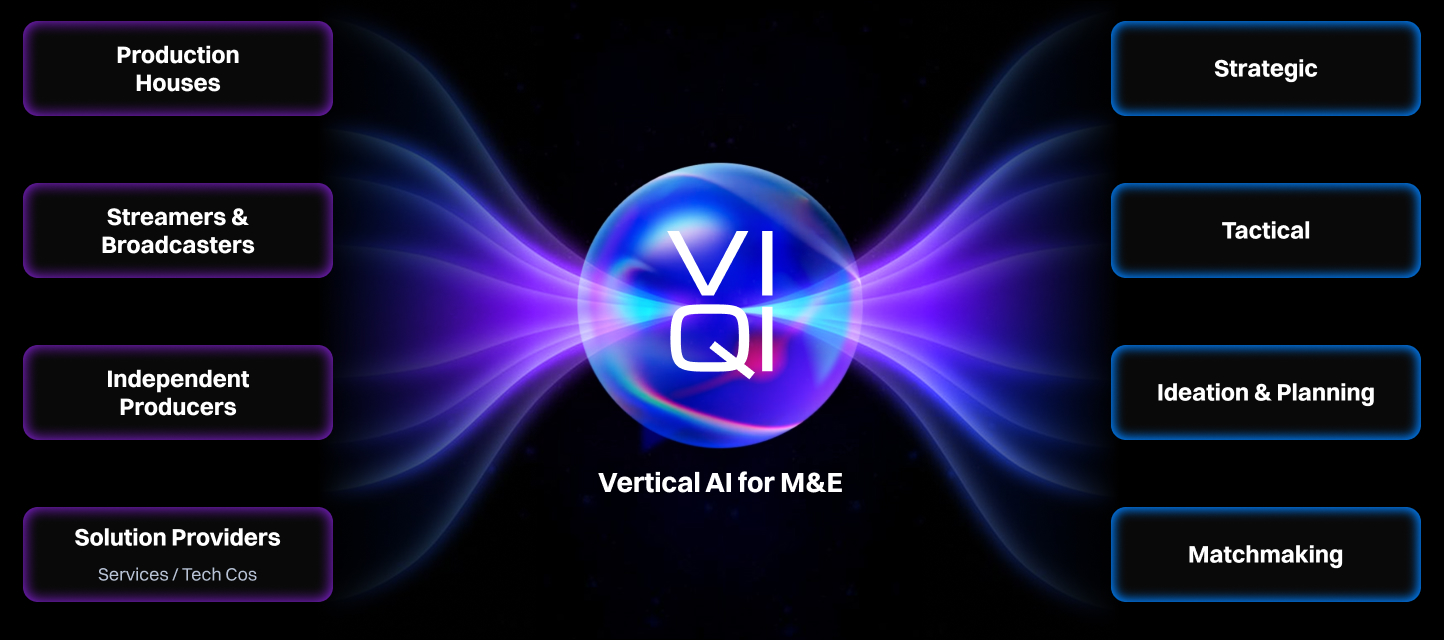
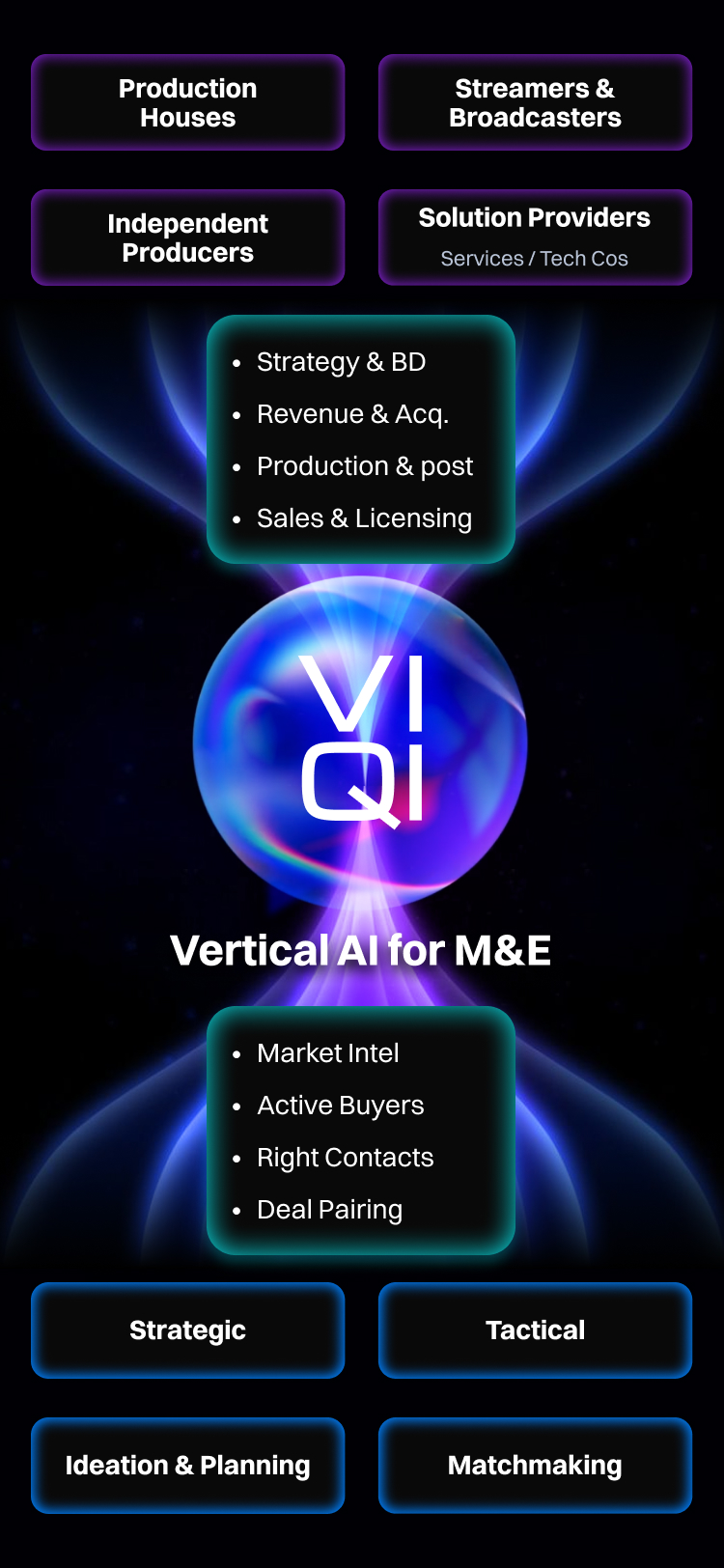
VIQI is Vitrina’s entertainment intelligence platform, built specifically for media and entertainment professionals who need structured, verified data on companies across the global M&E ecosystem. For animation studio discovery, VIQI provides filterable access to thousands of studios categorized by territory, production type, format specialization, and co-production history. Instead of building a longlist manually across market databases and web research, producers can search and filter in minutes. Explore the broader Vitrina Intelligence blog for more resources on navigating global M&E partnerships.

The platform indexes 400,000+ M&E companies worldwide, with data updated continuously from public filings, broadcast credits, festival databases, and industry announcements. For animation specifically, this means you can identify studios that have co-produced with international partners in the last two years, filter by the territories they have active relationships in, and cross-reference their stated specializations against their actual credit history. This kind of verification layer is what separates VIQI from a generic company directory.

For studios themselves, VIQI provides a channel to surface their co-production availability to a professional audience of producers and commissioners actively searching for partners. Listing on Vitrina means your studio appears in the searches of buyers who are already in acquisition and partnership mode β€” a fundamentally different quality of inbound than general SEO traffic or conference badge scans.

Is Your Animation Studio Visible to Global Buyers?

List your studio on Vitrina and get discovered by producers, commissioners, and co-production partners actively searching for studios like yours.

List Your Animation Studio on Vitrina β†’

Conclusion

Finding the right animation studio partner is a structured process, not a creative instinct. The producers who consistently get it right approach studio selection the same way they approach a distribution deal: with clear criteria, independent verification, and a willingness to walk away from an impressive portfolio when the structural terms don’t work. The seven criteria framework here gives you that structure. Apply it consistently and you’ll shortlist faster, negotiate more clearly, and avoid the contractual surprises that derail productions mid-schedule.

The animation market’s continued growth makes this discipline more important, not less. More studios means more choice but also more noise. The producers who can efficiently identify structurally compatible partners β€” based on real data, verified credits, and transparent IP positions β€” will consistently outperform those who choose based on showreel quality alone. Territory, deal structure, and financial stability are not secondary considerations. They’re foundational ones.

Start your studio search with a clear brief: define your format, your target territories, your budget tier, and your IP ownership requirements before you open a single database or attend a single market. That clarity will cut your search time in half and make every conversation you have with a potential animation co-production partner more productive from the first meeting.

Frequently Asked Questions

What is an animation studio partner?

An animation studio partner is a production company that collaborates with a content owner or producer to develop, produce, or co-finance an animated project. The relationship can range from full creative co-production with shared IP to a service production arrangement where the studio executes a defined brief. The term “partner” covers a wide range of deal structures, so the specific agreement terms always matter more than the label.

How do I find an animation studio for hire internationally?

The most efficient route is a combination of structured database search and targeted market attendance. Platforms like VIQI let you filter studios by territory, production type, and co-production history to build a verified longlist. Industry markets like MIFA at Annecy or Cartoon Forum then provide in-person validation for the studios that make your shortlist. Cold outreach works, but it’s significantly less efficient than these structured channels.

What is the difference between a co-production and a service production deal?

In a co-production, both parties contribute creatively and/or financially and typically share IP ownership and distribution rights. In a service production, the commissioning party retains all IP and pays the studio a fee to execute the work. Co-productions are more complex to negotiate but can unlock public funding and broader distribution. Service production is simpler but provides no financial leverage from the studio side and puts all production risk on the buyer.

What are the red flags when evaluating an animation studio partner?

Key red flags include: reluctance to share standard contract terms before a term sheet, vague or inconsistent answers about current production capacity, credits that cannot be independently verified, a heavy reliance on a single client for revenue, and unwillingness to provide references from previous international co-production partners. Any one of these warrants caution. Multiple flags together should lead you to remove the studio from your shortlist.

Does the territory where the animation studio is based really matter?

Yes, territory is one of the most important and most underweighted factors in studio selection. A studio’s location determines its natural broadcaster relationships, its access to public funding incentives (such as France’s CNC, the UK’s BFI schemes, or Canada’s tax credits), and its IP law environment. The cultural context the studio operates in also affects the creative sensibility it brings to a project. Studios based in Japan bring credibility for anime-style content that a European studio simply can’t replicate on reputation alone.

How important is IP ownership when selecting an animation studio partner?

IP ownership is critical, particularly for projects intended as franchise starters. Many studios, especially those with established original IP, include contract language claiming co-ownership of derivative works. If you don’t negotiate these terms explicitly, you may lose sequel rights or merchandising rights you assumed you owned. Always request and review standard contract terms before entering serious negotiation, and engage an attorney with animation co-production experience.

Which industry events are best for finding animation co-production partners?

MIFA at Annecy (June, France) is the world’s largest animation market and the best single event for international co-production deal-making. Cartoon Forum (September, Toulouse) focuses specifically on European animated TV projects seeking co-producers and broadcast partners. Asia Animation Summit covers East and Southeast Asian studio activity. For broad entertainment industry coverage that includes animation, IFTA member markets like AFM also surface animation partnership opportunities.

Start Your Studio Search on VIQI

Search, filter, and evaluate animation studios across 100+ territories β€” free to explore. No credit card required.

Explore VIQI Free β†’

About the Author

Vitrina Research Team

The Vitrina Research Team produces intelligence-led analysis on media and entertainment industry structure, deal activity, and market trends. Our research draws on VIQI’s proprietary dataset of 400,000+ M&E companies worldwide.