By Vitrina Research Team | Published: July 9, 2026 | 7 min read
Most producers evaluate content opportunities in the wrong order. They fall for a compelling story first, then try to reverse-engineer the commercial case afterward. That sequence is expensive. The global entertainment and media market is projected to reach $3.4 trillion by 2028, according to the PwC Global Entertainment and Media Outlook, but that headline figure masks enormous variance between genres, territories, and windows. Not every wave lifts every boat.
A high-value content opportunity isn’t simply a good idea. It’s a good idea with a confirmed buyer, a viable rights structure, credible partners, proven demand, and a clear path to financing. When all five signals align, you have an opportunity worth developing. When one or two are missing, you have a research project, not a greenlight. Knowing the difference before you commit development resources is the producer’s single most valuable skill.
This framework walks through exactly how to make that call. It covers the five core signals of a genuinely profitable content opportunity, the red flags that masquerade as opportunity, a 10-question pre-commitment checklist, and how modern data tools collapse weeks of manual research into hours. Whether you’re evaluating film business opportunities or broader entertainment industry opportunities, the same structured logic applies.
Key Takeaways
- High-value content opportunities share five measurable signals: confirmed buyer appetite, clean IP rights, credible partner track record, territory demand-supply gap, and a clear financing pathway.
- Genre trends that peaked 18 months ago, platforms that announced but haven’t commissioned, and partners with no verifiable deal history are classic false opportunities.
- The global M&E market will reach $3.4 trillion by 2028 (PwC), but only producers who evaluate commercial signals before creative ones capture that value reliably.
- A structured 10-question checklist can reduce wasted development spend and compress weeks of manual market research into hours with the right data platform.
Why Most Producers Evaluate Opportunities in the Wrong Order
According to the BFI’s industry research, development spend on projects that never reach production accounts for a significant share of independent producers’ annual budgets. The creative-first approach is the primary driver. Producers attach to a concept, build a team, develop scripts, and only then ask whether a buyer actually exists for this type of content in this territory right now.
The problem isn’t passion for the material. Passion is essential. The problem is sequence. Commercial viability isn’t a filter you apply at the end. It’s a lens you bring to the very first evaluation. Does confirmed buyer appetite exist? Is the rights structure clean? Do your potential partners have a delivery track record? These questions take minutes to answer with the right data. Without that data, they take weeks, and by then you’ve already spent real money.
Producers who invert this sequence, starting commercial and then finding the creative expression, consistently show better greenlight-to-delivery ratios. They aren’t less creative. They’re more disciplined about which creative ideas get their time. The goal is to find opportunities where the commercial case is already strong, then develop the best possible creative execution within that space.
“The producer’s job is not to guess what buyers want. It’s to know what buyers are actively commissioning and build toward that with creative integrity intact.”
What Are the 5 Signals of a High-Value Content Opportunity?
Identifying profitable content opportunities requires reading five distinct signals simultaneously. The European Audiovisual Observatory tracks commissioning trends across European platforms and consistently shows that projects with multiple aligned signals outperform those relying on a single strong factor. Each signal reduces a specific category of production risk. Together, they define an opportunity worth pursuing.
Signal 1: Confirmed Buyer Appetite
This is the most critical signal and the one most often skipped. Confirmed buyer appetite means a platform or distributor has actually commissioned content in your genre and target territory within the last 18 months. Not announced a strategy. Not published a wish list. Commissioned and delivered deals.
Genre strategies shift quickly. A platform that was actively buying Nordic crime thrillers 24 months ago may have pivoted entirely. Without current commissioning data, you’re pitching against a buyer profile that no longer exists. The 18-month window is not arbitrary. It’s the typical cycle between a platform commissioning trend and the resulting content reaching screens, which then shapes the next commissioning round.
Signal 2: Clean Rights Structure
Encumbered IP kills deals at every stage. A clean chain of title means the underlying rights are fully controlled, options are current, any underlying material (book, script, life rights) is properly optioned, and there are no competing claims. Rights problems discovered in due diligence can collapse financing arrangements that took months to assemble.
Before committing development resources, verify that every rights holder in the chain has been properly contracted. This includes music rights if existing recordings are integral to the concept, and format rights if the project is based on an existing format. Clean rights are table stakes, not a detail to sort out later.
Signal 3: Partner Track Record
Co-producers and distributors with no verifiable deal history are a liability, not an asset. A partner’s name on a pitch deck matters far less than their track record of actually closing and delivering projects. Look for companies that have completed international co-productions in your budget range within the last three years. Delivery history, not aspiration, is the metric.
This applies equally to distributors. A distribution partner who claims strong relationships with particular platforms should be able to point to recent deals with those platforms. If that evidence isn’t available through industry records or public announcements, treat the partnership claim as unverified. Using a film production database makes it straightforward to check a company’s actual deal history before entering negotiations.
Signal 4: Territory Demand vs. Supply Gap
The most commercially attractive content opportunities sit in territory-genre combinations where buyer demand exceeds available supply. According to Statista’s Media Market Outlook, streaming video revenue is growing fastest in Southeast Asia, Latin America, and parts of the Middle East, yet content production infrastructure in those regions lags significantly behind demand growth. That gap is an opportunity.
Mapping demand against supply requires knowing how many projects in your genre and territory are already in active development or recently released. If the market has been flooded with similar content in the last 12 months, even strong underlying demand may be temporarily saturated. The gap analysis must be current, not based on conditions from two years ago.
Signal 5: Clear Financing Pathway
A viable financing pathway means at least two of these four mechanisms are realistically accessible for your project: pre-sales to confirmed interested buyers, production incentive eligibility in the shooting territory, co-production treaty access via a partner, and gap finance availability from a lender active in your budget range. One mechanism alone rarely closes a budget. Two or more create a fundable stack.
IFTA’s annual market reports consistently show that independent productions with pre-sales in place before production begins have significantly higher completion rates than those relying solely on post-production sales. Pre-sales are the strongest single financing signal because they confirm buyer appetite and provide bankable commitments simultaneously.
Stop Guessing. Start Researching.
VIQI gives producers access to commissioning data, company track records, and territory demand signals for 400,000+ M&E companies worldwide. Evaluate opportunities in hours, not weeks.
Which Red Flags Look Like Real Opportunities?
Not everything that looks like a content opportunity is one. Some of the most persistent traps in the industry are opportunities that were real 18 months ago, or opportunities that were announced but never materialized. Recognizing these false signals before committing development resources is as important as identifying the genuine ones. The entertainment market intelligence needed to tell them apart is now widely available, but only if you know what patterns to look for.
The Lagging Genre Trend
Genre trends in content are real, but they move faster than development cycles. A genre that peaked on streaming platforms 18 months ago is likely saturated today. Buyers who drove that trend have already commissioned their quota. New entrants pitching into that space are competing for residual appetite, not the main wave. The tells are consistent: trade coverage of the trend has slowed, acquisition announcements in the genre have thinned, and multiple similar projects are already in post-production.
The counter-instinct here is correct. If you’re reading about a genre trend in the trades, the commissioning window for riding that trend has often already closed for independent producers. Platforms commission 12-18 months ahead of release. By the time the genre trend is visible in published content, the next commissioning cycle has already begun in a different direction.
The Platform That Announced but Hasn’t Commissioned
Platform strategy announcements are marketing events, not commissioning mandates. A streaming service announcing expansion into a new territory or genre category does not mean they are actively accepting pitches, have allocated budget, or have a commissioning team in place for that content type. Dozens of independent producers waste development resources every year pitching to platforms based on press releases rather than actual deal flow.
The verification test is simple: can you point to three deals this platform has closed in this genre or territory in the last 18 months? If not, the announced strategy is an aspiration. Build to buyers with a proven recent transaction history, not those with compelling press releases.
The Partner With No Deal History
Co-production and distribution partners who present extensive relationship networks but cannot point to completed deals are a structural risk. In the independent film and TV sector, company formation is cheap and relationship claims are easy to make. What’s hard to fake is a verified deal history: projects that went into production, were delivered, and reached audiences or platforms as contracted. Always verify partner track records through industry databases before entering formal agreements.
What Questions Should Producers Ask Before Committing Development Resources?
A structured pre-commitment checklist turns content opportunity identification from an intuitive process into a repeatable, defensible one. These 10 questions should be answered, at least provisionally, before any meaningful development budget is committed. Some take minutes with the right data tools. Others require conversations. None should be skipped.
- Has a real buyer commissioned this genre and territory in the last 18 months? Not announced interest. Commissioned and closed deals.
- Is the underlying IP fully controlled? Are options current, chain of title clean, and all rights holders under contract or contactable?
- Does the lead co-producer have at least one verified international delivery in the last three years? At a similar budget level to this project?
- How many similar projects are currently in active development or recently released in this territory? Is there still a demand-supply gap?
- Are at least two financing mechanisms realistically accessible? Pre-sales, incentives, treaty co-production, gap finance?
- Is the genre trend current or lagging? When did commissioning activity in this genre peak, and what direction is it moving now?
- What’s the realistic budget range, and does it align with the financing stack? Overbudgeted projects relative to likely pre-sale values kill financing earlier than almost anything else.
- Does your distribution partner have recent deals with the target buyer? Not a general relationship. Specific recent transactions.
- What is the incentive eligibility in the shooting territory? Is the level sufficient to materially affect the financing gap, and is it available for your project structure?
- What does success look like in 36 months? Can you define a clear exit or return path, and does the opportunity structure support that path?
If you can answer eight of these ten questions confidently and positively, you likely have a genuine high-value content opportunity. If you’re uncertain on more than three, you have research to do before spending development budget. The checklist is not a barrier to creativity. It’s a filter that ensures creative energy goes toward opportunities with real commercial traction. For more context on evaluating opportunities across the industry, the Vitrina Intelligence blog covers this topic regularly with current data.
How Does Data Change the Content Opportunity Evaluation Process?
The questions in that checklist are not new. Experienced producers have always asked them. What has changed is the time and cost required to answer them. Historically, verifying a buyer’s recent commissioning history required festival meetings, agent conversations, and weeks of calls. Verifying a partner’s deal history required personal network knowledge or expensive trade subscriptions. That research cost created an information asymmetry that disadvantaged independent producers relative to studios with large business affairs teams.
Data platforms built on structured M&E industry datasets collapse that timeline dramatically. Buyer commissioning histories, company deal records, territory trend data, and partner track records are now queryable in minutes rather than weeks. This doesn’t replace human judgment. It eliminates the delay between forming a hypothesis about an opportunity and getting the data needed to test it. A producer in 2026 who still relies solely on network knowledge for this research is operating at a structural disadvantage.
The practical difference is significant. A producer with data access can screen 20 potential opportunities in the time it previously took to properly research one. That means more shots on goal from the same development budget, better-calibrated pitches, and fewer expensive dead ends. According to the PwC Global M&E Outlook, content spending by major platforms continues to grow year-on-year, which means the opportunity set is expanding. But competition for that spend from better-informed producers is also intensifying.
The producers who benefit most from this shift are those who treat data as a first-stage filter, not a last-resort check. They run commercial viability assessments before attaching creative talent, before optioning material, and before commissioning scripts. That discipline, combined with genuine creative vision, is what defines the modern independent producer operating at the top of the market. Understanding how to use entertainment market intelligence effectively is now a core producer competency, not an optional advantage.
How VIQI Helps Producers Evaluate Content Opportunities
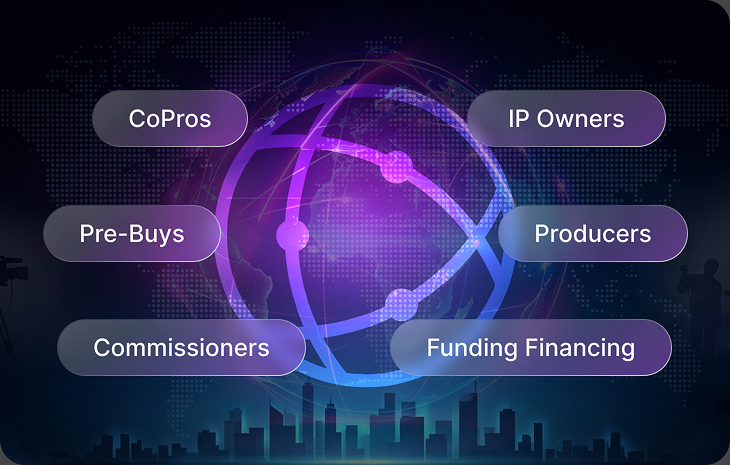
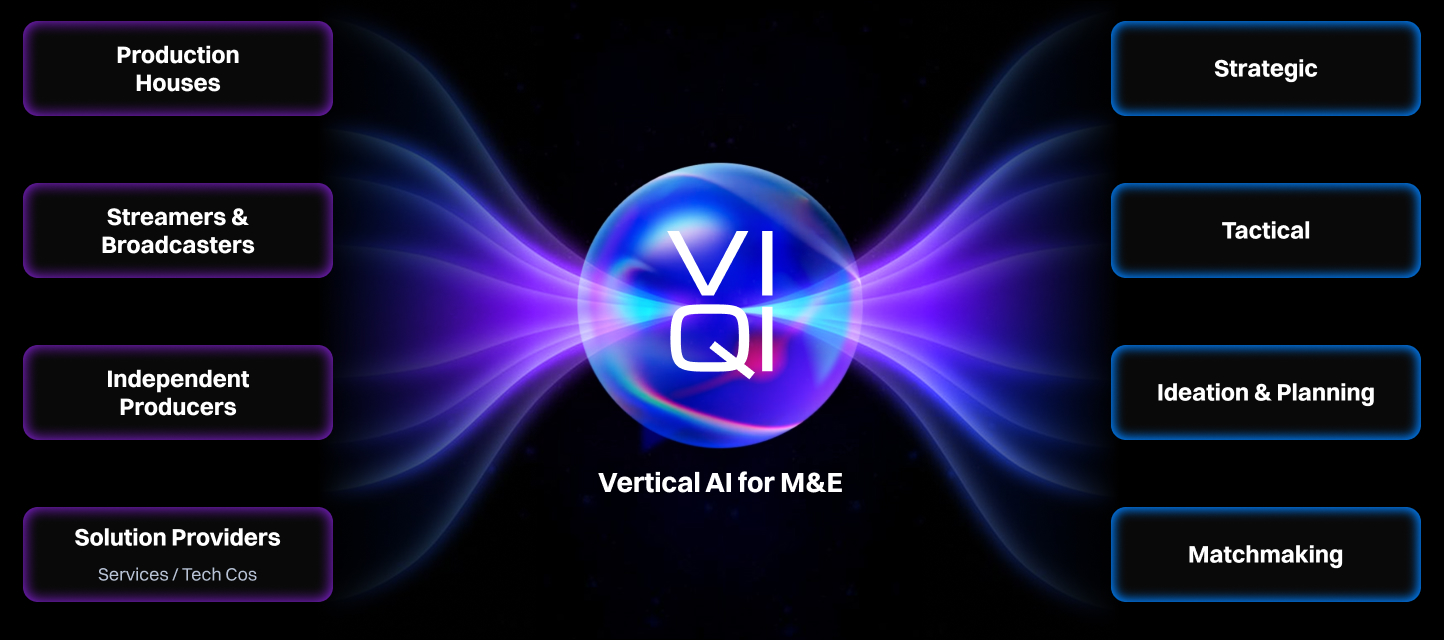
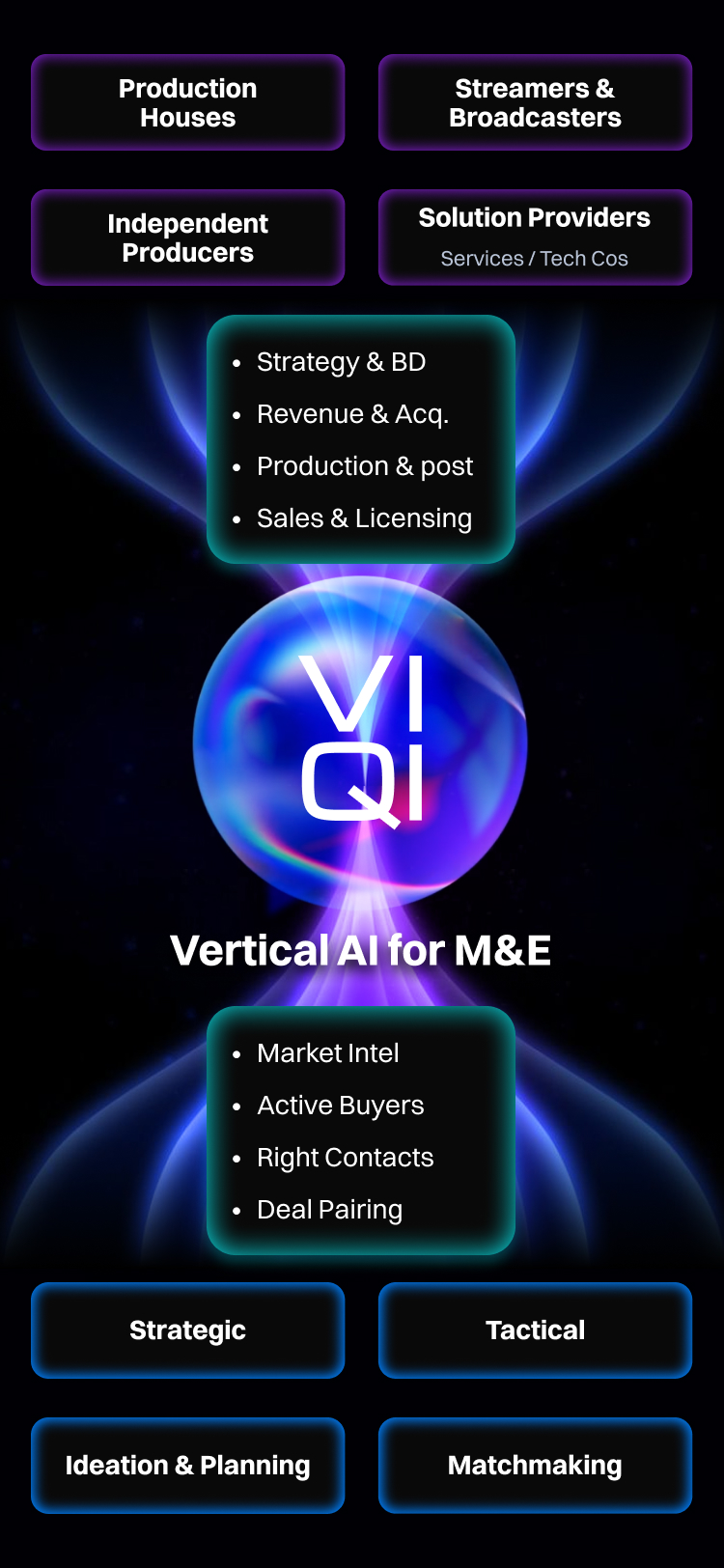
VIQI, Vitrina’s intelligence platform, is built specifically for the content opportunity identification workflow described in this article. It indexes over 400,000 M&E companies globally, including production companies, distributors, platforms, broadcasters, and financiers, with data on their deal histories, genre specializations, territory activity, and company relationships. A producer can enter a genre and territory combination and surface all buyers who have actively commissioned in that space within a defined recent period, verified against actual deal records rather than self-reported profiles.
For partner verification, VIQI provides structured profiles on co-production companies with their delivery histories, past international collaborations, and budget range patterns. That’s the data needed to answer checklist questions 3 and 8 in minutes rather than weeks. For territory demand mapping, VIQI’s filters allow producers to query active project counts by genre and territory, giving a live read on supply-side saturation. We’ve found this feature particularly useful during the early screening phase, when producers are comparing multiple opportunities before committing any development budget.

The platform also supports financing pathway research. Incentive eligibility by territory, co-production treaty partners by country, and distributor pre-sale history by platform type are all queryable through VIQI’s search interface. For producers navigating complex international co-production structures, having all of these data points in one place changes the economics of opportunity evaluation. It converts what was a multi-week research sprint into a same-session decision framework. That speed is a real competitive advantage in a market where the best opportunities close quickly.
Get Your Company in Front of Producers
Distributors, co-producers, financiers, and service companies: list your company on Vitrina to be discoverable when producers search for verified partners in your territory and genre.
Conclusion
High-value content opportunities are identifiable before development begins. They’re not discovered by luck or creative instinct alone. They’re found by systematically checking five commercial signals: confirmed buyer appetite, clean rights, credible partners, a territory demand-supply gap, and a viable financing pathway. When all five align, you have something worth building. When they don’t, you have a gap in your research, not a reason to proceed on faith.
The 10-question pre-commitment checklist in this article is designed to be used before any meaningful budget is committed. It won’t kill great ideas. It will kill the expensive false starts that drain development resources and morale. In our experience, producers who apply a structured evaluation process at the first stage of opportunity assessment consistently develop fewer projects overall, but convert a higher proportion of them to production. That’s a better outcome by almost every metric that matters in independent production.
The global content market is large and growing. The opportunity set for independent producers has never been technically wider. But width of opportunity doesn’t translate to individual producer success without the discipline to distinguish high-value from low-value opportunities quickly and reliably. That discipline is now data-enabled. The producers who build it into their first-stage evaluation process will consistently outperform those who don’t. Start with the commercial signals. Let the creative vision follow. The results compound over time.
Frequently Asked Questions
What makes a content opportunity “high-value” for an independent producer?
A high-value content opportunity combines confirmed buyer appetite in the target territory and genre, a clean IP rights structure, credible partners with verified delivery histories, a supply-demand gap in the market, and at least two accessible financing mechanisms. When all five signals align, the opportunity has a realistic path from development through to production and distribution. The absence of any single signal significantly elevates risk.
How do producers confirm buyer appetite before pitching?
Confirmed buyer appetite means finding evidence that a platform or distributor has closed actual commissioning deals in your genre and territory within the last 18 months. This can be verified through industry databases, trade publications reporting deal announcements, festival deal trackers, and platforms like VIQI that aggregate M&E company deal histories. Press releases announcing strategic intent are not sufficient confirmation. Closed deals are the standard.
Why is the 18-month window important for evaluating commissioning trends?
The 18-month window reflects the typical commissioning cycle in the streaming and broadcast industry. Platforms generally commission content 12 to 18 months before it reaches screens. By the time a trend is visible in published content and trade coverage, the corresponding commissioning wave has usually passed. Looking at commissioning activity in the last 18 months, rather than at released content, gives a current read on buyer appetite rather than a lagging indicator of past behavior.
What is a territory demand-supply gap and how do you identify one?
A territory demand-supply gap exists when buyer demand for content in a specific genre-territory combination exceeds the number of available or in-development titles. Streaming revenue growth in Southeast Asia, Latin America, and MENA has outpaced local content production capacity, creating structural gaps. Identifying these gaps requires knowing both how many buyers are active in a territory and how many projects are currently in development targeting those buyers. Data platforms that track active projects by territory enable this analysis.
How do you evaluate a potential co-producer’s track record before committing to a project?
Evaluate a co-producer’s track record by looking for completed international co-productions delivered within the last three years at a budget range comparable to your project. Verify that the deals cited are publicly documented through trade announcements, festival databases, or industry records rather than relying solely on the company’s own materials. Companies with strong relationship claims but no verifiable delivery history represent a due diligence gap that should be resolved before entering formal agreements.
What are the most reliable financing mechanisms for independent content producers?
The four primary financing mechanisms for independent producers are pre-sales to confirmed buyers, production incentives from shooting territory governments, co-production treaty access through a qualifying partner, and gap finance from lenders active in your budget segment. Pre-sales are the most bankable because they represent contractual buyer commitments. According to IFTA’s market data, projects with pre-sales in place before production have significantly higher completion and delivery rates than those financed solely through post-production sales.
How can data tools speed up content opportunity identification?
Data platforms built on structured M&E industry datasets allow producers to query buyer commissioning histories, partner deal records, territory trend data, and incentive eligibility within a single session rather than across multiple weeks of manual research. This collapses the time between forming a hypothesis about an opportunity and testing it with real data. Producers with data access can screen significantly more opportunities per development cycle, improving the ratio of greenlit projects to total development spend.
Start Evaluating Opportunities with Real Data
VIQI indexes 400,000+ M&E companies with verified deal histories, commissioning records, and territory data. No registration required to start exploring. Find your next high-value opportunity today.
About the Author
Vitrina Research Team
The Vitrina Research Team produces intelligence-led analysis on media and entertainment industry structure, deal activity, and market trends. Our research draws on VIQI’s proprietary dataset of 400,000+ M&E companies worldwide, covering production, distribution, financing, and platform commissioning across every major territory.