By Vitrina Research Team | Published: June 15, 2026 | 8 min read
The global media and entertainment industry is projected to reach $2.8 trillion in revenue by 2027, according to the PwC Global Entertainment and Media Outlook. Yet most producers, distributors, and investors still rely on personal networks and fragmented spreadsheets to find partners, size markets, and track competitors. A dedicated film and TV industry database changes that equation completely.
Whether you’re a production company hunting co-production partners in Southeast Asia, a distributor mapping buyers across 40 territories, or a fund doing due diligence on an acquisition target, structured industry data cuts your research time by a meaningful margin. The question is no longer whether to use a film production database β it’s which one to use and how to extract maximum value from it.
This article breaks down ten concrete benefits of using a film and TV industry database in 2026, with real-world use cases for every stage of the production and distribution pipeline. Each benefit maps to a practical workflow you can implement immediately.
Key Takeaways
- A film and TV industry database cuts partner research from weeks to hours by centralizing 400,000+ M&E company profiles in one searchable platform.

- PwC projects the global M&E market at $2.8 trillion by 2027 β structured data access is now a competitive requirement, not a luxury.
- Top use cases include deal sourcing, competitive intelligence, international expansion, investor due diligence, and supply chain mapping.
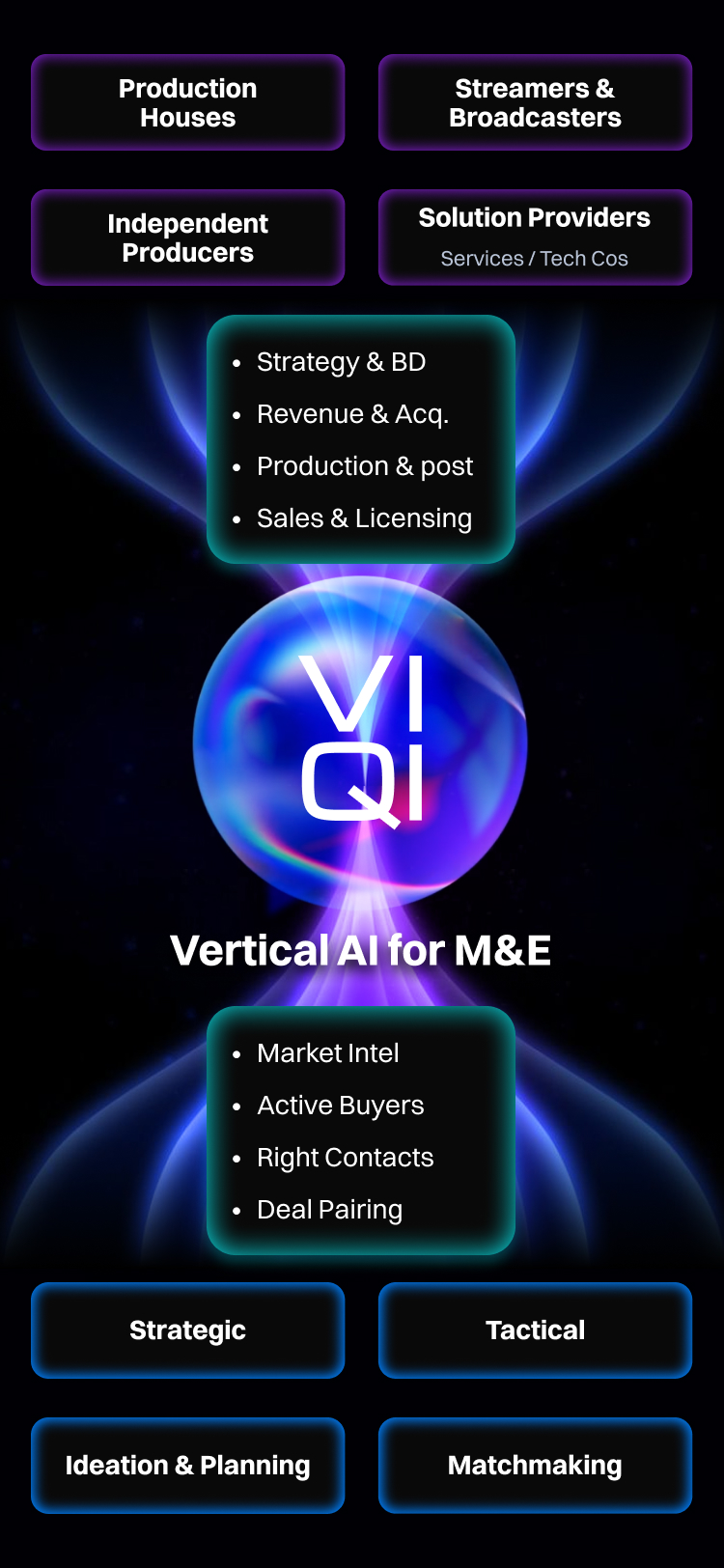
- VIQI (Vitrina Intelligence) gives both buyers and suppliers a single platform for discovery, vetting, and market analysis.
- Benefits compound: teams that use structured data for one workflow tend to expand usage across research, pitching, and partnership functions.
Why Does a Film and TV Industry Database Matter in 2026?
The entertainment industry now spans more than 400,000 active companies worldwide β studios, distributors, streamers, post-production houses, talent agencies, and technology vendors β according to VIQI’s proprietary M&E dataset. No individual professional or team can manually track that universe. A structured film and TV industry database makes the impossible tractable by organizing this fragmented landscape into searchable, filterable company profiles.
The scale of the problem is significant. The European Audiovisual Observatory tracked over 11,000 theatrical releases across Europe alone in a single year. Add global streaming originals, co-productions, and format licensing β and the complexity compounds fast. Professionals who lack systematic data access rely on word-of-mouth, which means they miss the majority of viable partners and deals.
Structured data also supports the shift toward evidence-based pitching. Buyers at major streamers and networks increasingly expect producers to arrive with market data β comparable titles, territory performance, genre trends β rather than just creative decks. An entertainment industry platform that combines company data with market intelligence gives professionals the tools to compete on both creative and commercial terms.
Benefit 1: Does a Film Production Database Actually Save Research Time?
Research efficiency is the most immediate and measurable benefit of using a film production database. Teams that previously spent two to three weeks building a long-list of potential co-production partners across a region can now generate the same list in under an hour. The time savings compound across every project cycle, freeing creative and business development staff for higher-value work.
A typical manual research workflow involves checking IMDB credits, reading trade press archives, scanning festival catalogs, and cold-calling referrals. That process is slow, incomplete, and heavily biased toward companies already in a professional’s network. A structured database replaces guesswork with systematic filtering β by territory, genre, company type, deal history, or production volume.
Independent producers in particular benefit from this kind of speed. The Independent Film and Television Alliance (IFTA) represents hundreds of independent companies whose teams operate lean, without dedicated research departments. For these companies, database access functions as an outsourced research capability. You can explore our notes on film financing strategies for independent producers to see how research efficiency feeds directly into smarter financing decisions.
Benefit 2: How Does a Database Improve Deal Sourcing?
Deal sourcing in film and TV has historically been relationship-dependent, which creates structural blind spots. A film and TV industry database opens access to companies outside a professional’s immediate circle, effectively expanding the addressable deal universe without requiring expensive market attendance. That’s a meaningful shift, especially for teams that can’t attend every major market each year.
Concrete applications include identifying distributors who’ve recently acquired titles in a specific genre, finding broadcasters who have commissioned original content in a particular territory, and spotting production companies whose output aligns with a financier’s investment thesis. Each of these tasks is impractical without structured data β and straightforward with it.
The British Film Institute’s industry data portal shows how even national-level data improves sourcing outcomes. When professionals can see the volume and type of projects entering production in a given market, they can time outreach to align with active buying cycles rather than cold-pitching into quiet periods.
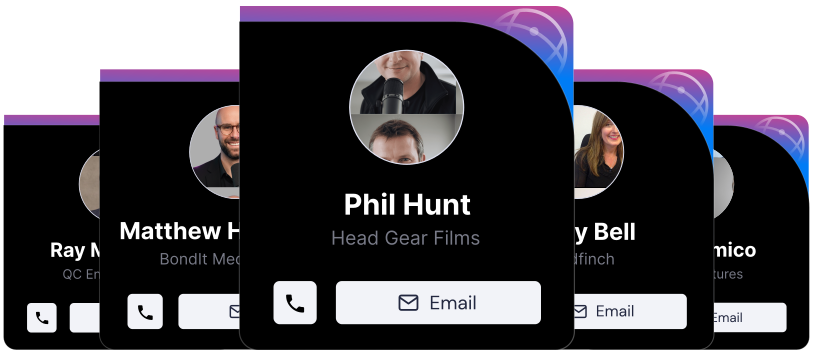
Research 400,000+ M&E Companies on VIQI
Filter by territory, genre, company type, and deal history. Build qualified partner lists in minutes, not weeks.
Benefit 3: Using a Database for Competitive Intelligence
Competitive intelligence is often cited as a top priority by entertainment executives, but it’s rarely executed systematically. A film and TV industry database provides a structured view of competitor activity β what companies are producing, which territories they’re entering, and which partners they’re working with. This intelligence directly informs positioning, pricing, and pitch strategy.
For example, a production company pitching a crime drama to a European broadcaster can use database filtering to see which competing producers have delivered similar content to that broadcaster in the past two years. That context shapes the pitch β what differentiates the project, what the buyer already has, and what gaps exist in their slate.
Competitive intelligence from databases also extends to tracking new entrants. When a technology company or a private equity-backed group enters the production space, a well-maintained film production database will surface that activity early. Teams that monitor competitor footprints systematically are less likely to be caught off-guard by market shifts.
Benefit 4: How Does Database Access Support Partner Vetting?
Partner vetting is one of the highest-stakes activities in film and TV production. Choosing the wrong co-producer, distributor, or technology vendor can cost a production months and significant budget. A structured database reduces that risk by providing verified company profiles β production history, deal track record, territory coverage, and organizational details β before the first meeting takes place.

The vetting process typically involves three layers: capability (can this company deliver what it claims?), credibility (do they have a track record in this genre and territory?), and compatibility (do their working patterns and deal terms align with yours?). A film and TV industry database addresses the first two layers directly and can surface signals relevant to the third.
The Producers Alliance (PACT) has long advocated for greater transparency in production company capabilities. Structured databases operationalize that transparency at scale β vetting that once required weeks of reference calls can begin with a ten-minute database review.
Benefit 5: Can You Actually Size a Market Using Industry Data?
Market sizing is a prerequisite for fundraising, greenlight decisions, and territorial expansion β but it’s notoriously difficult to execute in entertainment. A film and TV industry database provides the company-level building blocks for bottom-up market sizing, letting analysts count active players, estimate collective output, and segment markets by company type or production volume. PwC’s Global M&E Outlook projects the industry at $2.8 trillion by 2027, but the actionable intelligence lies in understanding the structure beneath that headline number.
Bottom-up sizing from a database is more reliable than top-down estimates for niche segments. If you’re evaluating the market for premium unscripted content in German-speaking Europe, aggregate industry reports won’t give you the company-level granularity you need. A database that lets you filter by territory, format, and production scale will get you much closer.
This is also where the Vitrina blog has explored adjacent topics in depth β for instance, our piece on anime studio research demonstrates how database-driven counting produces more accurate market estimates than survey-based methods. The same methodology applies across genres and territories.
Benefit 6: Trend Spotting Before the Market Moves
Entertainment trends typically surface in production data six to twelve months before they appear in trade headlines. A film and TV industry database lets you track leading indicators β new company formations in a genre, increased commissioning activity in a territory, or a spike in co-production deals between two regions β before the trend becomes conventional wisdom. That lead time is genuinely valuable for development, acquisitions, and investment strategy.
Practical applications include monitoring which genres are attracting new entrants, tracking which streamers are expanding their local language content commissioning, and identifying markets where production infrastructure is being built out rapidly. Each of these signals points to near-term opportunities for deals, partnerships, or investment.
The European Audiovisual Observatory publishes retrospective trend reports, but professionals who rely on published reports are always behind the curve. A live film production database inverts that disadvantage β you spot the trend from the data, then use the reports to confirm and contextualize what you’ve already identified.
Citation Capsule
The global media and entertainment industry is projected to reach $2.8 trillion in revenue by 2027, according to the PwC Global Entertainment and Media Outlook. Professionals using a structured film and TV industry database can identify territory-level and genre-level growth signals well before they appear in aggregate reports. (PwC Global M&E Outlook, 2025)
Benefit 7: How Does a Database Support International Expansion?
Entering a new territory requires understanding its production ecosystem β who the active commissioners are, which local production companies have international co-production experience, and which distributors hold the relationships with local broadcasters. A film and TV industry database compresses months of market intelligence work into a structured research sprint. That’s why cross-border expansion teams consistently cite database access as a top operational need.
International expansion planning benefits from three specific data types: company directories (who’s active in the target territory), deal flow data (what types of projects are finding buyers), and contact intelligence (who are the decision-makers at key companies). A comprehensive film production database addresses all three in a single platform rather than requiring separate tools for each data type.
Our analysis of top anime studios in Japan illustrates this dynamic at a country level. A Western distributor or streamer looking to enter the Japanese animation market needs exactly the kind of structured company-level data that a database provides β not just the top-line names, but the mid-tier studios where partnership opportunities are less competitive and potentially more flexible.
Benefit 8: Investor Due Diligence in Film and TV
Film and TV investment has grown significantly more sophisticated, with private equity, family offices, and institutional investors now active participants in production financing. Each of these investors requires structured due diligence before committing capital β and that due diligence depends heavily on accurate company-level data. A film and TV industry database provides the foundation for credible investment analysis by giving investors a verifiable picture of a target company’s market position, production history, and competitive landscape.
Key due diligence questions include: How many comparable companies exist in this market? What’s the target company’s production volume relative to its peer group? Which territories and distribution channels does the company cover? These are questions that a well-structured film production database can answer in minutes, replacing weeks of analyst research.
The IMDb data resources are frequently used as a starting point for production history research, but they don’t provide the business intelligence β company size, deal relationships, territory coverage β that investors need for financial due diligence. Specialist entertainment industry databases fill that gap. You can explore related analysis on the Vitrina blog for deeper coverage of M&E investment trends.
Benefit 9: Does a Film Production Database Help with Casting and Crew Research?
Crew and talent sourcing is one of the most relationship-intensive parts of production, and it’s an area where structured data can dramatically expand access. While individual talent databases exist, a company-level film and TV industry database serves a complementary function β it identifies which production companies are active in a specific market, which can then serve as entry points for crew network access. It’s a structural approach to talent discovery rather than a direct talent search tool.
For international co-productions, this matters enormously. A producer looking to hire a local line producer in Poland, a visual effects house in South Korea, or a post-production facility in Canada can use a database to identify the active companies in those markets first, then approach them for crew referrals or direct engagement. This company-first approach is faster and more reliable than cold-searching individual CVs.
Production service companies, location facilitators, and post-production vendors are all segments well covered by a comprehensive film and TV industry database. These companies are often invisible to international producers who haven’t worked in a territory before β database access gives those producers a systematic view of the local infrastructure available to them.
Benefit 10: Supply Chain Mapping Across the M&E Ecosystem
The film and TV supply chain spans development companies, financiers, production studios, post-production facilities, distributors, and technology vendors β and a breakdown at any link affects the entire project. Supply chain mapping using a film and TV industry database lets companies identify single points of failure, find backup vendors, and build resilience into their production pipelines. This use case surged in importance after global disruptions exposed the fragility of single-source dependency in production workflows.
A concrete example: a major production company might discover through database research that four of its five key VFX vendors work with the same underlying rendering infrastructure provider. That concentration risk is invisible without structured supply chain data and obvious with it. Identifying that risk before production begins allows the company to diversify vendors proactively.
Supply chain mapping also supports sustainability initiatives, which are becoming standard practice at major studios and broadcasters. Knowing which vendors in your supply chain hold green production certifications β and which don’t β is a data problem that a well-maintained entertainment industry platform can help solve. The BFI’s industry data resources provide a model for how national bodies are beginning to integrate supply chain transparency into industry data standards.
How Vitrina Helps You Navigate Film and TV Industry Data
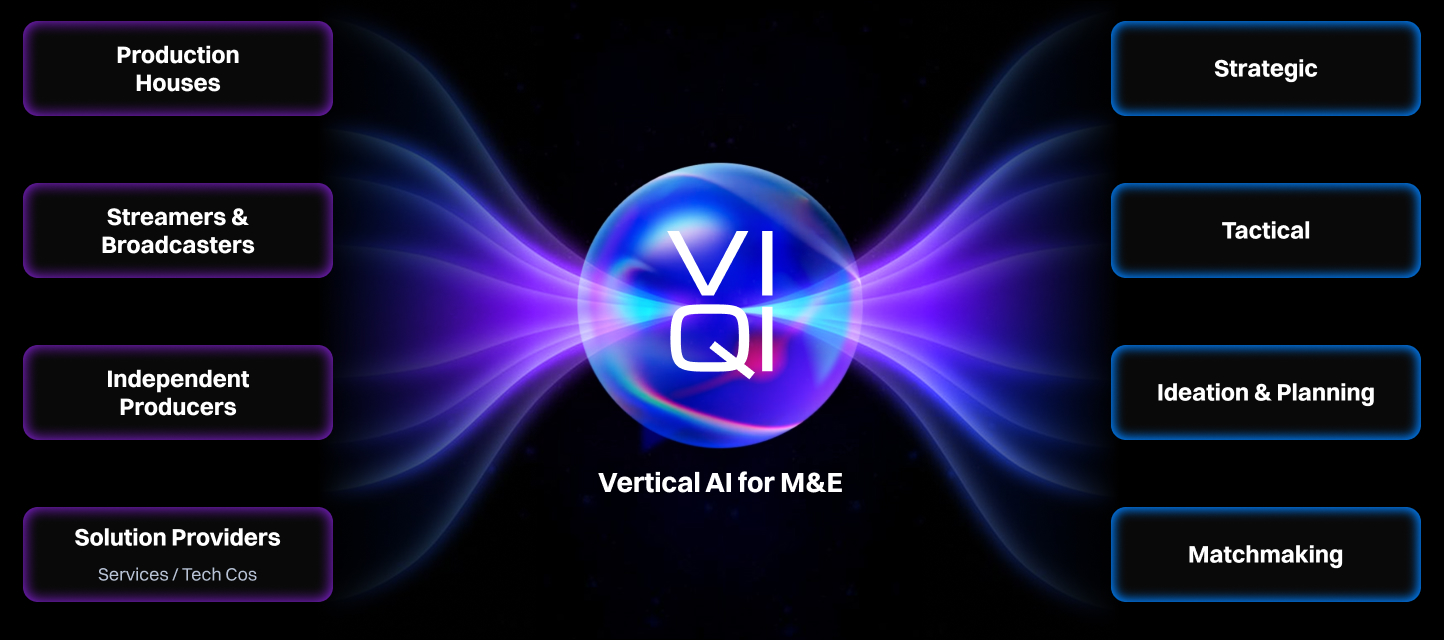
VIQI (Vitrina Intelligence) is a B2B entertainment industry platform that centralizes profiles of more than 400,000 M&E companies across production, distribution, streaming, post-production, and adjacent technology sectors. The platform is designed specifically for professionals who need structured, searchable data to support discovery, vetting, and market analysis β without building internal research infrastructure from scratch.

On the demand side, VIQI allows buyers, distributors, investors, and production companies to filter the global M&E landscape by territory, company type, genre focus, production scale, and deal history. A research task that once took a senior analyst a week now takes an afternoon. On the supply side, companies that list on the Vitrina platform gain visibility with qualified buyers and partners who are actively researching in their category β making inbound discovery a systematic part of business development rather than a lucky accident.
What distinguishes VIQI from generic business databases is its depth within the M&E vertical. The platform is built for entertainment industry use cases β including the ten benefits described in this article β with company profiles structured around production activity, territorial coverage, and deal relationships rather than generic corporate metadata. For professionals who treat market intelligence as a strategic asset, that specificity makes a significant practical difference. Browse the Vitrina blog for ongoing analysis of how M&E professionals are applying intelligence platforms to real business challenges.

List Your Company on Vitrina
Get discovered by 400,000+ M&E professionals researching partners, vendors, and suppliers. Visibility starts the moment your profile goes live.
Conclusion
A film and TV industry database is no longer a specialist tool for research departments at major studios. It’s becoming standard infrastructure for any professional operating across more than one territory or genre. The ten benefits covered in this article β from research efficiency and deal sourcing to supply chain mapping and investor due diligence β represent distinct workflow improvements, not abstract advantages. Each one translates to faster decisions, lower research costs, and more complete market visibility.
The practical entry point is simpler than most professionals expect. Start with the use case most relevant to your current workflow β partner discovery, competitive intelligence, or market sizing β and build database research into your standard process for that task. The compounding effect is real: teams that systematize one research workflow typically expand database usage across their entire business development function within six to twelve months.
The global M&E market’s growth to a projected $2.8 trillion by 2027 means the competitive stakes for being well-informed are rising. Professionals with structured data access will consistently outpace those relying on personal networks and informal intelligence. The industry database isn’t replacing the relationship β it’s ensuring that the relationships you build are the right ones, at the right time, with the right companies.
Frequently Asked Questions
What is a film and TV industry database?
A film and TV industry database is a structured, searchable platform containing profiles of companies operating across the media and entertainment value chain β production companies, distributors, broadcasters, streamers, post-production facilities, and related vendors. Professionals use these platforms for partner discovery, competitive research, market sizing, and due diligence. Platforms like VIQI index more than 400,000 M&E companies globally, making the full industry landscape searchable in one place.

How is a film production database different from IMDb?
IMDb is a consumer-facing title and talent database. A film production database is a B2B intelligence tool built around company-level data β organizational structure, territorial coverage, deal history, production volume, and partner relationships. While IMDb is useful for identifying credits and production history, it doesn’t support business workflows like partner vetting, market sizing, or investment due diligence. Purpose-built entertainment industry platforms address those use cases directly.
Who uses film and TV industry databases?
The primary user base includes production companies (for partner and vendor research), distributors (for identifying new buyers and territories), investors and private equity funds (for deal sourcing and due diligence), streamers and broadcasters (for supplier and format discovery), and industry consultants or analysts. The BFI and European Audiovisual Observatory are examples of institutional users that publish research built on structured industry data. Use cases vary, but the common thread is a need for systematic company intelligence rather than individual title data.

How accurate is the data in entertainment industry databases?
Accuracy depends heavily on the database provider’s data sourcing and update methodology. Platforms that combine primary company submissions with third-party verification and regular data hygiene cycles maintain the highest accuracy. For high-stakes decisions like investment due diligence or acquisition targeting, it’s standard practice to cross-reference database data against company filings, trade press, and direct outreach. Databases are most reliable as a starting point for research and discovery, with verification following for shortlisted targets.
Can small production companies benefit from a film industry database?
Yes, and arguably more than large ones. Major studios have dedicated research and business development teams; smaller companies don’t. A film production database functions as outsourced research infrastructure for independent producers, giving them access to partner and market intelligence that was previously only available to well-resourced organizations. IFTA member companies regularly cite partner discovery and international market access as the two highest-value use cases for structured industry data among independent producers.
How do I get my company listed in a film and TV industry database?
Most entertainment industry platforms have a company submission process. On Vitrina, companies can list their profiles directly at vitrina.ai. Listing typically involves providing company details, territories of operation, genres or formats covered, and contact information for business development inquiries. A complete, accurate profile improves discoverability significantly, as buyers and partners filter by specific criteria when searching for suppliers and collaborators. Keeping your profile current increases the chance of appearing in relevant searches.
What makes VIQI different from other entertainment industry databases?
VIQI is built exclusively for the M&E vertical, with company profiles structured around entertainment-specific attributes including production activity, deal relationships, and territorial coverage. With more than 400,000 indexed companies, it provides broader coverage than most specialist alternatives. The platform serves both sides of the market: buyers use it for discovery and research, while suppliers use it to gain visibility with qualified partners actively searching in their category. That dual-sided design creates a network effect that improves data quality and discovery relevance over time.
Explore the VIQI Database Free
Access profiles of 400,000+ film and TV companies. Filter by territory, genre, and company type to find exactly the partners or suppliers you need.
About the Author
Vitrina Research Team
The Vitrina Research Team produces intelligence-led analysis on media and entertainment industry structure, deal activity, and market trends. Our research draws on VIQI’s proprietary dataset of 400,000+ M&E companies worldwide.