By Vitrina Research Team | Published: July 2, 2026 | Updated: July 2, 2026 | 12 min read
Sony Pictures Entertainment isn’t just a Hollywood studio. It’s one of the most complex, globally distributed entertainment businesses on the planet, with operations spanning theatrical film, scripted television, anime, gaming content, and streaming across more than 200 territories.
For producers, agents, and investors, understanding Sony’s internal structure before approaching the company is not optional. Sony Pictures Television alone generates billions in annual revenue across scripted, unscripted, and international formats. Pitching the wrong division, or missing a first-look deal window, can cost you years. The corporate map matters as much as the creative pitch.
This guide breaks down Sony’s full entertainment structure from the conglomerate level down to individual division strategy. We cover Sony Pictures Television’s production model, Crunchyroll’s anime ambition, regional operations in India and Europe, and the practical routes for businesses seeking a Sony partnership.
Key Takeaways
- Sony Pictures Entertainment generates approximately $10–11B annually across film and TV operations (Sony Group Annual Report, 2024).
- Sony Pictures Television (SPT) distributes content to 200+ territories globally, making it one of the world’s largest TV studios by output volume.
- Sony’s $1.175B acquisition of Crunchyroll in 2021 established it as the dominant gatekeeper for Western anime streaming distribution.
- The three main entry points for partners are: first-look deals, international co-production agreements, and content licensing through SPT International.
- Sony’s C-suite and VP-level contacts shift frequently — VIQI tracks live org chart data and verified contacts across Sony’s divisions.
Research Sony’s Deal Activity on VIQI
VIQI gives entertainment professionals verified intelligence on Sony Pictures Television’s deal activity, org chart, production slate, and 400,000+ other M&E companies globally.
Sony Pictures Entertainment vs. Sony Pictures Television: What’s the Difference?
Sony Pictures Entertainment (SPE) is the US-headquartered parent company overseeing all of Sony’s film and television operations, based in Culver City, California. Sony Pictures Television (SPT) is one of several divisions operating under SPE, specifically focused on TV production, format development, and international content distribution. Confusing the two is one of the most common mistakes pitchers make.
SPE and SPT have different teams, different mandates, and different acquisition criteria. A theatrical film concept routes through Columbia Pictures or TriStar. A scripted drama series routes through SPT. A co-production with an international broadcaster routes through SPT International. Getting the right door matters more than getting the right pitch.
Sony Pictures Animation, the division behind the Spider-Verse franchise, sits under SPE separately from SPT. Sony Pictures Releasing International handles global distribution as a distinct function. Knowing which entity to approach eliminates wasted introductions and positions you as a credible partner from the first contact.
| Division | Focus | Key Output | How to Engage |
|---|---|---|---|
| Sony Pictures Entertainment (SPE) | Parent company, US film & TV | Strategic oversight, M&A, financing | Executive co-production, equity deals |
| Columbia Pictures | Theatrical feature film | Major studio releases | Feature film pitches, IP licensing |
| TriStar Pictures | Mid-range theatrical & prestige | Specialty features, awards titles | Prestige film, documentary features |
| Sony Pictures Television (SPT) | TV production & distribution | Scripted, unscripted, formats, syndication | First-look deals, co-production, licensing |
| Sony Pictures Animation | Animated theatrical & streaming | Spider-Verse, family animation | Animation co-production, IP partnership |
| Crunchyroll | Anime streaming & distribution | Anime SVOD, licensing, dub production | Anime licensing, co-production, simulcast |
Source: Sony Group Corporation corporate filings and official divisional pages, 2024
Sony Pictures Television: How Big Is the Production Operation?
Sony Pictures Television is among the largest TV studios in the world by sheer production volume, with a catalogue spanning scripted drama, sitcoms, reality, daytime, and game shows distributed to broadcasters across 200+ territories. The scale is rarely appreciated from outside the industry.
On the scripted side, SPT’s pedigree includes Breaking Bad, Better Call Saul, and Seinfeld. These aren’t just cultural touchstones — they’re evidence of SPT’s willingness to back niche, challenging concepts that eventually become franchises. That creative risk tolerance shapes what kinds of pitches get traction inside the studio.
Unscripted and daytime are equally significant. SPT operates the Game Show Network (GSN) in the US and holds long-running formats like Jeopardy! and Wheel of Fortune. These catalogue assets generate syndication and licensing revenue that funds the studio’s more experimental commissioning. Understanding this dual revenue structure explains why SPT can absorb risk on international co-productions.
SPT’s first-look deal model is the primary on-ramp for independent producers. Under a first-look arrangement, an indie producer develops projects at SPT in exchange for the studio getting first rights of refusal. These deals typically include overhead funding and a development commitment. For film production companies looking to scale into television, a first-look deal with SPT is the clearest structured route into Sony’s production pipeline.
SPT’s international co-production model has evolved significantly in the last five years. Rather than simply licensing finished US content overseas, SPT now actively develops local-language originals with regional broadcast partners in the UK, Germany, France, Australia, and India. This shift reflects premium buyer demand for authentic local content and opens co-production opportunities that weren’t available under the old distribution-only model. SPT’s appetite in 2025–2026 is tilted toward scripted drama with global appeal, unscripted formats with proven regional track records, and IP-based content tied to existing franchises.
Connect with Sony’s Network — Both Ways
For Producers & Studios
List your production company on VIQI and get discovered by Sony’s sourcing and co-production teams.
For Buyers & Investors
Research Sony’s org chart, deal history, and production slate alongside 400,000+ M&E companies.
Sony’s Anime Ambition: What Does Crunchyroll Mean for Distributors?
Sony’s acquisition of Crunchyroll from AT&T for $1.175B in 2021 was one of the most strategically significant M&A moves in entertainment that decade. Crunchyroll now has 13 million-plus paid subscribers globally, making it the world’s largest anime streaming platform (Crunchyroll corporate overview, 2024). Sony isn’t just distributing anime — it’s controlling the Western distribution gateway.
For Japanese animation studios seeking Western audiences, Crunchyroll is now largely unavoidable. Sony consolidated the former Funimation brand into Crunchyroll, eliminating the main competing Sony-owned platform and creating a single dominant outlet. Any studio wanting simultaneous English-language streaming for a new anime series faces Sony’s licensing terms.
Sony’s home market advantage in Japan feeds the pipeline. Japan’s domestic anime industry produces hundreds of titles annually, and Sony’s local relationships give Crunchyroll early access to the strongest properties before competing Western streaming services can bid. That upstream advantage compounds over time. For a deeper look at the anime production landscape, see how Japan’s anime studio network feeds this global distribution chain.
The Crunchyroll move also signals Sony’s broader strategic logic: identify a fragmented content vertical, acquire the dominant aggregator, and control rights flow. That same playbook informs how Sony approaches scripted co-productions and format licensing in other genres. Understanding the anime acquisition helps predict how Sony will structure future content partnerships.
Sony TV Leadership: Who Actually Makes the Decisions?
Sony’s entertainment leadership structure spans multiple decision-making tiers. At SPE, the chairman and CEO sets overall content and commercial strategy. Below that, SPT operates under its own president and a network of division heads covering scripted, unscripted, international, and networks. These roles change. The key decision layers partners need to understand are: the studio president (greenlight authority on major productions), the head of international co-productions (entry point for non-US partners), the VP-level development executives (the people who actually read your pitch), and the business affairs team (the people who close the deal).
Sony’s C-suite contacts shift with market conditions, deal outcomes, and leadership cycles. A name that was accurate six months ago may have moved divisions, taken a competing studio role, or shifted oversight responsibilities. Relying on outdated directories is a real operational risk for business development teams. VIQI tracks live org chart data and verified contact information across Sony’s divisions — updated continuously rather than published annually.
How to Pitch or Partner with Sony Pictures Television
There are three primary routes into Sony Pictures Television for external companies. Each suits a different type of partner and a different stage of content development.
Route 1: The First-Look Deal
First-look deals are Sony’s preferred structure for independent production companies with a proven track record. SPT provides overhead and development funding, and the producer brings projects to Sony before any other buyer. These deals typically run two to three years and are renewable. They’re competitive — but they’re the highest-value entry point for established independents.
Route 2: International Co-Production Partnership
International co-production is an increasingly active route, particularly for UK, European, and Asia-Pacific companies. SPT looks for partners who bring broadcaster relationships, local financing, and strong IP. Broadcasters in Germany, France, the UK, and Australia are active in this structure. The co-production model lets SPT distribute internationally while a local partner handles on-the-ground production and regional broadcast deals.
Route 3: Content Licensing Through SPT International
For companies with finished or near-finished content, SPT International is the acquisition and licensing division covering 200+ territories. This suits producers who want to retain production control but access Sony’s global distribution infrastructure. It’s also the pathway for format sellers — a proven format in one market can be licensed for local adaptation elsewhere. Among global film distribution companies, SPT International consistently ranks as one of the top-tier distributors for TV content licensing.
The festival circuit remains a legitimate discovery channel for SPT acquisitions, particularly for independent films crossing into limited series or documentary formats. Markets like MIPCOM, Sundance, and Berlin are active sourcing venues for SPT’s international team. Having a strong market presence increases your visibility to Sony’s acquisition scouts. The agent and attorney network surrounding Sony is equally important — most successful pitches arrive through WME, CAA, or major entertainment law firms with established Sony relationships.
Sony Entertainment’s Global Footprint: Key Markets and Opportunities
Sony Group Corporation’s total FY2024 revenue was approximately ¥13 trillion (~$85B), with entertainment and technology as the largest combined profit driver (Sony Group Annual Report, 2024). Sony operates entertainment entities across virtually every major media market, but its strategy varies significantly by region.
India is one of Sony’s most operationally complex markets outside the US. Sony Pictures Networks India operates Sony Entertainment Television (SET), AXN, and the LIV streaming platform. SET is among India’s top Hindi general entertainment channels. LIV competes directly with Disney+ Hotstar and Amazon Prime Video India in the SVOD space. For Indian production companies, Sony’s local infrastructure creates direct commissioning and co-production entry points that don’t exist for most global studios.
Analysis of SPT’s publicly announced co-production deals between 2022 and 2025 shows a clear geographic concentration: the UK accounts for the largest share of scripted co-productions, followed by Germany and Australia. France has seen increased activity in unscripted format deals. This pattern suggests UK-based production companies currently have the strongest statistical pathway into SPT’s co-production pipeline.
| Region | Sony Entity | Key Activity | Opportunity Type |
|---|---|---|---|
| United States | SPE, SPT, Columbia, GSN | Theatrical, scripted TV, game shows, syndication | First-look deals, format licensing, distribution |
| United Kingdom | SPT International (London) | Scripted co-production, drama, prestige | Co-production, IP partnership, format acquisition |
| India | Sony Pictures Networks India, LIV | Broadcast TV, SVOD, local production | Local content commissioning, format licensing |
| Japan | Sony Group HQ, Crunchyroll pipeline | Anime production, IP development | Anime licensing, co-production, simulcast deals |
| Germany / France | SPT International (DACH/France) | Scripted co-production, formats | Co-production with local broadcasters |
| Australia | SPT International (Asia-Pacific) | Scripted drama co-production | Co-production, distribution, format deals |
Source: SPT International public announcements, Sony Group corporate filings, industry data 2024
Working with Sony: What M&E Companies Need to Know
Sony’s scale is both its greatest asset and the primary reason why cold approaches rarely work. Sony Pictures Entertainment processes thousands of inbound pitches and partnership inquiries annually. The companies that get traction share common traits: they arrive with a clear understanding of which Sony division they’re targeting, a pitch that fits Sony’s current acquisition priorities, and ideally, a warm introduction from inside Sony’s network.
Timing matters. Sony’s active acquisition categories shift with streamer demand, franchise performance, and executive priorities. Tracking Sony’s recent greenlight decisions before you pitch gives you critical context about current appetite. For international companies, the co-production route requires demonstrating broadcaster relationships in your home market, financing capacity, and production infrastructure. Arriving with a broadcaster attached — even in soft commitment — meaningfully increases your credibility with SPT International’s team.
Connect with Sony’s Network — Both Ways
For Producers & Studios
List your production company on VIQI and get discovered by Sony’s sourcing and co-production teams.
For Buyers & Investors
Research Sony’s org chart, deal history, and production slate alongside 400,000+ M&E companies.
How Vitrina Helps You Research Sony’s Entertainment Network
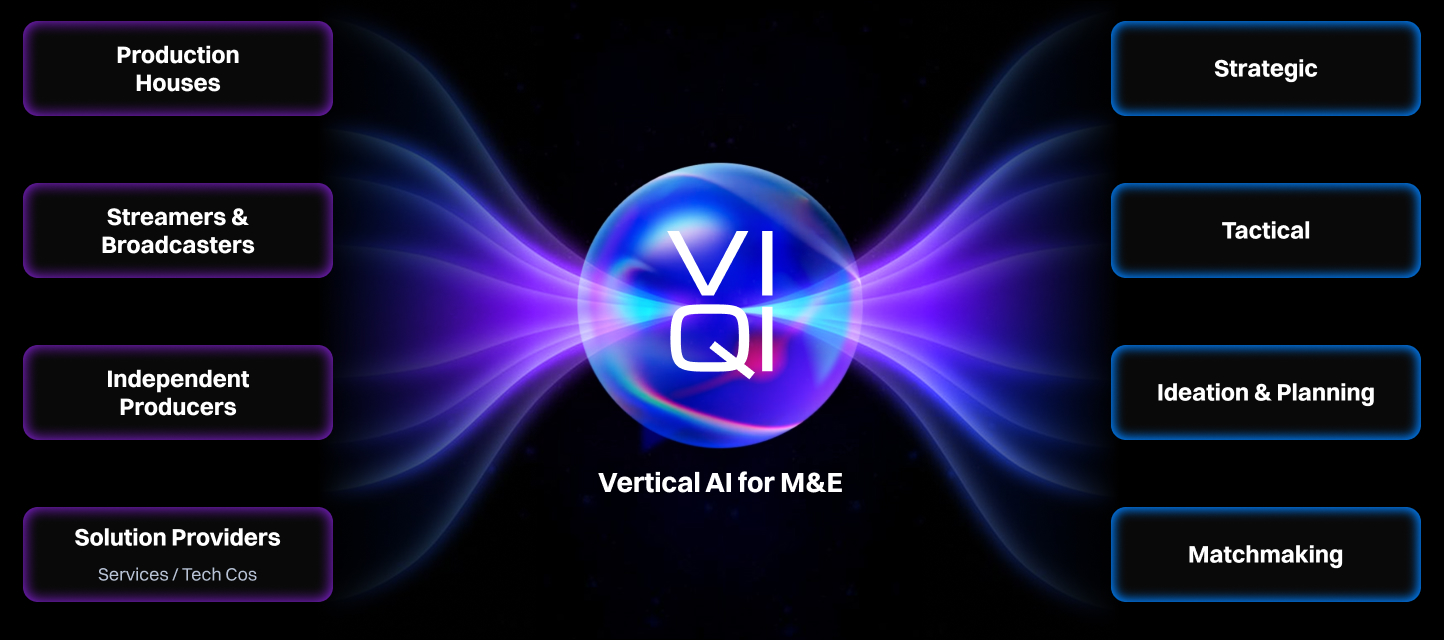
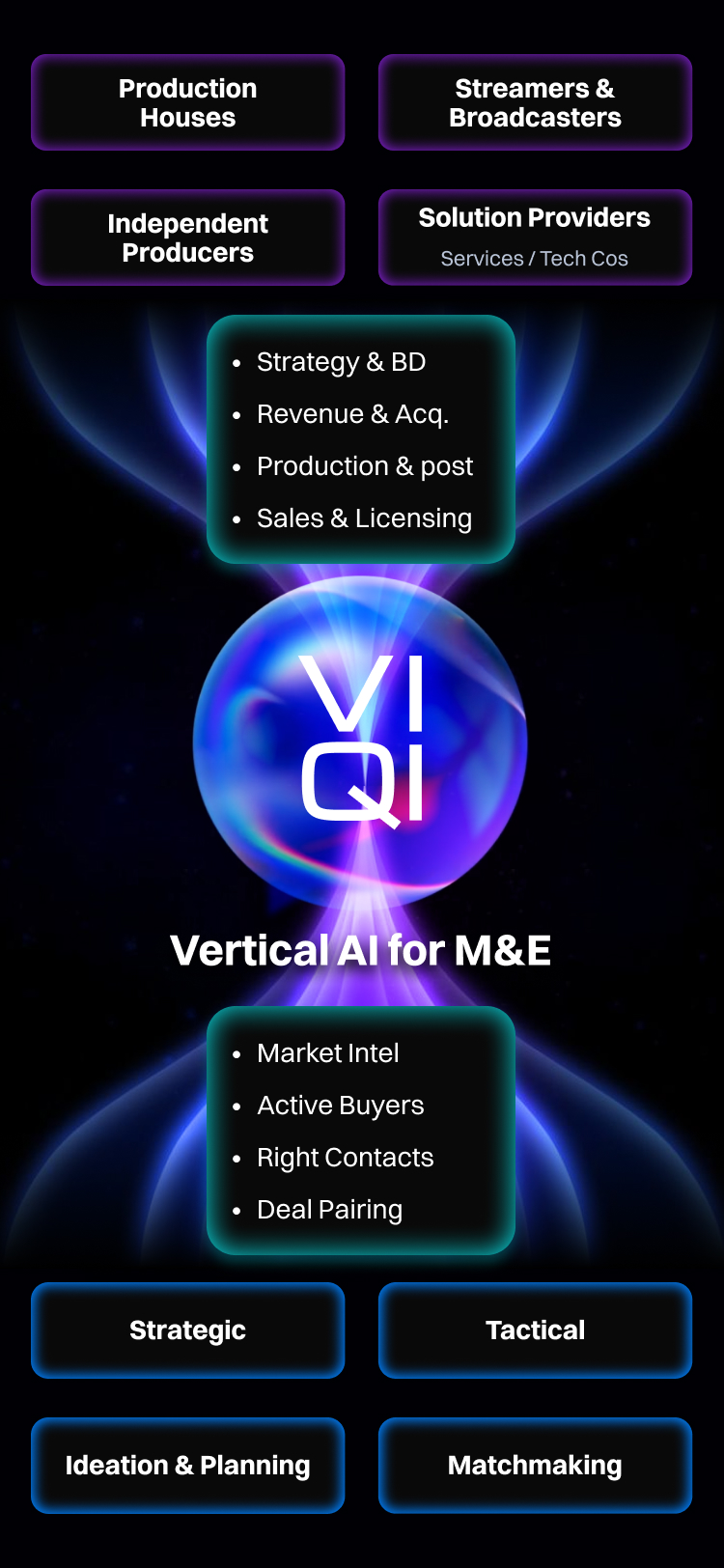
Sony Pictures Entertainment operates across dozens of divisions, subsidiaries, and regional entities — and the people, deals, and partnerships within that network change constantly. VIQI, Vitrina’s M&E company intelligence platform, is built specifically to give entertainment professionals a live, structured view of companies like Sony and the broader ecosystem they operate within.
On VIQI, producers can track which Sony divisions are actively commissioning, which executives have recently moved roles, and which independent companies hold active first-look deals with SPT. Investors can monitor SPE’s deal activity across its film, TV, and streaming divisions in one unified view. Sales agents can identify the right SPT International contact for a specific territory before making first contact — rather than spending weeks navigating Sony’s org chart blind.
Beyond Sony, VIQI covers 400,000+ M&E companies globally — meaning you can research Sony’s co-production partners, competing studio slates, and regional broadcaster relationships in the same platform. For any professional whose business touches the Sony ecosystem, VIQI replaces hours of fragmented research with a single verified intelligence layer.
Conclusion
Sony Pictures Entertainment is one of the most complex and consequential players in global entertainment. From SPT’s scripted drama pipeline and game show catalogue to Crunchyroll’s dominance in Western anime distribution and Sony Pictures Networks India’s position in South Asian streaming, the Sony entertainment machine operates at a scale and geographic breadth that few companies can match.
For producers, agents, and investors, the key takeaway is structural clarity: know which Sony division you’re targeting, understand what that division is actively seeking in 2026, and arrive through the right channel — whether that’s a first-look pitch, an international co-production approach, or a content licensing submission through SPT International. Cold outreach to the wrong division wastes everyone’s time. Informed, well-timed approaches get results.
The entertainment industry’s most successful partnerships are built on intelligence, not just relationships. Knowing who’s buying what, when, and through which structure is the competitive edge that separates producers who land deals from those who spend years in development limbo. VIQI exists to close that intelligence gap — for Sony and for the entire global M&E ecosystem.
Frequently Asked Questions
What is Sony TV Entertainment?
Sony TV entertainment refers to the television production and distribution operations under Sony Pictures Entertainment (SPE), headquartered in Culver City, California. The primary TV arm is Sony Pictures Television (SPT), which produces scripted dramas, comedies, unscripted series, and game shows, then distributes them across 200+ global territories. SPT is one of the largest independent TV studios in the world by output volume.
What does Sony Pictures Television produce?
SPT produces scripted drama, comedy, reality television, daytime programming, and game shows. Notable titles include Breaking Bad, Better Call Saul, Seinfeld, Jeopardy!, and Wheel of Fortune. SPT also produces international co-productions with broadcasters across the UK, Germany, France, Australia, and India, and manages the Game Show Network (GSN) in the United States.
How do I pitch a TV show to Sony?
The three main routes are: securing a first-look deal (for established production companies), approaching SPT International for co-production partnerships (for international producers with broadcaster relationships), or submitting through content licensing for finished content. Cold pitches rarely advance. Most successful pitches arrive through talent agents, entertainment attorneys, or development executives who already have relationships inside SPT.
What is Sony’s role in anime distribution?
Sony is the dominant gatekeeper for Western anime streaming distribution through Crunchyroll, acquired from AT&T for $1.175B in 2021. Crunchyroll has 13M+ paid subscribers globally and operates as the primary English-language streaming platform for new anime titles. Sony consolidated the former Funimation brand into Crunchyroll, creating a single dominant platform. For Japanese studios seeking Western distribution, Crunchyroll’s licensing terms are largely unavoidable in the English-language market.
How can I research Sony’s entertainment deal activity?
Sony’s deal activity across SPT, SPE, and Crunchyroll is tracked in real time on the VIQI platform, which covers 400,000+ M&E companies globally with live org chart data, production slate intelligence, and verified business contact information. Start free on VIQI →
About the Author
Vitrina Research Team
The Vitrina Research Team produces intelligence-led analysis on media and entertainment industry structure, deal activity, and market trends. Our research draws on VIQI’s proprietary dataset of 400,000+ M&E companies worldwide.