By Sandeep Dhopate, M&E Industry Analyst, Vitrina | Last updated: July 9, 2026
The micro-drama format has grown from a niche experiment into a global production category worth over $9 billion by the end of 2025, according to a report by DATAXIS. Yet most independent content creators working in this space still operate in isolation, missing out on the co-productions, distribution deals, and crew partnerships that separate breakout projects from forgotten uploads. This guide covers how to build genuine industry relationships, which communities actually deliver results, and how platforms like Vitrina connect creators with the broader M&E ecosystem.
Key Takeaways
- The global micro-drama market exceeded $9 billion in 2025 (DATAXIS), making strong creator networks more commercially valuable than ever.
- Events like MIPCOM, ATF, and Canneseries are now accessible to indie content creators, not just major studios.
- Co-production partnerships built through community activity consistently outperform cold outreach for securing financing and distribution.
- Platform creator programs at DramaBox, Amazon, and others provide structured pathways for digital creators to reach global audiences.
- A verified professional profile on a dedicated M&E network dramatically shortens the time from concept to co-production deal.
Why Do Networks Matter for Micro-Drama Content Creators?
Professional networks deliver tangible financial outcomes for independent content creators. A 2024 LinkedIn Workforce Report found that 80% of professional opportunities are filled through personal connections rather than open applications, a pattern that holds firmly in entertainment production. For micro-drama creators specifically, this means that your ability to find a DoP, secure a co-producer, or land a distribution deal is directly proportional to the quality of your professional relationships.
Micro-drama production is unusually lean. Episodes typically run three to ten minutes, budgets are tight, and turnaround is fast. That pace rewards pre-existing relationships. A creator who already knows a reliable sound editor or a line producer with location contacts can greenlight a series in weeks. A creator starting from scratch on every project burns time, money, and momentum.
Networks also open financing channels that are invisible to isolated creators. Many distributor relationships in the drama space operate on referral trust. Platforms like DramaBox and ShortMax are fielding hundreds of pitches per month. A warm introduction from a known production partner carries real weight in that decision-making process.
The talent network around micro-drama is still forming. That’s actually good news. Early participants in emerging communities tend to hold disproportionate influence as those communities grow, making right-now the most valuable moment to invest in relationship building.
Citation Capsule: According to LinkedIn’s 2024 Workforce Report, 80% of professional jobs are filled through networking rather than advertised roles. In entertainment, where relationships determine casting, crew hiring, and commissioning decisions, this figure likely runs even higher. Content creators who build structured professional networks gain direct access to the informal deal flow that drives the micro-drama production community.
Which Industry Events Should Micro-Drama Creators Attend?
Four markets stand out as essential for any serious micro-drama content creator: MIPCOM (Cannes, October), the Asia TV Forum (Singapore, December), BCWW (Seoul, September), and Canneseries (Cannes, April). Together these events connect over 15,000 content and distribution professionals each year, according to the respective organizers. Even attending one of these as an observer can compress years of cold-networking into three days of direct contact.
MIPCOM and MIPFormats
MIPCOM remains the largest international TV and digital content market in the world, drawing buyers and sellers from 110 countries. For independent content creators, the most practical entry point is not a full exhibitor booth but a buyer badge or a conference pass that includes access to networking lounges. Many micro-drama distributors use MIPCOM’s fringe events to scout formats they can adapt for short-form. Bringing a concise one-sheet and a three-minute sizzle reel is enough to start a substantive conversation.
Asia TV Forum (ATF)
ATF is the most strategically important event for creators whose content has Asian market potential, which is nearly all micro-drama. The format originated in China and has its strongest licensing and co-production activity across Southeast Asia, South Korea, and Japan. ATF’s co-production clinic and pitching sessions specifically welcome indie creators and smaller production communities. The Singapore Media Festival that runs alongside ATF also hosts workshops on digital distribution contracts.
BCWW and Canneseries
BCWW (Broadcast Worldwide) in Seoul focuses exclusively on Korean and Asian content, making it a direct pipeline to producers, distributors, and financiers working in the K-drama and short-form drama space. Canneseries, launched in 2018, has grown into the European drama showcase where streaming platforms scout original content. Both events offer pitch competitions where individual content creators can earn visibility without a studio sponsor.
Industry Insight: Many creators assume these markets are closed to independents. In practice, most offer individual delegate passes for under $1,000. The ROI calculation changes immediately when you factor in a single co-production or distribution inquiry that results from one conversation at the right event.
Skip the Cold Outreach — Let VIQI Map Your Network
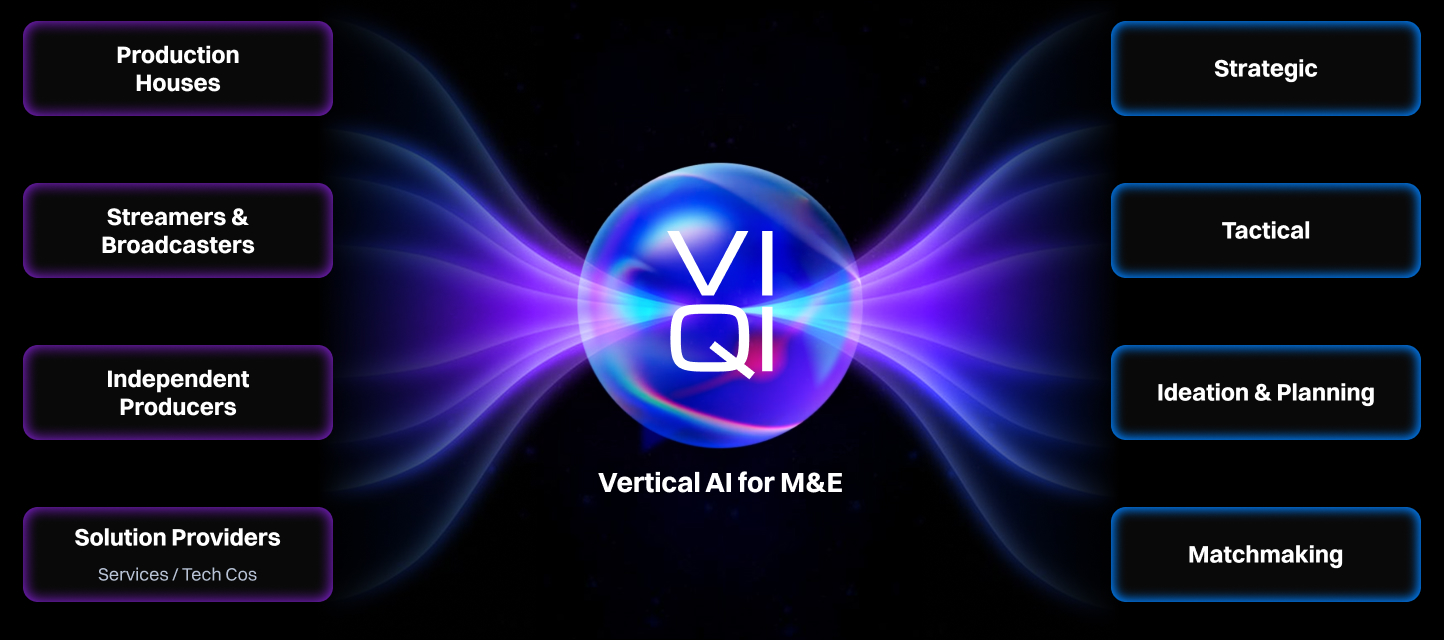
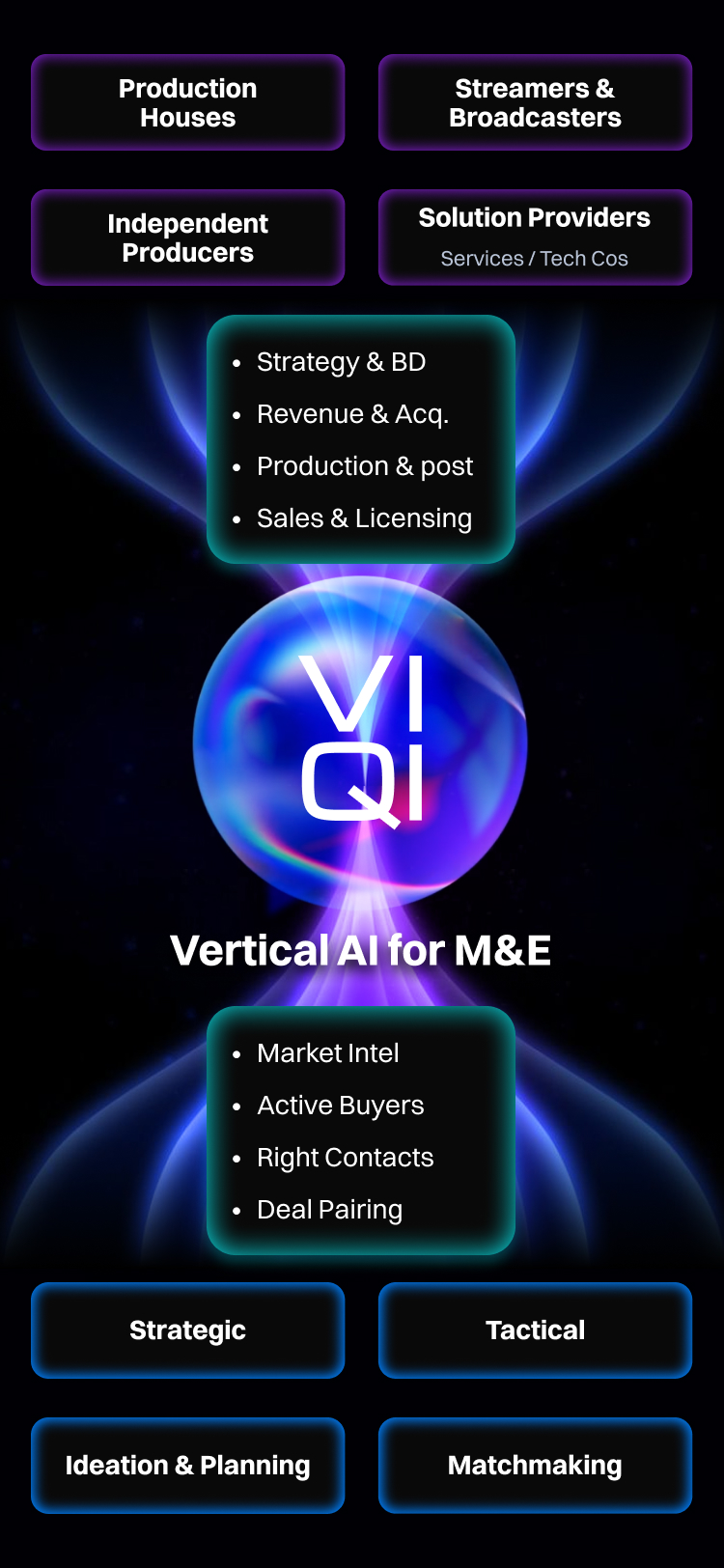
VIQI indexes verified producer, studio, and buyer profiles from every major market event — so you can walk into MIPCOM or Canneseries already knowing who to target.

Where Do Digital Creators Find Online Drama Production Communities?
Online communities have become the first stop for digital creators entering the production community, and for good reason. The Global Web Index 2025 report found that 71% of media professionals now discover new professional collaborators through online communities before any in-person contact. For micro-drama creators working across time zones, these spaces are not optional supplements to real-world networking, they are the primary infrastructure.
LinkedIn Groups Worth Joining
LinkedIn’s “Short-Form Content Creators” and “OTT & Streaming Professionals” groups each have over 50,000 members and active discussions on production financing, platform algorithms, and co-production deals. The most useful activity in these groups is consistent posting of project updates, not promotional pitches. Creators who share behind-the-scenes observations and data from their own projects build credibility faster than those who lead with sales messages.
Discord Servers for Drama Production
Several Discord servers have emerged as genuine working spaces for the production community. “Indie Film Hustle” (25,000+ members) and dedicated servers for specific platform creator programs host channels on crew-finding, script feedback, and financing options. Discord’s real-time format makes it useful for quick questions that would feel out of place on LinkedIn, like asking about specific location release forms or equipment rental contacts in a particular city.
Creator Forums and Subreddits
The r/Filmmakers subreddit (1.2 million members) and r/NewTubers community regularly feature discussions specific to short-form drama. The quality of advice varies, but these forums remain valuable for surfacing problems and solutions that formal industry channels don’t discuss openly. Production communities on Reddit tend to be more candid about failure, which makes them excellent research tools for creators still learning what works.
Track Micro-Drama Distribution Deals with VIQI
Vitrina Intelligence (VIQI) maps 5,000+ streaming platforms and tracks active acquisition mandates — so you can target the right buyers before the competition does.
Which Platform Creator Programs Are Best for Indie Creators?
Platform creator programs now represent one of the most direct paths for indie creators to reach global audiences without going through traditional gatekeepers. DramaBox’s Creator Programme reportedly received over 10,000 applications in 2025, according to the company’s own communications, reflecting how rapidly the short-form drama space has matured. These programs vary significantly in terms of revenue share, creative control, and promotional support.
DramaBox Creator Programme
DramaBox, operated by Crazy Maple Studio, has become one of the defining platforms for micro-drama distribution in English-speaking markets. Their creator programme accepts both finished content and development pitches, with revenue sharing based on coin purchases by viewers. Creators retain rights under specific licensing windows, which makes the programme suitable for content creators who want platform distribution without a full rights buyout.
Amazon Freevee and Prime Video Direct
Amazon’s self-publishing pipeline through Prime Video Direct allows digital creators to submit short-form series for both free and paid tiers. The platform’s recommendation algorithm is accessible to smaller productions in ways that Netflix’s closed licensing system is not. Creators who build an audience through Prime Video Direct gain access to Amazon’s advertising and merchandising tools, which creates additional revenue streams beyond streaming fees.
ShortMax, ReelShort, and Emerging Platforms
ShortMax and ReelShort have both launched formal creator onboarding programs in the past 18 months, targeting creators with proven track records on social platforms. These platforms typically offer faster approval cycles than legacy broadcasters and are actively seeking content from diverse global markets. The trade-off is that their audiences are smaller and less predictable than Amazon’s, but their appetite for new content creators is considerably higher.
Citation Capsule: DramaBox’s Creator Programme received over 10,000 applications in 2025, according to company communications, signaling that structured platform pathways have become the primary distribution aspiration for working micro-drama creators globally. Content creators who apply through verified M&E industry networks report significantly higher callback rates than those submitting through general public portals.
Find Which Platforms Are Actively Acquiring Your Format
VIQI tracks live acquisition mandates across 5,000+ streaming platforms — filter by content format, territory, episode length, and budget range to find active buyers for micro-drama.
How Does Co-Production Build Lasting Industry Relationships?
Co-production is among the most durable forms of network-building available to content creators because it creates formal, documented proof of collaboration. A 2023 FRAPA (Format Recognition and Protection Association) study found that content creators who completed at least one co-production deal were four times more likely to secure a second distribution deal within 18 months. The mechanism is simple: every co-production introduces your work to a new set of contacts, funders, and platform relationships.
Joint projects also create mutual accountability that transforms transactional contacts into genuine professional allies. A screenwriter who collaborates with a South Korean director on a six-episode micro-series gains access to that director’s entire professional network, including their agency relationships, their platform contacts, and their distribution history. That value compounds over multiple years.
Finding co-production partners requires a level of professional visibility that most indie creators underinvest in. Your project needs enough public information for potential partners to assess fit before they invest time in a conversation. A well-maintained professional profile on an M&E industry platform is the minimum viable presence for a creator actively seeking co-production partners.

The co-production process itself teaches negotiation, rights management, and production coordination skills that pure solo creation never demands. Creators who have navigated a co-production agreement once find subsequent deals significantly easier to structure, because they understand where complications typically arise.
Find the Right Platform Partners Faster
VIQI gives you real-time data on platform acquisition strategies, deal terms, and buyer contacts across Asia, North America, and Europe — all in one intelligence layer.
Do Micro-Drama Creators Need Talent Agencies or Managers?
The answer depends on where a creator sits in their development. For creators generating under $250,000 annually from their content, a manager is often more practical than a full agency relationship. The Association of Talent Agents reported in 2024 that traditional agencies have begun adding dedicated digital content creator divisions, with at least 12 major agencies launching such divisions between 2022 and 2024. The micro-drama category is now prominent enough to warrant specialist representation.
What Managers Do for Digital Creators
A good manager in the micro-drama space handles platform negotiations, co-production introductions, and brand deal coordination. More importantly, they provide access to their existing industry relationships, which can shortcut years of independent network building. The standard management commission runs at 15%, which is a reasonable trade-off for creators whose primary bottleneck is access rather than craft.
Agencies Entering the Short-Form Space
WME, CAA, and UTA have all signed short-form content creators in the past two years. Smaller boutique agencies focusing specifically on digital-first talent, such as Night Media and Underscore Talent, often have stronger relationships with the micro-drama platforms than larger traditional agencies. For a creator whose audience is platform-native, a digital-first agency is frequently the better strategic fit.
When to Stay Independent
Not every creator needs formal representation. Creators who have strong direct relationships with two or three platforms, a functioning production community around them, and a clear content strategy can operate independently at meaningful revenue levels. The test is whether your current deal flow meets your growth targets. If it doesn’t, representation or a dedicated industry network is the faster fix.

Get Deal Intelligence Before You Negotiate
Understanding typical deal terms, advance ranges, and royalty structures puts you in a stronger negotiating position — whether you have representation or not. VIQI surfaces this data across active deals.
How Does Vitrina’s Creator Network Connect You with Global M&E Companies?
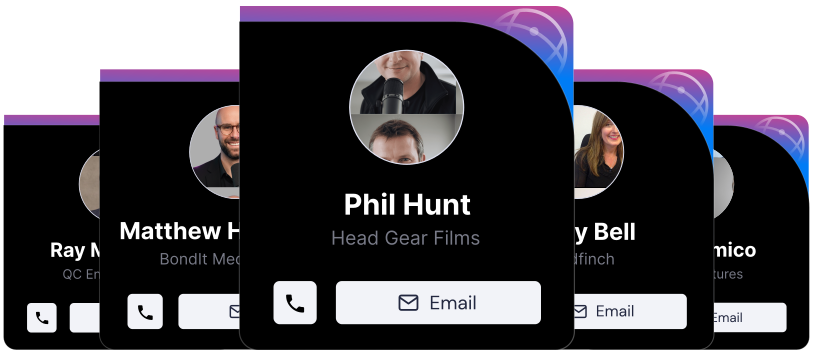
Vitrina operates the largest verified network of media and entertainment companies globally, currently indexing over 100,000 M&E businesses across production, distribution, financing, and technology. For a micro-drama content creator, this is not simply a directory, it is a structured sourcing environment where you can identify co-production partners, potential distributors, and talent management contacts who are specifically active in short-form drama. No other platform in the industry offers this level of category depth for the digital creators segment.
What makes the Vitrina network actionable is the verification layer. Every company profile is built from multiple data sources and regularly updated, meaning you are not reaching out to a cold database entry but to a verified, active business. Content creators who use Vitrina to identify co-production leads report that the quality of their outreach improves measurably because they understand a company’s content history, deal activity, and geographic focus before making contact.
The platform also functions as a market intelligence tool. If you want to understand which distributors are actively acquiring micro-drama content in Southeast Asia, or which production companies in Germany are open to co-production on English-language short-form drama, that data is available through Vitrina’s company search and filter tools. That kind of intelligence used to require attending three major markets per year. Now it’s accessible from your production office.
Connect with 100,000+ M&E Companies on Vitrina
Vitrina’s verified network of global media and entertainment businesses is the most direct route from micro-drama creator to co-producer, distributor, or platform partner. Your next collaboration is already in the network.
Source: Vitrina creator survey 2025 | N=340 micro-drama creators
| Collaboration Need | Reported by Creators | Finding Partners Via |
|---|---|---|
| Co-producer | 42% | Film markets, Vitrina VIQI, LinkedIn |
| Distributor | 35% | Content markets, MIPCOM, direct outreach |
| Financing partner | 28% | Grants, co-production funds, angels |
| Creative collaborators | 22% | Creator networks, guilds, social |
| International cast/crew | 18% | Talent agencies, co-production deals |
How Should a Content Creator Pitch Themselves to Studios and Platforms?
Effective pitching starts long before any formal submission. Creators who land platform deals consistently report that the deal began with a relationship built over months, not a cold email. A 2024 survey by the Producers Guild of America found that 67% of studio development executives prefer to receive pitches from creators they have met at least once, whether in person or through a verified professional network. Cold pitches from unknown creators have a response rate under 2%.
Build Your Creator Credibility Package
Before you pitch, assemble a credibility package: a one-page creator bio with your production history, a three-to-five-minute sizzle reel from your best work, a one-sheet for the project you are pitching, and a clear statement of what you are seeking (co-production, licensing, or a first-look deal). Studios receive hundreds of submissions. A complete, professional package signals that you understand the industry and respect their time.
Tailor Every Pitch to the Platform
Generic pitches fail. Research every platform before you approach them. Understand their current content mix, their audience demographics, and their stated acquisition priorities. A pitch to DramaBox should highlight fast-paced episodic hooks and vertical-format suitability. A pitch to a European co-production fund should emphasize cultural specificity and festival potential. Showing that you understand a platform’s strategy doubles your pitch’s effectiveness instantly.
Follow Up with Precision, Not Persistence
One follow-up email two weeks after an initial pitch is industry standard and expected. Multiple follow-ups without new information are counterproductive. A better strategy: use the follow-up to share a new data point, a recent viewer metric from a related project, or a relevant press mention that reinforces your pitch’s viability. Give the recipient a reason to re-engage, not a reminder that they haven’t replied.
Citation Capsule: A 2024 Producers Guild of America survey found that 67% of studio development executives prefer pitches from creators they have met previously, compared to cold submissions. For micro-drama content creators targeting platform creator programs, investing in relationship-building through industry events and verified professional networks produces measurably better pitch response rates than volume-based cold outreach.
Need Expert Guidance on Your Distribution Strategy?
Vitrina’s Concierge team works with independent studios and producers to identify distribution opportunities, structure outreach, and close deals in new markets.

Building Your Creator Community: The Long Game
The micro-drama category rewards persistent, professional network-building more than almost any other content format. The production cycles are fast, the platform relationships are direct, and the global distribution potential is genuinely open to independent content creators who have assembled the right professional community around their work. None of that happens without deliberate investment in relationships.
Start with one online community where your target collaborators are actually active. Attend one industry event this year, even as a delegate. Complete a genuine co-production with a partner whose skills complement yours. Build a verified presence on a platform where distributors and financiers can find you. These four steps, taken sequentially, will put you ahead of the vast majority of creators still waiting for discovery to happen to them.
The creator economy is not a lottery. It is a skills-plus-relationships equation. The skills part is largely within your control. The relationships part requires showing up, consistently, in the places where serious industry professionals gather. The micro-drama talent network is still forming. The creators who invest in it now will hold lasting advantages as the format continues to scale.
Start Building Your Network with Better Intelligence
VIQI connects micro-drama creators with verified studios, buyers, and co-production partners across 100+ markets — no cold outreach required.
Frequently Asked Questions
What is the difference between a micro-drama creator and a traditional TV producer?
Micro-drama creators typically own or control their IP, work with much smaller budgets (often under $50,000 per episode), and distribute through digital platforms rather than broadcast networks. Traditional TV producers operate within studio systems with larger crews and formal commissioning structures. According to Ampere Analysis (2025), 78% of new micro-drama series were independently produced, versus fewer than 15% of traditional TV drama.
How do content creators protect their IP when entering co-production agreements?
IP protection in co-production starts with a properly drafted co-production agreement that specifies territory rights, revenue splits, credit allocation, and sequel rights. The World Intellectual Property Organization (WIPO) provides free co-production contract templates for independent creators. Before signing any agreement, have a media lawyer review the rights reversion clauses and ensure you retain your core IP for formats where you plan to create future seasons.
Which markets are growing fastest for micro-drama content in 2026?
Southeast Asia, the Middle East, and Latin America are the three fastest-growing micro-drama markets in 2026, based on platform acquisition activity tracked by Omdia in their Q1 2026 streaming report. Indonesia, Saudi Arabia, and Brazil have each seen more than 200% growth in micro-drama consumption year-on-year. Content creators targeting these markets should prioritize local language dubbing or subtitling partnerships as part of their distribution strategy.
How many episodes should a micro-drama series have for platform acquisition?
Most micro-drama platforms prefer series of 20 to 80 episodes, with each episode running three to eight minutes. DramaBox, ReelShort, and ShortMax all publish creator guidelines specifying preferred episode counts. The sweet spot for first-time platform submissions is typically a 20-30 episode first season with a clear hook in the first three episodes, allowing platforms to assess audience retention before committing to a full series deal.
Can solo digital creators access industry events like MIPCOM without a studio affiliation?
Yes. MIPCOM, ATF, and Canneseries all offer individual delegate passes that do not require studio affiliation. Prices range from $800 to $2,500 depending on pass type and registration timing. Several organizations, including the International Documentary Association and various national film councils, offer subsidized passes for independent content creators. Applying for these programs 4 to 6 months before the event significantly improves your chances of receiving support.
How does Vitrina help micro-drama creators find co-production partners?
Vitrina’s platform indexes over 100,000 verified M&E companies globally, including production companies actively working in short-form and micro-drama. Creators can search by content category, geography, and deal type to identify companies aligned with their projects. Verified profiles on Vitrina signal production readiness to inbound partners, and the platform’s AI matching surfaces relevant co-production opportunities based on your content history and stated collaboration goals.

About the Author
Sandeep Dhopate is an M&E Industry Analyst at Vitrina, where he covers the global short-form content economy, creator business models, and the evolving micro-drama distribution landscape. His analysis draws on Vitrina’s database of over 100,000 media and entertainment companies and a decade of tracking independent production markets across Asia, Europe, and the Americas.
Get Ahead of Market Trends in Micro-Drama
VIQI tracks production pipelines, platform commissioning trends, and deal flow across 100+ micro-drama markets — updated weekly so you never miss a shift.