IHUB
IHUB
 Private Briefings (Webinars)


 LeaderSpeak Podcast
  Global Entertainment Digest (Newsletter)
  Premium Lists
 Membership Benefits
 About Vitrina
 Our Story
Los Angeles, June 15 2026
Author: By Kunal Barai
Kunal Barai leads Global Markets at Vitrina.AI, working with producers and financiers across 100+ countries to facilitate content financing and co-production matchmaking. He recently hosted a roundtable on AI for Film Financing at MIP London 2026. Earlier, he spent 12+ years at Nielsen/Gracenote and completed MIT Sloan’s executive program on AI strategy.
Summary: Free Ad-Supported Streaming TV (FAST) has officially broken out of its shell as a library dumping ground to become an absolute cornerstone of the global content ecosystem. In 2026, streaming platform monetization strategies have dramatically pivoted toward hybrid monetization models, creating an immediate, high-margin pipeline for independent filmmakers who know how to navigate the distribution terrain. For producers trying to build sustainable revenue loops, mastering FAST channel distribution mechanics isn’t just an experimental side hustle anymore—it’s a core baseline competency.
Let’s be completely honest about how independent distribution used to work. You’d spend years bleeding out your bank account to package a feature, scrap through principal photography, and pray for a miracles-only sales agent deal at Cannes or AFM. If you were incredibly lucky, you might lock down a flat-fee SVOD license that stripped away your long-term backend upside. But those locked-gate walls are crumbling fast. The major global subscription apps are aggressively cooling off on high-volume indie licensing, leaving a massive funding deficit across the global supply chain.
And that’s precisely where the modern monetization architecture steps in. The streaming landscape has slammed into a massive reality check, shifting from pure-subscription exclusivity to a brutal battle for user attention metrics. Viewers are flatly refusing to add more premium subscriptions to their monthly credit card statements. Instead, they are flooding directly into free ad-supported streaming TV environments. If you’re a producer holding unencumbered territory rights, this shouldn’t terrify you. It should completely change how you build your slate’s financial stack.
The capital reality behind free ad-supported TV is simple: it de-risks library monetization while driving continuous cash flow directly back to the IP owner. Based on Vitrina’s ongoing analysis of modern distribution deal flows across global supply chains, we’ve tracked an undeniable surge in hybrid monetization models. This isn’t theoretical marketing fluff. It is a live structural realignment that transforms how independent catalogs generate long-term residual equity.
Table of Contents
- What Is Free Ad-Supported TV (FAST) and How Does It Actually Monetize?
- The Vitrina FAST Deal Matrix™: Assessing Revenue Structures
- How Can Independent Producers Secure Distribution on Leading Channels?
- Platform Spotlights: Top Environments Reshaping Distribution Architecture
- Industry Implications: Three Structural Conclusions for Producers
- Conclusion
- Frequently Asked Questions (FAQ)
What Is Free Ad-Supported TV (FAST) and How Does It Actually Monetize?
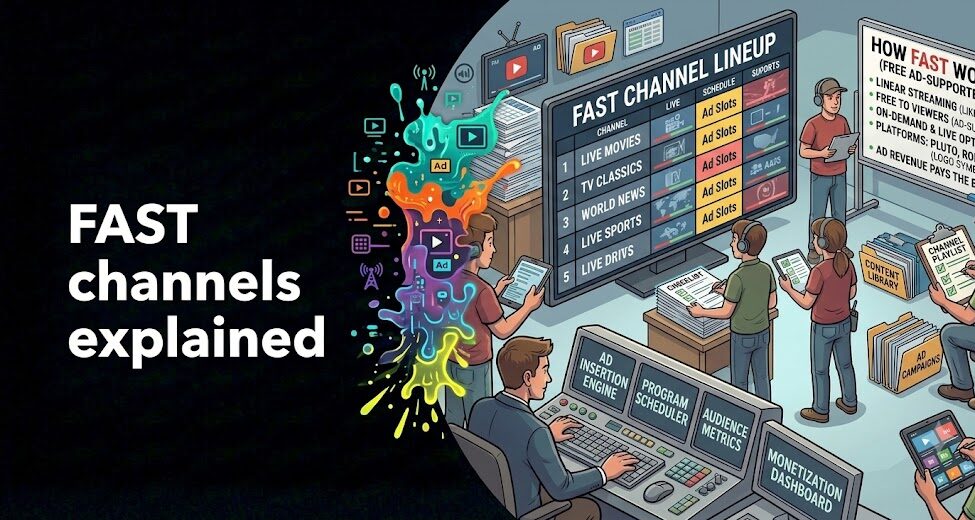
Free ad-supported streaming TV (FAST) delivers linear, pre-programmed content channels to audiences entirely free of charge, entirely monetized through programmatic ad insertion models. Unlike classic premium subscription video apps, FAST channels mimic the traditional dial experience of legacy cable networks, allowing viewers to lean back and surf through themed, hyper-targeted programming blocks.
But don’t make the amateur mistake of treating these setups like regular terrestrial broadcasting. The underlying backend infrastructure runs on advanced dynamic ad insertion systems. When an independent film plays on a platform like Tubi or Pluto TV, the ad markers trigger precise, real-time programmatic bidding. This means the system serves highly personalized ad copy tailored to that exact user’s viewer demographic.
What’s the immediate business takeaway for your production company? The cash equation shifts completely away from upfront minimum guarantees toward long-tail ad-revenue splits. Instead of watching an independent title collect dust in an offline drive stack after its initial window closes, you can deploy your content into dedicated genre channels to draw ongoing programmatic payouts. The math doesn’t lie: steady monthly viewership across a distributed network of free networks provides consistent, recurring EBITDA protection.
The Vitrina FAST Deal Matrix™: Assessing Revenue Structures
Complex syndication frameworks often leave filmmakers buried under a mountain of distribution legalese. To strip away the noise, we have built a streamlined operational diagnostic to help you evaluate incoming deal terms.
| Deal Model | Revenue Architecture | Risk Positioning | Optimal Asset Fit |
|---|---|---|---|
| Pure Rev-Share | Straight 50/50 or 70/30 programmatic splits | High upside; depends completely on platform reach | High-concept library genre films |
| Hybrid Minimum | Small upfront advance offset against future ad caps | Balanced; floor protection with capped initial upside | Documentary slates, star-attached indie features |
| Flat-Fee Packaged | Fixed annual payout for multi-title library package | Low risk; predictable cash infusion, zero long-term upside | Deep catalog backlist, legacy archival material |
Look, if an aggregator approaches you demanding exclusive worldwide rights under a pure rev-share model, you need to turn around and walk away. Uncapped downside protection only makes sense if you maintain non-exclusive flexibility. The strategic players understand that the real magic happens when you cross-collateralize your catalog across multiple non-exclusive app partners simultaneously.
How Can Independent Producers Secure Distribution on Leading Channels?
And that’s where most independent creators completely miss the mark. You cannot simply upload an unformatted ProRes file to a network operations head and expect a distribution agreement. Platforms do not operate like amateur video sharing portals. To enter a live programming matrix, your content must bypass strict technical gatekeepers.
Securing channel space requires a disciplined approach to the global packaging process:
- Clean Chain of Title Documentation: Every music cue license, talent release form, and clear option agreement must be fully indexed before a programming director even reviews your screener.
- Ad-Break Contextual Tagging: Your post-production workflow must incorporate explicit, well-timed narrative breaks to house programmatic mid-rolls seamlessly without breaking viewer engagement.
- Syndication-Ready Master Delivery: Files must be encoded precisely to cross-platform technical specs—often requiring closed-captioning compliance assets for diverse global regions.
- Reputable Aggregator Alignment: Bypassing cold rooms requires partnering with verified syndication agents who maintain active operational endpoints inside leading software hubs.
The bottom line? If your master delivery files aren’t structured correctly from day one, you are actively burning cash. The platforms move incredibly fast; they will pull down an asset if it creates technical processing drag on their delivery infrastructure.
Platform Spotlights: Top Environments Reshaping Distribution Architecture
Navigating the landscape requires a clear, granular view of the dominant infrastructure footprints driving audience metrics this quarter. Here are the elite free networks you need to track:
01. Tubi
The uncontested heavyweight champion of deep, genre-fluid independent catalog monetization.
Owned by Fox Entertainment, Tubi stands out because it completely avoids restrictive curation gatekeeping. Their massive algorithmic pairing engine specializes in surfaces hyper-specific indie catalogs directly to dedicated, enthusiastic sub-demographics.
Monthly Active Users: Over 80 million active viewers
Primary Monetization: Pure AVOD programmatic ad splits
Key Genre Affinity: Horror, sci-fi action, true-crime documentaries
02. Pluto TV
The pioneer of premium, curated theme-channel virtual programming dials.
Backed by Paramount, Pluto TV operates like a hyper-efficient digital cable network. They favor packaged, structured episodic slates that can fill out entire 24/7 linear programming tracks.
Global Footprint: Mapped across 35+ international territories
Primary Monetization: Shared inventory revenue architectures
Target Demographics: Multi-generational comedy, procedural classics, nostalgia television
03. The Roku Channel
Hardware-integrated premium positioning that captures massive living room real estate.
Roku’s native hardware integration gives independent filmmakers a direct pipeline straight to the home screen. Their platform architecture prioritizes high-production-value feature films that can draw massive, multi-device view times.
Active Streaming Accounts: Scaling past 100+ million accounts
Primary Monetization: Programmatic dynamic inventory control
Core Content Focus: Family entertainment, premium independent lifestyle drama
Industry Implications: Three Structural Conclusions for Producers
The operational shift toward ad-supported environments fundamentally rewrites how independent IPs scale across international borders.
1. Content Longevity Replaces the Box Office Weekend Panic
The classic model forced indie titles to hit or die within a single theatrical weekend or premium transaction window. If an asset missed its mark, the capital exposure was a total loss. Free ad-supported models remove that ticking clock entirely. Algorithmic content recommendations mean a feature can quietly gather audience velocity over a continuous 24-month cycle, generating compounding ad payouts long after its launch day.
2. Non-Exclusive Syndication Multiplies Catalog EBITDA
Locking your project into a single, restrictive worldwide exclusive license limits your catalog’s overall earning potential. The smartest independent teams utilize smart pairing strategies to map out non-exclusive distribution patterns. By syndicating a single title to multiple networks concurrently across international markets, you stack independent revenue loops on top of one another to maximize asset cash yield.
3. The Fragmentation Paradox Demands Better Operational Data
With hundreds of thematic channels active globally, finding the exact right programming buyer is an absolute nightmare. This opaque environment leads to extreme margin leakage through untrusted intermediaries who take massive cuts. To survive, you must use real-time supply chain intelligence to verify channel capabilities, track actual platform deal histories, and speak directly to the executives who actually sign off on licensing agreements.
Conclusion
Free ad-supported television has fundamentally rewritten the rulebook for long-tail media exploitation. As subscription monetization hits a hard economic wall, the migration toward dynamic programmatic environments gives creators an unprecedented chance to maintain control over their content assets. Stacking your slate across multiple free distribution hubs can insulate your corporate cash flows from unexpected market corrections.
The cost of staying unaligned is steep. Filmmakers who rely on outdated relationship networks or blind luck at film markets face rapid margin erosion at the hands of exploitative distributors. You need to leverage precise, verified supply chain insights to evaluate incoming offers with confidence. Act on real data, structure your assets for syndication compatibility, and treat the ad-supported space as a primary target rather than a secondary afterthought.
Ready to completely transform your independent distribution pipeline? Join the 300,000+ verified companies utilizing Vitrina to navigate international buyer networks, optimize licensing terms, and secure partnerships with top global networks.
Frequently Asked Questions (FAQ)
What are typical revenue splits under free ad-supported TV models?
Standard programmatic advertising agreements inside free ad-supported TV systems generally follow a straight 50/50 rev-share split between the hosting application and the intellectual property owner. Some elite aggregators holding massive library catalogs can occasionally command higher 70/30 splits. It is critical to confirm that your distribution arrangement calculates these margins based on gross advertising revenues rather than net receipts to protect your bottom line from hidden administrative deduplication charges.
Do FAST channel buyers pay upfront minimum guarantees?
The vast majority of standard licensing deals within free ad-supported TV models skip upfront minimum guarantees entirely. Instead, the revenue architecture relies on long-term backend cash distribution drawn from ad viewership. That said, some premier networks looking to lock down exclusive windows for star-driven titles will offer small upfront advances. These hybrid minimum models function as a financial floor, fully recoupable against your feature’s initial ad monetization metrics.
Can I license my indie feature non-exclusively across multiple networks?
Yes, non-exclusive syndication is the absolute master strategy for independent producers looking to optimize catalog yields. Unlike legacy subscription video licenses that require absolute window exclusivity, free ad-supported TV parameters easily accommodate concurrent non-exclusive placements. By distributing a single independent horror or thriller title across multiple environments simultaneously, you multiply your monthly programmatic payouts without fragmenting your underlying ownership rights.
What technical specifications do free networks require for delivery?
Free ad-supported networks require masters to carry precise contextual data tagging, specifically embedding SCTE-35 digital cue markers to automate real-time ad placement. Masters must follow cross-platform standards—frequently requiring high-bitrate Interoperable Master Format assets along with fully compliant, localized closed-captioning files. Failing to secure clean technical validation from platform engineering gatekeepers will cause your title to face immediate operational processing rejection.
Questions producers and executives are asking
If I’m cross-collateralizing my catalog non-exclusively across three separate syndication hubs, how can I audit reporting accuracy across competing programmatic ad servers?
What structural metrics differentiate a standard distribution aggregator from a high-margin digital syndication partner when formatting library assets for global networks?
How are forward-thinking independent sales agents factoring programmatic revenue metrics into the early-stage financing plans of mid-budget genre features?